
Many US founders assume UK setup costs are fixed. They aren't. Your total spend depends on your business structure, whether you need a visa, and whether you're running things remotely or opening a physical office.
This guide breaks down realistic pricing tiers, the cost drivers specific to Americans, and how to budget without getting blindsided by cross-border fees.
Key Takeaways
- Remote setup for a UK Ltd starts around £189–£340 ($255–$459) with no visa required
- Visa-sponsored relocation with office space pushes fixed costs to £10,760–£14,866 ($14,536–$20,082) before payroll
- Most cost variation comes from immigration needs, physical presence, and dual-country tax filing
- Choose remote-first when you only need a legal entity; relocate when you need on-the-ground staff or premises
- Long-term market entry with staff or offices can justify the higher spend—budget payroll as a separate line
How Much Does It Cost to Start a Business in the UK as a US Entrepreneur? (Pricing Overview)
There's no single answer here. Your residency status, chosen structure, and need for a UK presence swing the total cost dramatically, sometimes by tens of thousands of dollars.
US founders tend to trip over the same budgeting mistakes:
- Underestimating cross-border friction - currency conversion, wire fees, and dual tax filing add up fast
- Assuming an LLC translates directly - the US LLC has no UK equivalent, which changes your legal and accounting setup
- Forgetting the registered address rule - a US home address doesn't satisfy UK company law, so you'll need a paid UK address service
Typical Cost Range
| Setup Type | First-Year Cost Range | What Drives It |
|---|---|---|
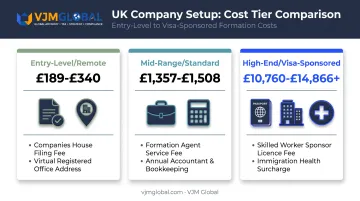
| Entry-level / remote | £189-£340 ($255-$459) | Filing fee, virtual address, confirmation statement |
| Mid-range / standard | £1,357-£1,508 ($1,833-$2,037) | Formation agent, accountant, address service |
| High-end / visa-sponsored | £10,760-£14,866+ ($14,536-$20,082+) | Visa fees, endorsement costs, office space, healthcare surcharge |
Entry-level and mid-range figures cover registration, a registered address, and basic accounting. They exclude visa fees, office leases, and staff salaries. High-end totals build in visa, endorsement, and initial office costs; ongoing salaries and sponsor obligations still sit on top.
Entry-Level / Remote Setup
This tier suits freelancers, e-commerce sellers, and digital service providers who have no intention of relocating. It typically includes:
- Online Companies House registration
- A virtual registered office address
- Basic bookkeeping support
Best for: US businesses testing UK demand before committing further resources.
Mid-Range / Standard Setup
Here you add a formation agent, banking setup support, and an accountant who handles VAT and Corporation Tax filings. This is the sweet spot for businesses selling into the UK without moving staff there.
Best for: Established US companies expanding sales into the UK market remotely.
High-End / Visa-Sponsored Setup
This tier covers Innovator Founder visa costs, immigration legal counsel, a physical office lease, and local hiring. That mix puts it in a different cost category from remote setups, and ongoing salaries plus sponsor-licence duties push spend higher still.
Best for: Founders relocating to run UK operations in person.
Key Factors That Affect the Cost for US Entrepreneurs
Beyond the standard UK startup expenses, Americans face cross-border variables that shift the budget considerably. These five factors change the numbers most for US founders.
Business Structure Chosen
A UK Ltd company is the most common route and generally the cheapest to set up and maintain. A branch of a US entity requires registering the parent company with Companies House, adding complexity. Sole trader registration is simplest but offers no liability protection.
One catch: the US LLC has no direct UK equivalent. Founders trying to mirror their LLC structure often end up paying more in legal and accounting fees to translate it into something HMRC actually recognises.
Immigration & Visa Status
If you're not relocating, you skip visa costs entirely. If you are, expect meaningful fees. Per the UK's April 2026 immigration fee schedule:
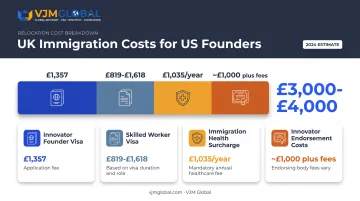
- Innovator Founder visa (applied from outside the UK): £1,357
- Skilled Worker visa (up to 3 years, outside UK): £819-£1,618 depending on duration
- Immigration Health Surcharge: £1,035 per year for standard applicants
Add Innovator endorsement costs (roughly £1,000 plus progress-meeting fees) and legal counsel, and visa-related spending alone can exceed £3,000-£4,000 before you've hired anyone.
Registered UK Office Address
UK law requires every company to list a physical UK registered office address. A US home address simply doesn't qualify. This forces most American founders into a paid virtual office or registered agent service, typically £39-£190 per year depending on features like mail scanning and forwarding.
Banking & Currency Conversion
Opening a UK business bank account as a non-resident is harder than it looks. Traditional banks like Lloyds require a UK-resident director with a UK mobile number. Fintech providers such as Wise are generally more accessible to US-based founders, offering UK account details without an in-person visit.
Ongoing costs matter too. Wiring funds from a US account into a UK one triggers FX spreads and transfer charges, and these fees compound the longer you operate.
Professional & Cross-Border Compliance Support
Working with disconnected US and UK advisors often creates costly gaps: missed filings, duplicated work, or conflicting guidance on ownership structure. One team that knows both frameworks cuts those missteps.
VJM Global supports American founders with UK company formation, registered address arrangements, and ongoing accounting and tax compliance, so formation and filing stay aligned from day one.
Cost Breakdown of Starting a UK Business
The initial registration fee is just the entry point. Here's the fuller picture of what a US founder actually pays across the first year and beyond.
| Cost Category | Timing | What's Included |
|---|---|---|
| Company registration | One-time | Companies House fee (£100 online), plus agent fee if used |
| Registered office / virtual address | Recurring (annual) | Required UK address service, since a US address won't work |
| Visa & immigration (if relocating) | One-time / periodic | Application fees, health surcharge, legal counsel |
| Banking setup & currency conversion | One-time + recurring | Account opening support, ongoing FX fees on transfers |
| Accounting, tax & compliance | Recurring | UK Corporation Tax/VAT filing plus US-side FBAR/FATCA coordination |
| Legal & professional fees | One-time / periodic | Shareholder agreements, contracts, IP registration |
A few line items stand out:
- Confirmation statements run £50 annually online, a small but easy-to-forget recurring cost
- Shareholder agreements often start around £400 for a basic version, with customized drafts costing several hundred pounds more
- US persons owning a foreign company still carry FBAR and FATCA reporting obligations regardless of where the business operates
The recurring line items are where most founders underbudget. A one-time registration fee feels manageable; it's the annual address renewal, accountant retainer, and dual-country filing that add up over a three-year horizon.
Extra Costs & Considerations Unique to US Entrepreneurs
American founders carry compliance obligations that UK-only entrepreneurs never have to think about.
US reporting obligations. Owning a UK company doesn't exempt a US citizen from IRS reporting. Key filings include:
- FBAR: required once aggregate foreign accounts exceed $10,000 at any point in the year
- FATCA Form 8938: separate thresholds from FBAR
- Form 5471: can apply once ownership hits 10% of a foreign corporation
Budget for a specialist accountant who understands both US and UK systems. Generic single-country advisors frequently miss one side entirely.
Currency exchange and wire fees. Funding your UK company from a US account isn't free. Between FX spreads and wire charges, banks can add anywhere from a few pounds to over £25 per transfer. These costs recur every time you move money, so treat them as ongoing operating expenses—not only a one-time capital injection.
Remote director and nominee services. If no founder lives in the UK, banking and admin often run more smoothly with a UK-based nominee director or registered agent. Many American founders only discover this recurring cost when a bank or supplier asks for a UK point of contact they don't have.
How to Minimize Costs & Where Professional Support Helps
You can control most of this budget with a few deliberate choices.
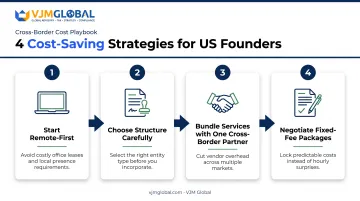
- Start remote-first. Use a virtual UK registered office instead of leasing physical space until you've proven demand. Leasing before you need it is one of the fastest ways to burn cash unnecessarily.
- Choose your structure carefully. If your business model allows fully remote operation, stay UK Ltd-registered without relocating. This avoids triggering visa and immigration costs you don't actually need.
- Bundle services with one cross-border partner. A single firm for formation, registered address, and ongoing accounting and tax compliance usually costs less than separate UK and US advisors. VJM Global, for example, has worked with 500+ American business owners and 250+ UK businesses, so US reporting and UK filing sit in one engagement.
- Negotiate fixed-fee packages. Shop around for accountants and legal counsel, and push for fixed-fee arrangements over hourly billing wherever possible. Hourly rates on cross-border work have a habit of spiraling once questions start crossing jurisdictions.
Frequently Asked Questions
Can a US citizen start a business in the UK?
Yes. US citizens can register a UK Ltd company without needing UK residency. A visa only becomes necessary if you plan to physically live and work in the UK to run the business.
How much does it cost to start a business in the UK?
Entry-level remote setups run around £189-£340 ($255-$459), while visa-sponsored setups with a physical presence can exceed £10,760 ($14,536). US founders often pay more due to registered address, banking, and dual-country compliance needs.
Is starting a business in the UK worth it?
The UK offers strong market access, a favourable tax treaty with the US, and a straightforward incorporation process. Weigh that against the added cross-border compliance costs, which are manageable but real.
Do I need a visa to start a business in the UK as a US citizen?
No, not for remote ownership. A visa is only required if you're physically relocating to run the business day-to-day inside the UK.
Can a non-UK resident open a business bank account in the UK?
It's possible but can be difficult without a UK address or an in-person visit. Working with a UK-based formation or accounting partner often makes this easier.
What is the cheapest way to register a company in the UK from the US?
Online Companies House registration paired with a low-cost formation agent and a virtual registered office is the most budget-friendly route, typically landing in the £189-£340 range for the first year.