Compared to Germany or France, entry barriers are lower. Latvia also offers a Startup Visa route for founders who eventually want to relocate. Many Indians exploring this aren't large corporates — they're IT exporters, import-export traders, pharma distributors, and SMEs testing an EU foothold.
This guide walks through entity types, real costs, registration steps, and compliance — from the perspective of an Indian founder sitting in Mumbai, Bengaluru, or Delhi, not a Latvian resident.
Key Takeaways
- Latvia permits 100% foreign ownership with no local director requirement
- The SIA (private limited company) needs EUR 2,800 share capital, or less under the reduced-capital option
- Corporate tax is 0% on reinvested profits, 20% only when profits are distributed
- Commercial registration itself can move fast; bank account approval is usually the real bottleneck for Indian founders
What Does Starting a Business in Latvia from India Involve?
Starting a business in Latvia from India means an Indian citizen or company incorporating a legal entity in Latvia to trade, invest, or hire within the EU, without necessarily relocating.
There are two broad paths:
- Fully remote incorporation and operation: you register the entity, open a bank account, and run everything from India
- Incorporation followed by relocation: via the Startup Visa or another residence permit, if you plan to move to Latvia
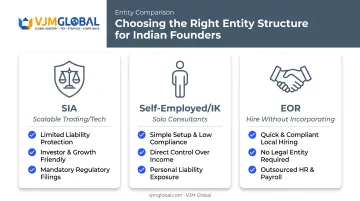
Indian founders typically pick from three structures:
- SIA (Sabiedrība ar ierobežotu atbildību): the standard limited liability company, suited for scalable trading or tech businesses
- Self-employed/IK registration: for solo consultants with minimal overhead
- Employer of Record (EOR): for companies that just want to hire in Latvia without incorporating anything at all
What to Know Before You Start a Business in Latvia as an Indian
Before you incorporate, get clear on the practical friction: how much travel, paperwork, and waiting is actually involved.
Physical Presence: Is It Required?
Latvia's Register of Enterprises allows electronic signing of incorporation documents with a secure e-signature. A 2025 Ministry of Justice e-service also lets an eligible single founder generate and sign establishment documents digitally in minutes. Company filing itself does not require a flight to Riga.
Bank KYC is a separate matter. Banks apply risk-based due diligence independently of the Register, and there's no fixed regulatory turnaround time — some non-resident applicants clear quickly, while others face weeks of document requests.
Documentation from India
Expect to prepare:
- Passport copy (valid, clear scan)
- Proof of address (bank statement or utility bill)
- Apostilled or notarised founder documents, including any power of attorney
India is a member of the Hague Apostille Convention, so most documents (including powers of attorney) can be apostilled through Indian authorities before use in Latvia. Skipping this step is the single most common cause of registration delays.
Remote-First vs. EU-Market-First
Ask yourself honestly:
- Do you need physical EU presence (logistics, warehousing, on-site staff)?
- Is the model fully remote (IT services, software exports)?
- Will Latvia be mainly a legal base while operations stay in India?
- Or are you building a genuine EU/Latvia-facing business?
The answer shapes everything from entity choice to whether you'll ever need a residence permit.
Why Start a Business in Latvia? (When It Makes Sense for Indian Founders)
Latvia isn't automatically the right EU entry point for every Indian founder. It makes sense under specific conditions.
The tax structure rewards reinvestment. Latvia's State Revenue Service confirms corporate income tax is 0% on reinvested profit, with the 20% rate applying only when profits are distributed as dividends. For a bootstrapped founder ploughing revenue back into growth, that's meaningfully different from India's flat corporate tax regime.
Other reasons this route works well:
- Single entity, full market access: an SIA gives you EU, Eurozone, and Schengen market access from one low-cost registration
- Lower operating costs than Western Europe: office space, staff, and compliance overheads run cheaper than Germany or the Netherlands
- Sector fit: IT/software exports, pharma distribution, and textiles all map well onto existing India-Latvia trade patterns and Indian founder strengths
- Startup Visa route: Startup Latvia's official programme allows up to five founders per company a temporary residence permit valid for up to three years, if relocation is genuinely on the table
Latvia works best when you have a remote-friendly business model, want EU credibility without EU-scale bureaucracy, and don't need Western European market density on day one.
Early Decisions That Matter for Indian Entrepreneurs
Most delays Indian founders experience have nothing to do with effort. They come from underestimating real costs, capital rules, residency assumptions, and how money moves out of India.
Getting the Real Cost Picture
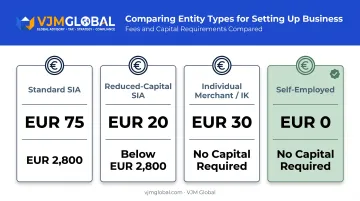
Official registration fees are modest:
| Entity type | Registration fee | Capital required |
|---|---|---|
| Standard SIA | EUR 75 | EUR 2,800 minimum |
| Reduced-capital SIA | EUR 20 | Below EUR 2,800 |
| Individual merchant (IK) | EUR 30 | None |
| Self-employed | EUR 0 | None |
Latvia's Register of Enterprises publishes these as the current state fees. Notary costs, a registered address service, and accounting setup aren't part of this official schedule. Budget separately for those and get quotes upfront rather than assuming a fixed figure.
The Micro-Capital Trap
A reduced-capital SIA sounds attractive, but it comes with a condition many founders miss: the company must allocate at least 25% of annual profit to a mandatory reserve until capital reaches EUR 2,800. If you're planning to distribute early profits, this restriction can catch you off guard.
Do You Actually Need a Residence Permit?
Short answer: no, not if you're running the business remotely from India. A residence permit only becomes relevant if you plan to physically relocate. Many Indian founders assume incorporation and relocation are bundled — they aren't.
Moving Money from India to Latvia
Under RBI's Liberalised Remittance Scheme, resident Indians can remit up to USD 250,000 per financial year for permitted purposes, as confirmed by the RBI's official FAQ.
Funding overseas share capital isn't just an LRS matter. It also falls under India's Overseas Investment framework, which distinguishes direct investment from portfolio investment. Getting this classification wrong at the outset creates compliance headaches later.
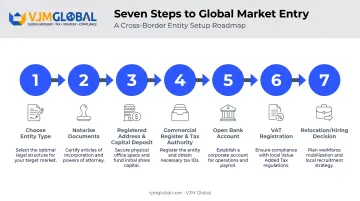
How to Start a Business in Latvia from India – Step by Step
The biggest mistake Indian founders make? Treating bank account applications as an afterthought instead of a parallel track from day one.
Step 1 – Choose the Right Entity Type
For a remote Indian founder, the SIA is usually the safer long-term choice over self-employed status.
- SIA: Limited liability, credible with EU banks and clients, scalable
- IK/self-employed: Cheap and fast, but no liability protection
- EOR arrangement: No entity at all: useful if you only need to hire, not trade
Common miss: registering as self-employed to save money, then having to re-register as an SIA once the business scales and clients demand a proper corporate entity.
Step 2 – Prepare and Notarise Documents from India
You'll typically need:
- Passport copy
- Articles of association
- Founder's decision/resolution
- Proof of address
Indian-issued documents generally require apostille certification before Latvian authorities will accept them. Submit non-apostilled paperwork, and expect your registration timeline to stretch by weeks, not days.
Step 3 – Secure a Registered Address and Deposit Share Capital
Every SIA needs a legal registered address in Latvia. A residential address in India will not work, even on paper. Virtual office providers fill this gap for non-resident founders.
You'll also need to deposit share capital (EUR 2,800, or less under the reduced-capital rules) into a temporary bank account. Route this transfer under RBI's remittance framework, keeping documentation clean for both Indian and Latvian compliance checks.
Step 4 – Register with the Commercial Register and Tax Authority
File with Uzņēmumu reģistrs (the Register of Enterprises) to receive your registration number. Reduced-capital SIA filings can move in 1-3 working days for a single founder. Once registered, you'll need to register with VID (the State Revenue Service) as a taxpayer.
Common miss: defaulting to standard corporate tax status without checking whether a micro-enterprise or SME VAT scheme fits your revenue profile better.
Step 5 – Open a Latvian Business Bank Account
This is where non-resident Indian founders lose the most time. Banks assess account purpose, expected transaction volumes, source of funds, and your connection to Latvia, all under risk-based KYC guidance from the Bank of Latvia.
Common miss: assuming this step takes days. Realistically, plan for several weeks and have your business plan, source-of-funds documentation, and company paperwork ready before you apply, not after.
Step 6 – Register for VAT and Set Up Compliance
Latvia's national VAT threshold sits at EUR 50,000 annually, per the European Commission's SME VAT rules page for Latvia. Below that, you may qualify for a simplified scheme. Bookkeeping obligations start from day one, regardless of turnover.

Coordinating a foreign registered address, a local accountant, tax registration, and bank compliance at the same time is hard to manage alone. VJM Global supports Indian founders with entity formation plus FEMA and RBI advisory on capital sent abroad, so you are not juggling disconnected local agents.
Step 7 – Decide on Relocation, Hiring, or Remote Operation
Three paths from here:
- Stay remote: run the SIA entirely from India, no permit needed
- Relocate via Startup Visa: up to five founders, three-year residence permit, if physical presence in Latvia is genuinely part of your plan
- Use EOR instead of incorporating: if your only need is hiring a Latvian employee, a full SIA might be overkill
Common miss: incorporating a full company when an Employer of Record arrangement would have met the actual business need at a fraction of the complexity.
Conclusion
Starting a business in Latvia from India is achievable without ever relocating. 100% foreign ownership and no local director requirement remove two of the biggest hurdles other EU jurisdictions impose.
Your timeline depends on apostille compliance, document preparation, and bank account approval more than on the registration itself. Get those three right, and the rest moves quickly.
Given the number of moving pieces across two regulatory systems, working with a firm experienced in cross-border formation and FEMA/ODI advisory, such as VJM Global, reduces the friction of handling Latvian formation and India-side FEMA/ODI compliance remotely.
Frequently Asked Questions
How much does it cost to start a business in Latvia?
Registration fees range from EUR 0 for self-employed status to EUR 75 for a standard SIA, plus EUR 2,800 in share capital (or less under the reduced-capital option). Notary, address, and accounting costs are additional and vary by provider.
What business can I start in Latvia as an Indian?
IT/software services, import-export trade, pharma distribution, and logistics all fit well given existing India-Latvia trade patterns. Sector choice should align with whether your model needs physical EU presence or can run remotely.
Is it easy for Indian citizens to obtain permanent residency (PR) in Latvia?
Not automatically. Business investment or Startup Visa routes grant temporary residence permits, while EU long-term-resident status generally requires five years of continuous, lawful residence and a separate application.
Which jobs are in high demand in Latvia?
Construction trades, metal and machinery professionals, and healthcare workers show notable shortages, according to EURES labour market data. IT and multilingual professionals also remain sought after for founders hiring locally.
Are Latvians friendly to foreigners?
Latvia's business culture is formal but professional, with English widely used in business and urban settings. Foreign investors are generally welcomed, though relationships build gradually rather than instantly.