Introduction
US entrepreneurs eyeing Africa often hit the same walls: crowded hubs, heavy competition, and entry rules that eat time before revenue. Malawi is drawing a different crowd—agribusiness investors, import/export traders, NGOs pivoting to commercial models, and diaspora founders—for low competition and real trade access.
Malawi's AGOA eligibility, SADC and COMESA membership, and a stable political climate make it a practical entry point into regional markets, not just a single country of roughly 20 million people. Government incentives for agro-processing, mining, and tourism add to the appeal.
This guide walks US-based founders through entity types, registration, taxes, and compliance for starting a business in Malawi — step by step, with the caveats that actually matter.
Key Takeaways
- Register online via CRIPC’s MBRS portal for about K75,000 (local) or K250,000 (foreign/external company)
- Corporate tax is 30%; VAT is set near 17.5%
- No US–Malawi tax treaty exists, so plan cross-border profit repatriation deliberately
- Director residency and capital-deposit rules are often overstated online; confirm with CRIPC and MITC before budgeting
- A cross-border compliance partner cuts costly registration and tax missteps during setup
What Is a Malawi-Registered Business (From a US Founder's Perspective)?
A Malawi-registered business is a legally incorporated entity, owned or co-owned by a US-based founder, operating under Malawian company law, typically through the Companies Registrations & Intellectual Property (CRIPC) office.
What matters is real market access: agriculture, tourism, mining, and manufacturing opportunities that remain underdeveloped compared to larger African economies.
Two common structures dominate:
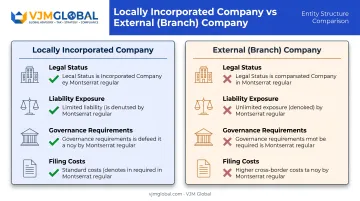
- A locally incorporated Limited Liability Company: a separate legal entity under Malawian law
- An External (branch) Company: an extension of the US parent, registered to operate in Malawi
Owner-operated ventures and joint ventures with local directors both use these structures, but the choice affects governance, liability, and filing costs differently.
What to Know Before You Start a Business in Malawi from the USA
Whether Malawi is the right market depends on your sector and risk appetite. A few operational realities should shape that call before you file anything.
Managing From a Distance
Malawi sits several hours ahead of US time zones, and reliable internet outside major cities can be inconsistent. Founders who plan to run operations entirely from the US, without ever visiting or hiring local leadership, tend to hit friction fast.
Local Directors and On-Ground Trust
Malawian company practice generally expects at least one natural-person director, and many foreign-owned structures involve resident directors or partners for practical reasons: banking, licensing follow-ups, and day-to-day oversight. Treat the local director relationship as something to build carefully over time.
Realistic Timelines
Online registration through MBRS can move quickly once documents are ready. But:
- Sector licensing (mining, energy, food processing) adds weeks to months
- Bank account opening often lags behind incorporation
- Revenue rarely starts flowing in the first 60-90 days
Sector Knowledge Requirements
Import/export and general trading ventures usually move faster than agro-processing or mining, which need technical expertise, environmental approvals, and longer capital cycles—plan timeline and funding around the heavier path if that is your sector.

Why Start a Business in Malawi from the USA? (When It Makes Sense)
Malawi entry makes sense under specific conditions, not automatically for every founder.
Conditions that favor entry:
- Trade access: Malawi remains AGOA-eligible for textiles and apparel and can use COMESA tariff-free treatment on qualifying originating goods
- Underdeveloped sectors: Agro-processing, mining, and tourism still have room for new entrants and thinner local competition
- Investment incentives: Export Processing Zone (EPZ) status and duty exemptions exist for qualifying investments
- Workforce economics: A young, cost-competitive labor pool supports labor-intensive operations
- Export evidence: Malawi exported roughly $54 million in shelled groundnuts and $70 million in black tea in 2023 (World Bank trade data), showing agricultural export channels already function
That said, tourism and agro-processing are government priorities, not guaranteed profit centers. Demand, land access, and licensing still need project-level validation before you commit capital.
Early Decisions That Matter When Entering Malawi from the USA
The costliest mistakes usually come from underestimating regulatory hurdles and capital requirements.
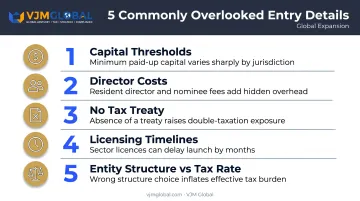
Commonly overlooked details:
- Capital thresholds – Malawi investment guidance links a US$50,000 figure to obtaining an MITC investment certificate. Don't assume this applies uniformly; confirm the current threshold with MITC for your specific project.
- Director costs – Trustworthy local directors or partners bring real compensation and relationship-management costs beyond any statutory minimum.
- No tax treaty – The US and Malawi have no Double Taxation Avoidance Agreement. Malawi is absent from the IRS list of US income tax treaties, so profit repatriation needs separate US foreign-tax-credit planning.
- Licensing timelines – Regulated sectors like mining now fall under the Mining and Minerals Regulatory Authority, established under the 2023 Mines and Minerals Act. Budget extra months for these approvals.
- Entity structure vs. tax rate – Older guidance cited a 35% branch tax versus 30% for local companies. Current MRA materials suggest this gap may have narrowed to a flat 30%. Verify directly with MRA before assuming either rate applies.
How to Start a Business in Malawi from the USA – Step by Step
Cross-border entry works best as a staged process. Common mistakes include skipping director due diligence, underestimating capital rules, and ignoring double-taxation exposure until after money has moved.
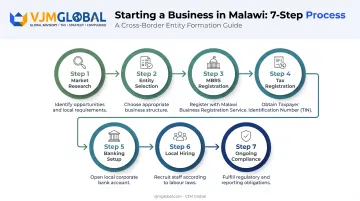
Step 1 – Identify the Market Opportunity and Entry Sector
Research promising sectors through the Malawi Investment and Trade Centre (MITC), which prioritizes agro-processing, pharma distribution, renewable energy, and tourism. Validate demand through local contacts before committing.
Common miss: Entering a sector without confirming import/export or licensing restrictions first.
Step 2 – Choose Your Entity Type and Structure
Decide between a locally incorporated company and an external (branch) company. Factor in governance requirements and any resident-director expectations for your structure.
Common miss: Defaulting to a branch structure without checking current tax implications. This choice now hinges more on liability and banking than on a fixed rate gap.
Step 3 – Register the Company Online via MBRS
- Create an account on the MBRS online registration portal
- Reserve your company name (a separate fee applies)
- Upload director/shareholder consents and constitutional documents
- Pay the registration fee — roughly K75,000 for a local company or K250,000 for a foreign company
- Receive your incorporation certificate
Common miss: Registering without print/scan access ready, which stalls document uploads mid-process.
Step 4 – Register for Tax and Regulatory Compliance
Obtain a Tax Identification Number from the Malawi Revenue Authority and register for VAT once you cross the applicable turnover threshold. Apply for sector-specific licenses — MERA for energy, MMRA for mining.
Common miss: Overlooking withholding tax obligations on dividends, interest, or technical service fees paid to the US parent.
Step 5 – Open Banking and Financial Infrastructure
Open a corporate account in Malawi under the company's name. Because no DTAA exists, build a repatriation process around documented shareholder loans, service agreements, and dividend approvals that a bank can validate.
Common miss: Assuming US banking relationships transfer smoothly. They generally don't — Malawian banks want their own source-of-funds and compliance evidence.
Step 6 – Build Local Operations and Hire Support
Recruit local staff or a trusted on-ground manager to bridge time zone and cultural gaps. Malawi's Employment Act governs working hours, leave, overtime, and termination. Map every hire to the correct wage category rather than assuming a flat national figure.
Common miss: Relying purely on remote management without a dependable local point of contact.
Step 7 – Get Ongoing Compliance and Advisory Support
Malawi's rules keep moving. VAT thresholds and rates have already changed twice in recent releases, and wage orders update periodically. Treating registration as a one-time task, rather than an ongoing compliance relationship, is where many founders lose momentum.
VJM Global supports entity formation, tax registration, and ongoing compliance across African markets including Kenya, Nigeria, South Africa, and Ghana, using each country's own regulators and statutes. For Malawi entry, the same discipline applies: confirm current local rules directly instead of relying on outdated checklists.
Common miss: Treating incorporation as the finish line instead of the starting point for years of recurring filings.
Conclusion
Starting a business in Malawi from the USA hinges on getting director arrangements, capital planning, and tax structuring right from day one. How fast you click through an online registration form matters far less.
Market research, realistic timelines, and trusted local execution matter more than speed of entry. Malawi's rules around VAT, wages, and licensing have shifted more than once in recent years, so what worked for another founder last year may already be outdated.
Stay compliant and revisit your structure as Malawi's regulatory and economic environment evolves—that is what sustains the business after launch.
Frequently Asked Questions
How much does it cost to register a business in Malawi?
Registration fees run around K75,000 for a locally incorporated company and K250,000 for a foreign/external company, under Malawi's current fee schedule. Add name reservation costs, licensing fees, and any MITC investment certificate requirements on top.
Which business is easy to start in Malawi?
General trading, import/export, and small-scale retail carry fewer regulatory hurdles than mining or energy. Agro-processing sits in between: straightforward to register, but it needs more operational groundwork than pure trading.
Which small business is most profitable in Malawi?
Agriculture-linked ventures tied to groundnuts and tea have the strongest documented export track record. Tourism and hospitality are also official government priorities, though profitability depends heavily on location and demand validation.
Do I need a Malawian partner or director to start a business there as a foreigner?
Malawi requires at least one natural-person director. Residency rules for that director are not consistently confirmed on official CRIPC pages, so verify the exact requirement before finalizing your structure.
Is there a tax treaty between the US and Malawi to avoid double taxation?
No. Malawi doesn't appear on the IRS's list of US income tax treaties, meaning Malawi-source income faces domestic withholding without treaty relief. US founders should plan separately for foreign-tax-credit eligibility.
How long does company registration take in Malawi?
Online registration through the CRIPC system can move quickly once documents are ready, though no official source confirms a fixed processing window. Licensing and bank account setup typically add weeks beyond incorporation itself.