This interest isn't limited to large corporates. Indian SMEs, export-import traders, and mining or agri-equipment suppliers are all exploring Zimbabwe as a market, not just a customer base.
This guide walks Indian residents and companies through legally establishing and operating a small business in Zimbabwe, step by step.
TL;DR
- Foreign investors can form a Private Limited, PBC, Partnership, or Public Limited company
- A ZIDA licence is mandatory for foreign-owned entities before operations begin
- Name reservation, incorporation, ZIMRA tax registration, and banking each have separate fees
- Full setup usually takes several weeks once ZIDA licensing and banking are included
- Cross-border support helps first-time investors avoid costly filing errors
What Does Starting a Business in Zimbabwe from India Actually Involve?
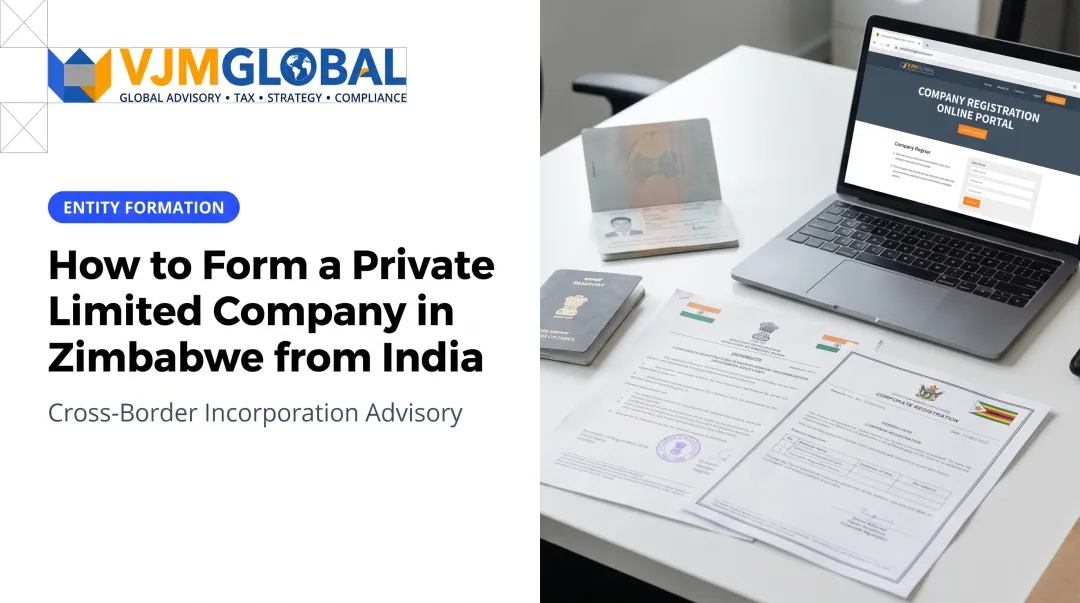
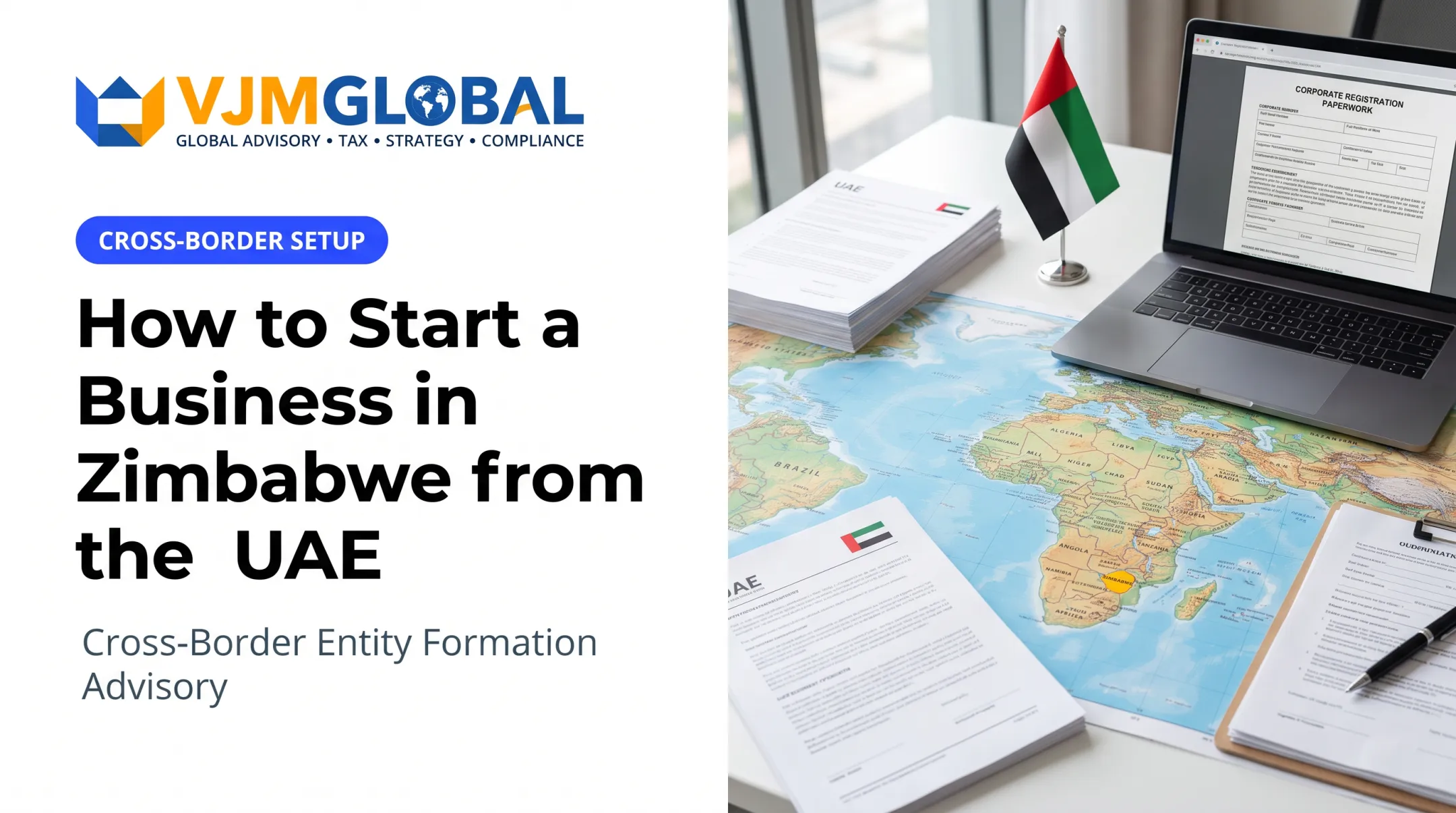
It means an Indian resident or company incorporating and operating a legally recognised entity in Zimbabwe under the Companies and Other Business Entities Act (Chapter 24:31).
That's a broader undertaking than simply exporting goods. It covers:
- Company registration with the Registrar (via the CIPZ portal)
- Tax registration with ZIMRA
- Obtaining a foreign investment licence from ZIDA
Structures available to foreign investors include:
| Structure | Best For |
|---|---|
| Private Limited Company (Pvt Ltd) | Most foreign investors; broad ownership flexibility |
| Private Business Corporation (PBC) | Smaller-scale, simpler ventures |
| Partnership | Joint operations with local or foreign partners |
| Public Limited Company | Larger capital-raising ventures |

The Companies and Other Business Entities Act recognises these categories along with foreign companies and co-operatives, so the list of viable structures is not limited to just these four.
Which structure you choose often depends on how you plan to operate. Most Indian investors in Zimbabwe cluster around two models.
Common Business Models Indians Pursue in Zimbabwe
Two models dominate:
- Import-export/trading — minerals, pharmaceuticals, machinery, and agri-inputs moving between the two countries
- Manufacturing and value-addition — pharma, textiles, food processing, and mining-services ventures that add local value rather than just shipping raw goods
Why Zimbabwe Makes Sense for Indian Entrepreneurs
Zimbabwe isn't a guaranteed win. It's a sound choice under the right conditions.
Zimbabwe's GDP reached $51.22 billion in 2025, with annual growth of 8.1%, according to World Bank country data.
Mining alone accounts for 12% of GDP, per ZIDA's mining sector overview, making it the economy's second most important sector.
Trade between the two countries is growing too. Bilateral trade reached $250 million, according to a December 2025 Herald report on Harare trade talks. India's commercial links with Zimbabwe span textiles, minerals, and metals.

Practical advantages for Indian founders:
- English is the official language, removing a major operational barrier
- SADC and COMESA membership opens a wider regional market beyond Zimbabwe
- Many sectors allow full foreign ownership, subject to sector-specific ZIDA licensing
- Underdeveloped sectors mean lower competition for early movers
What to Know Before You Start
Many Indian founders underestimate the on-ground complexity of a market they haven't operated in before. Three areas cause the most friction:
- Currency and forex controls. Zimbabwe runs a multi-currency system. The Reserve Bank of Zimbabwe's August 2025 Monetary Policy Statement requires traders to make goods and services available in both ZiG and USD at a floating, market-determined rate. Profit repatriation works through normal banking channels and withholding tax—not an instant or frictionless transfer.
- Infrastructure gaps. Power outages cost Zimbabwe's mining sector roughly $500 million in lost 2024 revenue, per Reuters. If you need continuous power, backup planning isn't optional.
- Local representation. A local director or resident representative typically simplifies compliance, banking, and day-to-day operations.

Build realistic timelines. Customs clearance, ZIDA licensing, and bank account setup add weeks—not days—to your path to profitability.
How to Start a Small Business in Zimbabwe from India – Step by Step
Skipping ZIDA licensing or local compliance steps is the most common, and costly, mistake Indian investors make. Here's the practical sequence.
Step 1 – Validate the Opportunity and Choose Your Sector
Research demand in your target sector before committing capital. Mining services, manufacturing, and import-export each have different entry barriers and competitive dynamics.
A common miss: assuming Indian pricing and margins translate directly to Zimbabwe. Forex volatility changes the math fast, and what works at home may not hold up once currency swings enter the picture.
Step 2 – Choose the Right Entity Structure and Reserve a Name
Compare Pvt Ltd against PBC based on your capital and ownership plans. Most foreign investors lean towards Pvt Ltd for its flexibility.
Next, submit your proposed company names (ZIDA's checklist for private companies asks for five possible names) to the Registrar for a name-availability search through the CIPZ portal.
Once you get the availability notice, you must submit your Memorandum and Articles, registered-office address, and directors/secretaries list within 30 days, according to the CIPZ registration portal. Miss that window, and you start over.
Step 3 – Complete Incorporation and Obtain a ZIDA License
You'll need to prepare:
- CR6 — registered address documentation
- CR14 — directors and secretaries listing (confirm current requirement with CIPZ, as form requirements can shift)
- Memorandum and Articles of Association
- ID and proof of residence for all directors and shareholders
Foreign-owned entities must also secure a Foreign Investment License from ZIDA before operations can legally begin.
For a General Investment License, expect a non-refundable $577.50 application fee plus a $4,620 licence fee on approval, per ZIDA's licensing checklist. ZIDA states licences are typically issued within seven days, though this is a service commitment rather than a statutory guarantee.

Step 4 – Register for Tax and Statutory Compliance
Register with ZIMRA for a Business Partner Number/TIN, VAT (compulsory once taxable supplies exceed $25,000 in 12 months), income tax, and — if hiring — PAYE and NSSA.
Key deadlines:
- PAYE registration: within 14 days of becoming an employer
- PAYE remittance: within 10 days after month-end
- NSSA registration: within 30 days of becoming an employer
Common miss: delaying your tax clearance certificate. Without it, you can't bid on tenders or government contracts, which shuts out an entire category of business opportunity.
Step 5 – Set Up Banking, Forex, and Local Operations
Open a corporate bank account. Banks typically want your incorporation certificate, Memorandum and Articles, board resolution, directors' identification, and business PIN.
Plan for forex controls upfront. Dividends and disinvestment proceeds are remittable, but only through normal banking channels and subject to withholding tax — build this into your cash flow projections, not as an afterthought.
Decide early whether you'll hire local staff and partners or run things remotely through a local representative. This decision shapes almost everything else about your operating model.
Step 6 – Get Professional Support for Cross-Border Compliance
First-time investors in an unfamiliar regulatory system make avoidable errors: wrong forms, missed deadlines, incomplete filings. Engaging a firm experienced in multi-jurisdiction entity formation cuts these registration errors and delays.
VJM Global's cross-border team helps companies of any origin with entity formation, compliance, and tax registration across Africa and 100+ countries, using each market's own regulators and statutory instruments. The process is scoped to Zimbabwe's requirements, not a generic template from another jurisdiction.
Conclusion
Starting a business in Zimbabwe from India requires methodical entity choice, correct ZIDA licensing, and first-pass tax compliance. Rushing any of these steps tends to cost more time later than it saves upfront.
Currency and forex realities matter more than speed of launch. A business that opens fast but hasn't planned for repatriation friction will struggle more than one that took an extra month to get banking right.
Zimbabwe's investment and forex policies continue to evolve. Long-term success depends on staying current with those changes, not just getting the initial registration right. If you want entity choice, ZIDA licensing, tax filings, and banking setup handled as one process—not three disconnected workstreams—VJM Global can support the India-to-Zimbabwe path end to end.
Frequently Asked Questions
What business is best to start in Zimbabwe?
Mining services, agricultural value-addition, manufacturing, and import-export consistently rank as strong sectors for Indian investors. The right choice depends on your existing supply chain relationships and capital.
What business can I start with $10,000 in Zimbabwe?
At this budget, trading or small-consignment import-export, agri-processing, and service-based ventures are realistic. Capital-intensive manufacturing or mining ventures typically need more capital.
How much does it cost to open a company in Zimbabwe?
Costs vary by entity type. Foreign-company registration carries a flat $1,100 fee, while a General Investment License adds $577.50 upfront plus $4,620 on approval. Local incorporation fees depend on the current Registrar tariff.
Can an Indian citizen own 100% of a company in Zimbabwe?
Most sectors permit full foreign ownership under a Pvt Ltd structure, subject to ZIDA licensing and any sector-specific reservations. Always check your specific sector before assuming unrestricted ownership.
How long does company registration take in Zimbabwe?
Individual stages typically take 3-6 working days, but this excludes ZIDA licensing and bank account setup, which take considerably longer. Budget for several weeks overall, not days.
Do I need to visit Zimbabwe to register a company?
Registration can often be handled remotely through local agents or consultants. However, a resident director is typically required, so you'll need someone with local standing even if you don't travel yourself.