
Introduction
The city you choose to launch in shapes everything: your access to investors, the talent pool you can hire from, the regulatory burden you'll carry, and the customers you can reach from day one. These factors combine to determine whether your business survives its first three years — or thrives beyond them.
The global picture has shifted. Cities outside Silicon Valley are actively competing for founders with tax incentives, faster registration processes, and government-backed startup programmes. Singapore grew its startup ecosystem by 26.7% in 2024. Dubai now ranks third globally for startup-friendliness.
India crossed 200,000 DPIIT-recognised startups by December 2025 — a sign that emerging markets are no longer playing catch-up.
This article covers seven of the best cities in the world to start a business, the criteria used to evaluate them, and what each city concretely offers in terms of setup ease, tax environment, and ecosystem maturity. Use it to match the right city to your industry, budget, and growth ambitions.
Key Takeaways
- San Francisco, New York, and London dominate global ecosystem rankings — but come with high operating costs and complex tax structures.
- Singapore and Dubai offer the fastest registration timelines and most tax-efficient structures for foreign founders.
- Bengaluru provides a massive talent base and competitive operational costs, with strong government incentives for eligible startups.
- Your ideal city depends on your industry — fintech founders lean toward Singapore, deep tech toward Tel Aviv, and IT services toward Bengaluru.
- In India especially, local compliance expertise is non-negotiable — entity structure, FEMA, and GST rules demand on-the-ground guidance.
What Makes a City Ideal for Starting a Business?
Five factors consistently separate business-friendly cities from the rest:
- Ease of registration — How long and how much does incorporation actually cost?
- Tax regime — Corporate rates, VAT/GST, capital gains treatment, and available incentives
- Access to funding — Density of VCs, angel networks, accelerators, and government co-investment schemes
- Talent availability — Skilled workforce depth, universities, and immigration flexibility for founders
- Regulatory environment — IP protection, FEMA-equivalent controls, labor laws, and anti-corruption frameworks
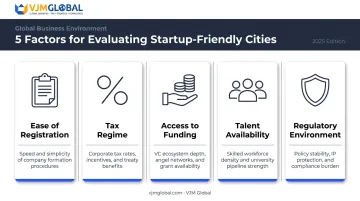
No single factor is sufficient on its own. A city with low taxes but no investor network puts an early-stage company at a disadvantage. A city with abundant capital but opaque registration processes wastes a founder's most valuable resource: time.
Beyond these fundamentals, industry alignment matters just as much as any single metric. A fintech startup has very different location priorities than a manufacturing business or a B2B SaaS company:
- Singapore suits fintech through its MAS regulatory sandbox and regional HQ infrastructure
- Dubai suits trade-based businesses through its free zones and logistics connectivity
- Bengaluru suits tech companies through its engineering talent density
The cities below were selected by cross-referencing StartupBlink's Global Startup Ecosystem Index 2026, the Multipolitan Startup Friendly Cities Index 2026, World Bank B-READY data, and tax competitiveness research from PwC and KPMG.
Best Cities in the World to Start a Business
These cities were selected based on ecosystem rankings, tax competitiveness, ease of registration, and quality of entrepreneurial infrastructure — not lifestyle appeal alone.
San Francisco, USA
StartupBlink ranks San Francisco #1 globally in its 2026 index, with over 17,000 startups indexed in its ecosystem. The region's VC density remains unmatched — proximity to Stanford, UC Berkeley, and a culture that treats failure as a data point rather than a career-ending makes it the default destination for AI, biotech, and deep tech founders.
That said, California is expensive and tax-heavy. Founders need to account for this clearly.
| Factor | Detail |
|---|---|
| Business Setup | LLC Articles of Organization: $70; Corporation Articles: $100. Online processing approximately 1 business day; expedited 24-hour handling costs $350. |
| Tax Environment | State corporate tax: 8.84% plus $800 minimum franchise tax. Personal income tax up to 13.3% for high earners. No preferential capital gains rate — gains taxed as ordinary income. |
| Key Industries | AI, SaaS, Biotech, Cleantech, Semiconductors |

Bottom line: Unbeatable for fundraising and network effects. Painful for cash-strapped early-stage companies managing California's tax obligations.
New York, USA
New York ranked #2 globally in StartupBlink's 2026 index with 11.6% year-on-year growth — the fastest among top-tier startup cities. Unlike San Francisco's tech-heavy concentration, New York's economy spans fintech, healthtech, adtech, fashion, and media, giving founders access to enterprise-level clients across multiple industries from the start.
| Factor | Detail |
|---|---|
| Business Setup | LLC filing: $200 state fee, plus a newspaper publication requirement (two newspapers, six consecutive weeks) and a $50 Certificate of Publication within 120 days. Corporation filing: $125. |
| Tax Environment | State business income tax: 6.5% (rising to 7.25% above $5 million threshold). NYC Business Corporation Tax: 8.85% for most non-financial corporations. NYC sales tax: 8.875% combined. |
| Key Industries | Fintech, Adtech, Healthtech, Fashion & Retail, Media |
Bottom line: New York's breadth is its defining advantage. Startups here can land enterprise contracts while simultaneously building consumer brands — something few other cities enable.
London, UK
London holds #3 globally in StartupBlink 2026, and its lead over other UK cities is substantial — its ecosystem score is 16 times higher than Manchester, the next-ranked UK city. For international founders, London offers something neither New York nor San Francisco can: a natural gateway to European talent, capital, and regulatory frameworks within an English-language environment.
The UK's FCA regulatory sandbox has made London the global benchmark for fintech regulation, attracting companies that want regulatory clarity before scaling internationally.
| Factor | Detail |
|---|---|
| Business Setup | Online Ltd registration via Companies House: £100, typically completed within 24 hours. |
| Tax Environment | Corporation tax: 25% above £250,000 profit; 19% at £50,000 or below; marginal relief applies between thresholds. Standard VAT: 20%. R&D merged scheme: 20% expenditure credit; R&D-intensive SMEs may access up to 186% deduction under ERIS. |
| Key Industries | Fintech, Insurtech, Creative Industries, Cybersecurity, Sustainability |
Bottom line: The £100 registration cost and 24-hour setup make London operationally accessible. The R&D tax relief schemes are genuinely competitive for tech and science-based businesses.
Singapore
Singapore entered the global top 10 for the first time in 2026 — ranked #10 in StartupBlink — driven by 26.7% ecosystem growth, the fastest among the top 20 globally. For foreign founders, it is Asia's most accessible launchpad: English is an official business language, incorporation takes days, and the government actively co-invests in early-stage companies.
The Startup SG Founder grant provides SGD 20,000–50,000 with a 1:1 matching ratio. Startup SG Equity co-invests up to SGD 2 million for general tech and SGD 12 million for deep tech.
| Factor | Detail |
|---|---|
| Business Setup | ACRA registration: SGD 315 total (SGD 15 name reservation + SGD 300 incorporation). Most applications approved quickly; complex cases up to 15 working days. A locally resident director is required. |
| Tax Environment | Corporate income tax: 17%. GST: 9% (since January 2024). Capital gains generally not taxed — though revenue-nature gains and certain foreign-asset disposals under Section 10L may still be taxable. |
| Key Industries | Fintech, E-commerce, Logistics, Biomedical Sciences, Regional HQ Operations |
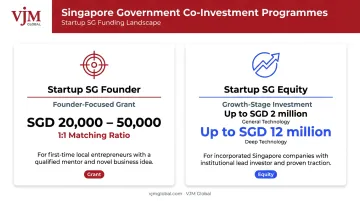
Bottom line: Singapore's combination of fast setup, co-investment grants, and 17% corporate tax makes it the pragmatic first choice for founders targeting Southeast Asian markets.
Dubai, UAE
Dubai ranked #3 in the Multipolitan Startup Friendly Cities Index 2026 and is the anchor business hub for the MEASA corridor. Its appeal is structural: more than 20 free zones allow 100% foreign ownership and full profit repatriation, with no personal income tax and a corporate rate that stays at 0% on qualifying income up to AED 375,000.
Important caveat: The 0% free zone rate applies only to Qualifying Income of a Qualifying Free Zone Person — meeting substance requirements, transfer-pricing compliance, and audit obligations. Other taxable income is taxed at 9%.
| Factor | Detail |
|---|---|
| Business Setup | DMCC free zone setup: AED 10,345–AED 84,515 depending on activity and visa count. DIFC fees vary by entity type and regulated activity. Mainland setup costs vary by activity and approvals required. |
| Tax Environment | Corporate tax: 0% on qualifying free zone income; 9% above AED 375,000 on other taxable income. VAT: 5%. No personal income tax, no capital gains tax. |
| Key Industries | Trade & Logistics, Real Estate, Fintech, Tourism & Hospitality, AI & Tech |
In practice: Dubai rewards trade-oriented, asset-light businesses. The free zone model genuinely delivers for the right company — but founders must verify qualifying income status before assuming the 0% rate applies to them.
Bengaluru, India
Bengaluru is India's undisputed startup capital. StartupBlink's ecosystem index lists 3,834 startup records for the city, and Tracxn's July 2026 tracker documents 56 unicorns headquartered there — the highest concentration outside the US and China.
Engineering talent density is a genuine competitive advantage: multinational technology companies, from global IT service firms to aerospace companies, have built their largest R&D teams here for decades.
India's broader context matters too. The country's nominal GDP stands at approximately $3.7 trillion and growing, with a young demographic increasingly transacting digitally.
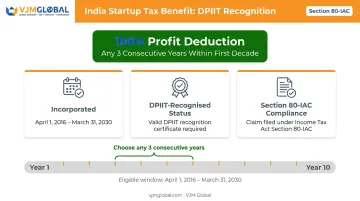
Government schemes — Startup India, Digital India, and DPIIT recognition — create meaningful tax and compliance advantages for eligible companies. DPIIT-recognised startups incorporated from April 1, 2016 through March 31, 2030 can claim a 100% profit deduction for any three consecutive years within their first decade, subject to Section 80-IAC conditions.
| Factor | Detail |
|---|---|
| Business Setup | Registration via MCA's SPICe+ portal. Costs vary with authorised capital, stamp duty, DSC, and professional fees — use MCA's ROC fee calculator for accurate estimates. LLP registration typically takes 10–15 days through VJM Global's process. |
| Tax Environment | Domestic companies: 25% base rate (turnover ≤ INR 400 crore) or 22% + surcharge + cess = 25.168% under Section 115BAA. Foreign companies: 35% base rate plus applicable surcharges and 4% cess. GST: 18% on most business services. |
| Key Industries | IT & Software, Business Process Outsourcing, Biotech, E-commerce, Space Tech |
Navigating India as a foreign founder requires more than reading a tax table. Entity structure selection alone — choosing between a Private Limited Company, LLP, Branch Office, or Liaison Office — carries significant implications for tax treatment, permitted activities, and FDI compliance under FEMA.
VJM Global has supported hundreds of US, UK, and Australian companies entering India, covering:
- Entity selection and structuring for FEMA compliance
- RBI filings and FDI documentation
- Ongoing GST compliance and transfer pricing advisory
- Back-office operations and financial reporting
Tel Aviv, Israel
Tel Aviv reached its highest global ranking in five years in 2026 — #7 globally in StartupBlink with 9.8% growth — cementing its "Startup Nation" reputation. The city produces more startups per capita than any other in the world, and much of that output traces back to military-grade technology development pipelines that convert defence-sector R&D into commercial products at a rate few ecosystems can match.
The Israel Innovation Authority's Startup Fund (updated July 2026) offers up to 60% funding and NIS 2 million at pre-seed, 50% and NIS 6 million at seed, and 30% and NIS 15 million at Series A, with private matching requirements.
| Factor | Detail |
|---|---|
| Business Setup | Registration via the Israeli Corporations Authority. Official process requires incorporation documents, shareholder declarations, and articles — no official average timeline is published. Foreign document requirements and sector-specific approvals require case review. |
| Tax Environment | Standard corporate income tax: 23%. Significant R&D grant programmes available through the Israel Innovation Authority across pre-seed to Series A stages. |
| Key Industries | Cybersecurity, AI & Machine Learning, Software & Data, Agritech, MedTech |
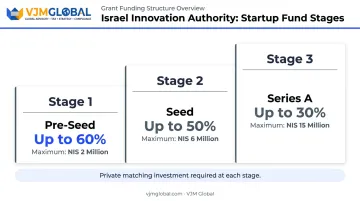
The verdict: Tel Aviv's small domestic market is a constraint, but its exit culture — backed by deep US VC relationships — makes it ideal for B2B tech and cybersecurity companies building for global markets from day one.
Conclusion
The highest-ranked ecosystem city is rarely the right city for every business. The right city is the one where your industry, capital requirements, target customers, and operational model align with what the local environment actually delivers.
Before committing to a location, evaluate scalability alongside setup conditions. A city that works for a five-person team may buckle under the demands of a 50-person operation. The questions worth asking before you sign anything:
- Does the regulatory environment evolve in ways that support growth, or create friction?
- Can the local talent pool realistically meet your Series A hiring needs?
- What is the true all-in cost of operating there, beyond the headline corporate tax rate?
For entrepreneurs and multinational companies exploring India — one of the fastest-growing markets on this list — the compliance landscape rewards preparation. VJM Global supports foreign companies entering India across the full setup and operations cycle: FDI structuring, entity registration, GST and tax compliance, FEMA advisory, payroll management, and back-office operations. With offices in Noida and New York, the team works across time zones to keep foreign businesses compliant from day one.
Frequently Asked Questions
What is the best city in the world to start a business?
San Francisco consistently ranks #1 globally for startup ecosystem quality per StartupBlink's global rankings. Singapore and Dubai rank significantly higher for ease of setup and tax efficiency, while New York and London offer broader access to capital and industry diversity. The best city depends on your sector and budget.
Which country is best for starting a business?
The USA, Singapore, UAE, and UK consistently rank among the top countries based on registration speed, regulatory transparency, and investor access. India is increasingly recognised as a compelling destination for foreign businesses due to its market size, engineering talent, and government startup incentive schemes.
What factors should I consider when choosing a city to start a business?
Five factors matter most: ease of company registration, corporate tax rates, access to funding and talent, startup ecosystem maturity, and alignment between city strengths and your specific industry.
Is India a good country for foreign entrepreneurs?
India offers a large consumer market, competitive operational costs, and schemes like DPIIT recognition that provide meaningful tax relief. Navigating entity structures, FEMA compliance, and GST obligations typically requires local professional support to avoid costly missteps.
What are the cheapest cities to start a business?
Bengaluru offers genuinely low operational costs — salaries, office space, and professional services are significantly cheaper than Western markets. Dubai free zones provide tax-free environments with streamlined registration. For digital-first businesses, Tallinn (Estonia) offers low-cost setup via the e-Residency programme.
How long does it take to register a company in the top startup cities?
Timelines vary: Singapore and the UK can complete registration in 1–3 business days. Dubai free zones typically take 1–2 weeks. India and the US generally require 1–4 weeks depending on entity type, documentation completeness, and state-level processing queues.