For Indian founders, NRIs, OCIs, startups, and exporters eyeing the US market, this document is often the first real step toward a US LLC. But it's rarely the only step that matters.
Many Indian business owners assume this filing works the same way as incorporating a private limited company back home, complete with a Certificate of Incorporation, PAN, and ROC filings. It doesn't. US formation runs on different rules, different agencies, and different follow-up requirements.
This guide covers what the certificate actually does, how to file it, what comes after approval, and where Indian tax and FEMA obligations enter the picture.
Key Takeaways
- A Certificate of Formation creates your LLC under state law; some states call it Articles of Organization instead.
- Filing is step one, not the finish line; an operating agreement, EIN, bank account, and ongoing compliance still follow.
- Indian ownership doesn’t remove FEMA, RBI reporting, or Indian tax obligations tied to the LLC.
- Fees, registered agent rules, and processing times vary by state—confirm with the relevant Secretary of State.
What Is a Certificate of Formation?
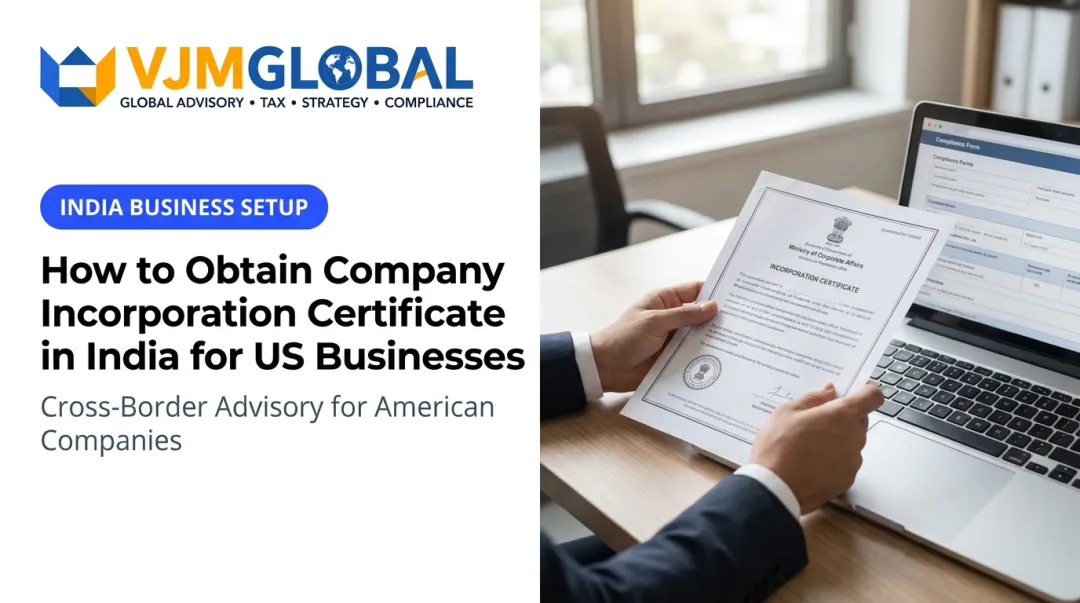
A Certificate of Formation is a public document filed with a US state authority to establish an LLC as a legal entity separate from its owners. Once approved, the LLC can enter contracts, open bank accounts, hold assets, and shield members from personal liability for business debts.
Not every state uses the same name for this filing. Delaware calls it a Certificate of Formation. Massachusetts uses Certificate of Organization. Florida, Wyoming, and Texas call it Articles of Organization. The names differ, but the legal function is identical: this filing is what brings the LLC into existence.

How It Differs from Other Documents
Founders frequently mix up formation paperwork with related documents. Here's the breakdown:
- Articles of Incorporation create a corporation, not an LLC. Saying you're "incorporating an LLC" is common shorthand, but technically you're "forming" or "organising" one.
- Operating Agreement is an internal contract governing ownership and management. It's not filed with the state.
- EIN is a federal tax ID issued by the IRS, separate from the state filing entirely.
- Certificate of Good Standing confirms an already-formed LLC is current on its obligations; it doesn't create anything new.
What Goes Into the Filing
Requirements vary by state, but most forms ask for:
- Legal LLC name with the required designator (LLC, L.L.C., or similar)
- Registered agent name and physical address in the formation state
- Principal business or mailing address, where required
- Business purpose and management structure (member-managed or manager-managed)
- Organiser signature
For Indian applicants, accuracy here matters more than it might seem. Your name, address, and ownership details on this filing need to match what appears later on your EIN application, bank forms, and tax filings. A spelling mismatch or inconsistent address between your passport and your formation documents can delay banking approval or trigger extra verification down the line.
One important caveat: the certificate itself doesn't get you an EIN, a business licence, a bank account, or automatic permission to operate in every state. It's the entity's birth certificate, nothing more.
How to Prepare and File the Certificate of Formation
The exact process depends on your chosen state and business structure. Always treat the relevant Secretary of State website as your primary source. Fees and rules change often.
Choose the State and Confirm the LLC Structure Fits
Before picking a state, weigh these factors:
- Where your actual customers, employees, or inventory are located
- Registered-agent availability and recurring compliance costs
- Privacy rules around member and manager disclosure
- Whether you'll need to register as a foreign LLC elsewhere anyway
Forming in Delaware or Wyoming doesn't excuse you from registering in a state where you actually conduct business. If you have staff, an office, or regular sales activity in California, for instance, you'll likely need foreign qualification there regardless of where you formed the LLC.
Confirm whether an LLC is even the right vehicle. Depending on your goals, alternatives like an Indian private limited company, an LLP, a US corporation, or a branch office might serve you better. There's no universal answer here; it depends on ownership structure, investor expectations, and where revenue will actually be earned.
Confirm the Name and Gather Required Details
Run a name availability search through your chosen state's business portal, and check for restricted words. Nevada, for example, requires special approval before using terms like "Bank," "Trust," or "University" in a business name.
Have this ready before filing:
- Proposed LLC name and backup options
- Business purpose and principal address
- Registered agent details
- Organizer and member/manager information
- Effective date (immediate or future-dated)
Indian founders should also check whether banks, the IRS, or formation agents require notarised, apostilled, or certified copies of identity and address documents. Requirements differ by institution, so confirm before you submit anything.
Appoint a Registered Agent
Your registered agent receives service of process and official state correspondence on the LLC's behalf. This isn't the same as a virtual office or mailing address. It must be a physical street address in the formation state, generally staffed during business hours.
As an Indian founder without a US address, you'll need a commercial registered agent service. Before committing, check their:
- Reliability for forwarding documents internationally
- Privacy protections for your personal information
- Renewal pricing (agent fees typically recur annually)
Submit the Filing and Pay the Fee
Most states accept filings online, by mail, or through an authorised formation service. The organizer signs and submits the certificate, then pays the applicable fee.
| State | Standard Filing Fee | Expedited Option | Certified Copy |
|---|---|---|---|
| Delaware | $110 | From $50 (24-hour) to $1,000 (one-hour) | $50 |
| Wyoming | $100 | $700–$1,400 same/next-day | ~$10 for 10 pages |
| Texas | $300 | $50–$750 depending on speed | $15 plus $1/page |

Fees are illustrative based on official state schedules and change periodically. Verify current amounts before filing.
Once you receive the approved certificate, review it line by line. Check the legal name, agent address, management designation, and effective date. Most states allow amendments if something's wrong, but catching errors early saves time later.
What the Approval Actually Means
Approval, whether it's a stamped certificate, filing number, or electronic acknowledgement, confirms your LLC legally exists. It does not confirm:
- Your federal tax classification
- Banking eligibility
- Licensing or foreign qualification status
- Compliance with Indian law
Legal, tax, and banking outcomes shift depending on your ownership structure, business activity, and any transactions flowing between the US LLC and an Indian entity.
What Happens After Approval?
Formation creates the entity. It doesn't make it operational. Here's what typically follows.
Adopt an Operating Agreement. This internal document should cover ownership percentages, capital contributions, management authority, voting rights, distributions, and what happens if a member wants out. It matters even more for multi-member LLCs or those with an Indian parent company involved.
Apply for an EIN. This is free directly through the IRS, and paid help is optional. Foreign applicants without a US Social Security Number take a different path. The IRS instructions for Form SS-4 note that applicants without a US address can't use the online EIN tool and must apply by phone or fax with the paper form.
Set up business banking. Expect to provide your formation documents, EIN confirmation, ownership details, and identity verification. Some banks also ask about source of funds. Remote account opening isn't guaranteed for every applicant; some banks still prefer an in-person visit.
Handle tax and related registrations. Depending on your state and activity, this could include:
- Sales tax registration (state-by-state, not automatic)
- Payroll tax accounts if you're hiring
- Industry-specific licences
- Business insurance
Track recurring obligations. These vary widely by state:
- Delaware charges a flat $300 annual LLC tax, due June 1, with no annual report required
- California imposes an $800 annual franchise tax on LLCs doing business there, per the state's Franchise Tax Board
- Registered-agent renewal fees typically recur yearly
- Beneficial-ownership reporting requirements may apply depending on current federal rules
Confirm current thresholds and deadlines before your first compliance cycle. States update these figures more often than founders expect.

Cross-Border Considerations for Indian Businesses
Forming a US LLC doesn't isolate you from Indian regulation. It usually adds a second layer of obligations on top of what you already manage domestically.
Indian Tax and Outbound Investment Review
If you're an Indian resident or entity contributing capital to a US LLC, FEMA's Overseas Direct Investment framework likely applies. The RBI's Master Direction on Overseas Investment requires that ODI transactions route through an Authorised Dealer bank, with reporting obligations attached to the financial commitment made.
Separately, your Indian income-tax position depends on your residential status, how the transaction is structured, and whether related-party rules apply. The India-US tax treaty also affects how profits get taxed across both jurisdictions, particularly under the permanent establishment provisions in Article 7.
Here's the tricky part: a US LLC's tax classification under US law (disregarded entity, partnership, or corporation) isn't automatically mirrored under Indian tax law. This mismatch is exactly why coordinated advice from professionals familiar with both systems matters. Don't assume the treatment translates cleanly.
US Federal and State Compliance
Foreign-owned LLCs often carry federal reporting duties beyond the basic tax return. The IRS instructions for Form 5472 specify that a US LLC treated as a disregarded entity and owned 25% or more by a foreign person must file a pro forma Form 1120 with Form 5472 attached. That filing covers transactions with related parties.
On the state side, expect:
- Annual reports and franchise taxes in your formation state
- Sales-tax nexus rules if you have inventory, staff, or agents physically present
- Foreign qualification requirements if you operate beyond your formation state

Banking, Payments, and Operating Substance
A Certificate of Formation alone rarely satisfies a bank, payment processor, or investor asking for proof of real operations. These parties typically want evidence of beneficial ownership, tax status, and source of funds, not just a state filing number.
A US LLC does not give you a US office, US resident director, work visa, or guaranteed banking access. A legal entity and physical operating presence are two different things.
For recordkeeping, maintain clear documentation of:
- Intercompany invoices and service agreements
- Intellectual property ownership
- Transfer-pricing support for related-party transactions
- Capital contributions, distributions, and currency conversion records
When Professional Support Is Appropriate
Coordinated legal and tax review becomes essential when any of these apply:
- Multiple members on the LLC
- An Indian parent or subsidiary in the structure
- Regular intercompany transactions
- US employees or outside investors
- Uncertainty around FEMA or treaty treatment
VJM Global works with Indian and foreign businesses on company formation, accounting, tax compliance, and financial advisory across markets including the US and India. If you're weighing a US LLC against an Indian entry structure, or need help reconciling FEMA reporting with US filing obligations, a tailored cross-border review is the more reliable starting point than piecing together general guidance.
This article is general information, not legal, tax, immigration, banking, or investment advice. Confirm current requirements with the relevant state authority, the IRS, RBI, and licensed professionals before acting.
Conclusion
A Certificate of Formation creates your US LLC. It's the legal starting point, not a complete operating or compliance package.
Before you file or fund an LLC from India, work through these decision points:
- Pick the right entity and state
- Prepare accurate documents
- Understand what compliance follows approval
- Review your FEMA and Indian tax exposure ahead of time
Verify current state and IRS requirements directly, then get a tailored formation and compliance review before committing capital. VJM Global can walk through the cross-border details with you if you'd like a second set of eyes on the structure.
Frequently Asked Questions
How much does LLC formation cost for an Indian business?
An LLC is a US state-law entity, not an Indian one, so there is no single "LLC cost in India." Costs usually cover state filing fees, a registered agent, EIN or professional help, banking setup, and India-side FEMA or tax advice. Do not trust a flat quote without checking your state and structure.
What is a Certificate of Formation for an LLC?
It's the state filing that legally creates an LLC. Some states use different names for the same document, including Articles of Organization or Certificate of Organization.
Can an Indian citizen or Indian company form a US LLC?
Yes, most states permit foreign ownership under their LLC statutes. However, banking access, IRS reporting, Indian tax treatment, and FEMA/ODI compliance all need review based on your specific ownership structure and activity.
What information is required for a Certificate of Formation?
Typically the LLC name, registered agent and address, business purpose, management structure, and organiser details. Exact fields vary by state, so check your chosen state's official form before filing.
Is a Certificate of Formation the same as an Operating Agreement?
No. The certificate is the public filing that creates the LLC with the state. The Operating Agreement is a private, internal contract governing ownership, management, and decision-making. It is never filed with any government authority.