Many articles reduce incorporation to "just file some paperwork and you're done." That's not accurate. The structure you pick, the state you choose, and the compliance habits you build afterward all carry real consequences. This guide walks through your structure options, the exact filing steps, realistic costs, and the mistakes that trip up new founders most often.
Key Takeaways
- Incorporating separates your personal assets from business debts, protecting your home and savings from most lawsuits
- Your structure (LLC, C-corp, S-corp, or nonprofit) shapes taxation, ownership rules, and investor appeal, with no universal right answer
- The core filing process runs through 7-8 steps: naming, registered agent, articles of incorporation, EIN, bylaws, and tax registration
- Fees and processing times vary by state; Delaware and Wyoming remain popular for their business-friendly legal frameworks
- Incorporation isn't a one-time task; annual reports and ongoing bookkeeping keep your liability protection intact
What Does It Mean to Incorporate a Business?
Incorporating means filing articles of incorporation (sometimes called a certificate of incorporation) with a state, which creates a legal "person" distinct from you. This entity can own property, sign contracts, open bank accounts, and get taxed on its own , not through your personal tax return.
The practical payoff is twofold: personal liability protection and continuity. If your business gets sued or racks up debt, creditors generally can't come after your house or personal savings. And unlike a sole proprietorship, the business doesn't automatically dissolve if you sell your stake or bring on a partner.
Compare that to operating as a sole proprietor or general partnership. Those structures offer zero separation — legally, you are the business. One lawsuit or unpaid vendor invoice can put your personal assets on the line.
Benefits of Incorporating Your Business
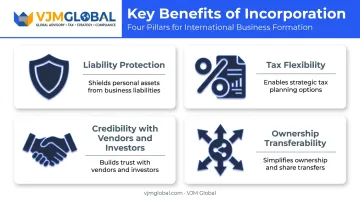
- Liability protection: If a customer sues your incorporated business over a faulty product, they're generally limited to going after business assets, not your personal home or retirement account
- Tax flexibility: LLCs and S-corps offer pass-through taxation (profits taxed once, on your personal return), while C-corps can access specific corporate deductions unavailable to individuals
- Credibility with vendors, banks, and investors: Incorporated entities look more established, which matters when you're negotiating supplier terms or applying for a business loan
- Ownership transferability: Shares or membership interests can be sold, gifted, or inherited without dissolving the company
These advantages help explain why filings keep climbing year after year. The Census Bureau recorded 5.67 million business applications in 2025, a measure of EIN applications signaling intent to form a business rather than a count of completed incorporations. Even so, it's a strong signal of how many entrepreneurs pursue formal business structures each year.
Choosing the Right Business Structure
Your structure choice ripples through liability exposure, tax treatment, and your ability to raise money later. Pick based on where you want the business to go, not just where it stands today.
LLC (Limited Liability Company)
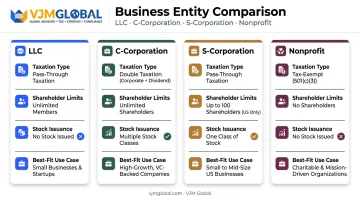
LLCs suit solo entrepreneurs and small teams who want liability protection without heavy compliance overhead. A single-member LLC is disregarded for federal tax purposes by default, while multi-member LLCs default to partnership treatment. Both avoid double taxation unless you elect otherwise.
The catch: LLCs can't issue stock. If you're planning to court institutional investors or venture capital down the road, this structure often becomes a limitation rather than an asset.
C Corporation
C-corps allow unlimited shareholders and multiple stock classes, which is exactly why they're the default choice for startups chasing venture capital. Many investors specifically require or prefer a Delaware C-corp structure before they'll negotiate a term sheet.
The tradeoff is double taxation — the corporation pays tax on profits, and shareholders pay tax again on any dividends received. It's a real cost, but one most venture-backed founders accept in exchange for fundraising flexibility.
S Corporation
S-corps avoid double taxation through pass-through treatment, similar to an LLC. The IRS imposes strict eligibility limits:
- No more than 100 shareholders
- Only eligible shareholder types (individuals, certain trusts, and estates)
- No nonresident-alien shareholders
- Just one class of stock It's a tax election made via Form 2553, not a separate state entity type.
Nonprofit and Other Structures
Nonprofit corporations suit mission-driven organizations pursuing federal tax-exempt status, though incorporating alone doesn't grant exemption. You'll still need IRS recognition through Form 1023 or 1023-EZ. Cooperatives, meanwhile, work well for member-owned businesses where control and profits are shared among participants rather than concentrated with outside shareholders.
Step-by-Step Guide to Incorporating Your Business in the US
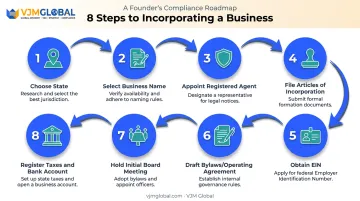
Most founders file directly through their state's Secretary of State office or use an online formation service. Processing times vary widely by state, so build in buffer time before you need the entity active.
Step 1: Choose Your State of Incorporation
You can incorporate in your home state or a business-friendly state like Delaware or Wyoming. Weigh the state's fees, tax rules, and legal precedent against the cost of "foreign qualification" — the extra registration and fees required if you incorporate out-of-state but operate locally.
Step 2: Select and Reserve a Business Name
Your name must be unique within the state and include a corporate designator like "Inc." or "LLC." Your legal name can differ from the DBA (doing business as) or trade name you use for branding and marketing.
Step 3: Appoint a Registered Agent
A registered agent receives legal and tax documents on your business's behalf. States require a physical address within the state of incorporation (PO boxes and mail-forwarding services typically don't qualify).
Step 4: File Articles of Incorporation
This filing requires your business purpose, share structure, and director information. Base filing fees vary by state:
| State | Base Filing Fee | Notes |
|---|---|---|
| Wyoming | $100 | Eligible online filings activate immediately |
| California | $100 | Additional fees apply for expedited processing |
| Delaware | $109+ | Varies with authorized stock and document length |
Expedited processing costs extra almost everywhere. Delaware, for example, offers same-day and one-hour options for a premium fee.
Step 5: Obtain an EIN from the IRS
You'll need an Employer Identification Number to file taxes, hire employees, and open a business bank account. Applying directly through the IRS is free and typically produces an approved EIN within minutes.
Step 6: Draft Corporate Bylaws or an Operating Agreement
These internal documents define governance: who makes decisions, how profits get distributed, and what happens if an owner exits. Corporations use bylaws; LLCs use operating agreements.
Step 7: Hold an Initial Board Meeting and Issue Ownership Shares
This meeting formalizes your bylaws, appoints officers, and issues stock or membership certificates to owners. Keep meeting minutes on file. They matter later if your liability protection is ever challenged in court.
Step 8: Register for Taxes, Licenses, and a Business Bank Account
Round out incorporation with these final registrations:
- Register for state and federal tax accounts
- Secure any industry-specific permits your business needs
- Open a dedicated business bank account
Keeping business and personal finances separate from day one protects everything you just set up.
Key Factors to Consider Before Incorporating
Before you file, run through these practical checkpoints:
- Budget against expected first-year revenue. Weigh incorporation fees and ongoing state costs realistically — a $100 filing fee is trivial, but franchise taxes and registered agent renewals add up.
- Plan for growth early. Founders raising capital, hiring globally, or expanding into markets like India should build compliance into their entity structure from day one. Firms such as VJM Global specialize in aligning U.S. incorporation with cross-border expansion plans.
- Check industry-specific regulations. Finance, healthcare, and food service businesses often need licensing beyond basic incorporation.
- Decide how much control you want to retain. Bringing on a board or investors means ceding some operational say. Know your limits before you sign anything.
Post-Incorporation Compliance and Common Mistakes to Avoid
Incorporating is the start, not the finish line. A few recurring mistakes cause founders real problems down the road.
Commingling personal and business finances is the most common one. Mixing accounts gives courts grounds to "pierce the corporate veil," stripping away the liability protection you just paid to establish. Keep a dedicated business account from Step 8 onward, no exceptions.
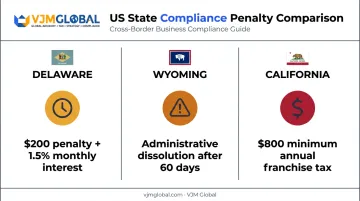
Skipping ongoing compliance is the second. Annual reports, franchise taxes, and license renewals aren't optional:
- Delaware charges a $200 penalty plus 1.5% monthly interest on late franchise tax payments
- Wyoming can administratively dissolve an entity 60 days after a missed filing deadline
- California imposes an $800 minimum franchise tax annually on corporations and LLCs, regardless of income or losses
Many founders also underestimate the ongoing bookkeeping and tax filing workload that follows incorporation — it's not a once-a-year task. This is where outsourcing to experienced professionals pays off.
VJM Global's team of CPAs and Chartered Accountants handles accounting, payroll compliance, annual filings, and secretarial work for founders managing operations across the US, UK, and India simultaneously. This keeps growth on track instead of stalling over a missed deadline.
One US-based client, Incubit GBS, brought VJM Global on specifically to manage accounts and compliance so leadership could stay focused on core operations rather than paperwork.
Frequently Asked Questions
Is it a good idea to incorporate a business?
Incorporation makes sense if you want liability protection, plan to raise investor funding, or need long-term credibility with banks and vendors. For a small, low-risk side project, it can be unnecessary overhead.
What types of business entities can be incorporated?
The main types are LLCs, C-corporations, S-corporations, nonprofit corporations, and cooperatives. Each carries distinct tax treatment and ownership rules, so match the structure to your goals.
How much does it cost to incorporate a business in the US?
Base state filing fees typically run $100 to $109, based on published Wyoming, California, and Delaware schedules. Add optional registered agent fees, legal review, and expedited processing costs on top.
How long does it take to incorporate a business?
Standard processing often takes about a week, though this varies by state. Wyoming, for instance, offers immediate activation for eligible online filings, while many states offer paid expedited options for same-day or 24-hour turnaround.
Do I need a lawyer to incorporate my business?
A lawyer isn't legally required for basic filings. However, complex ownership structures, multiple founders, or investor agreements usually benefit from legal review before you sign anything.
Which US state is best to incorporate in?
Delaware is popular for its investor-friendly corporate law and the Court of Chancery's deep legal precedent. Incorporating in your home state, though, avoids the added cost and paperwork of foreign qualification if you're operating locally.