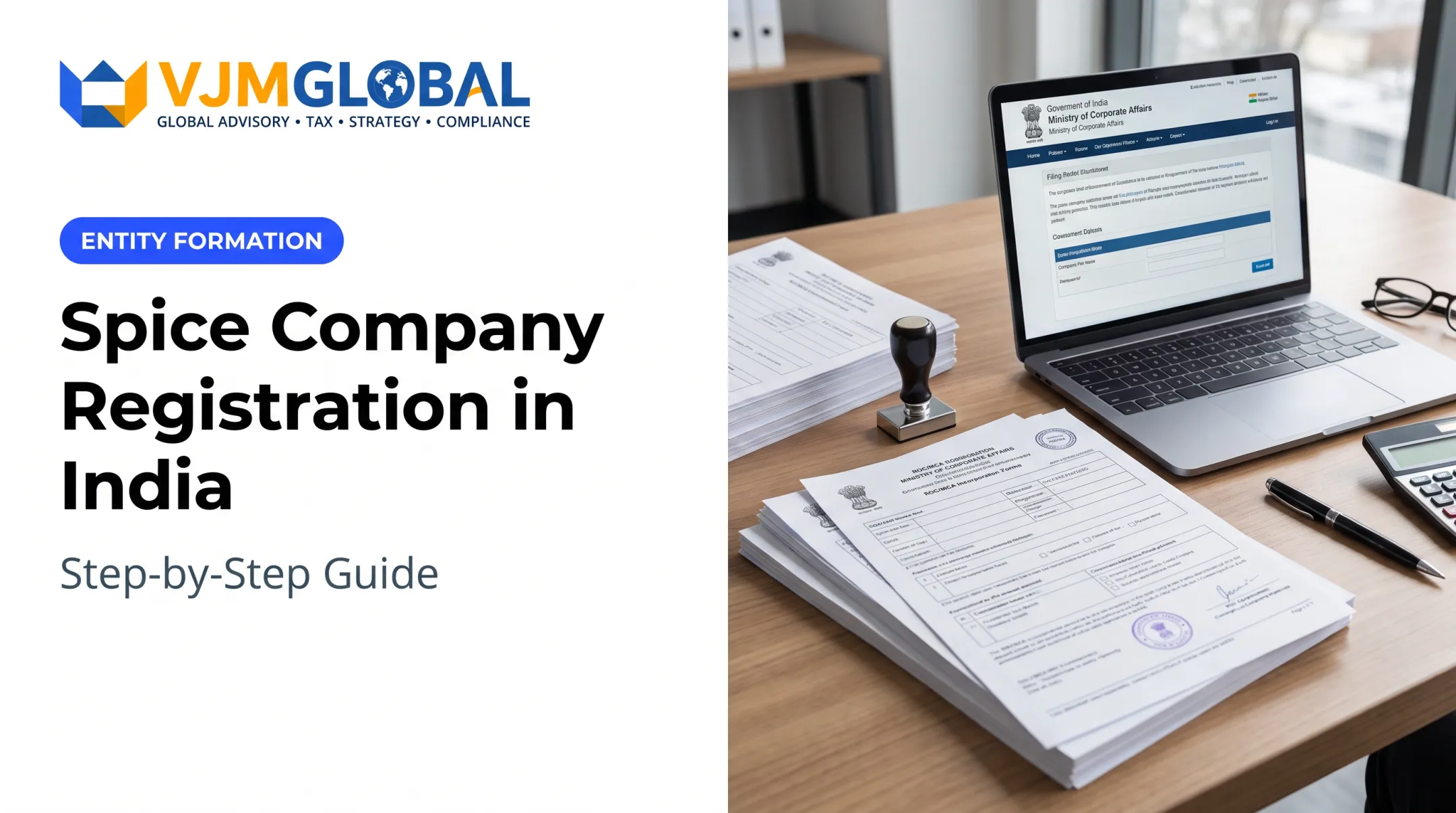
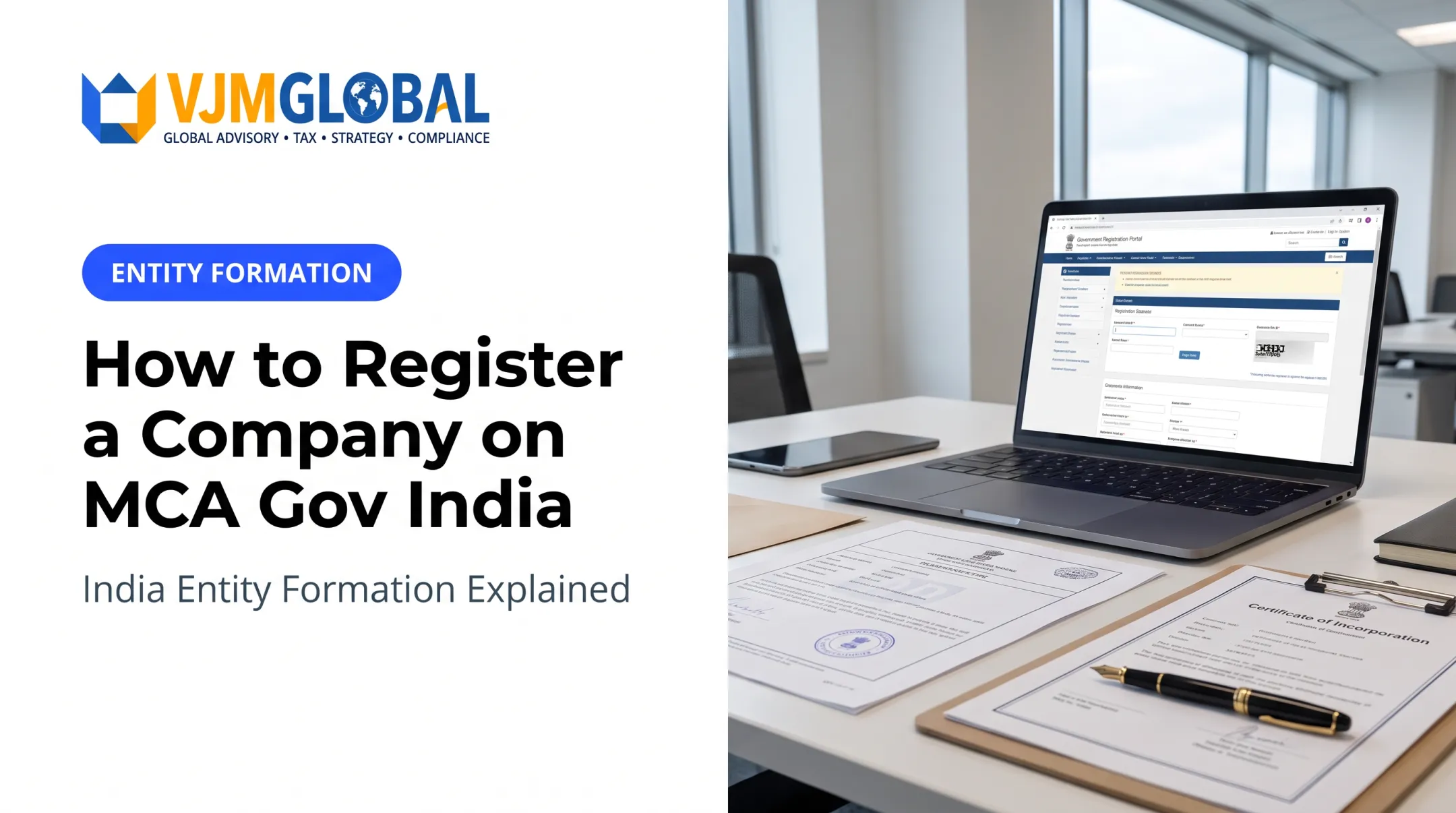
For US-based founders, this step carries extra friction. You're dealing with cross-border documentation, an 11-13 hour time difference, and a Digital Signature Certificate (DSC) requirement that doesn't exist in US business formation. Add in mandatory Trademark Registry cross-checks, and a "simple" MCA portal task turns into a coordination exercise.
This guide walks through the exact RUN/SPICe+ process, what's different for US applicants, current fees, validity windows, and the mistakes that trip up first-time overseas filers.
TL;DR
- Name reservation runs through SPICe+ Part A (new companies) or RUN (renaming) on the MCA portal
- Government fee is ₹1,000 for RUN; confirm SPICe+ Part A fees on the MCA portal at filing
- Approved names hold 20 days (new incorporation) or 60 days (renaming), extendable under Rule 9
- US applicants need a DSC for at least one director/subscriber, with notarized or apostilled ID documents
- MCA screens names under Rule 8 undesirability tests, including registered trademark conflicts
How to Reserve a Company Name for India Registration from the USA
Step 1: Shortlist and Search Two Preferred Names
Before filing anything, run two searches:
- MCA "Check Company/LLP Name" search: confirms no identical or near-identical entity already exists
- Trademark Registry search at IP India's public search portal: checks for registered trademark conflicts in your business class
Under Rule 8 of the Companies (Incorporation) Rules, names are compared after stripping out words like "Private," "Limited," punctuation, spacing, plurals, and phonetic variations. So "TechNova Pvt Ltd" and "Tech Nova Limited" are treated as the same name for approval purposes.
Pick names that are distinctive and reflect your actual business activity — generic or purely descriptive names get rejected more often.
Step 2: Obtain a Digital Signature Certificate (DSC) as a US Applicant
A DSC is mandatory for whoever files the RUN or SPICe+ form. As a foreign national, this generally means submitting notarised or apostilled identity and address proof to a licensed Certifying Authority.
Documents typically required:
- Passport-size photograph
- Self-attested passport copy (notarised by a foreign authority, or countersigned by the Indian Embassy in your country)
- Government-issued address proof (bank statement, driving licence, or residence card)
- Notarised translation if any document isn't in English
Start this well ahead of your intended filing window. Overseas DSC issuance takes longer than domestic issuance because of extra verification and courier steps. Build in buffer time rather than assuming a same-week turnaround.
Step 3: File RUN or SPICe+ Part A on the MCA Portal
Choose your form based on your situation:
- RUN: used for reserving a name in connection with an existing company's change of name
- SPICe+ Part A: the service for reserving a name for a brand-new company incorporation
For SPICe+ Part A, you'll enter:
- Business structure (Private Limited, OPC, or Public Limited)
- Two name preferences, ranked by priority
- Nature of proposed business activity
Submitting two names in priority order matters. If your first choice fails Rule 8's similarity test, MCA can consider the second without forcing a fresh filing.

Step 4: Pay the Government Fee and Track Approval
The RUN filing fee is ₹1,000. Confirm the exact SPICe+ Part A fee on the live MCA fee enquiry page at the time of filing, since fee tables can be updated.
MCA approval typically takes 3–5 working days after submission and Registrar review, depending on workload and whether clarification is needed.
Because approvals process during Indian business hours, US applicants should:
- Check for the approval email in the morning, India time (evening or overnight, US time)
- Build in at least a one-day lag before assuming a rejection or delay
- Avoid submitting corrections late in the US day, since that pushes MCA review to the next Indian business day
Step 5: Complete Incorporation Within the Validity Window
Once approved, a new-company name reservation is valid for 20 days. You must file SPICe+ Part B incorporation documents before this window closes.
If you miss it:
- The name reservation lapses
- You must refile and pay the fee again
- Someone else can reserve the same name in the interim
Rule 9 allows extensions in a tiered structure. Paying before the 20-day mark expires can extend validity further, with additional fees at each tier. Confirm current extension fees on the MCA portal, since these figures are periodically revised.

When Should a US Applicant Reserve a Name Separately vs. File Directly Through SPICe+?
Use RUN or standalone name reservation when:
- You're still finalising directors, share capital, or your registered office address in India
- You want the name locked in while other incorporation pieces come together Use SPICe+ Part A directly into incorporation when:
- Directors, capital structure, and registered office are already settled
- You want to save a filing cycle by moving straight to Part B after approval Special case — WOS, branch, liaison, or project office: US companies setting up a wholly-owned subsidiary, or a branch, liaison, or project office, often need more lead time for FEMA and RBI paperwork. These founders usually benefit from reserving the name separately first, rather than rushing into SPICe+ Part A before the underlying structure is finalised.
What US Applicants Need Before Filing for Name Reservation
Missing paperwork, not naming disputes, is the single biggest cause of delay for overseas applicants.
Documentation Requirements
- Digital Signature Certificate for the filing applicant
- Notarised or apostilled passport and address proof for at least one proposed director
- DIN application (via SPICe+'s integrated DIN allotment, or separately through Form DIR-3) if not already allotted
- Self-attested PAN card, where applicable
Business Structure Decision
Before naming, decide whether you're forming a Private Limited subsidiary, an LLP, or a branch/liaison/project office. This isn't a minor detail:
- Suffix requirements differ (Pvt Ltd vs. LLP)
- Permitted business activities differ
- Branch, liaison, and project offices need FEMA clearance, RBI approval, and RoC registration, unlike a new company incorporation

Get this decision right before you file, since it shapes what name format MCA will even accept.
Naming Rules and Common Mistakes US Applicants Make
Mistake 1: Assuming certain words are automatically banned. Rule 8A does restrict specific terms: words implying association with government personages, "State" used by a non-government company, and sector-specific words like "Bank," "Insurance," or "Mutual Fund" unless you declare compliance with the relevant regulator's requirements. The restriction is clause-specific, not a blanket ban. First-time overseas filers often either avoid perfectly usable names or miss a required regulator declaration. Mistake 2: Skipping the Trademark Registry search. Under Rule 8, a name identical or too similar to a registered trademark in the same class is treated as undesirable, unless you obtain the trademark owner's consent. Search IP India's Trade Mark Registry before filing, not after rejection. Mistake 3: Assuming a US LLC or Inc. name transfers automatically. Your existing US entity name has zero standing in India's name-availability check. Rule 8 does allow some flexibility for Indian subsidiaries to use the parent company's name with "India" or a state/city added, but only if that combined name is otherwise available. Mistake 4: Letting the 20-day window lapse. Time-zone miscommunication between a US founder and an Indian filing team is one of the most common, and most avoidable, reasons reservations expire unused.
Getting Expert Support for a Smooth India Entry
Running the MCA name search and the trademark check in parallel is already demanding. Filing RUN or SPICe+ correctly on the first attempt and managing DSC/DIN logistics across a 10-13 hour time difference is a lot to coordinate solo, especially while you're still choosing between a subsidiary, LLP, or branch. VJM Global brings decades of tax, audit, and cross-border advisory experience to this problem. The firm has worked with 500+ American business owners entering India. Pre-incorporation advisory covers entity structure selection, FDI policy guidance, and capital structuring before name filing begins. That order matters: the right structure first prevents naming and filing headaches later. With a 95% client retention rate and teams that work directly with India's regulators and statutory instruments, VJM Global handles:
- DSC and DIN logistics across time zones
- Parallel MCA name and trademark searches
- RUN or SPICe+ incorporation filing US founders don't need to track Indian business hours from a kitchen table at midnight.
Frequently Asked Questions
How do I reserve a business name in Florida?
That's a US state-level process handled through the Florida Secretary of State. It's a completely different system from reserving a company name in India through MCA's RUN service.
Can you reserve a name for a company?
Yes. In India, this happens through MCA's RUN service or SPICe+ Part A. Once approved, you hold the name exclusively for 20 days before completing incorporation.
What is a name reservation?
It's a company name approved and held exclusively by MCA for a limited period, so no other applicant can register it while you complete your incorporation filing.
How long does MCA take to approve a reserved company name?
MCA approval typically takes 3–5 working days, though timelines vary. US applicants should also allow time for DSC issuance and document notarization before filing.
Can a US citizen reserve a company name in India without visiting India?
Yes. The entire process runs online, provided you have a DSC and the required identity/address documents. Physical presence in India isn't required.
What happens if my reserved name is rejected?
Review the rejection reason (usually a similarity conflict or a restricted word) and resubmit with a modified name. Confirm the portal's current fee and refund terms before refiling, since these can change.