The pull isn't just about tax efficiency. Founders in IT, fintech, and trading are using Mauritius as a springboard into African markets. Larger Indian companies use it for holding structures. NRIs use it to consolidate overseas assets. Each group has different motivations, but they all run into the same question: what does actually starting a business there involve?
This guide walks through the practical steps, the compliance work on both sides of the border, and the mistakes that trip up Indian founders most often.
TL;DR
- Pick a Domestic Company, GBC, or Authorised Company for local trade, treaty access, or a non-resident holding structure
- FEMA/ODI reporting with RBI is mandatory before or alongside incorporation, not an afterthought
- GBCs require two Mauritius-resident directors and real operational substance to access treaty benefits
- CBRD incorporation can finish in half a day; FSC licensing and non-resident bank accounts take longer
- Corporate tax sits at a flat 15%, with partial exemptions possible for qualifying GBC income
Why Mauritius Is a Strategic Choice for Indian Entrepreneurs
Starting a business in Mauritius from India usually means setting up one of three structures as a non-resident founder: a Domestic Company, a Global Business Company (GBC), or an Authorised Company (AC).
The appeal comes down to three things:
- Gateway to Africa — Mauritius has trade and investment links across the continent
- DTAA benefits — the India-Mauritius tax treaty caps Indian withholding at 5-15% on dividends and 7.5% on interest
- Low corporate tax — a flat 15% rate, with partial exemptions available for qualifying international income
On ease of doing business, the World Bank's B-READY framework gives Mauritius a Business Entry score of 75.6 for 2024 (older "ranked 13th" citations refer to the discontinued Doing Business index).
Mauritius-origin investment into India has totaled $180 billion between April 2000 and March 2025, roughly a quarter of India's total inbound FDI, according to the Indian High Commission in Mauritius. Indian founders use the corridor for Africa access and treaty benefits; Mauritius remains one of India's largest FDI sources in return.
Which structure fits depends on where you operate and whether you need treaty residence:
| Structure | Best for | Tax residence |
|---|---|---|
| Domestic Company | Local Mauritius operations | Yes |
| GBC | International business needing treaty access | Yes, with substance |
| Authorised Company | Foreign business managed outside Mauritius | No |
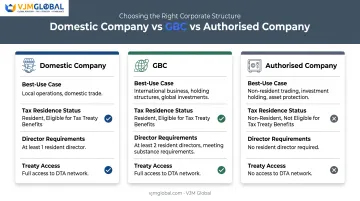
All three generally allow 100% foreign ownership for Indian nationals, and none carry a fixed mandatory minimum capital requirement in the current framework.
What to Know Before You Start a Business in Mauritius from India
Most Indian founders focus on registration and forget about substance—the local management and control tax authorities actually test. That is what determines whether the structure delivers any tax benefit.
Before you begin, settle these points:
- Documentation — KYC for all directors and shareholders, notarized incorporation documents, and translations where needed. Existing entities usually also need three years of audited financials for banks and regulators.
- Resident directors — a GBC needs at least two Mauritius-resident directors, and board meetings must include them. Regulators treat this as proof of local management and control.
- Realistic timeline — CBRD incorporation itself is quick, but FSC licensing (for GBCs/ACs) and non-resident bank KYC add weeks, not days.
- Holding vs. operating intent — a pure holding structure has different substance needs than an entity actually trading with local or African customers. Decide this early; it shapes everything downstream.
Choosing the Right Business Structure and Early Decisions
Structure choice isn't just a Mauritius decision. It also shapes how Indian regulators treat the investment.
Before you pick an entity type, lock down these early points Indian founders often miss:
- FEMA/ODI compliance — any Indian resident or company investing in a Mauritian entity falls under RBI's Overseas Direct Investment rules. Handle this before funds move, not after incorporation.
- True ongoing costs — resident director fees, registered office charges, and statutory audit costs for GBCs add up. Budget for them every year, not only the setup fee.
- Substance requirements — DTAA benefits apply only with genuine Mauritius management and control. An Authorised Company is managed elsewhere by design, so it has no treaty access.
- Banking delays — non-resident KYC at Mauritian banks is thorough. Notarize and translate documents in advance to avoid stalled account opening.
VJM Global runs FEMA/ODI reporting for Indian companies in parallel with overseas entity formation, so India-side and Mauritius-side compliance stay aligned.
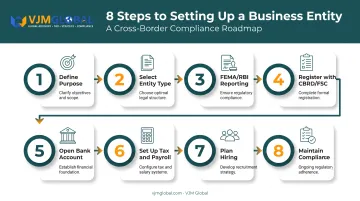
How to Start a Business in Mauritius from India – Step by Step
This process breaks into distinct stages. Skip one, and you'll likely pay for it later — usually in the form of a rejected bank application or a missed RBI filing. Common mistakes to avoid:
- Skipping FEMA/ODI filings until after incorporation
- Underestimating resident director requirements for a GBC (Global Business Company)
- Assuming Mauritian company law mirrors India's Companies Act (it doesn't)
Step 1 – Define Your Purpose and Target Market
Decide whether the entity will serve Mauritian customers directly, act as a gateway into Africa or Asia, or function purely as a holding/investment vehicle. This also determines your sector classification (fintech, ICT, trading, holding), which in turn affects licensing. Common miss: picking a structure before nailing down the actual business purpose. This gets reversed often, at real cost.
Step 2 – Select the Right Entity Type
Compare the three options against your goals:
- Domestic Company for local trade
- GBC for international business with treaty needs
- Authorised Company for foreign business managed from outside Mauritius Factor in director requirements, audit obligations, and tax treatment for each before committing. Common miss: choosing a GBC (with its resident director and audit burden) when a simpler Domestic Company would do the job — or the reverse, picking an AC when treaty access was actually the goal.
Step 3 – Complete FEMA/RBI Reporting from the India Side
Indian residents or companies investing in a Mauritian entity must report the investment under FEMA's ODI framework. This runs through your Authorised Dealer bank, using Form FC, filed at the point of remittance or financial commitment, whichever comes first. RBI issues one Unique Identification Number (UIN) per foreign entity. This needs to happen before or alongside incorporation, not after. Common miss: incorporating in Mauritius first, then discovering the ODI reporting should have started at the India end weeks earlier.
Step 4 – Register the Company with Mauritian Authorities
Registration happens through the Corporate and Business Registration Department (CBRD) for standard entities, or the Financial Services Commission (FSC) for GBCs and ACs. You'll need:
- Constitution documents
- Director and shareholder KYC
- A registered office address
- A company secretary (for applicable structures) Basic CBRD incorporation can complete within half a day, according to Mauritius's Economic Development Board. FSC licensing for GBCs and ACs takes considerably longer since there's no published fixed turnaround.
Step 5 – Open a Bank Account and Set Up Finances
Mauritian banks apply thorough non-resident KYC checks. Indian promoters should prepare notarised, translated documentation well in advance, including ownership charts and identity proof for anyone holding 10% or more of shares. Multi-currency accounts are widely available and useful if you're invoicing across India, Africa, and Mauritius simultaneously. Common miss: assuming account opening takes days. As a non-resident applicant, it usually stretches into weeks, and delays are the norm rather than the exception.
Step 6 – Set Up Tax, Payroll, and Compliance Systems
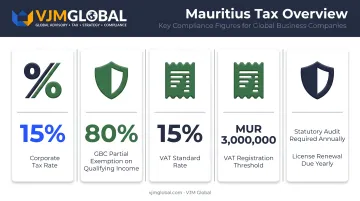
Corporate tax sits at a flat 15%. GBCs may qualify for an 80% partial exemption on specified income, but only where substance conditions are genuinely met. This is not an automatic discount. Other registration points:
- VAT at 15%, compulsory once taxable turnover crosses roughly MUR 3 million
- Annual returns and statutory audits for GBCs
- Licence renewals where applicable Firms like VJM Global support Indian-origin businesses with entity formation, accounting, and payroll setup, helping avoid missed filings on the Indian side while the Mauritius entity gets up and running.
Step 7 – Plan Hiring and Local Support
Decide early whether you'll hire locally in Mauritius or keep operations lean with a remote Indian team supporting the venture. If hiring locally, budget for statutory contributions:
- CSG (social contribution) — 1.5% employee, 3% employer for standard wage bands
- National Savings Fund (NSF) — 1% employee, 2.5% employer, subject to a monthly wage cap Minimum wage figures change periodically, so check the current Remuneration Regulations before finalizing payroll budgets.
Step 8 – Maintain Compliance and Scale
Staying in good standing means annual returns, license renewals, and ongoing tax filings in Mauritius. On the Indian side, you'll need to file an Annual Performance Report (APR) with RBI by December 31 each year, for as long as the investment continues. Skipping the APR isn't a minor lapse. It flags the entire outbound investment for scrutiny.
Conclusion
Starting a business in Mauritius from India isn't a single-country process. It's two parallel compliance tracks: Mauritian incorporation on one side, FEMA and RBI reporting on the other. Miss either, and the structure doesn't hold up the way you intended.
Structure, substance, and documentation matter more than how fast you can get incorporated. A GBC set up in a week with no real Mauritius management won't deliver the treaty benefits you were counting on.
An advisor who covers FEMA and RBI reporting alongside overseas incorporation cuts that friction on both tracks. VJM Global supports Indian companies expanding abroad with FEMA advisory, entity-formation coordination, and ongoing cross-border compliance so the structure holds up as intended.
Frequently Asked Questions
How do I set up a company in Mauritius?
Choose your entity type, register with CBRD or FSC depending on structure, appoint required directors, open a bank account, and register for tax. Each stage has its own documentation requirements.
What businesses are profitable in Mauritius?
ICT, fintech, financial services, tourism-linked services, and export/trading businesses tend to do well, largely due to government incentives and the country's position as a regional hub.
Can an Indian citizen own 100% of a Mauritian company?
Yes, subject to sector-specific licensing rules. Most structures don't carry a mandatory minimum capital requirement either.
Is RBI/FEMA approval required for Indians investing in Mauritius?
Yes. Outbound investment falls under FEMA's ODI framework, requiring reporting to RBI through your Authorised Dealer bank via Form FC.
How long does it take to register a business in Mauritius from India?
Basic CBRD incorporation can take under a day. GBCs and ACs take longer due to FSC licensing, and non-resident bank account opening often adds several more weeks.
What are the tax benefits of the India-Mauritius DTAA for business owners?
The treaty caps Indian withholding at 5-15% on dividends and 7.5% on interest, avoiding double taxation. These benefits depend on meeting genuine substance requirements in Mauritius.