The interest isn't limited to one industry. Malaysian trading companies, halal food exporters, tech consultants, and investors are all exploring Oman as a Gulf entry point, often without wanting to relocate their core operations.
This guide walks Malaysian founders through the legal steps to register and operate a business in Oman, from activity selection to post-registration compliance.
TL;DR
- 100% foreign ownership is allowed for most activities under Royal Decree 50/2019—check the Negative List first
- Register on the Oman Business Platform; commercial registration issues once the application is complete
- LLC is the standard structure for Malaysian-owned businesses
- Malaysian founders need attested documents, a registered Omani address, and activity-code verification
- Plan attestation and tax registration early—these steps cause most cross-border delays
What Does Starting a Business in Oman from Malaysia Involve?
At its simplest, this means a Malaysian individual or company legally establishing and owning an entity in Oman, whether to trade, provide services, or manufacture. Every part of that entity is governed by Omani law, not Malaysian law.
Here's the part many founders miss: being Malaysian doesn't change the process. The Ministry of Commerce, Industry and Investment Promotion (MOCIIP) applies the same registration procedures, entity types, and tax rules to a Malaysian applicant as it would to any other foreign investor.
Malaysian founders typically choose one of three formats:
- Standalone LLC in mainland Oman for general trading or services
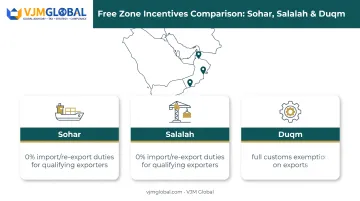
- Free zone entity (Sohar, Salalah, Duqm) for export or logistics-heavy businesses
- Branch office for an existing Malaysian company replicating its activities in Oman
Why Consider Oman as a Malaysian Entrepreneur?
Oman isn't automatically the right move for every Malaysian business. It makes sense under specific conditions: your activity is open to full foreign ownership, your sector has genuine Gulf demand, and you're prepared for the compliance workload that follows registration.
Key advantages worth weighing:
- Strategic geography: one Gulf base gives access to GCC, East African, and South Asian markets
- Tax structure: 15% standard corporate tax; personal income stays untaxed until a 5% high-income regime begins in 2028
- Sector alignment: halal trade, palm oil-linked commodities, IT services, and consultancy all see growing Gulf demand
- Free zone incentives: Sohar and Salalah offer 0% import/re-export duties for qualifying exporters; Duqm adds full customs exemption on exports (local Omani sales excluded)
Those tax upsides come with one planning caveat: Malaysia does not currently appear on Oman's published DTA treaty list, so profit repatriation should not assume treaty relief. Confirm the current position with Malaysia's Inland Revenue Board before structuring cross-border cash flows around a treaty that may not be in force.
What Malaysian Founders Should Know Before Starting
Before you file, plan for two frictions Malaysian founders often underestimate: document attestation timelines, and how much physical presence Oman still requires despite its digital registration system.
Plan around these realities:
- Malaysian company and personal documents typically need attestation or apostille before submission to MOCIIP
- A registered Omani business address is mandatory before Commercial Registration finalises. Virtual addresses aren't accepted for most activities
- Expect at least one trip to Oman for bank account opening and investor visa biometrics
- Full operational status—tax registration, labour clearance, and municipal licensing—takes longer than Commercial Registration alone
The Oman Business Platform can issue a Commercial Registration certificate almost immediately once your application is complete and correct. That speed covers the digital filing only—not attestation, travel, banking, or the licences that follow.
Choosing a Business Structure and Understanding Costs
Your structure choice affects ownership rights, liability exposure, and how hands-on you need to be day-to-day.
Structures Malaysian Investors Typically Use
- Limited Liability Company (LLC) — the most common route, allowing 100% Malaysian ownership in open sectors, generally requiring at least two shareholders
- Branch office — suited to an established Malaysian company replicating existing activities without forming a separate legal entity
- Free zone entity — suits Malaysian trading, logistics, or manufacturing businesses seeking duty exemptions and full profit repatriation
Budgeting for Setup
Malaysian founders should plan for:
- Ministry of Commerce, Industry and Investment Promotion (MOCIIP) and Oman Chamber of Commerce and Industry (OCCI) fees, with the OCCI membership certificate alone costing OMR 33
- Document attestation and legalisation costs
- Office or free-zone premises lease, priced in Omani Rial
- Professional or consultancy fees for formation support
Here's a common miss: founders price everything against the Ringgit, assuming a rough conversion will hold. Omani Rial-denominated capital requirements and lease costs don't move with the Ringgit, and underestimating them mid-process causes real delays.
How to Start a Business in Oman from Malaysia – Step by Step
Oman registration breaks into practical stages a Malaysia-origin applicant will actually face. The most common mistakes are submitting non-attested documents, picking an activity code that quietly overlaps with a restricted sub-activity, and forgetting to plan a trip for the bank account step.
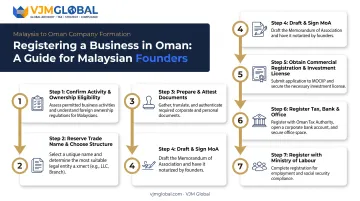
Step 1 – Confirm Your Business Activity and Ownership Eligibility
Select your intended activity from MOCIIP's list and cross-check it against Oman's Negative List, which has expanded in recent years to cover activities like Omani halwa manufacturing, certain tailoring services, and grocery retail. Confirm whether your chosen activity permits full Malaysian ownership or requires local participation.
Common miss: choosing a broad activity code that unintentionally overlaps with a restricted sub-activity.
Step 2 – Reserve Trade Name and Choose Structure
Reserve a compliant trade name through the Oman Business Platform, then decide between LLC, branch office, or free zone entity based on your company's actual goals in Oman.
Common miss: picking a name containing restricted terms that don't comply with Omani naming rules.
Step 3 – Prepare and Attest Malaysian Documents
Gather passport copies, company constitutional documents, and board resolutions (where applicable) from Malaysia. Get them attested or apostilled, and legalised through the appropriate channel where required.
Common miss: underestimating how long Malaysian document attestation actually takes before submission.
Step 4 – Draft and Sign the Memorandum of Association
Complete your MoA through the platform and sign digitally using the mandatory PKI digital identity system, which non-residents can typically verify remotely via passport scan.
Common miss: assuming a Malaysian digital signature or local notarisation will be accepted instead.
Step 5 – Obtain Commercial Registration and Investment License
Submit your complete application to MOCIIP for Commercial Registration and the Foreign Investment License, then complete mandatory OCCI membership to activate your commercial record.
Common miss: treating CR issuance as "fully registered" when several operational steps still remain.
Step 6 – Register for Tax, Open a Bank Account, and Register the Office
Obtain your Tax Registration Number within 60 days of CR issuance, since this is a statutory deadline, not a suggestion. Travel to Oman to complete bank account opening and municipal (Baladiyah) office registration.
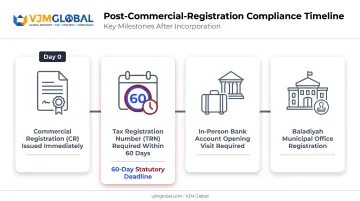
Common miss: assuming banking and tax steps can be finished entirely remotely from Malaysia.
Step 7 – Register with the Ministry of Labour Before Hiring
Apply for labour clearances and understand your Omanisation hiring obligations before bringing on staff. Arrange work visas for any Malaysian employees being relocated.
Common miss: hiring foreign staff before securing the necessary labour quotas.
Avoiding Common Setup Mistakes and Staying Compliant
Most delays Malaysian founders hit don't come from the registration process itself. They come from document and compliance gaps around it.
The recurring issues:
- Incorrect activity classification against the Negative List
- Missing or incomplete document attestation
- Underestimating Omanisation hiring obligations
- Inconsistent bookkeeping once the business goes live
Cross-border experience helps close those gaps. Firms such as VJM Global work across 100+ countries and align entity formation, tax registration, and ongoing compliance with each market's own regulators. Oman's rules are not a variation on Malaysian or generic Gulf procedure. Treating them as a distinct system is what prevents these setbacks.
Conclusion
Starting a business in Oman from Malaysia is achievable, with 100% ownership available across most sectors. Success comes down to two things: correct activity classification and thorough document preparation.
Founders who move early sidestep the most common delays:
- Validate the activity against the Negative List before filing
- Get documents attested well ahead of submission
- Plan for at least one visit to Oman during setup
Registration is only the starting line. Long-term success depends on staying current with tax, labour, and municipal obligations well after the Commercial Registration certificate is issued.
For support with entity formation, document readiness, or ongoing compliance as you expand, VJM Global can help you work through each step.
Frequently Asked Questions
How do I open an LLC in Oman?
Reserve a trade name, select an eligible activity code, draft a bilingual MoA, and submit documents to MOCIIP via the Oman Business Platform. Follow up with OCCI registration to activate the commercial record.
Can a Malaysian citizen own 100% of a company in Oman?
Yes, under Royal Decree 50/2019, Malaysian investors can own 100% of companies in most open-sector activities. Activities on Oman's Negative List are the exception.
Do I need to travel to Oman to register my business?
Most of the registration can be completed remotely. A visit is typically required for bank account opening and investor visa biometrics.
How long does it take to register a company in Oman as a foreigner?
Commercial Registration can be issued almost immediately once your application is complete. Reaching full operational readiness, including tax registration and banking, generally takes longer and depends on your specific activity and documentation.
What is the corporate tax rate for foreign-owned companies in Oman?
Oman's standard corporate tax rate is 15%, with no general personal income tax currently applied. Some qualifying small enterprises may access a reduced 3% rate under specific conditions.
Does Malaysia have a double taxation agreement with Oman?
Malaysia does not currently appear on Oman's published DTA treaty list. Confirm the current status directly with Malaysia's Inland Revenue Board before relying on treaty relief for profit repatriation.