That interest is coming from several directions at once:
- Indian-origin entrepreneurs in the US who understand the market and want to build something back home
- American private-label and D2C beauty brands looking for their next growth market
- US importers and wholesalers who want to source cosmetics manufactured in India
This guide walks through what actually matters if you're based in the USA and want to legally set up and run a cosmetics business in India: entry structure, licensing, costs, and the compliance work that never really stops.
Key Takeaways
- Cosmetics fall under the Drugs and Cosmetics Act and Cosmetics Rules, 2020, enforced by CDSCO with no foreign-founder exceptions
- Entry structure (subsidiary, liaison, distributor, or private label) sets FDI eligibility and how much control you keep
- CDSCO registration is mandatory whether you're importing or manufacturing locally
- FEMA/RBI reporting, GST, and ROC filings are recurring obligations, not one-time tasks
Why the Indian Cosmetics Market Is Attractive for US Entrepreneurs
Before assuming India is your next big win, it helps to know exactly what's driving the opportunity — and where the caveats sit.
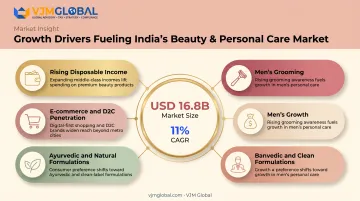
India's beauty and personal care market was estimated at USD 16.8 billion, growing at an 11% CAGR, with cosmetics and perfumes outpacing the category average, according to a 2023 report covered by Mint. That scale and growth rate put India among the more compelling beauty markets for a US founder.
What's Fueling the Growth
Four forces are doing most of the work:
- Rising disposable income, particularly in tier-2 and tier-3 cities, where personal care usage is growing faster than in metros
- E-commerce and D2C penetration, with online beauty sales once projected to grow around 30% annually through FY27
- Ayurvedic and natural formulations, which have moved from niche to mainstream as consumers favor ingredient transparency
- Men's grooming, a category expanding rapidly as urban men adopt skincare and grooming routines once considered women-only purchases
Two Ways to Play It
A US founder generally has two entry angles, and they're not mutually exclusive:
- Sell into India directly — building a brand for Indian consumers through D2C or marketplace channels
- Use India as a manufacturing base — sourcing cosmetics at lower cost to supply your US or global business
Either path benefits from the same ownership rule: most cosmetics manufacturing and trading activity qualifies for 100% FDI under the automatic route, so no prior government approval is needed for the investment itself. That gives a US owner a clear path to full control.
The common mistake: assuming a formula or brand story that worked in the US will translate directly. Indian consumers respond to different price points, packaging sizes, and ingredient claims — pricing and positioning need local adaptation, not a copy-paste launch.
Business Structures: How a US Founder Can Enter India's Cosmetics Market
The structure you choose determines your liability exposure, how much control you retain, and how often you need to be physically present.
Here's how the main options compare:
| Structure | Can Manufacture/Sell? | FDI Eligibility | Control Level | Best For |
|---|---|---|---|---|
| Wholly Owned Subsidiary | Yes | 100% automatic route | Full | Long-term India operations |
| Liaison Office | No (research only) | N/A (funded by remittances) | Limited | Early market scouting |
| Distributor Partnership | Yes, via partner | Not applicable to founder | Low on pricing/brand | Fast market entry, low commitment |
| Private Label + Importer of Record | Yes, via manufacturer | Depends on setup | Moderate | Selling without local manufacturing |
Wholly Owned Subsidiary (Private Limited Company)
This is the structure for founders serious about building a brand in India long-term. It gives you full operational and brand control and qualifies for 100% FDI under the automatic route for most cosmetics activities.
Setting one up typically requires at least two directors (with one being India-resident) and two shareholders, plus a registered office address in India. It's the most involved route, but also the only one that lets you manufacture, import, and sell under your own name without a partner in the middle.
Liaison/Representative Office
Useful only if you're not ready to commit. A liaison office can research the market, talk to potential partners, and represent your US parent company, but it cannot manufacture, import, or sell anything.
Expenses must be funded through remittances from the US parent. RBI eligibility typically requires a three-year profit record and a minimum net worth threshold for the parent company.
Distributor Partnership
No local entity required. You partner with an existing Indian distributor who buys, stocks, and resells your product. It's the fastest way to get on shelves or into marketplaces, but you give up pricing control and a lot of the brand experience.
Private Label via Third-Party Manufacturer
This lets a US brand owner sell in India without building a factory. You use a GMP-certified Indian manufacturer and act as (or appoint) the importer of record.
You keep the brand and formula ownership, but quality systems, labeling, and CDSCO-facing compliance still need clear contracts and oversight.
Where founders go wrong: picking a liaison office because it looks simpler on paper, then realizing months later that direct retail or local manufacturing needed a subsidiary all along.
Firms like VJM Global work through this decision with founders before incorporation starts, handling the FEMA/RBI filings so you're not managing every step from a New York time zone.
Licenses and Regulatory Compliance for a US-Owned Cosmetics Business in India
Regardless of where you live or hold citizenship, cosmetics sold in India are governed by the Drugs and Cosmetics Act, 1940 and the Cosmetics Rules, 2020, administered by CDSCO.
If You're Importing
Bringing finished cosmetics into India, whether made in the US or elsewhere, requires import registration (COS-1 application, resulting in a COS-2 certificate) filed by the foreign manufacturer, its Indian agent, or an authorized Indian subsidiary. Typical fees include:
- $1,000 per cosmetic category
- $1,000 per additional category
- $500 per manufacturing site
- $50 per product variant
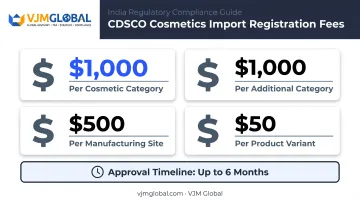
CDSCO can take up to six months to approve or reject an application, so build that into your launch timeline early. Once approved, registration stays valid indefinitely as long as you pay a retention fee every five years.
If You're Manufacturing Locally
You have two paths:
- Full manufacturing license: requires your own compliant premises, equipment, qualified technical staff, and testing capability
- Loan license: lets you use a third-party manufacturer's plant and staff under a formal consent arrangement, with batch testing and records still required
Manufacturing license fees are far lower than import fees: roughly ₹10,000 for up to 10 items in a category, plus ₹500 per additional item. State authorities must decide within 45 days.
Everything Else You'll Need
- IEC (Import Export Code): mandatory for any cross-border shipment, issued by the DGFT
- GST registration: compulsory for inter-state supply and most e-commerce sales
- Trademark registration: not legally required to sell, but essential to protect your brand name before a local competitor files first
Ongoing compliance doesn't end at launch. Annual ROC filings, GST returns, and statutory audits are recurring obligations. VJM Global handles these for foreign-owned entities so nothing lapses while you manage the US side of the business.
Common miss: assuming an import license covers you if you later start repackaging or private-labeling in India. Repackaging typically triggers manufacturing-level approvals, not just import registration.
Costs, Timelines, and Profitability to Expect
Your investment depends heavily on which model you pick. A light private-label or import launch costs far less than building your own manufacturing line.
Cost Components to Budget For
- Entity registration and legal/incorporation fees
- CDSCO licensing fees (import registration or manufacturing license)
- Product sourcing or contract manufacturing costs
- Initial inventory and packaging
- Digital marketing and launch spend
Import or private-label paths usually keep fixed costs lower; own manufacturing raises licensing, facility, and working-capital needs.
Marketing is often the swing factor. Consumer beauty brands in India can spend as much as 50% of total expenditure on marketing and promotion, according to Mint's 2024 reporting on the sector's competitive pressures. Customer acquisition in a crowded D2C space isn't cheap.
Realistic Timeline
| Stage | Typical Duration |
|---|---|
| Entity incorporation | 2–4 weeks |
| CDSCO licensing (import) | Up to 6 months |
| CDSCO licensing (manufacturing) | Around 45 days for approval |
| Manufacturer onboarding | Varies by partner |
Plan your launch date backward from these timelines, not forward from your ideal launch month.
Profitability Expectations
There's no single reliable margin benchmark for cosmetics in India; results vary too much by model. Established beauty retail players have reported gross margins above 40%, so the top line can look strong.
Bottom-line profit still depends on marketing spend, distribution costs, and how differentiated your niche is:
- Private label: Thinner brand premiums, lower marketing burn
- Fully branded launch: Higher upfront cost, stronger pricing power over time
Step-by-Step Process to Launch Your Cosmetics Business in India from the USA
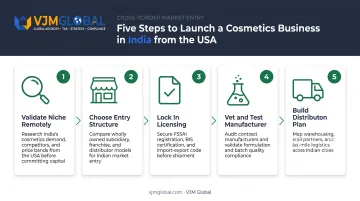
Use this sequence to move from research to first sales without stalling on compliance or supply:
- Validate the niche remotely. Use digital market research, competitor teardown, and marketplace demand signals (Amazon India, Nykaa search trends) before committing capital.
- Choose your entry structure. Pick subsidiary, distributor, or private label based on the control and commitment you want, then appoint a local compliance partner (such as VJM Global) for incorporation and India-entry filings.
- Lock in licensing before sourcing. Secure CDSCO registration (import or manufacturing), GST, IEC, and trademark filings before you ship or produce a single unit.
- Vet and test with a manufacturer. Finalize a GMP-certified Indian manufacturer or private-label partner, and run a small test batch before committing to full production runs.
- Build your distribution plan. Choose D2C, marketplace listings, or offline distributors so you can run the channel from India or from your desk in the US.
Frequently Asked Questions
How much does it cost to start a cosmetic business in India?
A private-label or import launch can start with a modest budget covering licensing fees, initial inventory, and marketing. A full manufacturing setup costs significantly more due to facility, equipment, and staffing requirements. Your model choice drives the range more than any other factor.
Do I need a license to sell cosmetics in India?
Yes. CDSCO registration — either import registration or a manufacturing license — is mandatory regardless of your nationality or where you're based. GST registration and trademark filing are also strongly recommended before launch.
Is a cosmetics business profitable in India?
It can be, but margins vary widely by niche, business model, and brand positioning. Private label tends to have lower marketing costs but thinner brand premiums; fully branded products cost more to launch but can command higher price points.
Can a US citizen or company own 100% of a cosmetics business in India?
Yes. Most cosmetics manufacturing and trading activities qualify for 100% FDI under the automatic route, meaning a US founder can fully own an Indian wholly owned subsidiary without prior government approval.
Do I need to be physically present in India to start the business?
Much of incorporation and licensing can be managed remotely with a local compliance partner handling filings and coordination. That said, periodic visits are useful for vetting manufacturers and inspecting facilities in person.
How long does it take to set up a cosmetics business in India from the USA?
Entity incorporation typically takes 2–4 weeks, while CDSCO licensing can take up to 45 days for manufacturing approval or up to six months for import registration. Plan your launch window around the licensing timeline, not the incorporation one.