
Introduction
Dubai and Abu Dhabi have become launchpads for UK business ownership. British expats, Indian and Pakistani professionals, Emirati investors and digital nomads in UAE free zones are registering UK companies for the trade ties, currency stability and fully remote formation process.
The path is rarely simple. Founders often struggle with entity choice, opening a UK bank account from the UAE, and working out tax residency before they file at Companies House.
Consultants, e-commerce sellers, tech founders and trading firms across the UAE are taking the same route. This guide covers entity choice, remote registration, banking and tax step by step, so anyone in the UAE can start a UK business with a clear plan.
Key Takeaways
- Register a UK limited company remotely via Companies House—no UK residency required
- Your structure (sole trader, Ltd or LLP) drives liability, bank credibility and filing duties
- A UK company registration does not grant the right to live or work in the UK
- Low government fees hide the real cost: registered office, banking and compliance support
- Corporation Tax, VAT thresholds and cross-border rules still apply from the UAE
Why the UK Appeals to UAE-Based Entrepreneurs
The UK offers a large English-speaking market, strong legal protections and global brand credibility, three things UAE-based founders often cite when they're looking to diversify beyond GCC markets.
The commercial relationship backing this interest is substantial. UK-UAE trade in goods and services reached £25.2bn in the four quarters to Q1 2026, up 3.9% year on year, according to the UK Department for Business and Trade factsheet. UAE investment stock in the UK stood at £7.0bn at the end of 2024.

Beyond bilateral trade, a UK company often works as a stepping stone into wider markets:
- Access to EU-facing clients and suppliers through the UK's trade agreements
- Credibility that helps win US contracts, since a UK Ltd is a globally recognised structure
- Brand trust with international buyers who are wary of offshore-only entities
The people doing this aren't a single demographic:
- British expats register UK companies to keep a foothold at home
- South Asian entrepreneurs in the UAE use UK entities to serve diaspora and international clients
- Emirati investors diversify portfolios through UK-registered vehicles
- Digital-first founders in Dubai free zones want UK payment infrastructure and brand recognition
"Starting a business in the UK from the UAE" usually means registering a UK legal entity, such as a limited company, and operating it remotely from the UAE. For some, that's the permanent setup. For others, it's groundwork before an eventual relocation.
What to Know and Decide Before You Start
Many UAE-based founders confuse registering a UK company with being allowed to live or work in the UK. They are separate processes—mixing them up costs you weeks once paperwork is already underway.
Before you touch a registration form, make three decisions:
- Remote or relocation-bound? Decide whether you're running the business permanently from the UAE or using it as a first step toward eventually moving to the UK. That choice decides whether a visa conversation matters yet.
- Which structure fits? Sole trader, limited company, or LLP each bring different liability and tax treatment, and UK banks and clients treat them differently. A limited company usually carries more credibility with a UK buyer than a sole trader setup.
- Documents ready? Have a passport copy, UAE proof of address (utility bill, Ejari certificate, or bank statement), and—where relevant—a short business plan. Banks and visa routes both tend to ask for these.
Common misconception: Registering a UK company does not grant a UK visa or work rights. It's purely a corporate registration with Companies House and HMRC, nothing more.
Getting these decisions right upfront saves weeks of back-and-forth once you're mid-registration.
How to Start a UK Business from the UAE – Step by Step
The process breaks into practical stages, from choosing a structure through to staying compliant after launch. The most common mistake founders make is assuming remote registration means no ongoing UK obligations, or delaying banking and tax registration until the business is already trading. Neither approach ends well.
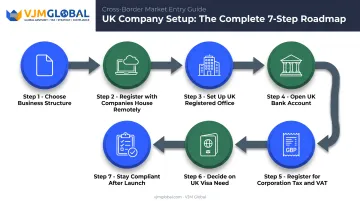
Step 1 – Choose Your Business Structure
Three options are on the table:
- Sole trader – Simplest route, no Companies House registration needed, but you carry personal liability for business debts
- Limited company (Ltd) – A separate legal entity registered at Companies House, offering liability protection and stronger credibility with UK banks and clients
- LLP – Suited to two or more partners who want shared ownership with limited liability
Most UAE-based founders trading with UK clients, or planning to open a UK business bank account, opt for a Ltd company. The liability protection matters, but so does perception: UK clients and banks tend to trust an incorporated entity over an unregistered sole trader arrangement.
Step 2 – Register the Company with Companies House Remotely
Registration is fully digital. You'll need a passport copy and address details, nothing else exotic. Non-resident directors don't need UK residency or a National Insurance number to complete this.
On cost and speed: online incorporation costs £100 and is typically processed within 24 hours, according to Companies House's official registration guidance. Postal filing costs £124 and takes 8-10 days, so online is the obvious choice for anyone registering from Dubai or Abu Dhabi.
You'll need at least one director and one shareholder, and neither has to be based in the UK.
Step 3 – Set Up a UK Registered Office Address
Every UK company must have a UK registered office address. A PO Box alone won't be accepted. It needs to be a physical address capable of receiving post.
Most UAE-based founders solve this through a virtual office or registered agent service. Two things to keep in mind:
- This address becomes public record and appears on the Companies House register
- It doesn't need to be where the business actually operates day to day
Step 4 – Open a UK Business Bank Account from the UAE
This is where many founders hit friction. Traditional high-street banks often require an in-person branch visit or a UK residential address history, which most UAE-based directors simply don't have.
Digital-first alternatives fill the gap. Several fintech and EMI providers support remote onboarding with document-based verification, though eligibility criteria vary by provider and it's worth checking each one's residency requirements before applying.
To speed things up, have ready in advance:
- Certificate of incorporation and company registration documents
- Proof of your UAE address
- Valid ID (passport)
- Details of ultimate beneficial ownership
Step 5 – Register for Corporation Tax and VAT
Once Companies House registration completes, HMRC automatically issues a Unique Taxpayer Reference (UTR), usually posted within about 15 days to the registered office address. Corporation Tax registration must follow within three months of the company starting business activity.
On VAT: registration becomes compulsory once UK taxable turnover exceeds £90,000 over the previous 12 months, or is expected to exceed that threshold in the next 30 days, per HMRC's VAT registration guidance.
One nuance UAE-owned businesses should flag with an advisor: non-established taxable persons face different registration triggers regardless of turnover. Ownership structure and UK establishment status both matter here.
Step 6 – Decide If and When You Need a UK Visa
Owning and operating a UK company remotely from the UAE doesn't require a visa. Physically working in or relocating to the UK does.
For founders planning an eventual move, the Innovator Founder Visa route exists, but it requires your business idea to be endorsed by an approved body first, and applicants need to show sufficient personal funds. Cross-border tax advisory matters here. Founders often manage tax residency questions in the UAE and UK at the same time, and getting that wrong can create unexpected liabilities on both sides.
Step 7 – Stay Compliant After Launch
Registration is the start, not the finish. Every UK company must file annual accounts and a confirmation statement with Companies House, plus Corporation Tax returns with HMRC. Missed deadlines trigger automatic penalties, so UAE-based directors should calendar filing dates early or appoint a UK accountant to handle them remotely.
Costs, Taxes and Compliance to Plan For
Government fees are just the entry point. Realistic budgeting covers five categories:
- Companies House registration fee
- Registered office or virtual address service
- Business bank account setup and ongoing fees
- Accounting and compliance support
- Visa fees, if relocation is on the horizon
Corporation Tax uses a tiered structure:
- 19% on profits under £50,000 (small profits rate)
- 25% on profits above £250,000 (main rate)
- Marginal Relief tapers the rate between those bands
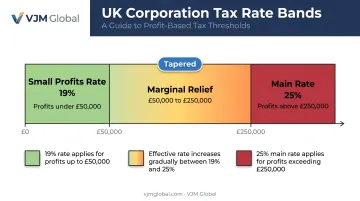
This applies regardless of whether the company is UAE-owned.
VAT uses the £90,000 registration threshold covered in Step 5. Non-UK-resident-owned businesses can face different registration triggers, so confirm your position with an advisor.
For UAE tax residents with UK-sourced income, a UK–UAE double taxation convention has applied since 2016, covering income and capital gains in both jurisdictions. Treaty positions can shift, so verify the current position before finalising your structure.
Ongoing compliance doesn't stop once the company is formed:
| Obligation | Frequency | Notes |
|---|---|---|
| Confirmation statement | Annual | £50 fee, applies even to dormant companies |
| Annual accounts | Annual | First filing due 21 months post-incorporation |
| Corporation Tax return | Annual | Due 12 months after accounting period ends |
These apply even to low-activity companies, so a UK Ltd sitting quietly with minimal trading still generates paperwork.
VJM Global supports founders operating between the UAE and UK with entity formation, cross-border tax advisory and ongoing compliance in both markets. That help matters when you need UAE and UK obligations kept aligned without duplicating work or missing a filing deadline.
Conclusion
Starting a UK business from the UAE is entirely achievable without ever boarding a flight. Success depends on getting the structure, banking and compliance right from day one.
Registering a company and obtaining the right to live or work in the UK are separate processes. Treating them as one and the same is the most common trip-up founders make.
If you're weighing up entity structure, cross-border tax exposure or ongoing compliance between the UAE and UK, VJM Global's formation and compliance support team works across both markets and can help you set up cleanly and stay compliant from the start.
Frequently Asked Questions
Which is the easiest business to start in the UK?
Sole trader setups and service-based models—freelance consulting, e-commerce and digital services—are the easiest entry points. They need minimal registration and low startup capital compared to regulated or asset-heavy sectors.
Can a UAE resident register a UK company without living in the UK?
Yes. Non-residents can register a UK limited company remotely through Companies House with a passport copy and UK registered office address. No UK residency or National Insurance number is required for directors.
Do I need a UK visa to start a business in the UK from the UAE?
No visa is needed to own or remotely operate a UK company. A visa such as the Innovator Founder Visa is only required if you plan to physically relocate and work in the UK.
How much does it cost to register a UK company from the UAE?
Companies House charges £50 for online registration. Add a registered office service plus banking and compliance support, and total setup typically runs to several hundred pounds depending on scope.
Is there a tax treaty between the UK and UAE to avoid double taxation?
Yes, a double taxation convention between the UK and UAE has been in place since 2016, covering income and capital gains taxes. Verify the current treaty position with a cross-border tax advisor before finalising your plans.
Can I open a UK business bank account while living in the UAE?
Yes, via fintech and EMI providers offering remote, document-based onboarding. Traditional high-street banks often still require an in-person visit or UK address history, so check eligibility criteria before applying.