That momentum is why a growing number of UAE-based founders and trading companies are registering UK entities. Many want to move beyond the classic GCC re-export model, get closer to EU-adjacent logistics networks, and add the credibility a UK Ltd company carries with European buyers.
The interest isn't limited to large corporates, either. Free zone traders in Dubai and Abu Dhabi, e-commerce sellers, GCC-based SMEs and expatriate entrepreneurs are all exploring the same route.
This guide walks through the practical steps: company registration, EORI and VAT setup, customs compliance, and the logistics needed to run a UK trade business from the UAE.
TL;DR
- Companies House incorporation, a GB EORI number, and VAT registration are required; UK residency is not
- Every UK company needs a registered office or agent address, even if all directors sit in Dubai or Abu Dhabi
- Correct HS/commodity codes and product approvals set duty rates and stop shipment delays
- UK-GCC FTA talks concluded in May 2026 but are unsigned, so standard UK tariffs still apply to UAE goods
- Full setup, from incorporation to first shipment, usually takes a few weeks once documents are ready
What Is a UK Import-Export Business (Run from the UAE)?
A UK import-export business run from the UAE is a UK-registered trading entity. It sources or sells goods between the UK and UAE, or uses the UK as a base to reach other markets.
The model is operational trade: customs clearance, sourcing and distribution—not brand-building or marketing.
Two common formats show up repeatedly:
- A UK Ltd company trading UAE-sourced goods into the UK or wider European market
- A UAE-based entity re-exporting UK-origin goods into the GCC, Africa or Asia
Plenty of founders end up running both once the UK entity starts trading.
Why Start an Import-Export Business in the UK from the UAE?
Registering a UK company doesn't guarantee profit. It's a structural decision that suits specific trade patterns, not a shortcut to revenue on its own.
A Large, Transparent Market With Room to Grow
The UK remains a significant UAE trading partner outside the GCC. UK exports to the UAE hit £15.7 billion in the four quarters to Q1 2026, up 2.8% on the previous year, while UK imports from the UAE reached £9.5 billion, up 5.8%. That's growth on both sides of the ledger.

For UAE-based traders used to free zone re-export volumes, that curve is worth tapping directly rather than solely through intermediaries.
Credibility That Opens Doors
A UK Ltd company signals something specific to European buyers and suppliers: transparent ownership, UK company law, and public Companies House filings.
That matters when negotiating with UK wholesalers or EU distributors who prefer a UK-incorporated counterparty over a free zone structure they don't recognise.
Diversification and Remote Control
Relying entirely on UAE re-export routes concentrates risk in one jurisdiction. A UK entity:
- Adds a base with EU-adjacent logistics access
- Reduces overreliance on GCC re-export margins
- Can be incorporated and run remotely—no relocation or UK visit required
English commercial law and UK banking tools—letters of credit and invoice factoring—are recognised internationally. That helps when a UK buyer wants payment terms secured through a bank instrument rather than trust alone.
What to Know Before You Start
Get compliance and cost requirements straight before you spend money on registration. Whether trading suits you personally is a separate question.
Non-negotiable requirements:
- A UK company must maintain a registered office or agent address at all times, even when every director lives in Dubai or Abu Dhabi
- A GB EORI number and VAT registration are mandatory before goods can legally clear UK customs
- Commodity/HS code classification must be correct from day one; it determines the tariff rate and can hold shipments at the border
On trade agreements: UK-Gulf Cooperation Council FTA negotiations, which cover the UAE, concluded on 20 May 2026. The deal still needs legal finalisation, signature and ratification before it takes effect.
Until then, the UK Global Tariff applies to UAE-origin goods unless another exception applies. Don't assume preferential rates yet.
On timing: Incorporation itself moves fast, but VAT and EORI processing, bank account opening and arranging a first shipment all add weeks. Budget realistically rather than expecting income in month one.
How to Start an Import-Export Business in the UK from the UAE – Step by Step
With the fundamentals covered, here's how the process unfolds—from defining what you'll trade to shipping your first container.
Three mistakes come up repeatedly:
- Registering a vague "general trading" activity that doesn't match what you sell
- Skipping EORI or VAT registration until customs rejects a shipment
- Underestimating landed cost (duty plus VAT plus freight) until margins disappear
Step 1 – Define Your Product, Market and Trade Direction
Decide upfront whether your UK entity will primarily export UK goods to the UAE/GCC, import UAE-sourced or re-exported goods into the UK, or run both directions at once.
Validate the direction with real trade data before committing:
| Market | Leading category (2024/25) | Value |
|---|---|---|
| UK goods exports | Mechanical power generators | £45.4bn |
| UK goods imports | Cars | £46.5bn |
| UAE non-oil exports | Gold, jewellery | AED 561.2bn (total) |
| UAE non-oil imports | Gold, mobile phones, petroleum oils | AED 1.701tn (total) |
The common miss: registering a broad "general trading" SIC code without checking whether your specific product needs a licence, certification or standards approval. A trader planning to sell electronics, for example, may later discover UKCA marking requirements they hadn't budgeted for. Check product-specific compliance before locking in registration.
Step 2 – Choose a UK Business Structure and Register with Companies House
For non-resident founders, a private limited company (Ltd) is the most common and credible structure. It offers limited liability, is well understood by UK and EU trading partners, and doesn't require a UK-resident director.
Every UK company needs a registered office address in the same jurisdiction as incorporation, whether that's England and Wales, Scotland or Northern Ireland. This address is public on Companies House records; a UAE address alone won't work.
This is where specialist entity-formation providers become useful. Firms such as VJM Global handle UK incorporation, registered office arrangements and compliance filings remotely, meaning UAE-based founders never need to fly to the UK to get a company on the register.
Beyond the address, you'll need to:
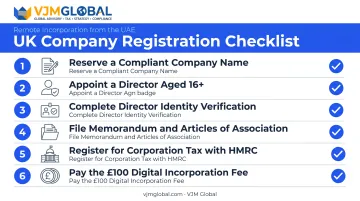
- Choose and reserve a compliant company name (avoid names too similar to existing ones or implying a government link)
- Appoint at least one director aged 16 or over (no UK residency required)
- Complete identity verification for each director
- File a Memorandum and Articles of Association
- Register for Corporation Tax with HMRC to obtain a Unique Taxpayer Reference
- Pay the standard digital incorporation fee, currently £100
Once approved, Companies House issues a Company Registration Number and certificate of incorporation, the point your UK trading entity legally exists.
Step 3 – Register for VAT, EORI and Import/Export Codes
A GB EORI number is required to submit any UK customs declaration. Without it, goods simply won't clear. Apply online through a Government Gateway account. Most numbers issue immediately; some take up to five working days if checks are needed.
VAT registration becomes mandatory once taxable turnover crosses £90,000 in a 12-month period, or if you expect to cross that threshold within 30 days. One catch: a business based outside the UK that supplies goods or services into the UK can be required to register regardless of turnover. Get this assessed early rather than assuming the standard threshold automatically applies.
Once registered, exported goods can often be zero-rated for VAT. You must meet the statutory conditions, ship the goods out of the UK within the time limit, and keep valid export evidence (commercial invoices and customs paperwork).
If goods will also clear UAE customs for re-export, you'll need a matching UAE Customs Client Code on that side, a separate registration from anything done in the UK.
Step 4 – Classify Goods, Secure Licences and Compliance Approvals
Every product needs a correct HS/commodity code, found using the UK Trade Tariff tool. This code determines the duty rate, VAT treatment, and whether quotas or trade remedies apply. Get it wrong and shipments get delayed or overcharged.
Next, check whether your goods are controlled. The Export Control Joint Unit (ECJU) administers licensing for military and dual-use items. Controlled goods need a specific licence, or may fall under an Open General Export Licence (OGEL) for defined goods and destinations.
An OGEL still requires registration and full compliance with its terms. It is not a blanket exemption.
Then confirm product-specific approvals:
- UKCA marking for covered product regimes (CE marking remains acceptable for many categories in Great Britain, for now)
- Food, cosmetics or electronics standards where applicable
- Any UAE-side certification needed for goods being re-exported
Skipping this step is one of the most common reasons shipments get held at customs.
Step 5 – Open a UK Business Bank Account and Arrange Trade Finance
Banks typically request:
- Incorporation documents and registered office details
- Proof of identity and address for directors and beneficial owners
- A business plan outlining expected turnover, trading countries and payment volumes
- Early purchase orders or supply contracts, where available
Non-resident directors and UAE-controlled ownership structures can fall outside a bank's standard "simple" business profile, which sometimes means more documentation or a longer review.
For managing cash flow on cross-border orders, two tools are worth understanding:
- Letters of credit: the issuing bank pays the seller once agreed documents and conditions are met
- Invoice factoring: a finance provider advances funds against unpaid invoices while customer terms run
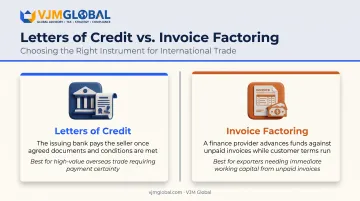
Neither is mandatory, but both become common once shipment volumes outgrow working capital alone.
Step 6 – Set Up Logistics, Documentation and Launch Operations
Partner with a freight forwarder or customs broker who already works UK-UAE shipping lanes. Someone unfamiliar with this specific corridor is more likely to misfile a declaration or miss a documentation requirement.
Typical shipment documentation includes:
- Commercial invoice
- Packing list
- Certificate of origin (when required by the buyer, customs or a preference claim)
- Bill of lading (sea) or air waybill (air)
- Customs declaration and export licence, where controlled goods apply
Not every document applies to every shipment; requirements shift depending on goods, destination, Incoterms and transport mode.
Once trading begins, recordkeeping is ongoing, not a one-off task:
- Keep customs records for a minimum of 4 years
- Keep VAT records for 6 years
- File your annual Companies House Confirmation Statement and accounts on schedule
- Stay current on VAT returns before scaling shipment volumes
Falling behind on filings is a common reason growing trading businesses run into friction with HMRC later.
Conclusion
Starting a UK import-export business from the UAE rewards preparation over speed. Get registration, EORI, VAT and product compliance right before your first shipment leaves the ground. Rush the paperwork and you'll pay for it in delayed customs clearance or unexpected duty bills.
Long-term success hinges on what comes after setup. Track tariff changes as the UK-GCC FTA moves toward ratification, and keep building logistics and banking relationships as volumes grow.
Working with a cross-border entity formation specialist such as VJM Global can shorten the setup timeline considerably, particularly for UAE-based founders navigating UK incorporation, registered office requirements and ongoing compliance filings from Dubai, Abu Dhabi or anywhere else in the Emirates.
Frequently Asked Questions
How do I open an import-export company in the UK?
Register your company with Companies House, obtain a GB EORI number, register for VAT once required, and secure any product-specific licences before shipping. A UK registered office address is mandatory throughout.
What is the UK's most profitable export?
Export value doesn't equal profit margin, but by value, mechanical power generators led UK goods exports in 2025 at £45.4 billion, while other business services topped services exports at £192.5 billion.
What are the top 10 imports in the UAE?
UAE data points to gold, mobile phones, petroleum-based oils, automobiles, jewellery, diamonds and computers as leading import categories. A full official top 10 ranked by value is not published in current releases.
Do I need to be physically present in the UK to register a company from the UAE?
No. UK company registration can be completed entirely remotely with a registered office or agent address in place. Directors can stay in Dubai, Abu Dhabi or anywhere else without relocating.
How much does it cost to start an import-export business in the UK?
Companies House digital incorporation costs £100. VAT and EORI registration carry no official government fee, though registered office services, customs brokers and advisory support add ongoing costs depending on scope.
Is there a free trade agreement between the UK and the UAE?
UK-Gulf Cooperation Council FTA negotiations, covering the UAE, concluded in May 2026, but the agreement still needs signature and ratification. Until it's in force, standard UK tariffs apply to UAE-origin goods.