Introduction
The UK saw over 650,000 new company incorporations in a recent year. Yet a large share of these businesses start trading without any real insurance cover in place, leaving founders personally and financially exposed from day one.
Startup insurance is widely available. Pricing still feels like a black box.
A solo consultant and a five-person SaaS team with enterprise clients face completely different cost structures. The figures on comparison sites rarely match what you actually pay.
This article breaks down typical UK pricing by insurance type and business profile, the factors that push premiums up or down, and how to budget for cover properly instead of guessing.
Key Takeaways
- UK startup insurance runs from about £250 a year for a low-risk solo founder to several thousand pounds in higher-risk sectors
- Industry risk, headcount, and client-required indemnity limits drive most of the cost variation
- Employers' Liability is mandatory once you hire; Public and Professional Indemnity are commercial must-haves
- Bundling core covers usually beats the cheapest standalone policy
How Much Does Startup Business Insurance Cost in the UK? (Pricing Overview)
There's no fixed price tag for startup insurance. Any quote you see before an insurer has assessed your actual risk should be treated as a rough estimate, not a real number.
Cost gets misunderstood in three common ways:
- Underinsuring to save money: choosing a lower indemnity limit than your contracts actually require
- Buying a generic, one-size-fits-all policy: one that excludes sector-specific activities you actually carry out
- Ignoring client or investor indemnity limits: enterprise buyers often demand far higher limits than a standard starter policy
Typical Annual Cost by Startup Profile
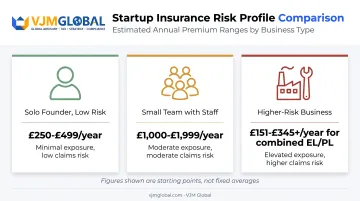
Solo founder, low-risk consultancy, no staff. According to PolicyBee's business insurance statistics, sole traders typically spend £250 to £499 a year on their insurance, with nearly half spending under £250.
That figure covers a general mix of business insurance rather than a fixed PL and PI package, but it's a fair budgeting proxy for a low-risk, no-employee business.
Small team with staff, moderate risk (tech, SaaS, service businesses). Once you add employees, Employers' Liability enters the picture. PolicyBee's data places businesses with one to nine employees at roughly £1,000 to £1,999 a year across their full insurance mix.
Add cyber cover for data-handling businesses and you're looking at another £130 or more a year on top for a modest limit.
Higher-risk business (manufacturing, construction, food/retail with public footfall). Real quotes gathered by comparison sites show combined EL and PL only—not a full package. A painter or decorator with one casual worker paid around £151 a year, while an electrician with one permanent employee paid closer to £345 a year.
Businesses with heavier equipment, warehousing, or products sold to the public typically sit above these figures once product liability is factored in.
Typical Annual Cost by Insurance Type
| Cover | Typical starting cost | Notes |
|---|---|---|
| Employers' Liability | From around £250/year | Rated on headcount and wage bill; manual roles cost more |
| Public Liability | From roughly £72–£75/year | Rises sharply with footfall and physical risk |
| Professional Indemnity | From roughly £72/year | High-risk professions (structural engineering, for example) pay several times more |
| Cyber Insurance | From around £133/year | Scales with data volume and business size |
| Directors & Officers | From around £176/year | Often required by investors before funding completes |
These figures are starting points, not averages. Your actual premium depends on a full risk assessment, not a headline number from a comparison page.
Key Factors That Affect the Cost of Startup Business Insurance
UK insurers don't apply a flat rate. They price based on sector risk, business size, and what your contracts actually demand.
Industry and Sector Risk
Desk-based, low-contact businesses — consultancies, agencies, software teams — pay less because there's minimal physical exposure. Public-facing, product-based, or physical-labour sectors like construction and manufacturing carry more risk of injury or damage claims, so premiums climb accordingly.
Business Size and Headcount
Hiring your first employee changes everything. It triggers mandatory Employers' Liability cover, and it usually increases your Public Liability exposure too, since more staff generally means more customer contact and more activity.
Indemnity Limits Required by Clients and Investors
Enterprise contracts commonly set minimum cover requirements:
- £1m+ Professional Indemnity for service and advisory work
- £5m-£10m Employers' or Public Liability for larger corporate clients
- Directors & Officers cover for investor and funding-round requirements
If your policy doesn't match what a contract or term sheet specifies, you could lose the deal entirely, regardless of how good your actual cover is.
Data Handling and Digital Exposure
Startups holding customer data or running digital platforms face higher cyber premiums. The UK Government's Cyber Security Breaches Survey found that 42% of micro businesses and 46% of small businesses reported a breach or attack in the previous 12 months. Insurers price cyber cover with that risk in mind.
Claims History and Location
A prior claims history pushes premiums up, though small claims typically don't move the needle much on their own. Operating in higher-cost regions such as London can also nudge pricing upward, though this tends to be a smaller factor than sector or headcount.
Cost Breakdown: What a Startup Insurance Premium Actually Includes
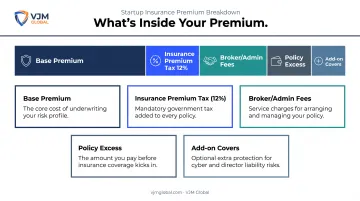
The quoted premium is rarely the only cost you should budget for. A full picture includes:
- Base premium: the recurring cost covering the agreed risk
- Insurance Premium Tax: a standard 12% added on top in the UK
- Broker or admin fees: one-time or recurring, depending on the provider (some insurers, like PolicyBee, advertise none)
- Policy excess: the amount you pay toward a claim before cover kicks in; a higher excess usually lowers your premium
- Add-on covers: cyber, D&O, and other extras, typically added as the business scales
Renewal premiums often rise once a startup adds staff, revenue, or new activities. Treat your insurance cost as a number to review annually, not something fixed at your first quote.
How to Budget for Startup Insurance and Avoid Overpaying
Budget for cover that matches your real risk: enough to protect the business, without paying for extras you will never use.
Smart Ways to Reduce Premiums Without Losing Protection
- Bundle core covers: Public Liability, Professional Indemnity, and Employers' Liability together, rather than buying each separately—most UK providers price packages this way
- Pay annually where possible: many insurers offer better terms than monthly instalments and drop ongoing admin fees
- Set a sensible excess: a slightly higher voluntary excess often cuts the premium if you can fund a small claim from cash reserves
Building Insurance Into Your Wider Startup Financial Plan
Insurance is one line item among several early compliance costs. Company formation, HMRC tax registration, and bookkeeping all land in the same first few months, and forecasting them together avoids cash-flow surprises later.
A firm that handles UK formation and early compliance can fold those costs into one forecast. VJM Global helps founders with Companies House registration, HMRC tax setup, and bookkeeping, so statutory items like insurance sit in the same early-stage budget rather than arriving as separate surprises.
Mistakes That Inflate Costs or Leave Startups Exposed
- Waiting until the first client contract to arrange cover: risk, and often the contractual requirement, starts when you begin trading
- Buying the cheapest comparison-site policy: generic wording may exclude the sector activities you actually perform
- Setting the wrong indemnity limit: a limit that ignores real client or investor exposure leaves you underinsured when a claim lands
Conclusion
Startup insurance costs in the UK vary widely by sector, headcount, and the cover limits clients or investors demand. There's no single figure that applies to every business, and treating any quoted range as gospel before a proper risk assessment is a mistake.
Know what drives the premium, and budget insurance with your other compliance costs. You get fewer surprises—and you're ready when a client or investor asks for proof of cover.
For founders setting up a new UK entity, especially from overseas, firms like VJM Global can handle entity formation, tax registration, and ongoing compliance. That way insurance and other statutory costs are built into the plan from day one, not scrambled together later.
Frequently Asked Questions
How much is £10 million public liability insurance?
£10m Public Liability is typically requested by larger enterprise clients or higher-risk contracts. Premiums hinge on your sector and claims history, not the limit alone — get a broker quote rather than a comparison-site estimate.
What insurance do I need for my business in the UK?
Most UK startups need the "core three": Employers' Liability once you have staff, Public Liability, and Professional Indemnity if you give advice or services. Sector-specific add-ons like cyber or product liability come next, depending on what you do.
Is business insurance a legal requirement for UK startups?
Only Employers' Liability (once you hire staff) and certain vehicle cover are legally mandatory. Everything else (Public Liability, Professional Indemnity, cyber, Directors & Officers) is a commercial necessity rather than a legal one, though contracts often make it non-negotiable.
How much does public liability insurance cost for a small UK business?
Starting prices from major UK insurers sit around £72–£75 a year for £1m of standard cover. The actual figure varies widely depending on your sector and how much public footfall your business handles.
Can I get business insurance before I officially launch my startup?
Yes, and you should. Cover can be arranged before trading begins, since many client contracts and co-working spaces require proof of insurance before they'll even sign anything with you.
Does a limited company need different insurance from a sole trader?
The core covers are largely similar for both structures. Limited companies with directors or investors, however, often add Directors & Officers cover to protect individuals from personal liability, something sole traders don't typically need.