Introduction
Setting up a business outside your home country used to be a project reserved for large multinationals. Not anymore. Startups, exporters, and solo founders now routinely form entities abroad to reach new customers, hire talent, or raise capital in a foreign currency.
The problem? Every country writes its own rulebook. A registration that takes 24 hours in the UK might take weeks in India, and the paperwork rarely looks the same twice.
The Global Legal Entity Identifier Foundation tracks more than 1,050 business registers across 232 jurisdictions — proof that there's no single "global registration process," just dozens of local ones.
This guide breaks down what global company registration means, why businesses pursue it, the step-by-step process, how to pick the right country (including a close look at India), and the mistakes that trip up first-time founders.
Key Takeaways
- Registration gives your business legal standing to hire, bank, and sign contracts abroad.
- Jurisdiction choice (tax regime, ownership rules, ease of doing business) matters most in registration.
- Most countries follow five stages: choose a jurisdiction, file documents, set up tax/banking, then stay compliant.
- Ignoring compliance costs or rules like India's FEMA/RBI framework is founders' costliest mistake.
What Is Global Company Registration?
Global company registration is the legal process of forming a recognized business entity in a country outside your home base. This formal filing with a government registrar grants your business a local legal identity, distinct from any marketing terminology.
Once registered, your company can:
- Hire employees under local labor law
- Open a corporate bank account
- Sign binding contracts with local suppliers or customers
- Pay taxes compliantly in that jurisdiction
This differs from simply having a foreign bank account or selling remotely into a market. Invoicing overseas clients or running Facebook ads to a foreign audience doesn't require registration. Actual registration means forming a subsidiary, branch, or representative office recognized under local corporate law.
Who typically needs this? Common candidates include:
- Scaling startups entering new markets
- Exporters establishing a local sales presence
- NRIs and OCIs investing back into India
- Multinationals setting up regional subsidiaries
The 4 Main Types of Business Structures Used Globally
| Structure | Best For | Key Trait |
|---|---|---|
| LLC | Small to mid-sized businesses | Liability protection, flexible management, popular default choice |
| Corporation/Joint Stock Company | Businesses seeking outside investors | Can issue shares, suited to larger fundraising goals |
| Branch Office | Parent companies extending operations | No separate legal personality; operates under the parent's name |
| Representative/Liaison Office | Market research only | Non-revenue-generating; heavily regulated by the RBI in India |
A liaison office in India cannot conduct any commercial, trading, or industrial activity, nor can it earn local income. It exists purely as a communication channel for the parent company.
Why Businesses Choose to Register Companies Internationally
Local incorporation changes how customers, banks, and partners perceive your business, well beyond meeting a compliance requirement.
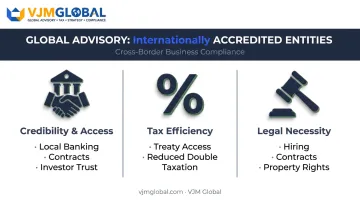
Credibility and access. A locally registered entity can open bank accounts, process local payments, and sign contracts that a foreign entity often can't. Regional customers and investors also tend to trust a business with local legal standing over one operating remotely.
Tax efficiency. The right jurisdiction and structure can substantially reduce your tax burden. The OECD's Model Tax Convention underpins more than 3,000 tax treaties globally, many of which prevent the same income from being taxed twice. That said, a low headline rate means little without treaty access. Always check whether your target country and home country actually have a treaty in force.
Legal necessity. In most jurisdictions, you legally cannot:
- Hire local employees on payroll
- Sign binding local contracts in your own name
- Own property or lease commercial space
...without a registered local entity. For many businesses, this makes registration mandatory rather than optional.
How to Register a Company Globally: Step-by-Step Process
Specific requirements vary by country, but almost every jurisdiction follows the same core sequence. Skipping steps, especially documentation review or tax registration, is the single biggest cause of delays and legal exposure.
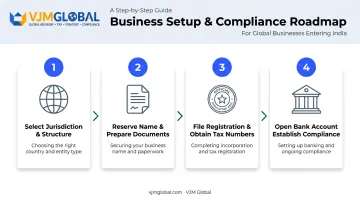
Step 1: Select Your Jurisdiction and Business Structure
Evaluate:
- Corporate tax rate and available exemptions
- Ease-of-doing-business ranking
- Proximity to your target market
- Foreign ownership restrictions
Tax rates alone vary enormously across jurisdictions:
| Country | Corporate Tax Rate |
|---|---|
| Singapore | Flat 17% |
| UAE | 0% up to AED 375,000, 9% above |
| UK | 25% main rate (19% small-profits rate) |
| India | 22%–30%, depending on the scheme elected |
Registration timelines vary just as widely. Delaware offers paid same-day options, while Singapore's more complex applications can take up to 15 working days.
Step 2: Reserve a Company Name and Prepare Incorporation Documents
Most registrars require:
- Passport or ID for all directors and shareholders
- Proof of address
- Articles of Incorporation
- A description of the business activity
You'll also typically need to appoint a registered agent or local representative, someone with a physical address in-country who receives official government correspondence on your behalf. Delaware, for instance, mandates this regardless of where the business actually operates.
Step 3: File the Registration and Obtain Tax/Regulatory Numbers
Once documents are ready, you submit the application to the relevant company registrar and pay the government filing fee. After incorporation, you'll still need:
- A tax identification number
- VAT/GST registration, where applicable
- Any industry-specific licenses before you can legally commence operations
Filing itself is often the fast part. Getting tax and licensing numbers issued afterward is usually where timelines stretch.
Step 4: Open a Local Bank Account and Establish Ongoing Compliance
Banks generally ask for:
- Certificate of Incorporation
- KYC/AML documentation for all beneficial owners
- Shareholder and director details
Registration doesn't end at incorporation. Ongoing obligations include annual filings, statutory audits, bookkeeping, and periodic tax returns. Miss these, and your entity risks falling out of good standing even if it's already legally formed.
Choosing the Right Country: Key Factors and Popular Jurisdictions
Jurisdiction selection comes down to five criteria:
- Registration cost and speed
- Corporate tax rate
- Foreign ownership rules
- Tax treaty access
- Banking infrastructure
| Jurisdiction | Typical Registration Speed | Government Filing Fee | Strategic Fit |
|---|---|---|---|
| USA (Delaware) | 1 hour to 24 hours (expedited) | From $109 (corporation) | Venture capital access |
| UK | Usually within 24 hours | £100 online | EU-adjacent market gateway |
| Singapore | Up to 15 working days (complex cases) | S$15 name + S$300 registration | Asia-Pacific hub |
| UAE (ADGM) | Average 5 working days | Activity-dependent | Middle East access |
Strategic goals should drive the decision, not tax rate alone. The US suits companies chasing venture funding. The UK and Ireland offer a foothold near European markets. Singapore and the UAE work well for businesses targeting Asia-Pacific or Middle Eastern customers.
One more factor is reshaping these decisions for larger groups: the OECD's Pillar Two rules impose a 15% effective tax floor on multinational groups with revenue above €750 million. Substance requirements, meaning you need real staff and operations rather than just a mailbox, are now non-negotiable for bigger companies chasing low-tax jurisdictions.
Spotlight: Why India Is a Growing Destination for Global Investors
India's expanding consumer market and liberalized FDI rules have made it a serious contender for US, UK, and Australian businesses. As of DPIIT's July 2025 policy table, sectors including manufacturing, telecom services, and greenfield pharmaceuticals now permit 100% FDI under the automatic route: no prior government approval needed for most activities.
That accessibility comes with complexity. India's corporate law, RBI/FEMA regulations, and multi-layered compliance calendar are not something most foreign founders can navigate alone. Getting the entity structure, FDI route, and post-incorporation filings wrong is common, and costly to fix later.
This is where local expertise pays for itself. VJM Global has spent over 30 years helping foreign companies enter India, supporting 500+ US, 250+ UK, and 250+ Australian businesses. That support spans the full journey: choosing between a subsidiary, branch, or liaison office, navigating FDI and FEMA compliance, and managing ongoing accounting, GST filings, and payroll once the entity is running.
Common Mistakes to Avoid When Registering a Company Abroad
Founders repeatedly stumble over the same handful of issues:
- Chasing headline tax rates alone. A 9% corporate rate means little once compliance costs, substance requirements, and withholding taxes offset the savings. Model the full cost, not just the sticker rate.
- Underestimating documentation and banking KYC. Missing beneficial-owner paperwork or incomplete shareholder records is one of the most common reasons bank accounts stall, sometimes delaying operations by months.
- Skipping local legal and tax advisory support. Rules like India's RBI approval for branch offices, or the mandatory Letter of Comfort for ineligible parent companies, aren't intuitive to outsiders. A dedicated local partner, such as VJM Global's team of CAs, CPAs, and FEMA specialists, catches these gaps before they become penalties.
Registration paperwork is rarely the hard part. Staying compliant afterward, year after year, is where most foreign businesses actually struggle.

Frequently Asked Questions
How do I register a company worldwide?
Choose your jurisdiction and business structure, prepare incorporation documents, file with the local registrar, and complete tax and bank account setup. The core sequence is similar everywhere, though specific requirements vary by country.
What is the best country to register a company?
The best country depends on your specific goals rather than one universal answer. The US suits venture-backed startups, the UK offers EU-adjacent access, and Singapore or the UAE work well for Asia-Pacific or Middle East expansion.
Can a foreigner register a company in the US?
Yes. Delaware and most US states permit 100% foreign ownership of an LLC or C-Corp, with no citizenship or residency requirement for shareholders. S-corporations are the exception, since they can't have nonresident-alien shareholders.
What are the 4 main types of business structures?
The four common structures are the LLC (liability protection with flexible management), Corporation (share issuance for investors), Branch Office (extension of the parent company), and Representative/Liaison Office (non-revenue market presence).
How long does it take to register a company internationally?
Timelines range from about 24 hours in the UK to several weeks elsewhere, depending on the country and structure chosen. Singapore's complex applications, for example, can take up to 15 working days.
Do I need to be physically present to register a company abroad?
No. Most jurisdictions allow remote incorporation through a registered agent or professional service provider. You'll typically still need a local registered office or agent address, even if you never visit in person.