Environmental Clearance is a prior regulatory approval assessing the likely environmental effects of a proposed quarrying or mineral-extraction activity before operations begin. This isn't just another piece of paper; it's a comprehensive environmental appraisal that determines the legality, continuity, and social acceptance of your operations in Kerala. Many operators mistakenly equate it with a quarrying permit or an approved mining plan, a misconception that can lead to costly shutdowns and legal challenges.
This article cuts through the confusion. We will explain what EC is, where it applies, the step-by-step process, and crucial exemptions. We will also cover recent legal developments in Kerala and the common mistakes that can put your project at risk.
Key Takeaways
- Environmental Clearance, quarrying permits, mining plans, and pollution consents are all separate legal requirements. One approval cannot substitute for another.
- The requirement for an EC is primarily governed by the EIA Notification, 2006, and its amendments, which classify projects based on lease area and clustering, not just production volume.
- Exemptions for projects linked to linear infrastructure, like national highways, are not automatic. They must be narrowly checked against the specific project, work order date, and how the material is used.
- An expired EC or permit is a major red flag. The validity of a mining plan or a history of royalty payments does not automatically grant the right to continue quarrying.
- Always verify the latest rules with competent authorities like SEIAA Kerala and seek professional legal or environmental advice before starting any excavation.
What Is Environmental Clearance for a Quarry?
Environmental Clearance (EC) is an environmental appraisal and approval process mandated under India's environmental laws. It is more than an administrative licence to extract stone or soil. Its purpose is to ensure that potential environmental impacts are identified, scrutinised, and managed before any work begins.
The process is built to deliver three outcomes:
- Systematically assess how the proposed quarry could affect local landform, water resources, air quality, biodiversity, and communities
- Formulate specific, legally binding conditions to prevent, reduce, or offset identified environmental damage
- Give the competent authority a clear basis to decide whether the project's environmental costs are acceptable
The Legal Framework
The requirement for EC stems from the Environment (Protection) Act, 1986. The primary instrument is the Environmental Impact Assessment (EIA) Notification, 2006, and its later amendments. For quarries in Kerala, the key provisions sit under Schedule item 1(a) for "mining of minerals," which covers building stone and other minor minerals.
EC vs. Other Permissions
Holding an EC does not mean you hold every other approval. Each permission serves a different function:
- Quarrying Permit/Mining Lease: Issued by the Department of Mining and Geology under Kerala's minor mineral concession rules. It grants the right to extract a specific mineral from a defined area.
- Approved Mining Plan: A technical document covering mining method, reserves, and mine closure. It must be approved by the relevant mining authority but is not an EC.
- Consent to Establish/Operate: Issued by the Kerala State Pollution Control Board to control air, water, and noise pollution from quarry operations.
- Local Body Permissions: NOCs or licences from the local Panchayat or Municipality covering land use and local regulations.
The precise EC requirement for a quarry depends on mineral type, lease area, production scale, location, and any court directions or exemptions. Relying on outdated area thresholds without checking current law is a serious compliance risk.
Where Environmental Clearance Requirements Apply in Kerala
The need for an Environmental Clearance is not limited to large-scale mining operations. In Kerala, a wide range of extraction activities may fall under the EC framework.
Activities that typically require an EC assessment include:
- New building-stone or minor mineral quarries
- Excavation of ordinary earth for commercial purposes or for use in other projects.
- Expansion or modernisation of existing quarries, especially if it involves increasing the lease area or production capacity.
- Material extraction linked to infrastructure projects, such as roads, railways, or buildings, even if carried out by a contractor.
Factors Determining EC Applicability
Several factors determine whether a project needs an EC and the complexity of the appraisal process:
- Project Size (Lease Area): Under the EIA Notification, leases below 25 hectares are typically Category 'B2'; those 25 hectares and above are 'B1'. The 2012 Supreme Court judgment in Deepak Kumar v. State of Haryana held that even leases under 5 hectares require an EC.
- Clustering: Quarries within 500 metres of each other may be treated as a 'B1' project if their combined area exceeds the threshold (for example, 25 hectares).
- Location and Sensitivity: Quarries proposed near ecologically sensitive areas like forests, national parks, water bodies, or in areas prone to landslides face a higher level of scrutiny.
- Project Linkage: Extraction by a contractor for another project (for example, a landowner supplying earth to a builder) is still assessed. Compliance responsibility cannot be easily shifted.

The Myth of Automatic Exemption for NHAI Projects
A common misconception is that quarrying ordinary earth for a National Highways Authority of India (NHAI) project is automatically exempt from EC. This is no longer correct.
In Noble M. Paikada v. Union of India on 21 March 2024, the Supreme Court set aside a blanket exemption for sourcing ordinary earth for linear projects. The government has since introduced a new, conditional provision.
Any claimed exemption now requires verification of:
- Work-order date
- Direct connection to the specified project
- Permit limitations
- Proof the extracted material is used only for that work
The Kerala High Court has also clarified how these rules apply for specific periods. An NHAI connection alone is not an exemption.
Official Source Verification: Before proceeding, always verify the current status of notifications and guidelines from official sources, including the Kerala State Environment Impact Assessment Authority (SEIAA), the Ministry of Environment, Forest and Climate Change (MoEFCC) via the PARIVESH portal, and the Kerala Department of Mining and Geology.
Why Environmental Clearance Is Required and How the Process Works
Quarrying is recognised as an activity with significant environmental consequences. Excavation alters landforms, impacts slope stability, and can disrupt natural drainage patterns. The process also generates dust and noise, affects local biodiversity, and places pressure on groundwater resources.
Official SEAC Kerala appraisal documents consistently flag concerns such as landslide susceptibility and the cumulative impact of multiple quarries in one area. The EC process exists to manage these risks proactively.
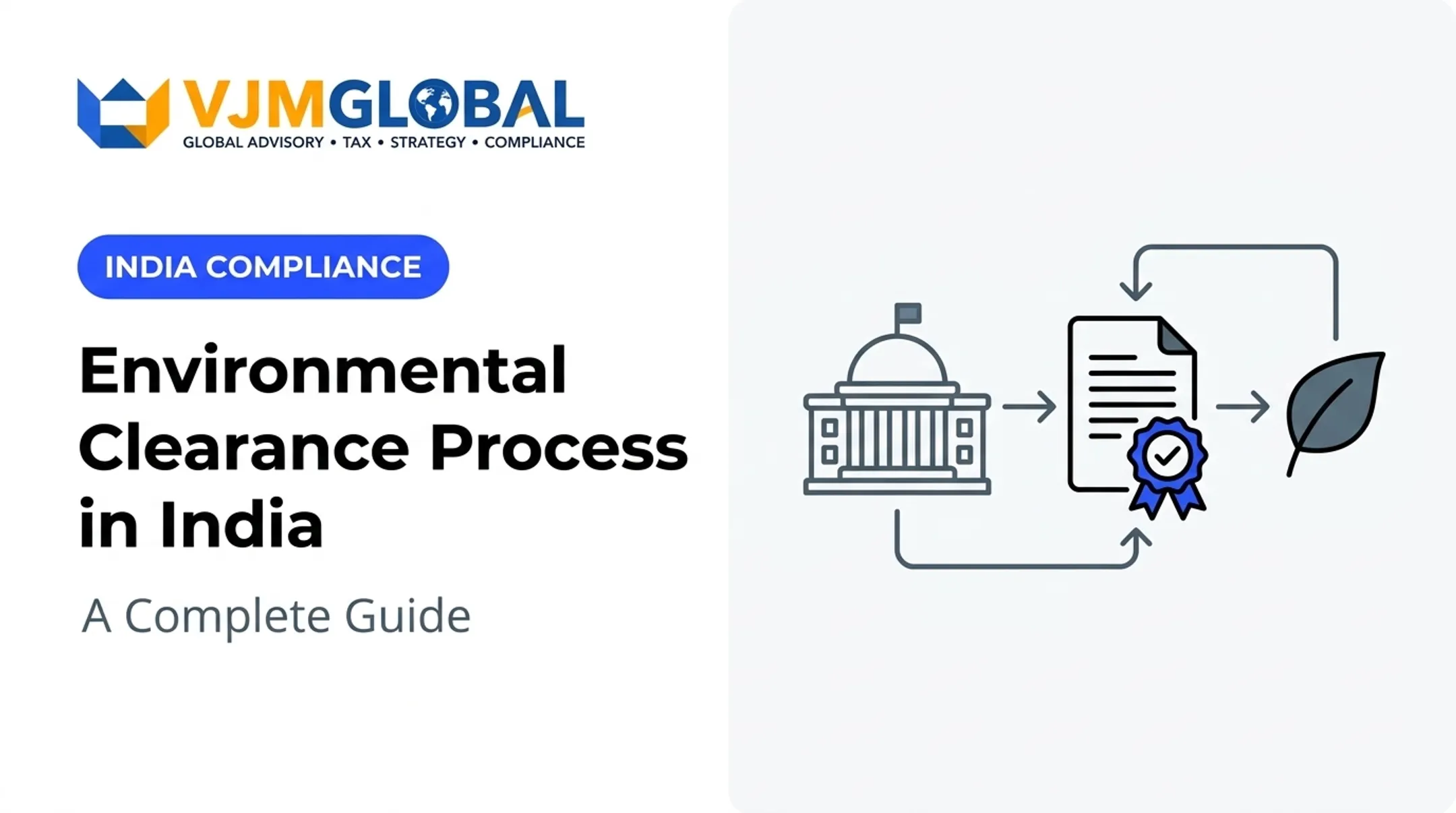
The process for obtaining an EC generally follows these steps:
1. Screening the Proposal The first step is to determine if the project requires an EC and, if so, which category it falls into ('B1' or 'B2'). This depends on the mineral, lease area, location, and potential for clustering with other nearby quarries.
2. Identifying the Approval Route and Authority For most quarry projects in Kerala (Category 'B'), the application is appraised by the State Expert Appraisal Committee (SEAC) and the final EC is granted by the State Environment Impact Assessment Authority (SEIAA). More complex 'B1' projects may require a more detailed Environmental Impact Assessment (EIA) report and public consultation.
3. Preparing and Submitting the Application The applicant must compile and submit a detailed application package through the designated online portal (PARIVESH). Key documents typically include:
- Application Form (such as Form-1)
- Pre-feasibility Report outlining the project details.
- An approved Mining Plan.
- Land ownership records and site plans.
- Details on production, machinery, and methods.
- An Environmental Management Plan (EMP) describing mitigation measures.
4. Scrutiny and Appraisal The SEAC reviews the application for completeness and technical accuracy. The committee may ask for additional information or clarifications. They appraise the project's potential environmental impacts and the adequacy of the proposed mitigation measures before making a recommendation to the SEIAA.
5. Post-Clearance Compliance Receiving an EC is not the end of the process. The approval comes with a set of legally binding conditions that the project proponent must follow throughout the quarry's lifecycle. These duties include:
- Adhering strictly to production and area limits.
- Implementing the approved Environmental Management Plan.
- Submitting regular compliance reports.
- Following protocols for mine closure and site restoration.
- Renewing or amending the EC if the project scope changes.

A critical warning for all operators: do not begin excavation simply because an application has been filed or a local NOC has been obtained. If prior EC is legally required, starting work without it is a violation of the law.
Key Factors, Exemptions, and Compliance Risks
EC outcomes hinge on a few application details—and on whether you stay aligned with those conditions after approval.
Factors Influencing Your EC Application
- Nature and Scale of Extraction: Mineral type, depth, area, production volume, and machinery (including blasting or crushing) are scrutinised. Seemingly separate activities may be treated as one project.
- Site and Environmental Sensitivity: Proximity to homes, water bodies, forests, protected areas, unstable slopes, or other regulated zones draws closer scrutiny.
- Project Linkage and Material Use: Linear-project exemptions require proof the material is used only for that project. Selling elsewhere or sourcing outside the permit can void the claim.
- Legal and Documentary Status: Keep the EC, quarrying permit, mining plan, and pollution consent valid and consistent. A mismatch in dates or conditions on one can jeopardise the others.
- Changes Over Time: Expansions, renewals, revised mining plans, or boundary changes can trigger a fresh assessment or EC amendment. New court rulings can shift the rules as well.
Understanding Exemptions and Compliance Risks
Operators often misread exemption rules, and courts interpret those claims narrowly. Recent Supreme Court and Kerala High Court decisions on NHAI-related quarrying stress a specific work order, a direct project link, and clear permit limits. A blanket claim that you supply an infrastructure project is not a defence.

Treat documentary consistency as part of compliance, not paperwork afterthought. VJM Global can help coordinate India-focused statutory and corporate records so EC, permit, and consent files stay aligned as your quarry approvals move forward.
Common Issues and Misconceptions
Many quarry operators in Kerala run into trouble by relying on outdated assumptions or incomplete information. Clearing up these common misconceptions is essential for maintaining compliance.
Myth 1: A quarry below a certain size (for example, 5 hectares) is automatically exempt from EC. Reality: This is false. Following the Deepak Kumar judgment, even small minor mineral leases require prior EC. Any area-based threshold or category must be verified against the current EIA notification and relevant court rulings.
Myth 2: A quarrying permit, approved mining plan, or royalty payment can substitute for an EC. Reality: These are separate compliances. Authorities and courts have repeatedly clarified that possessing one does not absolve you of the responsibility to obtain the others. An EC is a prerequisite that must be obtained separately from these other approvals.
Myth 3: An expired EC can be revived if the mining plan is still valid. Reality: An EC has a fixed validity period. A 2024 Kerala High Court ruling (Anil K.N. v. District Geologist) dealt with a conditional continuation for specific older clearances but did not establish a general rule. You cannot assume a valid mining plan keeps an expired EC alive.
Myth 4: An exemption is a permanent waiver. Reality: An exemption is almost always conditional and narrowly defined. It may be limited by project purpose, date range, location, or the end use of the material. Once those conditions are no longer met, the exemption may cease to apply.
Practical Warning Signs: If you encounter any of the following, it's time for an immediate compliance review:
- Your site boundaries have changed or expanded.
- You are producing more material than your EC allows.
- You are supplying material to multiple customers from a site with a project-specific permit.
- Your permits have expired or are nearing their expiry dates.
- You receive conflicting instructions from different government departments.
Conclusion
Obtaining Environmental Clearance for a quarry in Kerala is a distinct legal obligation that must be addressed separately from mining, land, and pollution-control permissions. It is a project-specific environmental approval that precedes any on-the-ground activity.
Recent litigation in Kerala shows the financial and legal cost of relying on blanket exemptions, outdated assumptions, or permits without a clear lawful basis for excavation. The rules change, and what was permissible yesterday may not be today.
The practical path is proactive diligence. Before you break ground or continue an existing operation:
- Verify current requirements with SEIAA Kerala and the Department of Mining and Geology
- Map every approval, condition, and expiry date
- Obtain qualified environmental or legal advice so the project rests on solid legal ground
Frequently Asked Questions
Which projects require environmental clearance?
The requirement depends on the EIA framework, project category, scale, location, and mineral type. Most quarrying activities need it. Verify the current official schedule with the competent authority rather than relying on a generic area-based assumption.
Why is quarrying a major environmental concern?
Quarrying can alter landforms, slopes, and drainage, and it can harm water quality and biodiversity. Dust and noise also affect nearby communities, so prior assessment and mitigation are required before work starts.
Is environmental clearance mandatory for quarries in Kerala?
For many quarrying activities, prior EC is mandatory. The exact requirement depends on the project's legal classification under the EIA Notification and whether any legally valid, narrowly worded exemption applies. Always verify the latest central and Kerala-specific requirements.
Can an NHAI contractor quarry ordinary earth without environmental clearance?
An NHAI connection alone is not sufficient for an exemption. The previous blanket exemption was invalidated by the Supreme Court in 2024. The current rules are conditional and depend on the work-order date, direct project linkage, and other specified safeguards.
Is a quarrying permit valid after the environmental clearance expires?
A quarrying permit does not authorise continued excavation after the EC expires. EC is a foundational approval, and expiry or non-compliance can jeopardise other permits. Confirm renewal or fresh-clearance requirements with the competent authority.