Introduction
Filing Articles of Organization takes minutes. The decisions behind that filing can shape your business for years.
Many founders treat LLC formation as a simple checkbox: pick a state, pay the fee, done. But ownership splits, tax elections, and compliance obligations often get decided by default, not by choice, and that catches people off guard.
Those defaults start with the state you pick, and Delaware, Wyoming, Illinois, and Nevada each set different fees, annual reports, and franchise tax obligations. The questions below help you decide those details on purpose.
This article offers general educational information only, not individualized legal or tax advice. Talk to a licensed attorney and tax professional about your specific situation before filing anything.
Key Takeaways
- Confirm an LLC actually fits your liability, tax, and funding goals before filing anything
- Choose your formation state based on where you operate, not internet folklore about Delaware or Nevada
- Put ownership percentages, management authority, and exit terms in a written operating agreement
- Separate your entity's finances completely from personal accounts to preserve liability protection
- Plan early for tax, banking, and foreign-qualification needs if you are an international founder or multi-state business
Is an LLC the Right Structure for Your Business?
What an LLC Actually Provides
An LLC creates a legal entity separate from its owners, called members. That separation generally offers personal liability protection: your house and personal savings sit outside business creditors' reach, provided you keep the entity properly maintained.
LLCs also offer flexible management, either member-run or manager-run, plus flexible federal tax treatment.
Under IRS default rules, a single-member LLC is treated as a disregarded entity, while a multi-member LLC is taxed as a partnership. Eligible LLCs can instead elect corporate taxation using Form 8832.
LLC vs. Other Structures
| Factor | Sole Proprietorship | Partnership | LLC | Corporation |
|---|---|---|---|---|
| Personal liability | Unlimited | Unlimited | Limited (generally) | Limited |
| Setup complexity | Lowest | Low | Moderate | Highest |
| Ownership flexibility | Single owner | Multiple owners | Flexible | Shares of stock |
| Raising capital | Limited | Limited | Moderate | Strongest |
| Tax treatment | Pass-through | Pass-through | Flexible | Can be double-taxed unless S-corp |
The Small Business Administration notes that corporations can raise capital by selling stock, while operating with more formality and cost than an LLC. That is a financing distinction, not proof an LLC can't attract investors. It simply means venture-heavy businesses with complex equity plans often lean corporate instead.
Questions to Ask Before Committing
- Do you need protection from lawsuits, contracts, or debts tied to the business?
- Will you have co-founders or outside investors from day one?
- Does your industry require professional licensing that limits entity choice?
- Will you hire employees, carry inventory, or sign vendor contracts?
- Do you plan to operate in more than one state?
An LLC isn't automatically right for every business. If you're planning a venture-capital raise, a complex cap table, or an eventual public listing, a C-corporation may fit better. Talk to a qualified tax professional before choosing your tax election. Reversing it later is harder than getting it right the first time.
Where Should You Form the LLC and What Should You Name It?
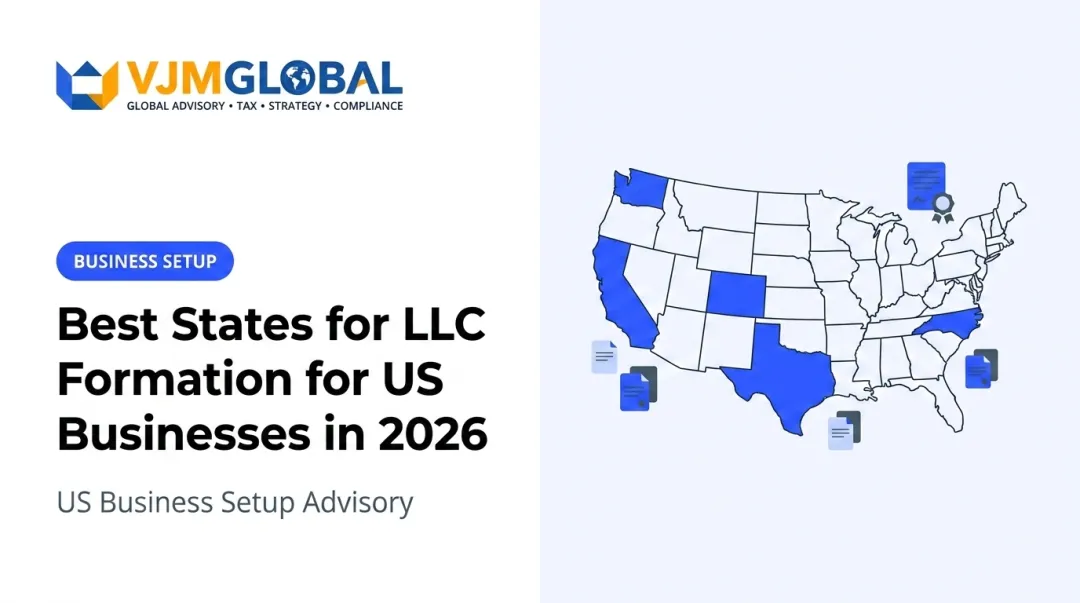
Home State vs. Delaware, Wyoming, and Nevada
Forming in Delaware doesn't automatically save you money if your business operates entirely in Texas. If you conduct sustained business in a state other than your formation state, you'll likely need to register there too. That process, foreign qualification, brings its own fees, registered-agent requirements, and annual reports.
Here's how a few popular formation states compare (verify current numbers before filing, since fees change):
| State | Formation Fee | Recurring Obligation |
|---|---|---|
| Delaware | $110 | $400 annual LLC tax, no annual report |
| Wyoming | $100 | Annual report fee, $60 minimum |
| Nevada | Roughly $425 combined | $200 annual license renewal |
| Illinois | $150 | $75 annual report, $100 late fee |
Beyond formation fees, weigh these factors before choosing a state:
- Filing fees and annual report or franchise tax costs
- Registered-agent requirements, which every state imposes
- Publication rules, since some states require newspaper notice
- Privacy considerations, as owner-disclosure rules differ by state
- Local business licenses tied to where you actually operate
Clearing Your Business Name
Checking name availability with your state's Secretary of State only confirms the name isn't already taken there. It doesn't mean the name is safe to use as a trademark nationally.
Before filing:
- Search your state's business name database for conflicts
- Search the USPTO trademark database for existing marks
- Check domain name availability across relevant extensions
- Confirm whether a DBA or assumed-name filing applies to any trade name

Skipping trademark research is a common, expensive mistake. Rebranding after launch costs far more than a search costs upfront.
What Ownership and Governance Questions Must You Settle?
Ownership Structure Basics
Before filing, decide:
- Single-member or multi-member LLC
- Whether owners are individuals, other entities, or a mix of both
- Ownership percentages and initial capital contributions
- Whether members can be required to contribute more capital later
Member-Managed or Manager-Managed?
This decision determines who can sign contracts, open bank accounts, hire staff, borrow money, and approve major decisions.
- Member-managed: All owners share day-to-day authority. Common for small, hands-on teams.
- Manager-managed: Designated managers, who may or may not be owners, run operations while other members stay passive.
Some states default to giving every member authority to bind the LLC unless the operating agreement says otherwise. Silence in your agreement doesn't mean neutrality. It means the state's default rule fills the gap, whether or not it matches your intentions.
What Belongs in Your Operating Agreement
A written operating agreement should cover:
- Voting thresholds for routine versus major decisions
- Profit and loss allocation, plus distribution timing
- Member responsibilities and access to financial records
- Compensation for members performing work for the LLC
- Approval rights for large transactions, borrowing, or admitting new members
Some states, including New York, require members to adopt a written operating agreement within a set period after filing. Even where it isn't legally mandatory, skipping this document leaves your business governed by generic state defaults.
Planning for Change and Exit
Your agreement should also address:
- Admission of new members and dilution of existing ownership
- Transfers of membership interests and rights of first refusal
- Future investor contributions and how they get valued
Cover the harder scenarios too:
- A member's death, disability, or bankruptcy
- Voluntary withdrawal or inability to perform agreed duties
- Disputes between members, including outright deadlock
Buy-sell provisions and valuation methods vary widely by business. Settle disagreement and deadlock rules before you file—not after a fight starts. Have a qualified attorney review the finished agreement.

How Will Taxes, Liability, and Finances Work?
Default Tax Treatment
Under default IRS rules, a single-member LLC is usually disregarded for federal tax purposes, and a multi-member LLC is taxed as a partnership.
Eligible LLCs can elect corporate taxation, and eligible corporations can further elect S-status. State tax treatment doesn't always mirror federal treatment, so check both.
A tax professional should assess:
- Expected profit and owner compensation
- Self-employment tax exposure
- State and local income tax obligations
- Payroll withholding if you'll have employees
- Sales tax registration (state-by-state)
- Whether a corporate or S-corp election actually helps your situation
Where Liability Protection Actually Holds
Liability protection is strongest when you treat the LLC as a separate entity: sign contracts in the company's name rather than your own, keep accurate records, and never mix personal and business finances.
An LLC doesn't protect you from everything. It usually won't shield you from:
- Personal guarantees you sign yourself
- Fraud or wrongful conduct
- Failure to maintain the entity properly
- Certain professional liabilities tied to licensed work
Liability protection and insurance are different tools. One limits owner exposure to business debts; the other covers risks like accidents or malpractice. You need both.
Financial Systems to Set Up Early
- A dedicated business bank account, opened once your EIN and formation documents are ready
- Clean accounting records and an expense approval process
- Document retention for contracts, filings, and tax records
- Invoicing and payroll systems
- A clear method for tracking member contributions and distributions
Also confirm beneficial ownership reporting. FinCEN's current guidance states that entities created in the United States are exempt from BOI reporting under the present rule, though foreign-formed entities registered to do business in the US may still have obligations.
Rules change. Verify the current requirement before you file rather than relying on last year's rule.
What Must You Complete After Deciding to Form the LLC?
The Filing Sequence
- Appoint a registered agent in your formation state, required in every jurisdiction
- Prepare and file Articles of Organization, or your state's equivalent document
- Pay the required state filing fee
- Retain your approved formation documents somewhere safe and accessible

Getting Your EIN
An EIN from the IRS is typically needed to open a business bank account, hire employees, handle multi-member LLC taxation, and meet certain payroll or excise tax obligations. A single-member LLC with no employees sometimes does not need one for federal tax purposes, but most banks still ask for one.
Form the entity first, then apply for the EIN, not the other way around. Check current IRS instructions rather than assuming one rule applies to every situation.
Post-Formation Checklist
- Adopt your operating agreement
- Open a business bank account
- Obtain necessary licenses and permits at the state, county, and city level
- Register for applicable state taxes, including sales tax where relevant
- Build an annual compliance calendar for reports, renewals, and tax deadlines
When Foreign Qualification Comes Into Play
If your LLC has employees, an office, property, or sustained business activity in a state other than where you formed it, you may need to register there too. Rules vary by state; some exempt isolated transactions or interstate commerce. Verify each state's specific triggers rather than assuming one rule applies everywhere.
Formation paperwork gets the LLC on the books. Accounting, tax coordination, and financial reporting keep it compliant afterward.
VJM Global supports US business owners and international founders with accounting setup, tax-compliance coordination, financial reporting, and ongoing back-office support through our New York office. Formation and legal structuring decisions should still come from a qualified US attorney.
Conclusion and Next Steps
Forming an LLC comes down to five decisions:
- Confirm the structure fits your goals
- Pick your state and name carefully
- Document ownership and management in writing
- Plan for taxes and liability protection
- Prepare for ongoing compliance after filing
None of this needs to happen alone. Gather your business details—ownership split, expected revenue, states of operation, and any foreign ownership—then consult a qualified attorney and tax professional before filing.
This matters most if you have multiple owners, foreign owners, regulated activities, or multi-state operations.
For founders forming a US LLC, VJM Global can provide accounting, tax-compliance, and financial advisory support once your structure and legal requirements have been assessed by qualified counsel.
Frequently Asked Questions
How do I form an LLC in Illinois?
Check name availability, appoint an Illinois registered agent, and file Articles of Organization with the Secretary of State. Prepare an operating agreement, obtain an EIN if applicable, and file your annual report by your anniversary month.
Is an LLC the best business structure for a small business?
It's often a strong fit for liability protection and pass-through taxation, but it isn't automatic. Weigh liability, tax treatment, ownership plans, funding needs, and industry rules against sole proprietorships, partnerships, and corporations first.
What is the best state to form an LLC?
The best state is usually where your business actually operates, since forming elsewhere often triggers foreign-qualification fees and dual compliance. Multi-state registration, franchise taxes, and annual report costs can outweigh a lower advertised filing fee elsewhere.
Do I need an operating agreement for an LLC?
A written operating agreement is strongly recommended, especially for multi-member LLCs. It documents ownership percentages, management authority, voting rules, distributions, and exit procedures that state default rules may not match.
How is an LLC taxed in the United States?
By default, single-member LLCs are disregarded entities and multi-member LLCs are taxed as partnerships. Eligible LLCs can elect corporate or S-corporation taxation instead. State treatment varies, so confirm your specific situation with a tax professional.
Does an LLC completely protect my personal assets?
No. Protection depends on keeping the LLC genuinely separate, avoiding fraud or commingled funds, staying in good standing, and carrying appropriate insurance. Personal guarantees and your own misconduct generally fall outside the shield.