Introduction
Starting a business is thrilling, right up until you hit the paperwork. One of the first big decisions you'll face is picking a legal structure. That choice ripples into your taxes, your liability, and how much red tape you'll deal with for years to come.
LLCs are winning that decision. Delaware alone saw 235,393 new LLCs in 2025, accounting for 70.4% of all new business entities registered in the state that year. That kind of volume speaks for itself.
Sole proprietorships are simple to set up, but they leave your personal assets exposed. Corporations offer strong liability protection, though the paperwork and formalities pile up fast. LLCs split the difference, blending liability protection with operational flexibility. This guide breaks down the real advantages and drawbacks of LLC formation so you can decide if it fits your business.
Key Takeaways
- LLCs blend corporate-style liability protection with partnership-style pass-through taxation
- Members get personal asset protection, tax flexibility, and lighter compliance duties than corporations
- Self-employment taxes, fundraising limits, and state fees are the main tradeoffs
- Your choice depends on risk tolerance, growth goals, and funding plans
What Is an LLC? Understanding the Basics
A limited liability company (LLC) is a hybrid business entity. Owners are called "members," and there's no cap on how many members an LLC can have. Foreign ownership isn't restricted either, which makes LLCs attractive to international entrepreneurs.
This flexibility isn't a recent development. Wyoming passed the first LLC statute in 1977, though nationwide adoption didn't take off until the IRS issued Revenue Ruling 88-76 in 1988, confirming that LLCs could be taxed like partnerships rather than corporations. Every state had LLC statutes on the books within a decade of that ruling.
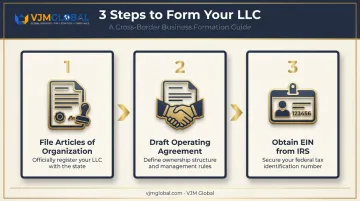
Forming one requires:
- Filing Articles of Organization with your state's Secretary of State office
- Drafting an Operating Agreement — optional in most states, but strongly recommended to define ownership, roles, and profit splits
- Obtaining an EIN from the IRS for tax and banking purposes
LLCs aren't just for small shops. The structure scales from solo freelancers to multi-million dollar operations, which is part of why it's become the default choice for so many new businesses.
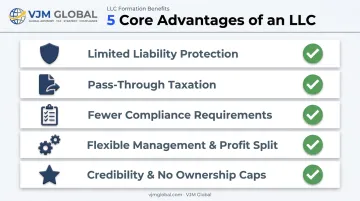
Advantages of Forming an LLC
Limited Liability Protection
This is the headline benefit. If your LLC faces a lawsuit or can't pay its debts, creditors generally can't come after your house, car, or personal savings. Say a client sues your consulting LLC over a failed project; your personal bank account stays off-limits.
That protection isn't bulletproof, though. Courts can "pierce the corporate veil" if you mix personal and business funds, skip your Operating Agreement's rules, or use the LLC to commit fraud. Keep separate bank accounts. It's the simplest way to preserve your shield.
Pass-Through Taxation and Tax Flexibility
LLC profits and losses flow directly to members' personal tax returns. There's no corporate-level tax, so you avoid the double taxation that hits traditional C-corporations.
Want more control? LLCs can elect different tax treatment: Form 8832 lets you choose corporate taxation instead of the default pass-through setup, while Form 2553 allows S-corp election, reducing self-employment tax exposure for profitable LLCs.
Fewer Compliance Hassles Than Corporations
Corporations must hold annual board meetings, keep shareholder minutes, and maintain extensive records. LLCs skip most of that. There's no mandatory board, no required annual shareholder meeting, and far less paperwork overall.
For a small business owner juggling ten roles at once, that saved time matters. Fewer filings mean fewer chances to miss a deadline and fewer billable hours from your accountant.
Flexible Management and Profit Allocation
LLCs can be member-managed (owners run daily operations) or manager-managed (owners appoint someone else to run things). Either way, your Operating Agreement dictates the terms.
Profit splits don't have to match ownership percentages, either. A member who owns 30% of the LLC could receive 50% of distributed profits if the agreement says so. Try doing that with corporate stock.
Credibility and Fewer Ownership Restrictions
Adding "LLC" to your business name signals legitimacy to banks, vendors, and clients who might hesitate to work with an unregistered sole proprietorship. It suggests you've taken the step to formalize your operation.
Unlike S-corporations, which cap ownership at 100 shareholders and bar foreign owners entirely, LLCs allow unlimited members, including non-US residents. That's a real advantage for founders building global teams.
Disadvantages of Forming an LLC
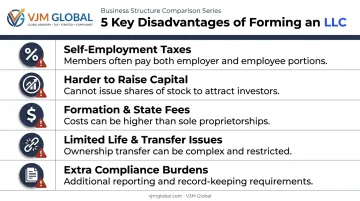
Self-Employment Taxes
LLC members pay self-employment tax on their share of net business income. The current self-employment tax rate is 15.3%, split between 12.4% for Social Security and 2.9% for Medicare.
This applies whether you took the cash out of the business or reinvested it. Corporations, by contrast, can pay owners a salary and distribute additional profits as dividends, which sometimes reduces the overall tax hit. This is one reason profitable LLCs often explore S-corp election.
Harder to Raise Investment Capital
LLCs can't issue stock. That single fact makes venture capitalists and institutional investors far less interested, since they typically want equity stakes they can later sell or convert.
If you're planning to:
- Pitch to VCs or angel investors
- Pursue an eventual IPO
- Offer employee stock options at scale
...a corporation (usually a Delaware C-corp) is usually the better fit from day one.
Formation and Ongoing State Fees
LLC costs land between sole proprietorships (usually free) and corporations (often pricier), though the range across states is wide:
| State | Base LLC Filing Fee |
|---|---|
| Montana | $35 |
| Kentucky | $40 |
| Arizona | $50 |
| New York | $200 |
| Massachusetts | $500 |
California adds a separate wrinkle: LLCs doing business there generally owe an $800 annual franchise tax, regardless of profit. That's on top of the initial filing fee and any income-based LLC fee.
Limited Life and Ownership Transfer Complications
In many states, an LLC dissolves automatically if a member leaves or passes away, unless the Operating Agreement specifically addresses continuity. Corporations don't have this problem; they exist independently of any single shareholder.
Transferring ownership is trickier too, since most states require existing members to approve new ones before an ownership stake can change hands. Corporate shares, meanwhile, trade freely without anyone's permission.
Additional Compliance and Reporting Burdens
A few states impose extra hoops:
- Arizona requires publication of formation notice within 60 days, either via newspaper or the Corporation Commission's website
- Nebraska mandates publication for three successive weeks in a local newspaper
- New York requires six weeks of publication within 120 days of formation, in two designated newspapers
On the federal side, most domestic LLCs got a break in 2025. FinCEN's current rule exempts entities created in the United States from Beneficial Ownership Information reporting. That requirement now applies mainly to foreign entities registered to do business in a US state.
LLC vs. Other Business Structures
LLC vs. Sole Proprietorship
Sole proprietorships cost nothing to start and involve zero paperwork, but they offer zero personal asset protection. Every business debt is your debt. An LLC adds a real liability shield for a modest filing cost, typically $50 to $500 depending on the state, which is why so many freelancers eventually make the switch once revenue grows.
LLC vs. Partnership
General partners in a traditional partnership carry unlimited personal liability for business debts, even ones a co-partner created. LLC members, regardless of their role in the business, keep limited liability protection across the board. That distinction alone drives many multi-owner businesses toward LLC status.
LLC vs. Corporation
C-corporations face potential double taxation: the entity pays corporate tax, then shareholders pay tax again on dividends. LLCs avoid that with pass-through treatment.
Corporations win on fundraising, though. Stock issuance makes it far easier to raise capital from multiple investors or go public. LLCs simply don't have that mechanism built in.
Is an LLC Right for Your Business?
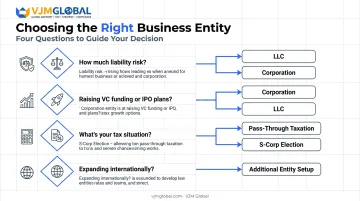
Ask yourself four questions before filing anything.
How much risk are you carrying? Businesses with significant lawsuit exposure, like consulting, contracting, or anything client-facing, benefit most from the liability wall an LLC provides. If you have a house or savings you want to protect, this matters.
What are your growth and funding plans? If you're bootstrapping or raising money from friends and family, an LLC works fine. If venture capital or an IPO is on your roadmap, a corporate structure will likely serve you better long-term.
What does your tax picture look like? Standard pass-through taxation works for many owners, but profitable LLCs sometimes save money through S-corp election. Talk to a tax professional before deciding either way.
Planning to expand beyond US borders? A growing number of American LLCs eventually look at India as a market, whether for manufacturing, tech talent, or back-office support. That's a different kind of complexity, involving entity registration, approval from India's central bank (the RBI), and ongoing compliance under Indian tax law.
Firms like VJM Global specialize in exactly this transition, working with US businesses on:
- Wholly owned subsidiary incorporation
- Branch and liaison office registration with RBI and ROC (Registrar of Companies) approval
- FEMA (India's foreign exchange law) advisory for cross-border fund flows
- Ongoing accounting and tax compliance once the entity is operational
If your LLC is eyeing a subsidiary, branch, or back-office setup in India, getting the entity structure and compliance framework right from the start saves considerable headaches later.
Frequently Asked Questions
What is the main advantage of a limited liability company (LLC)?
An LLC shields your personal assets from business debts and lawsuits while letting profits pass through to your personal tax return. That combination is hard to beat for most small and mid-sized businesses.
What is the biggest disadvantage of an LLC?
Self-employment taxes hit LLC members on their full share of net income, and LLCs can't issue stock to attract venture capital. Both factors matter more as your business grows.
Is an LLC better than a sole proprietorship?
An LLC adds real liability protection that a sole proprietorship simply doesn't have. You'll pay filing fees and handle more paperwork in exchange, but for most business owners, that tradeoff is worth it.
How is an LLC taxed by the IRS?
By default, LLCs get pass-through taxation, meaning profits and losses land on members' personal returns. Owners can also elect corporate or S-corp taxation using Form 8832 or Form 2553.
Can a single person form an LLC?
Yes. Every US state permits single-member LLCs, and the IRS taxes them like sole proprietorships by default unless the owner elects otherwise.
How much does it cost to form an LLC?
Costs vary widely by state, from around $35 in Montana to $500 in Massachusetts for the initial filing. Some states, like California, also charge ongoing annual taxes on top of that.