Requirements shift depending on your structure (sole proprietorship vs. LLC vs. corporation), your location (home-based, storefront, mobile), and your activity (retail, food, professional services). A tattoo studio faces different rules than a home-based consulting practice.
This guide breaks down the exact steps, real costs, structure choices, common mistakes, and what to handle after you file, so you register once and get it right.
Key Takeaways
- Texas has no single statewide business license; El Paso requires activity-specific permits instead (food, vendor, alarm, secondhand)
- Core steps: pick a structure, file paperwork, get a free EIN, register for state tax, clear zoning
- Costs range from $0 for an EIN to about $300 for an LLC filing, plus permit fees
- Post-registration compliance, bookkeeping, and tax filings trip up new owners more than paperwork itself
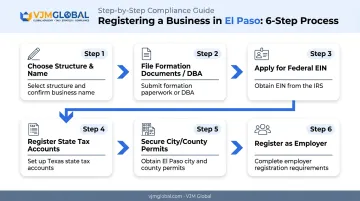
Step-by-Step: How to Register a Business in El Paso, TX
Registration follows a sequence. Skip a step, like zoning clearance, before signing a lease, and it can cost you a wasted deposit and months of delay.
Step 1: Choose Your Business Structure and Name
Your structure choice drives every filing that follows. Texas recognizes:
- Sole proprietorship or general partnership (no state creation filing)
- LLC (Certificate of Formation, Form 205)
- Corporation (Certificate of Formation, Form 201)
- Limited partnership or LLP (separate formation or registration forms)
Before filing anything, check name availability through the Texas Secretary of State's SOSDirect portal ($1 per search). A preliminary search result isn't a guarantee. Final approval only happens when your filing is reviewed. Want to lock in a name early? Form 501 reserves it for 120 days for $40.
Step 2: File Your Formation Documents or Assumed Name Certificate
Sole proprietors and general partnerships operating under a trade name file an Assumed Name Certificate (DBA) with the El Paso County Clerk Recording Division at 500 E. San Antonio, Suite 105.
The fee is $28, plus $0.50 for each additional owner listed, according to the El Paso County Recording Division's current published fee. Walk-in filers need all owners present with government photo ID; mail filers need notarized signatures.
LLCs, corporations, and LPs file a Certificate of Formation with the Texas Secretary of State instead, submitted online through SOSDirect, available 24/7. Fees differ by entity type, so confirm the current amount directly with the County Clerk or SOS before you submit anything.
Step 3: Apply for a Federal EIN
An Employer Identification Number is always free when applied for directly through the IRS website. Online applications can issue the number immediately.
You need an EIN for:
- Opening a business bank account
- Hiring employees
- Filing certain federal tax forms
Even a sole proprietor without employees often benefits from an EIN, since it keeps a personal Social Security number off business documents. The IRS explicitly warns against third-party sites that charge for something it provides free.
Step 4: Register for Texas State Tax Accounts
If you sell taxable goods or services in Texas, including online sales to Texas customers, you need a Sales and Use Tax Permit from the Texas Comptroller. Apply online through the Comptroller's eSystems portal and allow roughly 2-3 weeks for processing.
LLCs and corporations formed in Texas also owe franchise tax, though most small businesses fall under the no-tax-due threshold. Even below threshold, you still need to file the required informational report annually. Registration happens online and is typically handled without a separate application fee, but confirm current requirements with the Comptroller's office directly.
Step 5: Secure El Paso City and County Permits
The City of El Paso's Planning and Inspections One-Stop Shop, located at 811 Texas Ave, manages zoning verification, certificate of occupancy, and activity-specific licenses covering food service, vendors, tattoo studios, secondhand dealers, and alarm systems.
Confirm zoning approval before you sign a lease. Not every use is permitted at every address, and switching a building's occupancy type without a permit creates real problems down the line.
Planning a home-based business? Check home occupation limits with the city before you start operating. These vary by residential zone.
Step 6: Register as an Employer and Set Up Compliance Systems
Planning to hire? Register with the Texas Workforce Commission for unemployment tax once you've paid $1,500 or more in gross wages during a calendar quarter, or employed someone for part of a day across 20 different weeks in a year. Registration must happen within 10 days of becoming liable.
This is also the point to build your recordkeeping, payroll, and bookkeeping systems, not after your first tax deadline arrives.
Choosing the Right Business Structure for Your El Paso Business
The "right" structure depends on liability protection, tax treatment, and growth plans, not just which option is easiest to start.
Sole Proprietorship & General Partnership
These are the cheapest and simplest options to launch. The tradeoff: no personal liability protection. If the business gets sued or can't pay a debt, your personal assets are exposed. Operating under a trade name requires only the county DBA filing described in Step 2, nothing more.
Limited Liability Company (LLC)
An LLC separates your personal assets from business liabilities while keeping pass-through taxation, meaning profits flow to your personal tax return without a separate corporate tax layer. Formation requires a Certificate of Formation filed with the Texas Secretary of State for a $300 fee. This is the most common structure for small business owners who want liability protection without the formality of a corporation.
Corporation (C-Corp / S-Corp Election)
Corporations offer the strongest liability protection and make it easier to bring on outside investors. They also come with more formal governance requirements: bylaws, a board of directors, and documented meetings.
| Structure | Liability protection | Formation filing | Governance burden |
|---|---|---|---|
| Sole proprietorship | None | County DBA only (if trade name) | Minimal |
| LLC | Yes | SOS Certificate of Formation | Low |
| Corporation | Yes | SOS Certificate of Formation | High |
"S-corp" isn't a separate Texas entity type. It's a federal tax election made directly with the IRS after you've already formed an LLC or corporation.
Costs and Fees to Register a Business in El Paso
Total cost depends on your structure, your activity, and how many city, county, and state layers apply to your business.
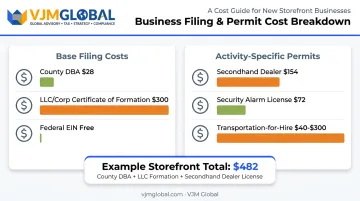
Base filing costs:
- El Paso County Assumed Name (DBA): $28, plus $0.50 per additional owner
- Texas LLC or Corporation Certificate of Formation: $300
- Federal EIN: always free (never pay a third-party site for this)
Activity-specific city permits add up fast:
- Secondhand dealer permit: $154
- Security alarm license: $72 for a 3-year term
- Transportation-for-hire permits: $40 to $300, depending on category
A retail storefront with a security system, for example, could stack a $300 LLC filing with a $72 alarm license before even opening its doors.
Beyond mandatory fees, budget for optional costs too:
- Registered agent service
- Business plan consulting
- Bookkeeping and accounting setup
Setting up accounting infrastructure early tends to pay for itself. Outsourcing this function to a local bookkeeper or accountant, rather than hiring in-house from day one, is often the more cost-effective route for a new business watching every dollar.
That early investment pays off once tax season and city compliance filings start piling up.
Common Mistakes to Avoid When Registering a Business in El Paso
New owners tend to hit the same snags:
- Assuming one blanket license covers everything. Texas and El Paso require separate city permits for each business activity, including food service, vending, and secondhand goods sales.
- Signing a lease before confirming zoning. Confirm your certificate of occupancy and zoning approval first, or you risk a lease on space you can't legally use.
- Filing your DBA with the wrong office. Sole proprietors and general partnerships file with the county clerk, while LLCs and corporations file with the Texas Secretary of State.
- Treating an EIN or LLC formation as full compliance. Neither replaces the city permits, food inspections, or sales tax registration your business still needs.
After Registration: Staying Compliant and Getting Ongoing Support
Registration is just the starting point. Staying compliant afterward means keeping up with several ongoing obligations:
- Sales tax filings
- Annual franchise tax reports
- Permit renewals
- Payroll compliance once you start hiring
Many new owners underestimate how much time bookkeeping and tax compliance demand once operations begin. Opening the doors is often easier than maintaining the discipline to keep the books accurate every month after.
For NRIs, OCIs, and foreign-linked entrepreneurs registering a business in El Paso, compliance often extends beyond the border. Many also manage income, investments, or business interests in India that require separate tracking and reporting.
This is where firms like VJM Global fit in. Their outsourced accounting, bookkeeping, and cross-border tax compliance support helps foreign-linked owners manage obligations in both countries, integrating with tools like QuickBooks and Xero while adding FEMA and NRI taxation expertise most domestic bookkeepers don't offer. Transparent pricing and dedicated support let owners focus on running the business instead of juggling paperwork across two countries.

Frequently Asked Questions
Do I need to register my small business in Texas?
Yes, in most cases. You'll file either a DBA with the county clerk (sole proprietors and partnerships) or formation documents with the Secretary of State (LLCs and corporations). Texas has no single blanket registration that skips this step.
How much does it cost to register my business in Texas?
Costs range from about $28-30 for a county DBA to roughly $300 for an LLC or corporation filing with the Secretary of State. Add any city or industry-specific permit fees on top of that.
How much is a business license in El Paso?
There's no flat fee since El Paso doesn't issue one general "business license." Costs depend on your specific activity, food permit, vendor license, secondhand dealer permit, and more. Confirm the exact fee for your business type with the One-Stop Shop.
Do I need a DBA if I'm a sole proprietor in El Paso?
Only if you're operating under a name other than your own legal name. If so, file the assumed name certificate with the El Paso County Clerk.
How long does it take to register a business in El Paso?
Online Secretary of State filings often process within a few business days. City zoning and permit approvals can take longer, particularly if an inspection is required.
Can I register my business online in El Paso and Texas?
Yes. LLC, corporation, and DBA filings for state-registered entities go through SOSDirect. El Paso's Citizen Access Portal handles city permits and licenses separately.