The appeal is straightforward: English is the language of business and law, corruption levels are among the lowest on the continent, and Botswana's SADC membership opens access to a market of roughly 380 million people. Company registration, at least on paper, is meant to be simple.
Interest isn't limited to mining conglomerates either. UK-based SMEs, tourism investors, remote-first founders and diaspora entrepreneurs are all exploring entry. This guide walks through what UK residents actually need to do, legally and practically, to set up and run a business in Botswana without relocating.
Key Takeaways
- Botswana's CIPA registry supports fully remote, online incorporation via its OBRS platform
- UK citizens can own 100% of a Botswana company but generally need a Botswana-resident director
- Corporate tax sits at 22% for resident companies versus 30% for non-resident branches
- VAT registration becomes compulsory above P1,000,000 in annual taxable turnover
- Getting entity structure and residency requirements right early avoids costly delays later
What Does Starting a Business in Botswana from the UK Involve?
It means legally registering a Botswana entity, or a branch of your existing UK company, while remaining based in the UK. You can stay put—but you must still prove a genuine legal presence in Botswana.
That presence typically comes through:
- A Botswana-resident director on your company's board
- A qualified company secretary
- A registered physical address in Botswana
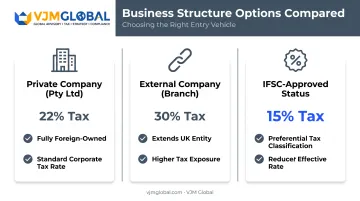
Simply owning shares from London or Manchester isn't enough to satisfy CIPA (the Companies and Intellectual Property Authority). You have three main structural routes:
- Private Company (Pty Ltd) — fully foreign-owned, most common for UK founders
- External Company (branch registration) — extends your existing UK company into Botswana
- IFSC-approved status — not a separate legal entity, but a tax classification (15% rate) layered onto a qualifying company trading with non-residents
What UK Founders Should Know Before Starting a Business in Botswana
Many UK entrepreneurs underestimate how much local presence Botswana actually requires. This isn't a verdict on whether Botswana is worth it, just a reality check before you commit time and money.
Remote Incorporation vs Local Presence
CIPA's Online Business Registration System (OBRS) does allow filing without visiting an office in person, and payments can be made by card or bank deposit. That's genuinely useful for a UK-based founder. However, the resident-director requirement means you cannot run the company entirely from London with a wholly UK-based board. You'll need a local partner, a resident nominee director, or an advisory firm that can arrange one.
Timeline Expectations
Be careful with timeline claims you might see online. CIPA itself describes OBRS as collapsing multiple registration procedures into a single filing that can register in as little as one day. Name reservation, when used, stays valid for 30 working days. The wider reality is that appointing a resident director, opening a bank account, and securing licences will still take considerably longer than the core registry step.
Other Practical Considerations
- Sector-dependent presence. Retail and tourism businesses depend heavily on being on the ground; services and trading businesses can often run more remotely.
- Currency movement. Repatriating profits between Botswana Pula (BWP) and GBP involves standard foreign exchange considerations and Botswana's exchange control processes.
- Test before you incorporate. Some founders use an Employer of Record (EOR) arrangement to hire locally and test the market before setting up a full trading entity.
Why Start a Business in Botswana from the UK? (When It Makes Sense)
Botswana makes sense under certain conditions, not as a default move for every UK business. The macroeconomic picture is mixed. The IMF reported that Botswana's economy contracted by around 3% in 2024, with a further contraction of roughly 1% expected in 2025, largely tied to a diamond-market downturn. That headwind needs weighing against the country's other strengths.
Those strengths still matter for UK investors:
- Governance and stability — ranks among Africa's least corrupt nations, with legal predictability that is rare regionally
- Market access — SADC membership links you to a bloc of roughly 380 million people, or 26% of Africa's population
- Diversification incentives — diamonds still dominate export receipts, so policy actively incentivises tourism, renewable energy, agribusiness and financial services
- Financial sector resilience — banking capital adequacy sat around 19.7% in 2023, well above the regulatory minimum
English as a business language, Commonwealth ties and established UK–Botswana commercial links also lower day-to-day friction compared with many regional peers.
The opportunity is real, but sector-dependent. Diversification plays, particularly renewable energy (solar irradiation among the highest globally) and tourism infrastructure, currently carry more policy support than diamond-adjacent ventures.
Early Decisions UK Founders Must Get Right
Most setbacks in Botswana market entry come from underestimating paperwork and structural friction, not from a flawed business idea.
Getting the Structure and Tax Rate Right
The cost of a resident director is easy to overlook if you have no local network. Budget for this properly, whether it's a nominee arrangement or a genuine local partner, from day one.
Tax treatment differs sharply by structure:
| Structure | Corporate Tax Rate |
|---|---|
| Locally incorporated Private Company (resident) | 22% |
| Branch / External Company (non-resident) | 30% |
| Approved manufacturing / IFSC status | 15% |
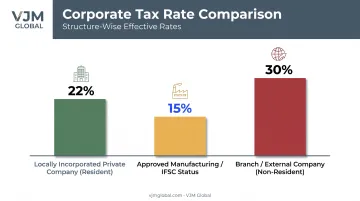
Choosing a branch structure without realising it triggers the higher rate is one of the most common, and most costly, early mistakes.
VAT and Realistic Timelines
VAT registration becomes compulsory once annual taxable turnover exceeds P1,000,000, according to Botswana's tax authority (BURS). Voluntary registration is available for turnover between P500,000 and P1,000,000. Factor this into your pricing model before you launch, not after.
Those VAT thresholds sit alongside other early operating costs. If you trade physical goods, landlocked export logistics belong in the same model: World Bank data shows export compliance in Botswana takes around seven days and roughly 12% of goods value in cost.
Incorporate Now or Test with EOR First?
Direct incorporation is not your only option. Founders unsure about long-term commitment can hire a small local team through an Employer of Record (EOR) first, then incorporate once demand is proven.
How to Start a Business in Botswana from the UK – Step by Step
Here's the practical execution path. Common mistakes at each stage: assuming the whole process is remote-only, skipping local licensing, and underestimating how long bank account opening actually takes.
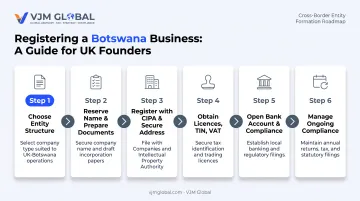
Step 1 – Choose Your Entity Structure
Compare your options against your actual business model:
- Private Company (Pty Ltd) — best for most UK-owned trading businesses; 22% tax rate
- External Company (branch) — extends your UK entity directly; simpler on paper but taxed at 30%
- IFSC status — a tax classification for companies trading predominantly with non-residents, not a standalone entity type
Remember: CIPA requires at least one Botswana-resident director and a qualified company secretary regardless of which structure you pick. The common miss here is choosing branch registration purely for simplicity, without realising the tax gap versus local incorporation.
Step 2 – Reserve Your Company Name and Prepare Documents
Search CIPA's online database and submit your name reservation through OBRS. Reservations stay valid for 30 working days.
You'll also need to prepare:
- Certified copies of directors' and shareholders' passports (UK-based parties included)
- Company constitution
- Beneficial ownership declarations for all natural-person owners
The common miss: submitting incomplete shareholder documentation from the UK side, which causes rejection and re-filing delays.
Step 3 – Register with CIPA and Secure a Local Address
File your incorporation documents through OBRS and pay the applicable registration fees. You'll also need a registered office address in Botswana, plus a postal address and principal place of business if registering an external company.
Don't assume a bare-bones virtual address will automatically satisfy every requirement. Verify what's acceptable for your specific structure before committing to an address provider.
Step 4 – Obtain Licences, TIN, and VAT Registration
Depending on your business activity, you'll need a trade or industrial licence from the relevant local council or government department.
You'll also register with BURS for:
- A Tax Identification Number (TIN) — required before most other tax registrations
- VAT registration — compulsory above the P1,000,000 turnover threshold
The common miss: not budgeting for VAT registration timing once your revenue projections firm up, leaving pricing decisions until too late.
Step 5 – Open a Corporate Bank Account and Set Up Compliance
Open a Botswana corporate bank account. In practice, this is often required before you can complete TIN registration. You'll also need to register employees under Botswana's workers' compensation framework once you start hiring locally.
This is the stage where documentation, resident representation, and tax registration all need to move at once, while you're still based in the UK. That coordination is hard to run alone from overseas.
Cross-border formation firms such as VJM Global help UK founders handle documentation flow and remote advisory support, so you don't need to be on the ground for every step.
Step 6 – Manage Ongoing UK-Botswana Compliance
Registration isn't a one-off task. Once trading, you'll need annual financial statements prepared to Botswana Institute of Chartered Accountants (BICA) standards, alongside your ongoing UK obligations.
UK founders also need to consider Controlled Foreign Company (CFC) rules. Per HMRC guidance, a CFC is a non-UK-resident company controlled by UK residents, and diverted profits can trigger a UK charge on interest-holders with at least a 25% stake, subject to exemptions. This isn't automatic for every founder, but it needs reviewing against your specific ownership structure.
The common miss: treating Botswana compliance as a "set up once" task, when it's really a parallel, ongoing obligation running alongside your UK filings.
Conclusion
Starting a business in Botswana from the UK is genuinely achievable without relocating, provided you take the residency and documentation requirements seriously from the outset. The registry process itself can move quickly, but the surrounding steps—resident directors, licensing, bank accounts, and tax registration—take real coordination.
Getting your structure, licensing and tax setup right the first time saves months of avoidable delay later. If you're juggling UK obligations alongside a new Botswana entity, cross-border support from a firm such as VJM Global can make managing both sides in parallel far easier.
Frequently Asked Questions
How much does it cost to register a business in Botswana?
CIPA's fee schedule lists a P20 name reservation fee and roughly P360 for company registration. Confirm current fees at filing, as the official schedule is not clearly dated. Additional licensing costs apply depending on your business activity.
Can a UK citizen live in Botswana?
British passport holders can visit visa-free for up to 90 days. Living there long-term requires a residence or work permit tied to your business ownership or employment. Company ownership alone does not automatically grant residency rights.
What is in high demand in Botswana?
Tourism, mining-adjacent services, agribusiness, renewable energy and financial services are the sectors receiving the most government and investment attention right now, largely as part of the country's push to diversify away from diamond dependence.
Do I need to be a Botswana resident to own a company there?
No. Full foreign ownership is permitted. However, CIPA requires at least one Botswana-resident director and a qualified company secretary on the board, even if all shareholders are based overseas.
How long does company registration take in Botswana?
CIPA's OBRS platform can process registration filings in as little as a day once submitted correctly. The wider process, including resident director appointment and documentation preparation, usually takes longer once director appointment and documents are factored in.
Is a branch office a good option for UK companies entering Botswana?
Branches (External Companies) allow full foreign ownership and can be quicker to set up structurally. However, they're taxed at 30%, compared to 22% for a locally incorporated Private Company, so the rate gap matters for long-term profitability.