
UAE-China trade momentum hasn't slowed either. Non-oil trade between the two hit roughly USD 90 billion in 2024, per the UAE Ministry of Economy and Tourism. Existing import/export relationships, Belt and Road connectivity, and relatively easy travel between the two countries have created real momentum.
The interest is broad. Trading firms want direct sourcing access. E-commerce sellers want manufacturing links. Investors want exposure beyond the Gulf. This guide walks a UAE-based founder or company through the actual steps to legally set up and run a business in mainland China.
Key Takeaways
- WFOE structures allow 100% foreign ownership in most sectors outside China’s Negative List
- Budget 3–6 months end-to-end once authentication and banking are included
- No general minimum registered capital, but paid-in capital is due within 5 years
- UAE founders need extra document legalisation before Chinese authorities accept filings
- Legalisation, banking, and filing friction make professional support worth the cost
What Does Starting a Business in China as a UAE-Based Foreigner Involve?
It means registering a legal entity in mainland China, most commonly a Wholly Foreign-Owned Enterprise (WFOE), so a UAE individual or company can invoice, hire staff, and operate legally on the ground.
That goes beyond opening a trading account or importing through a distributor. You complete formal incorporation with the State Administration for Market Regulation (SAMR), then tax registration, banking, and ongoing statutory filings.
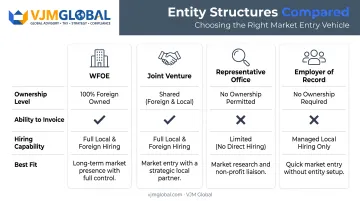
UAE founders typically consider four structures:
- WFOE — full ownership and control, can invoice and hire
- Joint Venture — required in sectors with foreign-ownership restrictions
- Representative Office — liaison and market research only, cannot invoice or profit
- Employer of Record (EOR) — hire staff without setting up an entity at all
What to Know Before You Start a Business in China from the UAE
Many UAE entrepreneurs underestimate the paperwork. Moving from a Gulf jurisdiction to China's regulatory system involves more cross-border legalisation than most first-timers expect.
Documentation and Travel Reality
- Physical presence matters for banking. Most Chinese banks require the legal representative's original passport in person, plus an on-site check of the registered office
- UAE documents need authentication. China joined the Apostille Convention in November 2023, but the UAE is not on the HCCH status table. UAE-issued papers still need MOFA attestation and Chinese mission legalisation, not a simple apostille
- Plan on 3–6 months for document prep, registration, tax setup, and banking—longer than many online estimates suggest
- You'll depend heavily on a local registered agent to navigate SAMR filings, tax bureau requirements, and bank KYC
- Everything gets filed in Simplified Chinese: company name, articles of association, business scope, all of it
Skipping any of these steps early tends to cost more time later.
Why Start a Business in China When Based in the UAE?
Opening a Chinese entity from the UAE only pays off under specific conditions.
The case for it:
- China's economy grew 5.0% in 2025, with total industrial value added up 5.8%, per official NBS data
- Direct access to China's manufacturing base cuts out middlemen for UAE trading and sourcing businesses
- Bilateral trade sat around USD 86.7 billion in 2023, growing over 12% year-on-year, per UAE MOET figures
- 100% foreign ownership is available in most sectors — no local partner needed
- Select Free Trade Zones offer a 15% corporate income tax rate for qualifying industries, well below the standard 25% rate
Those upsides still depend on fit. Skip this path if you fall into either camp:
- You need a quick, low-cost setup
- You will not commit to ongoing local compliance once the entity is live
Early Decisions That Matter When Setting Up in China from the UAE
Most early-stage problems for UAE founders trace back to underestimating documentation and banking friction, not a shortfall of capital.
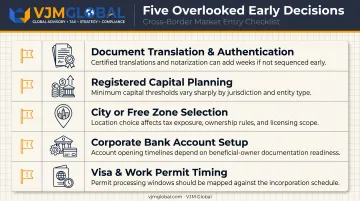
Overlooked areas that cause delays:
- Translating and authenticating UAE corporate documents takes longer and costs more than most founders budget for
- Registered capital has no statutory minimum, but China Briefing notes it should realistically fund 1–2 years of operations before revenue covers costs
- Match city or FTZ to the model: Shanghai for trading, Shenzhen for tech, Hainan or Qianhai if you can meet the income tests for 15% corporate income tax (CIT)
- Opening a corporate account often needs the legal representative on site, plus office verification
- Map Z visa and work permit timing early if the founder will relocate or travel frequently
How to Start a Business in China as a UAE-Based Foreigner – Step by Step
The path from UAE planning to a live China entity breaks into six practical stages. The most common mistakes: skipping document legalisation, picking the wrong entity type, and underestimating capital needs.
Step 1 – Choose the Right Entity Structure
Match the structure to your actual goal:
| Structure | Best for | Can it invoice? |
|---|---|---|
| WFOE (Wholly Foreign-Owned Enterprise) | Trading, e-commerce, services, manufacturing | Yes |
| Joint Venture | Restricted sectors requiring a Chinese partner | Yes |
| Representative Office | Market research, liaison | No |
| EOR (Employer of Record) | Hiring only, no operating entity | No |
Common miss: choosing a Representative Office when the business actually needs to bill Chinese clients. An RO has no legal-person status and cannot turn a profit.
Step 2 – Select a City or Free Trade Zone
- Shanghai or Guangzhou — strong fit for trading companies
- Shenzhen or Hangzhou — better for tech-oriented businesses
- Hainan, Lingang, or Qianhai — 15% CIT incentive zones, but only if your business meets the qualifying income and substance tests
Common miss: picking a city because it's familiar rather than because it fits the sector. Lingang's tax break, for instance, only applies to specific technology and R&D activities in the first five years — not general trading.
Step 3 – Prepare and Legalise UAE Documents
You'll typically need:
- Certificate of incorporation
- Passport copies of shareholders and the legal representative
- Bank reference letter
- Board resolutions authorising the China entity
Since the UAE isn't confirmed on China's apostille list, these documents likely need attestation through UAE MOFA and the Chinese mission before Chinese authorities will accept them.
Common miss: underestimating translation and legalisation turnaround — this step alone can take several weeks.
Step 4 – Declare Registered Capital and Draft Company Documents
China uses a subscribed capital model. Under Article 47 of the amended Company Law (effective July 2024), capital must be paid in within a maximum five-year period.
You'll also need to:
- Draft Articles of Association
- Define your business scope precisely
- Reserve a Chinese company name
Common miss: setting the business scope too broadly (risks rejection) or too narrowly (limits future activities).
Step 5 – Register with SAMR and Complete Post-Incorporation Steps
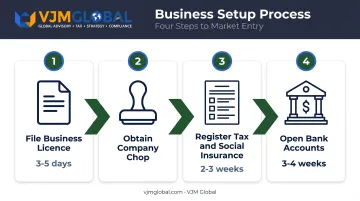
- File for the unified business licence through SAMR
- Obtain the company chop — mandatory for contracts, banking, and official filings
- Register for tax and social insurance obligations
- Open foreign capital and RMB bank accounts — plan for in-person attendance by the legal representative (3–5 working days at a Chinese bank; about 3–4 weeks at many international banks, per China Briefing)
Common miss: delaying tax registration beyond the required window after the licence is issued.
Step 6 – Plan Hiring, Visas, and Ongoing Compliance
Decide early whether to hire directly through your WFOE or use an EOR arrangement for initial hires while your entity gets fully operational. If you plan to be based in China yourself, factor in Z visa and work permit timing alongside your incorporation schedule.
Setup is the start, not the finish. Once operational, entities need continuing accounting, tax filing, payroll administration, and audit support. VJM Global supports UAE-based businesses with entity formation and ongoing multi-jurisdiction compliance after the licence is in place.
Common miss: treating incorporation as the finish line rather than the start of recurring statutory obligations.
Conclusion
Starting a business in China from the UAE is achievable, but it rewards careful sequencing over speed. Getting the entity type right, planning capital realistically, and legalising UAE documents properly matter more than rushing to file.
Long-term success in the Chinese market depends less on the initial setup and more on staying current with ongoing compliance: tax filings, payroll, audits, and periodic reviews of your operations as regulations shift.
Treat the first filing as the start of an operating plan: lock entity type and capital, complete UAE document legalisation, then calendar tax, payroll, and audit obligations before you scale.
Frequently Asked Questions
How can a foreigner start a business in China?
Foreigners can register a WFOE, JV, RO, or use an EOR, with a WFOE being the most common route for full ownership. UAE nationals follow the same process, with added document legalisation steps.
Which business is most profitable in China?
Trading, e-commerce, technology, and manufacturing-linked sourcing businesses tend to perform well, but profitability ultimately depends on sector, location, and execution.
Is it hard to own a business in China?
Ownership itself is straightforward. 100% foreign-owned WFOEs are permitted in most sectors. The registration and compliance process, however, is administratively demanding for first-time foreign founders.
What is the 6-year rule in China for foreign individuals?
This refers to tax residency: foreign individuals in China for six consecutive years without a single absence exceeding 30 days may become liable for worldwide income tax from the seventh year. Consult a tax advisor before extended stays.
How long does it take to register a company in China from the UAE?
Realistically, 3-6 months for a service or trading WFOE end-to-end, once document legalisation, registration, and banking are included. Manufacturing or JV structures typically take longer.
Do I need to visit China in person to set up my company?
Most registration steps can be handled remotely via Power of Attorney. Bank account opening, however, usually requires the legal representative's physical presence.