
Interest is coming from several directions: Ethiopian-American diaspora investors sending capital home, US manufacturers sourcing raw materials, tech founders eyeing startup tax incentives, and companies wanting an East Africa foothold. Each group faces the same bureaucratic maze.
This guide walks through entity setup, capital requirements, and compliance from a US-based founder's perspective, step by step.
TL;DR
- Choose a branch, subsidiary (PLC), or joint venture; a "startup account" is a tax label, not a legal entity
- Secure an Investment Permit from the Ethiopian Investment Commission (EIC) and meet capital thresholds
- Wholly foreign-owned ventures need $200,000; joint ventures need $150,000 (lower for some consultancy work)
- EIC permit review takes about 3–5 business days; authentication and banking add weeks
- Cross-border advisory support helps US founders avoid paperwork errors that delay registration
What Does Starting a Business in Ethiopia from the USA Actually Involve?
Starting a business in Ethiopia means legally registering a branch, subsidiary, or startup-designated entity that operates commercially inside Ethiopia. It's a different animal than simply exporting goods to Ethiopian buyers.
As a foreign investor, you go through Ethiopia's Investment Proclamation framework via the Ethiopian Investment Commission (EIC), on top of the standard commercial registration that domestic founders handle alone. That extra layer is where most delays happen.
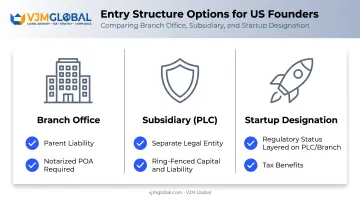
Common entry structures:
- Branch office — an extension of your US company; the parent carries full liability and needs an authorized legal representative with a notarized power of attorney
- Subsidiary (PLC) — a separate Ethiopian legal entity with ring-fenced capital and liability
- Startup designation — a regulatory status (not a separate entity) under Proclamation 1396/2025 for innovative ventures under five years old; layered on a PLC or branch to unlock tax benefits
Get this choice wrong early, and you'll be re-filing documents later.
What to Know Before You Start a Business in Ethiopia from the USA
Most US founders underestimate the cross-border complexity of entering Ethiopia. The real drag is usually the paperwork chain that links American notarization to Ethiopian registration, not the business idea.
Time, Travel, and Local Presence
EIC accepts applications online through a legally authorized representative with a notarized power of attorney. Personal travel isn't expressly required by the current filing rules. That said, banking steps, office leasing, and building local relationships still tend to go faster in person.
The Document Authentication Chain
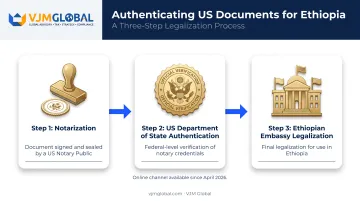
US-issued documents can't simply be emailed to Ethiopia. They need:
- Notarization by a US notary public
- US Department of State authentication
- Ethiopian Embassy legalization
The Ethiopian Embassy in Washington shifted this legalization step to an online channel as of April 2026, replacing walk-in processing. Skip a link in this chain, and your EIC application gets bounced back.
Minimum Capital Deposit
Under Investment Proclamation 1180/2020, capital thresholds vary by structure:
| Project Type | Wholly Foreign-Owned | Joint Venture |
|---|---|---|
| General investment | $200,000 | $150,000 |
| Architecture, engineering, technical consultancy, publishing | $100,000 | $50,000 |
This capital must be transferred into Ethiopia and confirmed through a bank credit advice submitted to EIC, with capital registration later forwarded to the National Bank of Ethiopia (NBE).
Local Representation Requirements
EIC's checklist requires a legal representative for branch filings: passport, ID, and a notarized power of attorney. It does not explicitly state that this person must be an Ethiopian citizen or resident, though practically, someone on the ground who can chase paperwork is invaluable.
Realistic Timeline
EIC quotes 3-5 business days for permit review alone. That figure doesn't include document legalization, bank account opening, capital transfer confirmation, or MoTRI commercial registration — each of which adds its own timeline. Budget for a multi-step process rather than a single fast approval.
Why It Makes Sense — and What Often Trips Up US Founders
The Case for Ethiopia
The fundamentals are strong right now:
- 135.47 million people and 9.8% real GDP growth in 2025 (World Bank) — a large, fast-growing market
- The 2024 FX reform introduced a market-determined exchange rate, making it easier for banks to process import transactions
- Startup Proclamation 1396/2025 offers designated startups income tax, dividend tax, and withholding tax exemptions, plus duty-free import of approved capital goods
None of this guarantees unrestricted currency access. Repatriation of profits still requires NBE approval and prescribed documentation, even post-reform.
Where Founders Get Tripped Up
Logistics costs get underestimated. Ethiopia is landlocked. Over 95% of import-export trade volume moves through the Addis-Djibouti corridor, according to the World Bank. Inland freight and border delays eat into margins fast if you haven't priced them in.
Remote-only assumptions. Some founders assume the entire process happens by email. You can file remotely through a representative, but banking and licensing steps often need someone physically present.
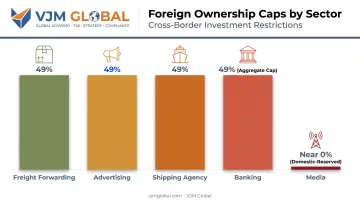
Sector restrictions get missed. Regulation 474/2020 reserves several activities for domestic investors and caps foreign ownership at 49% in freight forwarding, advertising, and shipping agency work.
Banking now allows regulated foreign participation under the 2025 Banking Business Proclamation, still with a 49% aggregate cap. Media remains largely domestic-reserved. Check your specific activity code before assuming full ownership is available.
How to Start a Business in Ethiopia from the USA — Step by Step
This breaks the process into practical stages from a US founder's vantage point. The most common mistakes: skipping document authentication early, underestimating capital deposit timing, and assuming US registration transfers automatically. It doesn't.
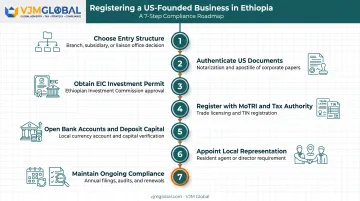
Step 1 — Choose Your Entry Structure and Business Idea
Decide between branch, subsidiary, joint venture, or startup-designated entity based on long-term intent, not convenience. Validate market need using research and, where possible, diaspora networks or local contacts.
Common miss: Choosing a branch for what's really a long-term operation better suited to a subsidiary. Branches carry full parent liability. A subsidiary ring-fences that risk.
Step 2 — Prepare and Authenticate US Documents
Gather your Certificate of Incorporation, Articles of Association, board resolutions, and passport/ID copies. Then run them through notarization, US state-level authentication, and Ethiopian Embassy legalization before submission.
Common miss: Submitting partially legalized documents. EIC's checklist is specific, and missing one authentication step sends you back to square one.
Step 3 — Obtain the Investment Permit from EIC
Submit your application with authenticated documents and your proposed capital commitment. Confirm your sector's minimum foreign capital threshold before you commit a figure.
Common miss: Underfunding the declared capital relative to the sector minimum, which stalls permit approval.
Step 4 — Register with MoTRI and Complete Tax Registration
Reserve a business name, register commercially with the Ministry of Trade and Regional Integration, and obtain your Commercial Registration Certificate. Then register for a Taxpayer Identification Number (TIN) and VAT, where applicable, with the relevant tax authority.
VJM Global coordinates document flow between US notarization steps and Ethiopian registration filings so sequencing stays intact when timelines slip.
Common miss: Treating this as a formality. MoTRI's checklist requires specific ID and power-of-attorney documentation when an attorney files on your behalf.
Step 5 — Open Bank Accounts and Deposit Capital
Open a foreign-currency account, transfer your committed capital, and obtain the bank's credit advice and confirmation for submission to EIC. Time this so it aligns with permit renewal deadlines.
Common miss: International wire delays holding up licensing. Build in buffer time for banking, not just permit review.
Step 6 — Appoint Local Representation and Set Up Operations
Appoint a legal representative or branch manager and secure a physical office lease along with any sector-specific licenses.
Common miss: Leaving the representative role vacant after initial filing, which risks removal from the commercial register.
Step 7 — Maintain Ongoing Compliance from Abroad
Plan for annual financial statement filings, tax returns, and investment permit renewals. Set up remote bookkeeping and payroll support so obligations get met without your physical presence.
Common miss: Assuming US accounting practices satisfy Ethiopian statutory filing requirements. They don't — each jurisdiction has its own instruments, and Ethiopia is no exception.
Conclusion
Starting a business in Ethiopia from the USA is achievable, but it rewards disciplined document preparation, realistic capital planning, and dependable local representation. Skip any one of those, and delays compound quickly.
Reform momentum is real. Forex liberalization and startup incentives have lowered the barrier compared to a few years ago. The bureaucracy hasn't disappeared, but it's more navigable than it used to be.
For founders unfamiliar with Ethiopian registration sequencing, an advisor who coordinates US document authentication with Ethiopian filing requirements shortens timelines and cuts rejection risk. VJM Global supports US founders through cross-border entity formation and the filing sequence end to end.
Frequently Asked Questions
How much does it cost to start a business in Ethiopia?
Government fees run roughly $50 each for the investment permit, commercial registration, and name reservation. Most projects also need a minimum capital deposit of $150,000–$200,000, plus professional and document authentication costs that vary by provider.
What type of business is profitable in Ethiopia?
Agro-processing, textiles, leather goods, and import-substitution manufacturing are government-promoted priority sectors . EIC's own investment portal highlights these as core focus areas for foreign investors.
What products are in high demand in Ethiopia?
Capital goods made up 36% of Ethiopia's $18.79 billion in merchandise imports in FY2024/25, followed by consumer goods at 26.3%, per National Bank of Ethiopia data.
Can a US citizen fully own a company in Ethiopia?
Most sectors allow full foreign ownership subject to EIC approval. Exceptions exist in restricted sectors like media, freight forwarding, and certain financial services, where foreign ownership is capped, often at 49%.
Do I need to travel to Ethiopia to register a business?
EIC's application process supports filing through a notarized power of attorney and local representative, so travel isn't strictly required. That said, banking and office setup steps often move faster with someone physically present.
How long does it take to register a company in Ethiopia as a foreigner?
EIC's investment permit review takes roughly 3-5 business days once documents are complete. Document authentication, banking, and commercial registration steps typically add several more weeks on top of that.