The truth is messier than a yes-or-no answer. Whether you need to register depends on your business structure, where you operate, and what you actually do day to day.
Here's the confusing part: plenty of sole proprietors legally run businesses without ever filing anything with their state. Yet almost every business, including those same sole proprietors, still needs some form of registration, whether that's an EIN, a DBA, or a sales tax permit.
This guide breaks down when registration is legally required, what happens if you skip it, how the rules shift from state to state, and what foreign nationals and NRIs need to know before starting a US business.
Key Takeaways
- Sole proprietors can often skip state entity registration, but most still need an EIN, DBA, or tax permit
- Forming an LLC or corporation always requires filing with your state's Secretary of State
- Skipping required registrations risks personal liability, fines, and blocked bank accounts
- Requirements vary by state; Oregon requires an Assumed Business Name filing for trade names
- Non-US residents can form an LLC or C-Corp with a registered agent and EIN/ITIN
What Does "Registering a Business" Actually Mean in the US?
There's no single "business registration" button to press. What people call registration is actually a bundle of separate filings, and which ones apply to you depends on your structure, industry, and location.
Here's what typically falls under that umbrella:
- EIN (Employer Identification Number): A free, nine-digit federal tax ID from the IRS, required to hire employees, open a business bank account, or file certain federal taxes. Single-member LLCs with no employees can often use the owner's Social Security Number instead.
- State entity formation: Forming an LLC or corporation means filing Articles of Organization or Articles of Incorporation with your state's Secretary of State. This creates a legal entity separate from you personally.
- DBA/Fictitious Name Registration: If you're trading under a name other than your own or your entity's registered name, most states or counties require a "Doing Business As" filing. A DBA doesn't grant legal protection; it just makes the name public record.
- Sales tax permit/seller's permit: Selling taxable goods or services requires a state sales tax permit before you make your first sale.
- Industry-specific licenses and permits: Restaurants need health department approval, contractors need trade licenses, and professional firms like accounting practices often need board registration. Local zoning approval can apply too.
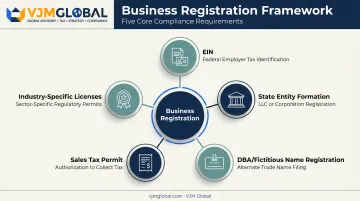
Skip any one of these that applies to you, and you're operating out of compliance, even if you never formally registered an LLC.
Do You Legally Need to Register Your Business?
Short answer: it depends on your structure, but "no registration of any kind" is rarely the honest answer.
If you're a sole proprietor operating strictly under your own legal name, say Jane Smith doing freelance design work, you can typically start without filing anything with your state. You'll likely still need an EIN if you hire anyone, and possibly a local business license or sales tax permit depending on what you sell.
Registration becomes mandatory the moment you:
- Form an LLC or corporation
- Hire employees
- Open a business bank account (most banks require an EIN)
- Trade under a name different from your own
Sole Proprietorship vs. Formal Business Structures
- Sole proprietorship: No filing needed to start, but liability protection is zero, so a lawsuit against the business becomes a lawsuit against you personally. Local licenses may still apply.
- Partnership: Equally informal to start, with liability shared among owners. A written agreement isn't legally required, though skipping one often causes problems later.
- LLC/Corporation: Requires a state filing, but grants liability protection and more credibility with banks, investors, and clients, often the better choice for scaling or raising capital.
Here's a stat that surprises most people: according to SBA Office of Advocacy data from 2024, sole proprietorships make up 86.3% of nonemployer firms in the US. Yet they account for only 13.0% of small employer firms (businesses with actual staff). Informal setups dominate among solo operators, but they largely disappear once a business starts hiring.
What Happens If You Don't Register Your Business?
Skip a required registration, and the consequences range from a minor headache to a business-ending event.
- Personal liability exposure: Without a formally registered LLC or corporation, no legal wall separates business debts from personal assets. A lawsuit, unpaid vendor, or loan default can reach your savings, car, or house.
- Fines and back taxes: Operating without a required sales tax permit or license can trigger penalties, back taxes, and interest from state and federal agencies. New York, for instance, imposes civil penalties up to $10,000 for unlicensed taxable sales, plus possible criminal charges.
- Banking and funding barriers: Banks and investors almost universally require an EIN and formation documents before opening an account or extending credit.
- Loss of legal protections: Unregistered businesses often struggle to enforce contracts in court and can't stop a competitor from using a confusingly similar trade name.
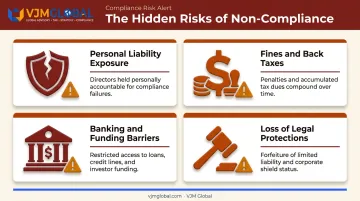
Not every unregistered sole proprietor faces a five-figure fine. But the moment you hire someone, sell taxable goods, or try to open a bank account, compliance gaps start costing real money.
State-Specific Registration Rules: What You Need to Know
Business registration rules vary widely from state to state. Fees, processing times, and renewal obligations shift depending on where you form your business.
Take Oregon as an example. Oregon requires LLCs and corporations to register with the Secretary of State's Corporation Division. Sole proprietors or partnerships trading under a name other than their own must file an Assumed Business Name.
| Oregon Filing | Initial Fee | Renewal | Frequency |
|---|---|---|---|
| Domestic LLC | $100 | $100 | Annually |
| Domestic Corporation | $100 | $100 | Annually |
| Assumed Business Name | $50 | $50 | Every 2 years |
Compare that to other states, and the differences add up fast:
| State | LLC Formation Fee | Corporation Formation Fee |
|---|---|---|
| California | $70 | $100 |
| Oregon | $100 | $100 |
| New York | $200 | $125 |
These are base filing fees only. DBA filings, annual reports, publication requirements (New York requires newspaper publication for LLCs), and industry licenses can add hundreds more.
Before starting your registration, check your state's Secretary of State website directly. Franchise taxes, annual report deadlines, and license requirements differ widely, and assuming one state's rules apply everywhere is a costly mistake.
How to Register Your Business in the US: Step-by-Step
Once you know registration applies to you, the process follows a fairly predictable sequence.
- Choose your business structure. Decide between sole proprietorship, partnership, LLC, or corporation based on liability protection and growth plans.
- Verify your business name is available. Search your state's business registry to confirm no one else is using your desired name, then check if a DBA is needed.
- Appoint a registered agent (for LLCs and corporations). Most states require an in-state agent with a physical address before you can file formation documents.
- File your formation documents. Submit Articles of Organization (LLC) or Articles of Incorporation (corporation) to your state's Secretary of State along with the filing fee.
- Apply for your EIN. The IRS issues EINs for free through its online application, and most applicants receive one instantly once eligibility conditions are met.
- Wrap up final compliance steps. Obtain any local, state, or industry-specific licenses that apply, then open a dedicated business bank account using your EIN and formation paperwork.
Skipping the order here creates problems. Banks won't open an account without an EIN, and you generally can't get an EIN for an LLC that hasn't been formed yet.
Registering a US Business as a Foreign National, NRI, or International Entrepreneur
Citizenship isn't a requirement for owning a US business. Non-residents, NRIs, and OCIs can legally form an LLC or C-Corp in any state without ever setting foot in the country, though a few extra steps apply.
- Registered agent: Every state requires one, and it must be a physical in-state address, not a PO box or your home address abroad.
- EIN without an SSN: Foreign founders without a Social Security Number or ITIN can still get an EIN. IRS instructions allow you to enter "foreign" on the relevant line of Form SS-4.
- ITIN, if needed: An ITIN is separate from an EIN and generally applies to individual tax filing obligations, not business ownership by itself. It usually comes into play alongside a federal tax return.
- US-India tax treaty considerations: Under the treaty's business profits article, India-based founders generally aren't taxed in the US unless they operate through a "permanent establishment" there. Correct entity structuring avoids double-taxation issues down the line.
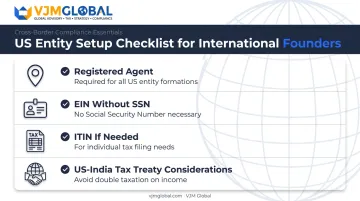
Where International Founders Usually Get Stuck
The paperwork isn't the hard part. What trips up most international founders is navigating state-specific filing quirks, understanding how the US-India treaty actually applies to their situation, and opening a US business bank account while sitting in Mumbai or Bangalore.
This is where cross-border expertise matters more than a generic formation checklist. VJM Global's team of CPAs, Chartered Accountants, and US-compliance professionals has spent years helping NRIs, OCIs, and global entrepreneurs navigate cross-border tax obligations. That experience spans 500+ American business owners and clients across the USA, UK, and Australia.
Instead of treating registration as a one-time transaction, the focus stays on keeping your entity compliant on both sides of the treaty long after the paperwork is filed.
Frequently Asked Questions
Is it necessary to register my business?
It depends on your structure. Sole proprietors operating under their own legal name can often skip formal state registration, but most businesses still need an EIN or tax registration to operate legally.
Do registration requirements vary by state?
Yes, requirements differ across all 50 states. For example, Oregon requires LLCs and corporations to file with the Secretary of State, while sole proprietors trading under a different name must file an Assumed Business Name.
What happens if a company is not registered?
You risk personal liability for business debts, fines, and back taxes, an inability to open a business bank account, and difficulty enforcing contracts or protecting your trade name.
How much does it cost to register a business in the US?
Costs vary by state and entity type. LLC filing fees typically range from $70 to $200, corporation fees from $100 to $125, and the EIN itself is always free.
Can a non-US resident or NRI register a business in the US?
Yes. Non-residents can form an LLC or corporation without US citizenship, provided they appoint a registered agent and complete the EIN process, using an ITIN where applicable.
Do online-only businesses need to register?
Online businesses face the same registration obligations as physical ones, including EIN registration, sales tax permits in states where they have nexus (a taxable presence), and any required industry licenses.