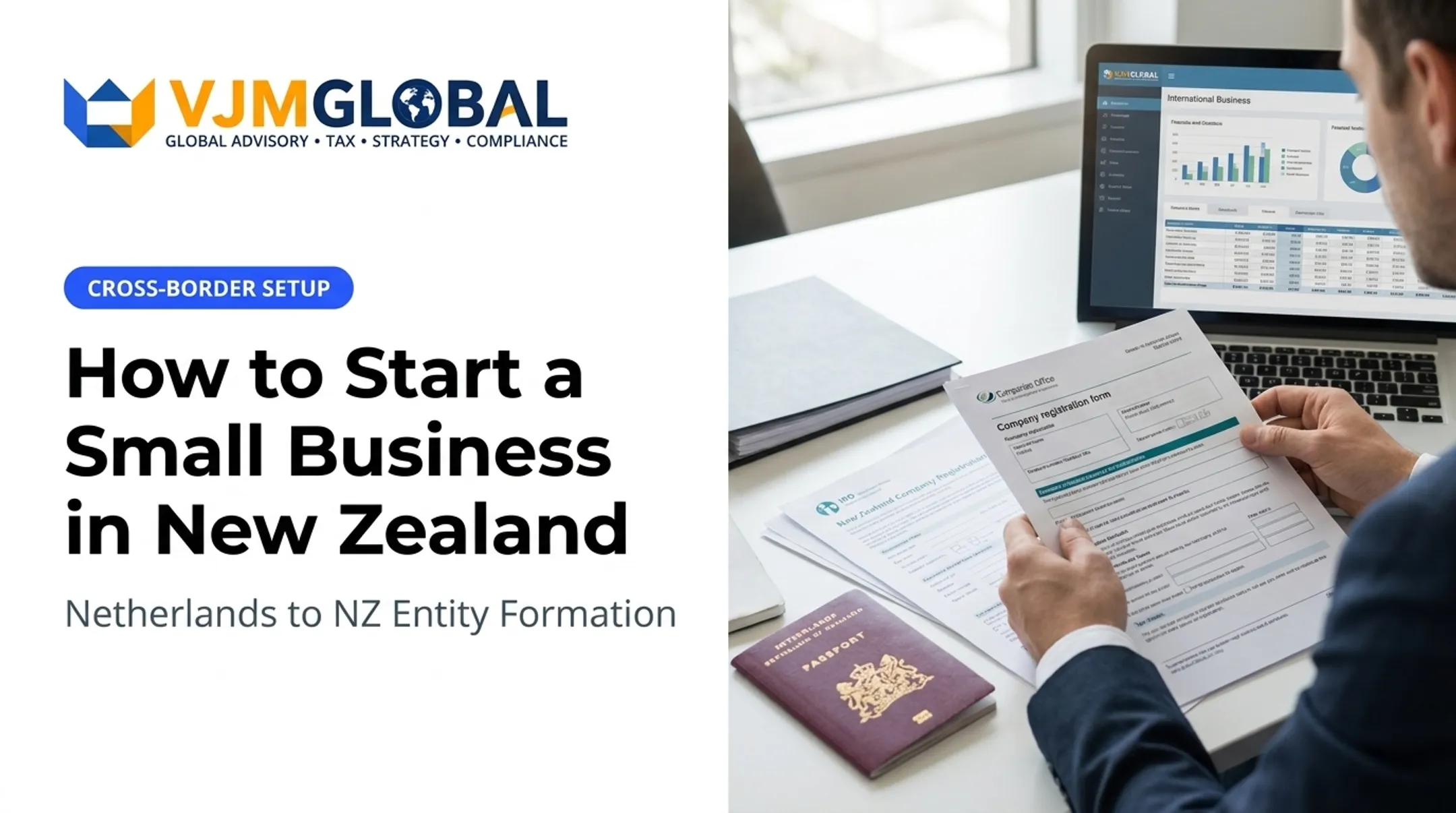
For UK founders, the appeal runs deeper than convenience. New Zealand shares your legal heritage, sits inside the CPTPP trading bloc, speaks English as its primary business language, and lets you register a company online in a matter of days. It's a rare combination.
The interest isn't limited to one type of founder. UK SMEs eyeing overseas expansion, solo consultants chasing a new market, and established companies wanting a formal NZ presence are all asking the same question: what does this actually involve?
This guide walks through the practical steps: business structures, visas, registration, tax and banking, so you know exactly what's required before you commit.
TL;DR
- Incorporate online via the Companies Office — NZ ranks among the easiest places to register
- Stay in the UK if you want: appoint at least one NZ or Australian resident director
- Use the Entrepreneur Work Visa to live in and run the business (typically NZ$100,000 investment)
- Budget for GST, a 28% company tax rate, and annual Companies Office returns
What Does Starting a Business in New Zealand from the UK Involve?
It means registering a legal entity, or a branch, with the New Zealand Companies Office and meeting the visa, tax and compliance obligations that apply to UK founders.
This covers two very different paths:
- Remote ownership — you stay in the UK and run the business through a compliant local structure
- Hands-on relocation — you move to New Zealand under an entrepreneur visa to manage operations directly
Common formats include:
- An NZ limited company
- A registered branch of your existing UK business
- Sole trader status
- A partnership
Which one fits depends heavily on whether you plan to relocate at all.
What to Know Before You Start a Business in NZ from the UK
Many UK founders underestimate residency and admin requirements before they register. Settle these points early:
Do you need to be physically present? No, but your company must have a resident director. This means someone living in New Zealand, or in Australia while also directing an Australian-incorporated company.
Timelines vary widely. Online company registration typically takes just days. The Entrepreneur Work Visa has historically taken up to 18 months for most applicants. Check current status with Immigration New Zealand: entrepreneur visa categories periodically close to new applications.
Remote vs hands-on management sets a different path:
- Running remotely means leaning on a local resident director and support network
- Relocating means day-to-day control, plus visa timelines and investment thresholds
Currency matters. Moving funds between GBP and NZD introduces exchange-rate exposure and reporting complexity that many founders don't plan for until it's already a problem.
Why New Zealand Appeals to UK Entrepreneurs
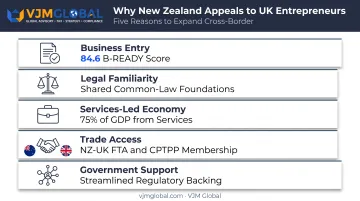
Use the points below as a practical checklist when weighing New Zealand as a market. Each one strengthens the case only if your model and setup match the opportunity.
- Business entry: New Zealand scored 84.6 on the World Bank's B-READY Business Entry index, reflecting a streamlined registration process
- Legal familiarity: A shared common-law system reduces the learning curve UK founders face in other markets
- Services-led economy: MBIE describes New Zealand as roughly three-quarters services-based, a strong signal for UK professional-service exporters
- Trade access: The NZ-UK FTA has been in force since May 2023, and UK CPTPP membership has been active since December 2024
- Government support: The Regional Business Partner Network connects eligible new businesses to advice, training and funding
None of this replaces due diligence. It simply means the groundwork is already in your favour if you're set up correctly.
Early Decisions That Matter When Setting Up in NZ
Most friction for UK founders comes from misunderstanding director residency rules and visa timelines. Overlooked areas include:
- True costs: registration fees, resident director or agent fees, and the NZ$100,000 Entrepreneur Work Visa investment threshold if you relocate
- Structure choice: NZ subsidiary, branch of your UK company, or sole trader status each carries different compliance burdens
- Realistic timelines: registration is fast; visa processing is not
- Compliance friction: annual returns, IRD registration, and GST registration once turnover crosses NZ$60,000
- Local director dependency: a legal requirement if you are not relocating immediately
Lock in cost, structure, timeline, compliance, and director arrangements first, and the rest of the setup stays far more predictable.
How to Start a Business in New Zealand from the UK – Step by Step
UK founders most often trip up on three points: skipping the resident director requirement, underestimating visa lead times, and assuming UK incorporation carries over. It doesn't. New Zealand treats your business as a fresh registration.
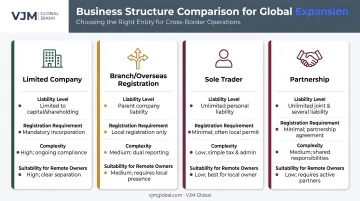
Step 1 – Choose Your Business Structure
Your options:
- Limited company — a separate legal entity; shareholder liability is generally limited to shares held
- Branch/overseas company registration — must register within 10 working days of starting NZ business activity
- Sole trader — simplest, but you're personally liable for all debts
- Partnership — shared control and liability between two or more parties
Every NZ company needs at least one director who's an NZ resident, or an Australian resident who also directs an Australian-incorporated company. Living in New Zealand for more than 183 days in a 12-month period satisfies the residence test.
Common miss: assuming full remote ownership works without a compliant resident director in place. It doesn't — this is a hard legal requirement, not a formality.
Step 2 – Reserve Your Name and Register with the Companies Office
Use the ONECheck tool to confirm your proposed name, domain and social handles are available, then reserve it via the Companies Register.
You'll need:
- A registered NZ address
- Director and shareholder details
- Signed consent forms from each director and shareholder
Name reservation costs NZ$10 plus GST; online incorporation costs NZ$118.74 plus GST. Reserved names must be used within 20 working days, and consent forms must be filed within the same window or the application is cancelled.
Once complete, you'll receive a Certificate of Incorporation and an automatically issued NZBN (New Zealand Business Number).
Step 3 – Sort Out Your Visa (If Relocating)
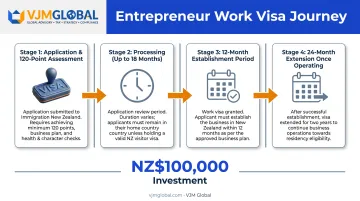
Relocation isn't mandatory. But if you want to manage your business hands-on in New Zealand, the Entrepreneur Work Visa is the primary route.
Requirements typically include:
- A 120-point assessment covering your business plan, capital and experience
- A minimum NZ$100,000 investment
- A detailed, credible business plan
The visa runs up to three years: 12 months to establish the business, then a further 24 months once you've demonstrated it's operating. Processing has historically taken up to 18 months for most applicants. Check current status with Immigration New Zealand, as entrepreneur visa routes have periodically closed to new applications.
Common miss: submitting a visa application with a thin or generic business plan. Immigration officers assess viability, not just intent.
Step 4 – Register for Tax, GST and Banking
Once incorporated, you'll need an IRD number for tax purposes. Key figures:
- Corporate tax rate: 28% flat, applied to worldwide profits for NZ-resident companies and NZ-sourced profits for overseas companies
- GST registration: required once turnover hits NZ$60,000 in the past or projected next 12 months
Opening an NZ business bank account as a non-resident typically requires a company extract, Certificate of Incorporation, and identification for anyone holding 25% or more of shares. Foreign tax-resident companies may also need to supply foreign tax reference numbers.
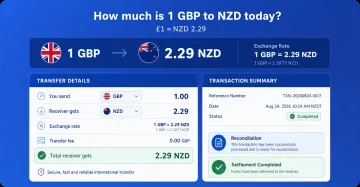
The practical challenge: managing GBP-to-NZD transfers alongside multi-currency reconciliation. Exchange-rate movements need to be accounted for correctly in your books, not treated as a footnote. This is where cross-border accounting support proves its value.
Step 5 – Meet Ongoing Compliance and Reporting Obligations
Registration isn't a one-time event. Ongoing obligations include:
- Annual returns to the Companies Office (currently NZ$49.74 plus GST)
- Keeping director and shareholder details current
- Maintaining statutory records — company minutes, financial statements and share registers — for 7 years (10 years for certain shareholder records)
Running compliance across two jurisdictions, UK reporting alongside NZ obligations, gets complicated fast without expertise on both sides.
VJM Global supports founders on that cross-border groundwork: entity formation, tax compliance and accounting built around each market's own regulators and statutory instruments. For UK founders balancing a New Zealand entity with ongoing HMRC obligations, dual-jurisdiction visibility matters from day one.
Conclusion
Starting a business in New Zealand from the UK is achievable without relocating, provided you understand the resident director rule and visa requirements from day one.
Clarity on structure, visas and compliance timelines matters far more than rushing through registration. The registration itself is fast; getting the surrounding decisions right is what determines whether the business actually works.
Long-term success depends on staying on top of NZ tax, GST and reporting obligations as the business grows, while keeping up with any ongoing UK tax and compliance duties in parallel.
Frequently Asked Questions
How much money do you need to start a business in New Zealand?
There's no minimum share capital required to register a company itself. However, the Entrepreneur Work Visa typically requires an NZ$100,000 investment, plus registration and ongoing compliance costs.
What is the best business to start in New Zealand?
Technology, professional services, tourism/hospitality and specialised retail are strong options for foreign entrepreneurs, largely thanks to New Zealand's services-driven economy and trade access via CPTPP and its UK/EU agreements.
Is New Zealand a good country for business?
Yes. It scores well on global business-environment rankings, runs a transparent tax system, and operates under a common-law framework that's familiar to UK founders, which reduces legal friction.
How much do I need to invest in NZ to get PR?
Permanent residence pathways, such as the Entrepreneur Resident Visa, generally follow similar NZ$100,000 investment guidance for established businesses. Requirements vary by category and can rise depending on your route.
Do I need to live in New Zealand to own a business there?
No. UK founders can own and run an NZ company remotely, provided the company has a compliant resident director: either someone living in New Zealand or an Australian resident who also directs an Australian company.
What is the corporate tax rate in New Zealand?
A flat 28% company tax rate applies to worldwide profits for NZ-resident companies, and to NZ-sourced profits for overseas companies operating through a branch or registered entity.