The pull is straightforward: lower entry costs than Western Europe, strong demand across tech and consumer goods, and a digital economy that's expanding fast. With 237.5 million people, Nigeria ranks as the sixth-largest population in the world.
This guide walks through what it actually takes to legally and practically start a business in Nigeria while staying based in Germany, from choosing a structure to navigating banking and compliance.
TL;DR
- Foreigners can own up to 100% equity in most Nigerian sectors
- Registration runs through the CAC, followed by FIRS tax and NIPC steps
- Cross-border banking and remittances are the biggest practical hurdles
- Full setup typically takes several weeks, plus ongoing compliance
- Professional cross-border advisory support reduces delays and risk
What Does Starting a Business in Nigeria From Germany Involve?
It means legally registering a Nigerian business entity while you remain in Germany, using remote filing or a local representative to handle in-country steps.
This isn't limited to physical retail shops. It commonly covers:
- E-commerce and consumer product businesses selling into Nigeria
- Import/export ventures moving goods between the two countries
- Tech services and SaaS-style offerings for Nigerian clients
- Consulting or advisory businesses run entirely online
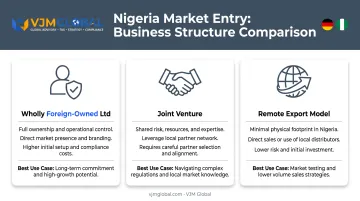
You will generally choose one of three structures:
- Wholly foreign-owned Nigerian Ltd - full control; the standard route for most sectors
- Joint venture with a local partner - useful where local market knowledge or licensing matters
- Remote export model without local incorporation - selling into Nigeria via distributors or an Employer of Record, with no entity required
What to Know Before You Start
Germany-based founders often underestimate how much complexity survives even after incorporation. A registered company on paper doesn't mean a functioning business on the ground.
Before committing, get clear on:
- Local representation - can you run this remotely, or do you need someone physically present for banking and permits?
- Realistic revenue timeline - registration is fast; earning steady income takes longer
- Remote vs. presence-dependent models - digital exports differ hugely from anything requiring local logistics
- EUR-NGN currency exposure - exchange rate swings affect your margins and pricing
- Skill vs. navigation dependency - is your business built on your product, or on someone else's ability to navigate Nigerian regulations?
Getting honest answers here before filing paperwork saves months of frustration later.
Why Nigeria Makes Sense as a Target Market (When It Does)
Nigeria is a sound target market only under specific conditions.
The demand side is real:
- A population of 237.5 million creates enormous scale for consumer-facing sectors
- Fintech, agribusiness, tech services, and consumer goods see recurring demand
- Operating costs run lower than in Germany, allowing competitive pricing
The digital picture is more nuanced. 41.21% of Nigerians used the internet in 2024, up from just over 40% the year before. Separately, GSMA reports 27% of the population owned a smartphone in 2024, with smartphones making up 64% of mobile connections.
That gap matters. Network coverage nears 90%, yet nearly 60% of Nigerians remain offline in practice, largely due to device affordability. A basic smartphone can cost over half a month's income for the poorest 40% of the population.
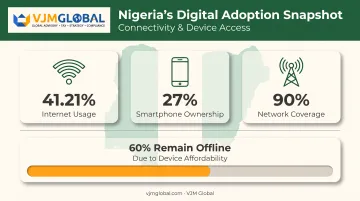
If your model depends on smartphone-heavy digital adoption, price and access barriers deserve real scrutiny—not just optimism about growth.
Nigeria makes sense when you're targeting an underserved niche, can price for local purchasing power, and aren't betting everything on universal digital reach.
Early Decisions That Matter for Cross-Border Founders
Germany-based founders rarely stall from lack of effort. The real drag is friction they did not price in: compliance steps, logistics, and banking rules that do not behave like German ones.
Areas that get overlooked most often:
- True compliance cost - registration fees are one line item; CAC, FIRS, and state-level obligations add up over time
- Breakeven under currency volatility - EUR-NGN swings can quietly erode margins you thought were solid
- Local director or agent needs - some banking and regulatory steps require someone with Nigerian presence
- Repatriation rules - moving profits back to Germany has its own documentation requirements
- Founder over-reliance - running everything solo from Germany without a Nigeria-based contact creates a single point of failure
None of these are dealbreakers. They're planning items that need answers before, not after, you register.
How to Start a Small Business in Nigeria From Germany – Step by Step
Registration alone doesn't equal market readiness. The steps below cover the full execution path, flagging where founders commonly trip up.
Step 1 – Validate the Nigerian Market Opportunity Remotely
Test demand before spending money on incorporation:
- Research via Nigerian trade data, online communities, and diaspora networks
- Run small pilot sales or partnerships to test actual willingness to pay
- Common miss: assuming German pricing models translate directly. Nigerian purchasing power is different, and pricing needs local calibration, not a straight EUR-to-NGN conversion.
Step 2 – Choose Your Business Structure and Ownership Model
Decide between a wholly foreign-owned LLC, a joint venture, or a remote export model without incorporation.
Most sectors permit up to 100% foreign ownership, according to a Legal 500 guide for foreign investors, with exceptions on a statutory negative list (arms and ammunition, for instance).
A foreign shareholder can appoint a Nigerian solicitor via power of attorney to handle incorporation—useful if you stay in Germany throughout.
Common miss: picking a structure before understanding its tax and repatriation implications.
Step 3 – Register the Company With the CAC
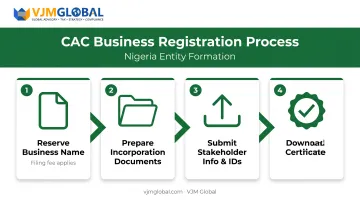
Nigeria's Corporate Affairs Commission runs an online portal (iCRP) that supports the full registry workflow remotely:
- Reserve your business name and pay via the portal
- Prepare incorporation documents, including Memorandum and Articles of Association and director details
- Submit stakeholder information, upload identification, and track status online
- Download your certificate once approved
Published CAC fees start at NGN 10,000 for share capital up to NGN 1 million, plus NGN 10,000 for each additional NGN 1 million, though a live portal quote should always confirm current pricing.
While this can technically be done solo, a local agent or advisory firm managing submissions and follow-ups saves real time. Registration also builds credibility with Nigerian banks and partners, who take a properly incorporated entity far more seriously than an informal arrangement.
Step 4 – Complete Tax and NIPC Registration
Once incorporated, register with the Federal Inland Revenue Service (FIRS) for a Taxpayer Identification Number and Tax Clearance Certificate.
Foreign-owned entities also need registration with the Nigerian Investment Promotion Commission (NIPC). This step is mandatory before you can open a local bank account or apply for business permits, so it's not optional paperwork to defer.
Nigeria applies 0% corporate income tax for small companies with turnover under NGN 100 million and fixed assets under NGN 250 million, per PwC's tax summary. Larger companies face 30%.
Step 5 – Handle Cross-Border Banking and Money Transfers
Opening a Nigerian corporate bank account often requires a local director or physical presence for KYC checks.
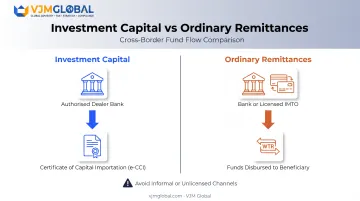
Two transfer types serve different purposes, and mixing them up creates compliance headaches:
- Investment capital should move through a Nigerian Authorised Dealer Bank, generating a Certificate of Capital Importation (e-CCI). This documents your equity and supports future profit repatriation.
- Ordinary remittances (operating funds, payments) should go through a bank or a licensed International Money Transfer Operator on the Central Bank of Nigeria's approved list.
Common miss: relying on informal transfer channels. They're untraceable, unregulated, and can complicate tax and repatriation later.
Step 6 – Set Up Local Operations or a Remote-Support Structure
Decide how much of the business genuinely needs boots on the ground versus what can stay remote.
Options include:
- Hiring a local operational contact for day-to-day presence
- Using an Employer of Record (EOR) to hire Nigerian staff without incorporating separately for payroll
- Managing everything from Germany, where the business model allows it
This is where firms like VJM Global typically get involved—supporting Nigerian entity formation, tax registration, and payroll compliance (PAYE, pension contributions, NHF, NSITF) without requiring you to relocate.
An EOR removes the need to incorporate solely to employ staff. It does not automatically clear Nigerian tax exposure if your activity creates a taxable presence there, so confirm that line with an advisor before you assume the EOR covers everything.
Step 7 – Launch, Market, and Track Compliance
With the entity live, shift focus to Nigerian customers: localized marketing, familiar payment methods, and steady compliance follow-through.
Set up from day one:
- Basic financial tracking and bookkeeping
- Calendar reminders for CAC annual returns and FIRS filings
- Local payment rails your customers already use
Common miss: treating registration as the finish line. Annual compliance obligations continue indefinitely, and missing them leads to penalties that compound over time.
Conclusion
Starting a business in Nigeria from Germany is legally straightforward on paper. Foreigners can own up to 100% of most Nigerian companies, and the CAC's online portal makes registration genuinely remote-friendly.
The real work lies in the logistics: banking, tax registration, currency exposure, and building a support structure that doesn't collapse the moment you're not physically present.
Success depends far more on validating real demand and setting up the right local operational backbone than on the registration paperwork itself.
Partnering with a firm familiar with both German and Nigerian requirements, such as VJM Global, can shorten the timeline considerably. It also reduces the compliance risk that catches most first-time cross-border founders off guard.
Frequently Asked Questions
What business can I start with €30,000 in Nigeria?
At this capital level, viable options include import/export ventures, agritech products, or tech and consulting services delivered remotely. This budget generally covers registration, initial inventory or setup, and a few months of operating costs.
What kind of business can I start with ₦5,000?
At this micro-budget, small-scale retail, reselling, or service-based businesses (tailoring, food vending, or basic errands) are realistic. These are typically informal ventures rather than formally registered companies.
How can I transfer money from Germany to Nigeria?
Use a regulated bank transfer or a licensed International Money Transfer Operator listed on the Central Bank of Nigeria's roster. Investment capital should separately go through an Authorised Dealer Bank to obtain a Certificate of Capital Importation.
How much does it cost to register a business in Nigeria?
CAC fees start around ₦10,000 for share capital up to ₦1 million, rising by ₦10,000 per additional ₦1 million. This excludes stamp duty, professional fees, and sector-specific approvals, so a live quote is essential.
Can a foreigner open a company in Nigeria?
Yes, foreigners can generally own up to 100% equity in most sectors, with exceptions on a statutory negative list. Foreign-owned entities also need NIPC registration after incorporation.
Do I need to be physically present in Nigeria to register my business?
CAC registration can largely be completed remotely through its online portal, including with a power of attorney to a local solicitor. However, opening a bank account and securing certain permits may still require a local representative.