Yet Portugal still pulls in UK founders for good reason: EU market access, lower operating costs, and residency routes tied to business activity. Research from Banco de Portugal found that Brexit-related trade friction reduced Portuguese output by at most 0.1% overall, though individual UK-exporting firms felt a sharper hit.
Freelancers, SME owners, retirees looking for a new venture, and UK companies wanting an EU foothold are all making this move. This guide walks through the visas, structures, registration steps, and compliance obligations UK nationals now face post-Brexit.
Key Takeaways
- Secure a D2, Startup, or Golden Visa before or alongside Portuguese company registration
- Company filing takes 1–2 days and costs about €220–€360; full prep can run up to two months
- You'll need a NIF, NISS, and Portuguese bank account before anything else moves forward
- UK–Portugal tax and social security rules need deliberate cross-border planning from day one
What Does Starting a Business in Portugal Involve for UK Citizens?
For a UK national, it means registering a legally recognised Portuguese entity or branch. Since Brexit, UK citizens are treated as non-EU nationals for this process.
This guide covers company incorporation and compliance. It doesn't cover immigration strategy or property investment, though visa routes often intersect with business setup.
UK founders typically choose between three structures:
- Sole Trader / Individual Entrepreneur: simplest setup, unlimited personal liability
- Single-Member Limited Company: one owner, limited liability protection
- Partnership or branch/subsidiary: extending an existing UK company into Portugal without full relocation
Each path has different visa implications; this guide focuses on the corporate and compliance steps for each.
What UK Founders Should Know Before Starting a Business in Portugal
Before Brexit, UK citizens registered businesses in Portugal the same way any EU national would. That automatic right disappeared on 1 January 2021. Now, UK founders face the same non-EU/EFTA framework as applicants from Canada, Australia, or the US.
Here's what actually matters before you start:
- You'll likely need a residence visa first. The D2 Entrepreneur Visa, Startup Visa, or Golden Visa are the main routes, and each has different qualifying criteria.
- The timeline is longer than people expect. Document preparation alone can take up to two months, even though registration itself is fast once everything's ready.
- A NIF and Portuguese bank account come before anything else. If you're applying remotely, you'll likely need a local tax representative to secure the NIF.
- Decide your operating model early. Running the business remotely from the UK, relocating in person, or opening a branch of an existing UK company all lead down different administrative paths.
- Language and bureaucracy differences are real. Most UK founders end up working with a local accountant or cross-border advisor rather than navigating Portuguese administrative systems solo.
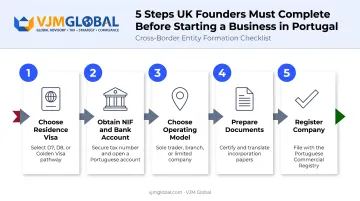
The official entrepreneur residence-visa service lists a processing deadline of 60 days and a fee of €90, but treat that as a service target, not a guaranteed relocation timeline.
Why Start a Business in Portugal from the UK? (When It Makes Sense)
Portugal isn't automatically the right move for every UK entrepreneur. It makes sense under specific conditions.
The Genuine Advantages
- EU market access that direct UK-based trade lost after Brexit
- Lower corporate tax in Madeira and the Azores: 13% standard CIT versus the mainland rate, per PwC's 2026 Portugal tax summary
- Government-backed startup schemes like the Startup Visa route, aimed at innovative and technology-driven ventures
- A substantial UK-connected population already in Portugal: AIMA recorded 48,238 UK nationals resident at end-2024, supporting demand in tourism, hospitality, and services
Where It Doesn't Make Sense
If your model needs frequent physical UK presence, or you are not ready for the extra visa layer, admin cost can outweigh the upside.
Portugal rewards founders who plan for the non-EU reality upfront rather than treating it as a formality.
Early Decisions That Matter for UK Founders
Most problems UK founders hit in Portugal come from underestimating post-Brexit complexity, not weak business ideas.
Things people consistently overlook:
- True setup cost. Registration fees of €220–€360 look small until you add visa fees, NIF/NISS processing, and legal translation.
- New entity vs branch/subsidiary. A new Portuguese company is not the same as a UK branch—choose from your operating model, not convenience.
- Double taxation exposure. The UK-Portugal Double Taxation Convention (in force since 1969) uses permanent home and centre of vital interests tests; incorporation alone does not fix tax residence.
- Physical presence. Some registration and banking steps still need you on the ground, even when digital options exist.
- Break-even timeline. Build in visa processing delays, not only the operational ramp-up.
Social security belongs on that same list. Many founders still assume the old EU coordination rules apply; they stopped covering the UK in January 2021.
The EU-UK Trade and Cooperation Agreement Protocol now governs this area. The European Commission notes it does not offer the same protection as the previous EU regulations.
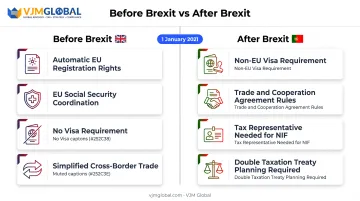
How to Start a Business in Portugal from the UK – Step by Step
Here's the practical sequence, built specifically around the non-EU rules UK nationals now face.
Common mistakes to avoid from the outset:
- Assuming old EU-citizen rules still apply
- Skipping the NIF step because it seems minor
- Underestimating how long visa processing actually takes
Step 1 – Choose Your Route: Visa, Residency, or Branch Setup
Decide whether you need:
- A D2 Entrepreneur Visa for independent business activity
- A Startup Visa for innovative, scalable ventures (managed through IAPMEI, with financial thresholds around €5,146.80 per person)
- Simply a UK company branch or subsidiary without personal relocation
Common miss: Assuming you can open a Portuguese company first and sort out residency later. Visa status typically needs addressing before or alongside incorporation, not after.
Step 2 – Get Your NIF, NISS, and Bank Account
The NIF (tax number) is the gateway to everything else. UK applicants can obtain one remotely through a tax representative, a requirement confirmed on the official AT guidance page for non-resident foreign applicants.
Once you have your NIF:
- Apply for a NISS (social security number)
- Open a business bank account in Portugal
Common miss: Delaying the NIF application. Every subsequent step (company registration, banking, tax filings) depends on having it first.
Step 3 – Choose a Business Structure and Name
| Structure | Liability | Minimum Capital |
|---|---|---|
| Sole Trader | Unlimited | Not officially set |
| Single-Member Limited Company | Limited | €1 minimum quota |
| Private Limited Company (Lda) | Limited | €1 per quota, minimum two partners |
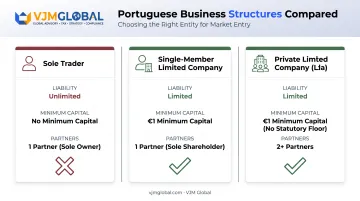
Common miss: Choosing a sole trader structure for cost simplicity without understanding that it exposes personal assets to business liabilities.
Step 4 – Register the Company
Two official routes exist:
- Empresa Online: pre-approved company pact, costs €220, registered within five working days if there are no irregularities
- Empresa na Hora (in-person): €360 for a standard request, or €200 with a bundled trademark class, per the official registration service page
Common miss: Turning up to register before documents are properly translated and notarised; this stalls the process regardless of which route you choose.
Step 5 – Set Up Tax, Payroll, and Cross-Border Compliance
Once registered, ongoing obligations kick in:
- IRC (corporate income tax): 19% on mainland Portugal from 2026 under Law 64/2025, lower in Madeira and the Azores
- IVA (VAT): ranging from 6% to 23% depending on goods/services and region
- Social security contributions for any employees
- Ongoing filing obligations across both Portuguese and UK systems if you retain UK tax residency ties
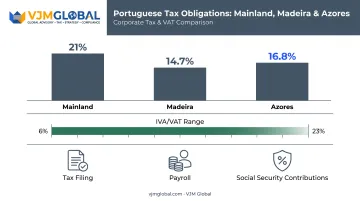
This is where most UK founders hit a wall. Reconciling UK tax residency with Portuguese obligations, managing payroll across two systems, and claiming relief under the double taxation convention is not something to leave until mid-year.
VJM Global provides entity formation and cross-border tax support for businesses expanding into new markets, including treaty analysis, permanent establishment review, and payroll reconciliation across both jurisdictions.
Common miss: Treating registration as the finish line. The ongoing administrative burden of staying compliant across two tax jurisdictions usually exceeds the one-time setup cost.
Conclusion
Starting a business in Portugal from the UK is achievable, but it is no longer a straightforward EU-to-EU move. Post-Brexit visa rules now sit at the centre of the process, not on the sidelines.
Getting the NIF, visa route, and business structure right upfront saves you from costly delays later. And once the company's registered, staying compliant across both UK and Portuguese tax and reporting obligations becomes the real long-term challenge.
Frequently Asked Questions
How much money do I need to start a business in Portugal?
Minimum capital depends on structure — as little as €1 per quota for a limited company, though €5,000+ is a more realistic working figure. Add registration fees of €220–€360, plus visa-related costs for UK applicants.
Which business is most profitable in Portugal?
Tourism, hospitality, and real estate lead the way, given tourism's roughly 12% contribution to Portugal's GDP. Tech and remote-work services are growing fast too.
Can a UK citizen start a business in Portugal after Brexit?
Yes, but UK nationals are now treated as non-EU citizens. You'll need a visa (D2, Startup Visa, or Golden Visa) alongside the standard company registration steps.
Do I need to live in Portugal to open a company there?
Not necessarily. A UK company can open a branch or subsidiary without relocating, but sole trader and individual entrepreneur routes generally require residency status.
How long does it take to register a company in Portugal?
Registration itself takes 1–2 days once documents are ready. But NIF processing, visa applications, and document preparation typically stretch the full process to around two months.
What taxes will my Portuguese company need to pay?
Expect IRC (21% mainland standard, lower in Madeira/Azores), VAT ranging 6–23%, and a municipal surtax of up to 1.5%. Regional free zones offer reduced rates worth investigating.