Introduction
Singaporean entrepreneurs are eyeing Portugal for a reason: EU market access, lower operating costs, and a Lisbon-Porto tech scene that keeps attracting remote-first founders. But Singapore isn't in the EU or EEA, so this isn't a same-day ACRA-style registration.
Many founders assume Portugal's "one-day company" reputation applies equally to them. It doesn't. Between visa processing, apostilled documents, and tax representation requirements, the timeline looks very different for a Singapore passport holder than for an EU citizen.
This guide walks through the full process step by step, covering entity choice, costs, visas, and ongoing compliance specifically for founders operating out of Singapore.
Key Takeaways
- Secure a Portuguese NIF, local address, and (often) a resident representative before you register anything
- Company registration takes 1-10 days, but Portuguese residence visa processing for Singaporean founders adds months on top
- Choosing between an Lda, branch, or subsidiary changes your liability and tax residency
- Appoint a certified accountant (TOC) and handle VAT registration and social security filings from day one
- The Singapore-Portugal double tax treaty helps prevent income being taxed twice, but relief isn't automatic
Why Singapore-Based Founders Are Choosing Portugal
Portugal offers something Singapore-based founders increasingly want: a foothold in the EU single market, without Singapore's high commercial rents or wage costs. Add a growing tech ecosystem in Lisbon and Porto, and the appeal makes sense on paper.
The catch: Singapore citizens are non-EU/EFTA nationals. That means a residence visa, typically a D2 (entrepreneur) or Startup Visa, is required before or alongside company registration, unlike the process for an EU citizen who can simply show up and incorporate.
A few institutions matter here:
- AICEP Portugal Global is the one-stop shop for foreign investors, with tailored guidance through each project stage
- Startup Portugal's Startup Visa targets innovative, scalable ventures, run through IAPMEI with certified-incubator involvement
- Tech Visa targets highly qualified hires rather than founders, and needs a bachelor's degree plus five years' experience
Portugal's tourism sector alone contributed roughly €34 billion, or 11.9% of GDP in 2024 — one marker of an economy that still courts foreign capital. For Singapore founders, the practical case is simpler: structured investor and startup pathways, lower operating costs than at home, and direct access to the EU single market.
Step-by-Step: How to Start a Business in Portugal from Singapore
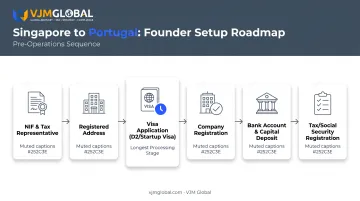
Step 1: Choose Your Legal Structure and Entity Type
Your first decision shapes everything downstream. Options include:
- A new Portuguese company (Lda or Unipessoal) — a clean, standalone entity
- A branch of your Singapore company — simpler on paper, but leaves the parent exposed for liabilities
- A subsidiary — a separate legal entity with liability capped at its own capital
Base this on shareholder count, how much capital you're deploying, your appetite for liability, and whether Portugal is a long-term hub or a market test.
Step 2: Obtain Your Portuguese Tax Identification Number (NIF)
Nothing moves without a NIF. As a non-EU national, a Singaporean founder typically needs to appoint a Portuguese tax representative to secure one remotely.
AICEP notes that tax representation can also run through an approved electronic-notification channel instead of a resident representative. The "you must always appoint someone" rule isn't universal—check your specific case before assuming otherwise.
Bank account opening, company registration, even signing a lease all wait on this number.
Step 3: Secure a Registered Address and Resident Representative
Portuguese company law requires a defined registered seat. A coworking space, virtual office, or shared office address usually satisfies this requirement.
If no shareholder or director lives in Portugal, you'll generally need someone locally who can receive official correspondence and act on the company's behalf.
That is distinct from a resident director requirement, which Portuguese law doesn't universally impose. Practical administration almost always still demands local eyes on the ground.
Step 4: Apply for the Right Visa (D2 or Startup Visa)
This is where timelines stretch. Singapore citizens need either:
- A D2 entrepreneur visa — requires proof of completed investment or a credible intention to invest, plus accommodation, subsistence funds, and a clean criminal record
- A Startup Visa — for qualifying, innovative, scalable ventures with IAPMEI approval and an incubation contract
The Singapore VFS checklist for D2 applications cites a statutory 60-day decision deadline, though this is subject to legal exceptions and shouldn't be treated as guaranteed. Police clearance from Singapore also needs a Hague Apostille from the Singapore Academy of Law.
Important nuance: you can technically register the company remotely without holding a visa yet. But actively managing or operating the business inside Portugal requires proper immigration status first.
Step 5: Register the Company via Empresa na Hora or Empresa Online
Two routes exist:
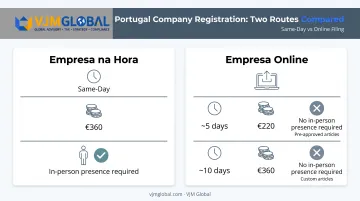
| Route | Timeline | Cost | Requires presence? |
|---|---|---|---|
| Empresa na Hora | Same day | €360 | Yes, in person |
| Empresa Online (pre-approved articles) | ~5 days | €220 | No |
| Empresa Online (custom articles) | ~10 days | €360 | No |
For Singapore founders who can't easily fly out, Empresa Online is the more realistic path, though direct filing usually needs a Portuguese Citizen Card or digital ID. Many founders instead file through a Portuguese lawyer or solicitor with professional filing certification.
Documentation trap: Singapore corporate and personal documents need a Hague Apostille and, in most cases, certified Portuguese translation. The language waiver for English, French, or Spanish generally applies to name searches, not to founding documents, so don't assume your English-language incorporation certificate will simply be accepted.
Step 6: Open a Business Bank Account and Deposit Share Capital
Traditional Portuguese banks often require an in-person visit for account opening, which is inconvenient when you're based in Singapore. Digital business banks tend to be faster for remote onboarding, though acceptance depends on each bank's own KYC policy for non-resident directors.
Once incorporated, shareholders generally must deposit share capital within five working days, unless contributions are formally deferred. For an SA formed online, at least 30% must be deposited within five days of the permanent certificate becoming available.
Step 7: Register for Tax, Social Security and Sector Licences
Three clocks start ticking after incorporation:
- 15 days to file the declaration of activity through a certified accountant (TOC)
- 30 days for the RCBE beneficial ownership filing
- Ongoing sector-specific licensing checks tied to your CAE activity codes
Coordinating these filings from Singapore while a Lisbon entity finds its feet is where the paperwork gets messy.
Cross-border advisors such as VJM Global help Singapore businesses keep accounting, tax, and compliance deadlines aligned when expanding abroad. Confirm Portugal-specific coverage before you engage—not every firm services every market.
Choosing the Right Legal Structure and Understanding Costs, Taxes and Compliance
Your legal form sets capital needs, liability and how Portuguese tax authorities treat the business. Most Singapore founders pick one of three company types, then decide whether the Singapore parent holds it as a branch or a subsidiary.
Company types and capital
- Sociedade Unipessoal por Quotas — solo founder, €1 minimum capital
- Sociedade por Quotas (Lda) — the SME standard; two or more shareholders, €1 minimum quota each
- Sociedade Anónima (SA) — €50,000 minimum capital; suited to larger or investor-backed ventures
A branch of your Singapore parent keeps liability with the parent. A Portuguese subsidiary caps liability at the local entity.
Tax rates for 2026
Once the form is set, budget for corporate tax and VAT:
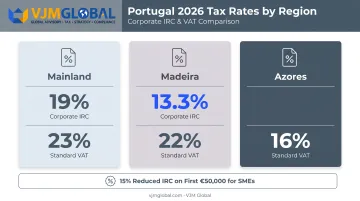
- Mainland corporate tax (IRC): 19%, reduced to 15% on the first €50,000 for qualifying SMEs
- Madeira's general IRC rate sits lower, around 13.3%
- Standard VAT: 23% mainland, 22% Madeira, 16% Azores
- Turnover under €15,000 may qualify for VAT exemption under Article 53, though this also waives input-VAT recovery
Social security, TOC and the Singapore–Portugal treaty
Social security contributions split between employer (23.75%) and employee (11%), totalling 34.75% for standard employees.
Every Portuguese company must appoint a certified accountant (TOC) from day one. There is no exemption from this rule.
Singapore and Portugal have had a double taxation agreement in force since 2002, covering business profits, dividends, interest and royalties. Treaty relief is not automatic. You must establish tax residence and meet each article's conditions. Coordinated support across both markets helps founders avoid duplicate filings and missed deadlines.
Common Mistakes Singapore Entrepreneurs Make When Expanding to Portugal
Fast company registration in Portugal often masks slower steps elsewhere. Singapore founders hit the same traps repeatedly:
- Underestimating visa lead times. D2 and Startup Visa processing routinely takes months, not days. Planning relocation around a "same-day" registration mindset leaves founders stuck waiting.
- Leaving apostille and translation too late. Singapore corporate documents need Hague Apostille certification and, usually, certified Portuguese translation. Starting after incorporation begins often adds weeks of delay.
- Choosing branch vs. subsidiary without weighing risk. A branch feels simpler upfront but leaves the Singapore parent directly exposed for Portuguese liabilities. A subsidiary takes slightly more setup effort, separates risk, and can change how profits are taxed in both jurisdictions.
Frequently Asked Questions
What is the best business for foreigners to start in Portugal?
Tourism, technology, agriculture/wine, and logistics all perform well for foreign founders. Tourism alone contributes close to 12% of Portugal's GDP, making it a consistently strong sector for new entrants.
What is the 23% tax in Portugal?
That's the standard mainland VAT rate, not corporate tax. Corporate income tax (IRC) sits at 19% on the mainland; VAT is lower in Madeira (22%) and the Azores (16%).
Can a Singapore citizen start a business in Portugal without residency?
Yes, registration can happen remotely with a NIF and a representative. But actively operating or managing the business inside Portugal requires a D2 or Startup Visa first.
How much does it cost to register a company in Portugal?
Expect between €220 and €435, depending on whether you use Empresa na Hora or Empresa Online with custom articles. This excludes ongoing accountant fees and any translation or apostille costs.
How long does the whole process take from Singapore?
Company registration alone takes 1-10 days. Visa processing and document legalisation stretch this to several weeks or months in total, so plan your relocation timeline separately from your incorporation timeline.
Do I need a local accountant in Portugal?
Yes. Every Portuguese company must appoint a certified accountant (TOC) from the day it's formed. This isn't optional, and it's required for the initial activity declaration too.