That reputation is pulling in a wider crowd than just local Scots. First-time founders, UK-based SMEs relocating north, and overseas companies wanting a foothold in the UK market are all registering Scottish entities. This guide walks through the entire process, from validating your idea to registering with Companies House and staying compliant afterwards.
TL;DR
- Pick sole trader, partnership, or limited company based on liability and tax outcomes
- Register a Scottish limited company at Companies House to receive an "SC" number prefix
- Confirm current Business Gateway and Scottish Enterprise funding before you apply
- Finish online registration in as little as 24 hours; allow weeks for proper planning
- Foreign companies can use professional formation support instead of navigating Companies House alone
What Does Starting a Business in Scotland Involve?
Starting a business in Scotland means registering and legally establishing a trading entity under Scots Law while still following UK-wide company law. You choose a structure, register with the right authority, and meet tax obligations from day one.
Three structures cover most founders:
- Sole trader — simplest setup, unlimited personal liability
- Partnership — shared liability and profits between partners
- Limited company — separate legal entity, limited liability, receives an "SC"-prefixed company number
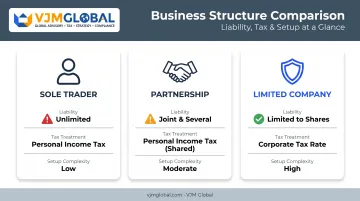
What to Know Before You Start a Business in Scotland
Many first-time founders underestimate how much groundwork comes before registration. Market research, drafting a business plan, and settling on a name and address typically take several weeks before you ever file paperwork.
How much you handle yourself versus outsource matters too. Compliance-heavy tasks (registration, tax setup, payroll) are where founders commonly bring in accountants or formation specialists like VJM Global, rather than learning HMRC's rulebook from scratch.
A few realities worth planning around:
- Budget a financial buffer for 6-12 months before steady income arrives
- Early-stage success depends more on admin and compliance discipline than raw technical skill
- Scotland's climate-driven sales cycles create sharp seasonal swings in some sectors, so build that into cash-flow planning rather than chasing quick wins
Why Start a Business in Scotland? (When It Makes Sense)
Scotland is a strong base only when your business fits the conditions that favour it.
A supportive institutional backbone. Business Gateway and Scottish Enterprise reduce early-stage cost and risk through advice, mentoring, and (subject to current availability) grant funding.
Some flagship schemes, including SMART: SCOTLAND and Regional Selective Assistance, have recently paused or closed to new applicants. Confirm live status before you budget around them.
University talent on your doorstep. Edinburgh Innovations helped launch 64 startups and spinouts in 2024/25 alone, with university-linked companies attracting £113 million in investment, according to the University of Edinburgh's 2024-25 annual report. Glasgow and Strathclyde run comparable entrepreneurship pipelines.
Other advantages worth weighing:
- Full trading access across the UK and, indirectly, into EU markets despite operating under Scots Law
- A statutory Net Zero target of 2045, creating real differentiation opportunities for sustainability-focused businesses
- Established sector strengths in tourism, food and drink, and increasingly deep tech

Early Decisions That Matter When Starting a Business in Scotland
Most setbacks come from underestimating registration complexity or local compliance quirks, not from a lack of effort.
Get your real costs straight first. Online incorporation costs £100 through Companies House and is usually turned around within 24 hours. Paper filing via IN01 costs £124 and takes 8–10 days.
Add registered office or service address fees and accountancy support on top. There is no single official "total setup cost" benchmark, so build your own estimate sector by sector.
Other decisions to lock down early:
- Legal structure: based on liability appetite and tax position, not just simplicity
- Registered office address: must be a physical Scottish address; using your home address makes it publicly visible on the Companies House register
- Sector-specific registrations: food businesses, for instance, must register with their local authority at least 28 days before opening
- When to bring in outside help: founders often handle validation and planning solo but outsource registration, tax, and payroll setup
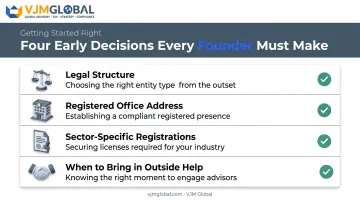
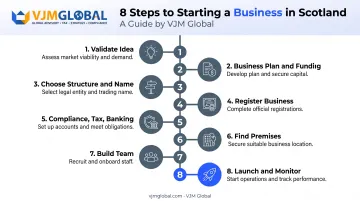
How to Start a Business in Scotland – Step by Step
Common mistakes at this stage: skipping market validation, choosing the wrong structure for tax purposes, missing compliance deadlines, or underfunding year one. Here's the sequence that avoids most of that.
Step 1 – Validate Your Idea and Understand Your Target Market
Research competitors to find your angle: a lower price point, faster delivery, or a clearer sustainability story. Define your target customer precisely, then validate demand directly through focus groups, trade fairs, or cold outreach. The most common miss here is relying on assumptions instead of actual customer conversations.
Step 2 – Write a Business Plan and Secure Funding
Draft a formal plan covering goals, marketing strategy, and financial projections. Research current Scottish and UK-wide grant options through Business Gateway and Scottish Enterprise's funding portal — but verify live eligibility, since scheme availability changes. Build in a contingency for slow early trading months.
Step 3 – Choose Your Business Structure and Name
Compare sole trader, partnership, and limited company against your liability tolerance and growth plans. Check name availability via Companies House, and make sure it's memorable and distinct from competitors. Limited companies registered in Scotland receive a company number with an "SC" prefix — for example, SC562406.
Step 4 – Register Your Business
For limited companies, complete Companies House form IN01, listing your Scottish registered office, director and shareholder details, and SIC code. Online filing costs £100 and typically completes within 24 hours; paper filing costs £124 and takes longer.
Foreign companies entering Scotland often use a formation specialist so Companies House filings, registered-office requirements, and early compliance checks are handled correctly first time. VJM Global provides UK company formation and multi-jurisdiction compliance support for this kind of cross-border setup.
Step 5 – Set Up Compliance, Tax, and Banking
Handle the core statutory setup early:
- Register with HMRC for Corporation Tax
- Register for VAT if turnover exceeds £90,000
- Set up PAYE if you are hiring
- Open a dedicated business bank account (mandatory for limited companies)
- Register with the ICO for the data protection fee if you process personal customer data, unless an exemption applies
Step 6 – Find Premises or Set Up From Home
Weigh home-based working (checking planning permission and insurance), co-working spaces, or leased premises. Working from home doesn't automatically trigger business rates liability; check with your local assessor for a property-specific ruling. Location-dependent sectors should also factor in footfall and business rates registration.
Step 7 – Build Your Team and Local Network
Scotland's universities feed a strong pipeline for creative, technical, and vocational hires. Join networks like Entrepreneurial Scotland for mentorship and funding updates. These connections often surface opportunities you won't find through official channels alone.
Step 8 – Launch, Market, and Monitor Performance
Set a realistic marketing budget matched to your audience: local markets, social media, or paid ads. Track financial health and customer feedback closely before you even think about scaling.
Conclusion
Starting a business in Scotland comes down to fundamentals: validate demand, pick the right structure, and complete registration and compliance properly. Government support and funding schemes are available, but they reward founders who've done their homework rather than those hoping to figure it out as they go.
For local and overseas founders who want expert support with entity formation, tax registration, and ongoing compliance, VJM Global specialises in cross-border business setup in the UK.
Frequently Asked Questions
How much money do you need to start a small business in Scotland?
Costs vary widely by sector, but budget for registration fees, initial stock or equipment, and a financial buffer covering several months of operating costs. Service-based businesses typically need less upfront capital than retail or hospitality.
How much does it cost to register a company in Scotland?
Online Companies House registration costs £100 and usually finishes within 24 hours; paper filing via IN01 costs £124 and takes 8–10 days. Total setup costs rise if you add a registered office service or professional formation support.
What do you need to start a business in Scotland?
You'll need a business plan, a chosen legal structure, a Scottish registered office address, and registrations with Companies House and HMRC where required. Sector-specific licences may apply too.
What business should I start in Scotland?
Choose an idea that fits local demand, your skills, and realistic startup costs. Validate it with Business Gateway advice and basic competitor research before you commit cash or register.
What businesses will boom in Scotland in 2026?
Sustainability-linked services, technology, and tourism-adjacent businesses show strong momentum, partly driven by Scotland's Net Zero 2045 target. Check Scottish Enterprise's sector insights for current data before committing.
What grants are available for small businesses in Scotland?
Business Gateway offers project-specific grants and advice; Scottish Enterprise runs separate funding calls by sector and stage. Schemes open and close often, so confirm live eligibility on their sites before you apply.