The interest isn't coming from one group alone. Australian SMEs are hunting for new markets, South African expats based in Australia want to build something back home, and investors are watching Africa's growth story with genuine intent.
This guide walks through the practical steps: choosing an entity structure, registering with the CIPC, sorting out tax and compliance, and getting banking sorted, all from an Australian founder's perspective.
Key Takeaways
- A South African Pty Ltd can be 100% foreign-owned, with no requirement for a resident director or shareholder
- On-the-ground founders need a Business Visa (ZAR 5 million capital) or a Critical Skills Visa
- CIPC registration is fast and auto-issues your SARS tax reference number
- Ongoing compliance spans CIPC, SARS, UIF, COIDA, and often B-BBEE
- Coordinated cross-border setup support shortens registration timelines and lowers multi-regulator compliance risk
What Does Starting a Business in South Africa from Australia Actually Involve?
It means registering and legally operating a company in South Africa while being based in, or a citizen of, Australia.
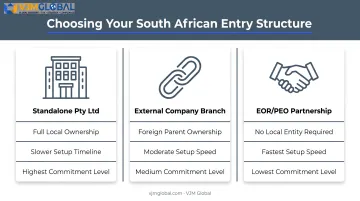
In practice, Australian founders choose between three main options:
- Standalone Pty Ltd — a fresh South African private company, incorporated locally
- External company (branch) — registering your existing Australian entity with the CIPC as a branch operation
- EOR/PEO partnership — hiring staff in South Africa through an employer-of-record arrangement without incorporating immediately
The third option suits founders who want to test the market with a small local team before committing to a full entity. VJM Global supports Pty Ltd incorporation, external company branch registration under South Africa's Companies Act, and EOR hiring, so the choice comes down to your commercial goals rather than a regulatory limitation.
What to Know Before You Start
Australian founders routinely underestimate South Africa's compliance layers. Expect several regulators: CIPC for company registration, SARS for tax, and potentially B-BBEE requirements if you're chasing government or corporate contracts.
Visa and Presence Requirements
If you plan to manage operations on the ground, budget time for visa processing. The South African High Commission in Canberra states that complete Business Visa applications are processed in 21 working days, though gathering documents, accountant certificates, and appointments can push the real timeline out further.
Directing operations remotely from Australia doesn't require a visa. Sitting in Johannesburg running day-to-day operations does.
Exchange Controls and Repatriation
The South African Reserve Bank permits Authorised Dealers to transfer dividends and profit distributions to non-residents, proportionate to ownership. This isn't automatic, though:
- The dealer must confirm local liabilities are covered
- You'll need a SARS Manual Letter of Compliance or a TCS-AIT PIN, depending on registration status
- Documentation trails matter more than speed
Realistic Timelines
Between market research, entity registration, and bank account activation, most founders shouldn't expect steady local income for the first three to six months. Banking alone can add weeks once you factor in KYC verification for a foreign-owned entity.
Why Start a Business in South Africa from Australia? (When It Makes Sense)
This isn't a guaranteed win. It makes sense under specific conditions, not as a blanket strategy.
South Africa remains Sub-Saharan Africa's most industrialised economy and functions as a launchpad into the wider SADC region. That's a genuine structural advantage if regional expansion is on your roadmap.
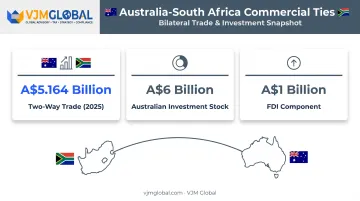
The trade relationship already exists at scale. Two-way trade between Australia and South Africa reached A$5.164 billion in 2025. Australian investment stock in South Africa sits at A$6 billion, including A$1 billion in FDI, according to DFAT's country fact sheet. This is an established commercial relationship, not an unproven frontier.
Other conditions favouring entry:
- Lower filing costs — CIPC's standard incorporation fee sits at a modest ZAR 125, well below Australia's ASIC fees for a proprietary company
- B-BBEE-linked opportunities — approved structures can open doors to government and large corporate tenders
- Proven Australian operators — Flight Centre runs a South African Pty Ltd for local flights and packages, showing a durable localised model can work
The catch: B-BBEE isn't optional if procurement is your goal. The dtic expects entities operating in South Africa to contribute to B-BBEE scorecards, and some tenders require at least 30% subcontracting to black-owned enterprises. Model this before you bid on anything.
How to Start a Business in South Africa from Australia – Step by Step
The process runs in sequence: entity choice, legal registration, tax compliance, then banking. Skip a step or do them out of order, and you'll create headaches later.
Common mistakes to avoid:
- Assuming Australian company registration transfers automatically (it doesn't)
- Underestimating visa processing and preparation time
- Skipping the SARS/CIPC linkage step, which happens automatically but still needs eFiling enrolment
Step 1 – Choose Your Entity Structure
Decide between a new South African Pty Ltd or registering your Australian company as an External Company with the CIPC.
A Pty Ltd needs just one director and one shareholder, and neither has to be a South African resident. If you're extending an existing Australian entity instead, note the 20-business-day window to register as an External Company once you begin conducting business in South Africa.
Step 2 – Register with CIPC
The registration process is straightforward:
- Reserve a company name (ZAR 50, non-refundable)
- File incorporation documents and pay the standard fee (ZAR 125)
- Submit a certified passport copy (in English) and a South African physical registered address
CIPC registration automatically generates your SARS income tax reference number, though you'll still need to enrol on eFiling to activate it.
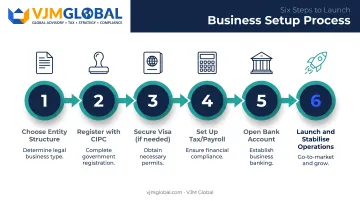
Step 3 – Secure the Right Visa (If Managing Locally)
If you're relocating to run the business yourself, compare your options:
| Visa Type | Requirement | Processing Time |
|---|---|---|
| Business Visa | ZAR 5m capital, 60% local staffing commitment within 12 months | 21 working days (complete application) |
| Critical Skills Work Visa | Occupation-based, SAQA evaluation required | 21 working days (complete application) |
Founders directing operations remotely from Australia can often skip this step entirely. On-the-ground management can't.
Step 4 – Set Up Tax, Payroll, and Compliance
VAT registration becomes compulsory once turnover crosses South Africa's threshold. Note this is set to rise to ZAR 2.3 million effective April 2026, up from the previous ZAR 1 million benchmark, so check the current figure at the time you register.
Once you hire staff, you'll also need to register for:
- PAYE (employee tax withholding)
- UIF (unemployment insurance, split 1% employee / 1% employer)
- SDL (skills development levy, applicable once payroll exceeds ZAR 500,000 annually)
- COIDA (Compensation Fund registration for injury/disease cover)
Foreign-owned entities also need to weigh B-BBEE if government or large corporate contracts are on the table.
Holding South African filings next to an existing Australian tax structure is complex. VJM Global can handle CIPC registration, SARS eFiling enrolment, and payroll setup (PAYE, UIF, EMP201 declarations) as modular services matched to your structure.
Step 5 – Open a Local Bank Account and Manage Cross-Border Funds
Expect to provide:
- CIPC registration certificate
- Proof of registered address
- Beneficial ownership declaration
- Visa documentation, if applicable
Banks don't publish fixed opening timelines for foreign-owned entities, but budgeting two to four weeks for KYC verification is a sensible planning estimate. Pairing a local ZAR account with a multi-currency account simplifies AUD-ZAR transfers considerably.

Step 6 – Launch, Hire, and Stabilise Operations
Decide early whether you'll hire directly, use a local EOR/PEO arrangement, or run lean with remote oversight from Australia.
Track compliance deadlines closely:
- CIPC annual returns
- SARS provisional tax filings
- Payroll reconciliations (EMP501, IRP5 certificates)
Running a South African entity doesn't pause your Australian obligations. You're still managing ABN/ASIC requirements, GST reporting, and Single Touch Payroll back home if you employ staff there too.
VJM Global covers both sides—South African bookkeeping and SARS compliance, plus Australian company tax returns, BAS/GST reporting, and PAYG—so you keep one coordinated compliance setup.
Conclusion
Starting a business in South Africa from Australia comes down to three decisions:
- Picking the right entity structure
- Sequencing your visa and CIPC steps correctly
- Building compliance in from day one rather than bolting it on later
Clarity on structure and tax obligations matters more than how fast you register. A Pty Ltd can be set up in days, but getting VAT, payroll, and B-BBEE positioning wrong costs far more time to unwind.
Long-term success depends on staying current with CIPC, SARS, and B-BBEE requirements as the business grows and thresholds change. VJM Global helps Australian founders with South African entity formation, tax registration, and ongoing statutory compliance so structure and filings stay aligned from day one.
Frequently Asked Questions
How much does it cost to start a business in South Africa?
CIPC's baseline incorporation fee is ZAR 175 (name reservation plus registration). Realistic total costs—including professional advice, visa applications, and compliance setup—typically run into several thousand AUD.
What business can I start with AUD 50,000 in South Africa?
Converted to ZAR, an AUD 50,000 budget comfortably covers entity registration, professional fees, and working capital for service-based or trade businesses. It falls well short of the ZAR 5 million Business Visa threshold, though.
What is the easiest business to start in South Africa?
Sole proprietorships and simple Pty Ltd service businesses, such as consulting, e-commerce, or import/export, are fastest to set up with minimal regulatory friction. Manufacturing or regulated sectors involve considerably more red tape.
Can a foreigner start a business in South Africa?
Yes. A Pty Ltd allows 100% foreign ownership. A Business Visa or Critical Skills Visa is only needed if you plan to manage operations on the ground yourself.
Do I need to be a South African resident to register a company there?
No. Neither directors nor shareholders of a Pty Ltd need South African residency. You do, however, need a physical registered office address in South Africa.
How long does it take to register a company in South Africa from Australia?
Standard CIPC registration is typically fast once documents are in order. Visa processing, if you're relocating, adds around 21 working days for a complete application, plus preparation time beforehand.