
Thinking about expanding your business into India? You're entering one of the world's most dynamic economies, where GDP per capita PPP has jumped from $6,966.3 in 2020 to $11,158.9 in 2024. This metric, which adjusts for cost-of-living differences across countries, reflects the actual purchasing power of India's population and signals rising demand for international products and services.
For U.S. entrepreneurs, SMEs, startups, and professional service firms, this growth translates into a unique opportunity: setting up a presence in India to test new markets, hire local talent, and build long-term expansion strategies. But success depends on a well-planned India entry strategy that addresses business registration, foreign direct investment (FDI) rules, and compliance with Indian regulations.
In this guide, you'll discover the most effective market entry strategies in India and the challenges U.S. businesses often face. You'll also learn how to develop a market entry strategy for India that sets the stage for lasting growth.
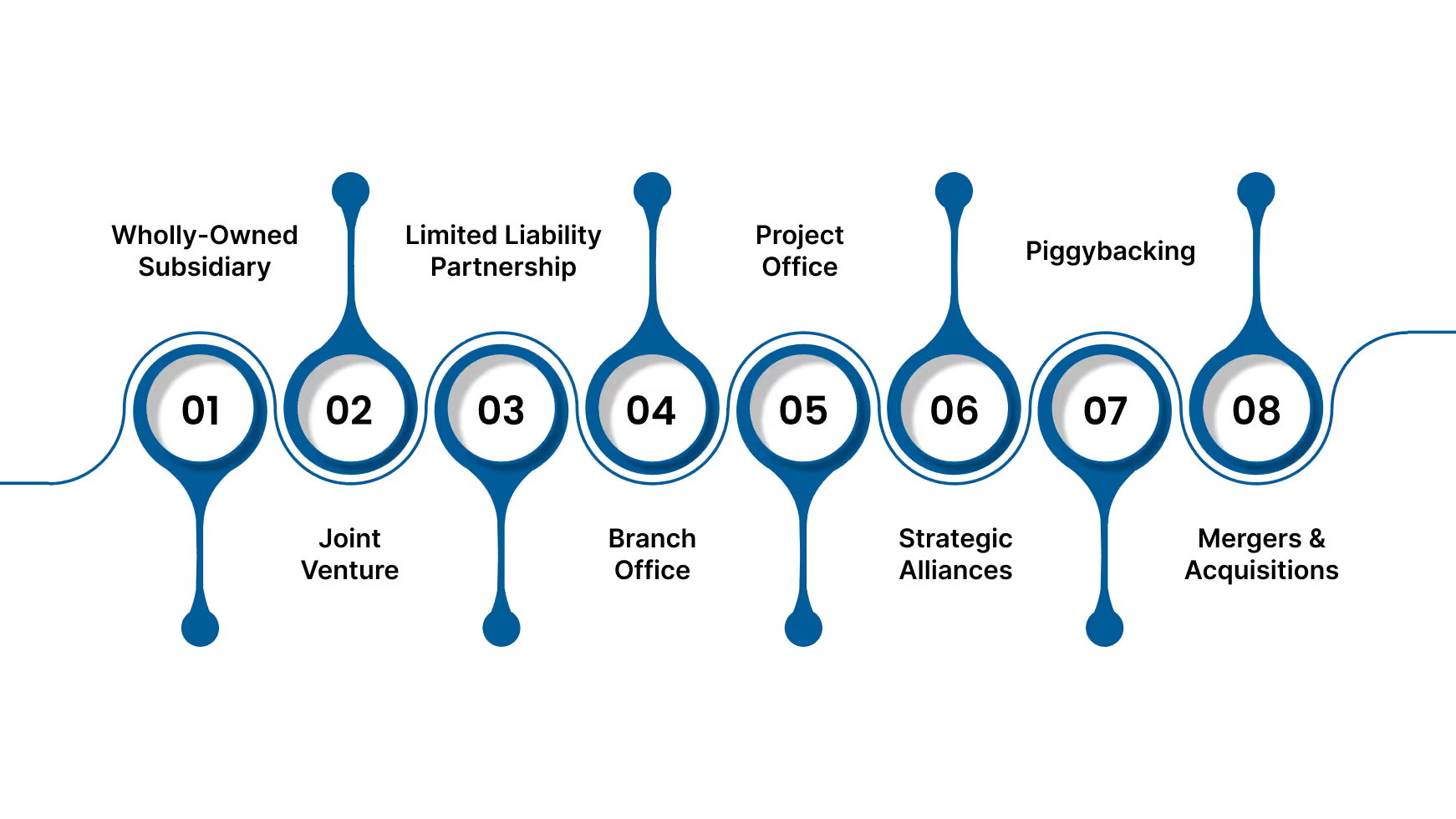
If you're a U.S. entrepreneur, SME, or professional service firm looking to enter India, knowing the right market entry strategy for India can determine whether your expansion is smooth or riddled with hurdles. With rising consumer demand and favorable FDI (Foreign Direct Investment) policies, you have multiple business structures to establish operations. Each comes with its own advantages, compliance requirements, and level of control.
Below are the most common India market entry strategies tailored to the needs of U.S. businesses.
Setting up a wholly-owned subsidiary is one of the most popular ways for U.S. firms to enter India. In this model, you have 100% ownership of your Indian entity, giving you complete control over operations, hiring, and profits.
Why it matters: A private limited subsidiary is ideal if you're looking for a long-term presence in India and want to replicate your U.S. operations without depending on a local partner.
Did You Know? The Indian government has accelerated digital incorporation, enabling your entity to be registered in weeks, not months.
[Image CTA 5]
A joint venture lets you collaborate with an Indian partner who already has market experience, supplier networks, and distribution channels. This reduces your entry barriers while sharing risks and investment.
Example: A U.S.-based food services brand can enter India by partnering with a local hospitality group that already understands consumer tastes and supply chain logistics.
Did You Know? Many U.S. fast-food chains first entered India through JVs before moving to wholly owned subsidiaries once they gained traction.
Also Read: How to Set Up a Joint Venture in India
For U.S. firms that want a lighter structure, the LLP route combines the flexibility of a partnership with limited liability protections.
Why it matters: If you're testing your market entry in India with limited resources, an LLP gives you a legal presence without heavy compliance costs.
Opening a branch office in India allows you to maintain a presence without establishing a new company. It functions as an extension of your parent business and is typically used for activities such as research, liaison work, or limited operations.
Ideal Use Case: This option is best for U.S. companies wanting to explore India without long-term commitments. For instance, a fintech company might open a branch in Bengaluru to gauge customer adoption before deciding on a full subsidiary.
Pro Tip: Use a branch office if your goal is exploration, not immediate expansion.
If you have a specific contract in India, you can set up a project office that exists only for the project duration. The Reserve Bank of India (RBI) and Registrar of Companies must approve it, and once the project is complete, the office can be closed.
This route is beneficial for U.S. construction, engineering, or procurement companies executing time-bound projects without wanting to maintain a permanent presence.
Forming strategic alliances with local firms allows you to pool strengths, share risks, and gain access to established distribution networks. However, unlike joint ventures, alliances do not always require shared ownership; they can be based on mutual collaboration agreements.
Example: A U.S.-based SaaS product company may collaborate with an Indian IT services provider to deliver bundled solutions to enterprise clients.
Piggybacking involves using an established partner's distribution network and brand equity to launch your products in India.
Example: A U.S. wellness brand could partner with an Indian e-commerce platform to distribute products quickly without setting up its own logistics.
Mergers and acquisitions offer the fastest way for U.S. companies to establish scale in India. By acquiring or merging with an Indian company, you gain instant access to its customer base, licenses, workforce, and market relationships. These resources might otherwise take years to build from scratch.
That said, M&As require thorough due diligence. Beyond financial checks, U.S. businesses must evaluate regulatory compliance, cultural integration, and post-merger alignment. Without careful planning, the very speed that makes M&As attractive can also create operational risks.
Example: A U.S. medical device manufacturer acquiring an Indian distribution company accelerates market access and better manages India's complex healthcare licensing environment.
Pro Tip: Partnering with advisors who understand both U.S. and Indian compliance frameworks reduces post-deal surprises.
Also Read: How Can I Register a Business in India from the USA? Simplified Process for Foreigners
For U.S. businesses, India, with over 1.4 billion people, a skilled workforce, and government initiatives such as Startup India and Digital India, represents massive growth potential. But the wrong entry model can lead to regulatory delays, compliance risks, or unnecessary tax burdens. Choosing between a subsidiary, JV, LLP, or project office depends on your goals, whether you want to test the market, form partnerships, or establish a full-scale presence.
If you're a U.S. SaaS startup, establishing a liaison or branch office may be a sensible way to gauge adoption rates. If you're a mid-sized manufacturing company, a wholly owned subsidiary might be the more sustainable choice.
Not sure which India market entry strategy fits your business? VJM Global guides U.S. businesses in choosing the correct route and staying compliant.
Knowing your entry options is only half the story. The real challenge is overcoming India's regulatory, cultural, and operational hurdles that can stall even the best-planned strategy.
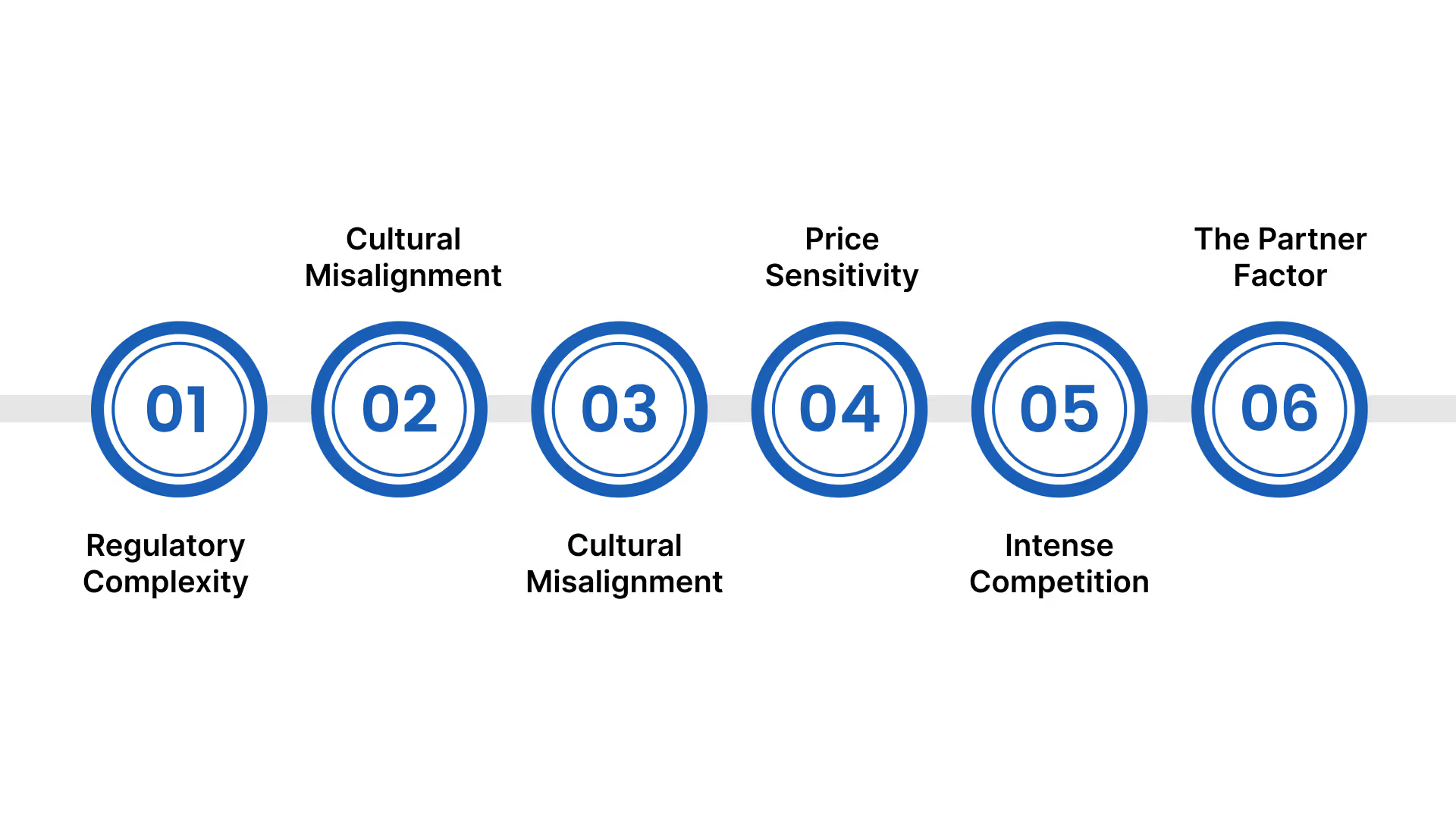
Expanding into India offers immense potential, but even well-prepared U.S. businesses often face hurdles once operations begin. From handling compliance to adapting products for price-sensitive consumers, these challenges can derail your entry strategy if not addressed early.
India's regulatory environment is layered and can feel overwhelming to new entrants. From FEMA and RBI to GST and sector-specific approvals, overlooking one requirement can stall your expansion plans.
How to address it: Work with local advisors who understand both U.S. and Indian compliance standards. Build regulatory planning into your entry timeline from day one. Companies that treat compliance as a strategic foundation, not just a checklist, avoid delays and protect brand reputation.
Why it matters: Missing even one sector-specific certification can block imports at customs, delay launch timelines by months, and hurt brand credibility with Indian regulators.
Business practices and consumer behavior in India are influenced by deep-rooted cultural values. Approaches that succeed in Western markets may need to be adapted to align with these differences. Understanding these nuances helps companies connect more meaningfully with Indian customers and partners.
How Indian Consumers Differ from Western Buyers:
How to address it: Shape your products, packaging, and messaging to fit Indian preferences, and focus on building trust over time before seeking significant commitments.
Example: A U.S. wellness brand entering India with single-use premium packaging may miss out. Adjusting to family packs at value-driven prices improves acceptance dramatically.
India's infrastructure has advanced quickly, but the experience is far from uniform. Logistics in dense metro areas look very different from the realities of reaching semi-urban towns or remote rural districts. For U.S. businesses, this uneven distribution scenario can create costly hurdles if not planned for in advance.
How to address it: Develop and implement dual distribution strategies, one tailored for metropolitan areas and another for rural areas. Use e-commerce platforms to test-market with minimal investment, gather honest consumer feedback, and then expand to brick-and-mortar stores in proven regions.
A product that commands a premium in the U.S. can face resistance in India if it doesn't clearly demonstrate its value. In India, buyers weigh durability, utility, and family relevance just as much as brand reputation.
How to address it: Compete on value for money, not just low prices. This means customizing offerings to Indian expectations, whether that's durable hardware or flexible family subscription plans. The goal is to show that every rupee spent delivers tangible benefits.
Example: A U.S. HR tech startup priced its SaaS at $99/month in the U.S. For India, it may launch a modular plan at ₹5,000/month (~$57) targeting SMEs, with optional add-ons.
Why it matters: In India, affordability fuels scale, and scale turns profitability from a goal into a reality.
India is one of the most competitive markets in the world. Alongside established domestic giants and fast-moving startups, global brands are also fighting for market share. In sectors like FMCG, fintech, SaaS, and e-commerce, new players emerge almost every quarter, making it easy for foreign entrants to be drowned out if they don't carve a clear space for themselves.
How to address it:
Example: A U.S.-based apparel brand targeting India's youth may avoid competing directly with budget fast-fashion giants by focusing on premium athleisure for urban professionals.
Entering India with a clear niche, rather than trying to be everything to everyone, helps you stand out in a competitive environment.
The right local partner can accelerate your entry; the wrong one can derail it. A partner with the wrong incentives, a poor compliance record, or weak distribution channels can derail even the best market entry strategy. Many U.S. companies underestimate the significant role trust and relationships play in driving business in India.
How to address it:
Why it matters: When partnerships are built on aligned incentives and trust, you gain faster regulatory approvals, wider market access, and cultural insights.
Also Read: Registering a Company in India: Common Pitfalls and How to Avoid Them
[Image CTA 7]
Understanding these challenges is crucial, but success depends on how you act on them. With the proper roadmap, you can turn potential roadblocks into a structured plan for growth in India.
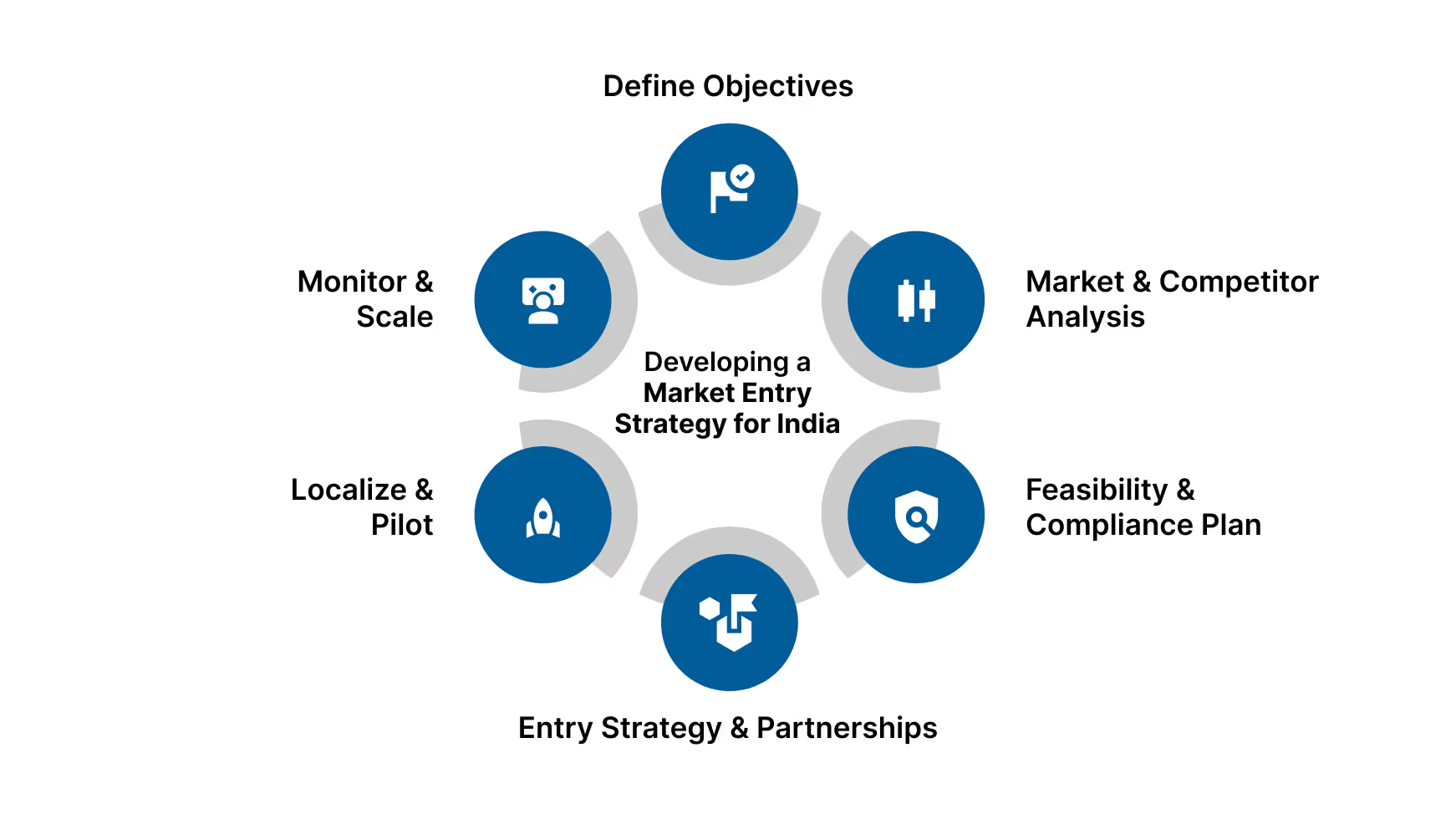
For U.S. companies, India is a market full of promise, but entering without a clear plan often leads to costly setbacks. To help you take action with confidence, here's a focused six-step roadmap explicitly designed for entrepreneurs, SMEs, startups, and professional service firms.
The first step in any India market entry strategy is clarity of purpose. Decide whether your main goal is market expansion, cost optimization, or talent acquisition. From there, define the scope: the industries you want to target, the customer segments you will serve, and the regions where you'll begin.
Remember, India is not a single market. Over 65 cities have populations above one million, each with unique consumption patterns. For example, Bengaluru and Hyderabad are ideal hubs for IT and technology-driven services, while Mumbai and Delhi NCR are financial and professional services powerhouses.
Consider your business model when narrowing focus. For instance, a U.S. consulting firm may establish itself in Delhi NCR to access corporate clients, whereas a SaaS startup may launch in Bengaluru to reach SMEs and tap into tech-savvy talent pools.
Pro Tip: Write a one-page entry brief that includes launch regions, target industries, budget guardrails, and expected ROI timelines.
Don't rely on top-line stats alone. Dig deeper into how customers actually buy, their preferences, purchasing power, and competitor positioning. In Tier-1 metros like Delhi, Mumbai, and Bengaluru, higher disposable incomes create demand but also invite heavy competition. In contrast, Tier-2 cities such as Pune, Jaipur, and Indore may be more price-sensitive, yet they present growing opportunities for businesses that can deliver substantial value at the correct cost.
Mini-checklist:
Before launching, stress-test both your financial assumptions and compliance roadmap. Build realistic cost models that account for incorporation fees, hiring, marketing, and at least 2–4 months of regulatory lead time. Moreover, identify all mandatory registrations and certifications for your sector, then map them to a timeline.
Pro Tip: Maintain a "compliance calendar" that tracks filings, deadlines, and renewals. Missing even one approval can derail your entire launch.
Select an entry route (subsidiary, JV, franchise, distributor) that fits your goals and resources. Your structure should suit both your goals and risk appetite. Furthermore, if partners are involved, choose based on capability and alignment, not speed or convenience. The right partner accelerates approvals and market access; the wrong one can slow you down or damage your credibility.
Standard global offerings rarely succeed in India without adaptation. Instead of rolling out nationwide all at once, run controlled pilots to validate demand and operations. Use these tests to refine pricing, customer messaging, and service delivery.
Localization may involve pricing tiers (monthly vs. annual), packaging formats (family-size packs instead of single units), or language adjustments (regional translations for Tier-2 markets).
Why it matters: Data from pilots should dictate where you double down. Success in 5-10 cities first is more valuable than spreading thin across 29 states.
Treat the first six months as your proof-of-concept. Monitor the right KPIs, adjust based on performance, and scale where the data supports growth.
Key KPIs to track:
For instance, on tracking city-wise adoption, you find Lucknow delivering a stronger ROI than Delhi. Instead of pushing more ads in Delhi, you can reallocate more resources in Jaipur and nearby Tier-2 markets to reduce CAC.
Expanding into India isn't just about choosing the right strategy; it's about executing it with precision. From compliance planning to partner selection and pilot launches, every step requires local expertise and on-the-ground support. This is where VJM Global becomes a critical partner, helping you turn entry strategies into successful, compliant operations in India.
Entering India in 2025 involves managing sector approvals, understanding state-level tax rules, and choosing a structure that aligns with your growth objectives. For U.S. entrepreneurs, SMEs, startups, and professional service firms, the challenge lies in balancing opportunity with compliance.
VJM Global supports you at each stage. Here's how we ensure that your entry into India is practical, compliant, and built for scale.
Worried about compliance hurdles, unreliable partners, or investing in the wrong markets? VJM Global helps U.S. businesses enter India with confidence by handling regulations, validating opportunities, and building lasting structures. Book a strategy call to get started.
India's young workforce, large population, pro-business reforms, and growing middle class make it one of the fastest-growing economies. With cost-effective operations and a thriving consumer base, it offers strong long-term growth opportunities.
Key sectors drawing high FDI include computer software and hardware, telecommunications, and services such as IT and real estate. Growth industries like automobiles, healthcare, and electronics manufacturing also offer significant opportunities for U.S. businesses.
For U.S. entrepreneurs, SMEs, and professional service firms, a market entry strategy outlines how to establish operations in India. It factors in regulations, customer preferences, competition, and choosing the proper mode, such as a subsidiary, joint venture, or franchise.
Key barriers include high setup and compliance costs, complex regulatory approvals, and strong local brand loyalty. U.S. businesses must also address resource control and network advantages held by established Indian competitors.