That growth is pulling in a wide range of new business owners. Startup costs stay low, demand keeps recurring, and hours stay flexible enough to start solo. Side-hustlers, laid-off professionals, immigrants building trades-based businesses, and cleaners tired of working for someone else are all entering the space.
But turning a service into a legitimate business means navigating registration steps that trip up a lot of first-timers. Here's exactly how to do it right.
Key Takeaways
- Registering a cleaning business requires a legal structure, agency filings, and the right licenses and insurance in place
- No state issues a general "cleaning license," though local permits and bonding requirements still apply
- Rules shift by state and city, so a Texas setup won't automatically work in California
- An LLC is the go-to structure for most cleaning businesses because it limits personal liability without heavy cost
- Treat registration fees, insurance, and bonding as startup costs, not optional extras
What Counts as a Cleaning Business?
A cleaning business gets paid to clean spaces — residential, commercial, or specialized — either as a solo operator or with a team. The product isn't equipment or supplies. It's a recurring service clients can count on.
Common formats include:
- Residential/maid service — recurring home cleaning
- Commercial/office cleaning — janitorial contracts for businesses
- Specialty cleaning — carpet, post-construction, move-out, pressure washing
- Subcontractor/agency models — working under an established brand or platform
Registration steps stay largely consistent across these formats. Licensing requirements, however, can diverge sharply depending on what you're cleaning and what chemicals or hazards are involved.
Choosing Your Business Structure and Name
Your legal structure shapes your taxes, your personal liability exposure, and how credible you look to commercial clients bidding you against competitors. Decide this before filing anything.
Sole Proprietorship
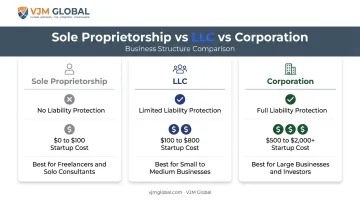
This is the default. If you don't register any other structure, you're automatically a sole proprietor, and it costs nothing to start. The catch: there's no liability protection. If a client sues over property damage or an injury, your personal assets — car, savings, home — are on the line. Risky territory for a hands-on service business.
LLC (Limited Liability Company)
The LLC is the most popular choice among cleaning business owners for good reason. It separates your personal assets from business debts, costs relatively little to form, and makes you look more established to commercial clients comparing bids. The SBA notes that LLC owners generally aren't personally liable for business debts — a meaningful protection when you're inside clients' homes and offices daily.
Corporation (C-corp/S-corp)
Usually only worth considering once you've scaled significantly, hired a sizable team, or are courting outside investors. Most solo or small-team cleaning operations skip this until growth demands it.
Here's how the three options stack up at a glance:
| Structure | Liability Protection | Startup Cost | Best For |
|---|---|---|---|
| Sole Proprietorship | None | $0 | Testing the business idea solo |
| LLC | Yes | Low | Most cleaning businesses |
| Corporation | Yes | Higher | Scaled teams or outside investors |
Once you've settled on a structure, the next decision is what to call your business.
Naming your business:
- Check name availability with your state's Secretary of State before you fall in love with a name
- File a DBA ("doing business as") if you're operating under a name different from your legal name or LLC name
- Once your brand starts gaining local recognition, consider trademarking your name/logo through the USPTO — base filing fees start around $350 per class
How to Register Your Cleaning Business: Step-by-Step
Think of this as your execution checklist. The most common mistake is skipping state-level registration because the business feels too small to bother with. That thinking creates compliance headaches later, especially once you start hiring or bidding on commercial contracts.
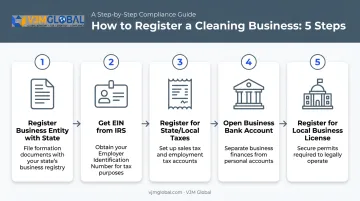
Step 1: Register Your Business Entity With the State
File Articles of Organization (for an LLC) or Articles of Incorporation (for a corporation) with the Secretary of State in your operating state.
Filing fees vary widely:
- Colorado: $50
- Texas: $300
- Massachusetts: $500
Processing times also differ by state, ranging from same-day expedited service (for an extra fee) to several weeks for standard filing.
Step 2: Get an EIN From the IRS
Your Employer Identification Number is completely free and comes directly from the IRS. You'll need it to open a business bank account, hire staff, and file taxes. Even solo operators without employees benefit from having one instead of using their Social Security number on business documents.
Step 3: Register for State and Local Taxes
If you're selling cleaning products alongside your services, you may need a state sales tax permit. In Texas, for example, janitorial and maid services are taxable, with a narrow exception for household employees working directly for a family. If you plan to hire, you'll also need to register for state unemployment/employer tax accounts.
Step 4: Open a Business Bank Account and Set Up Bookkeeping
Separate your personal and business finances immediately. This isn't just good practice: it protects your liability shield, since commingling funds can pierce your LLC protection, and it makes tax season far less painful.
Many small cleaning business owners outsource bookkeeping and tax filing early rather than trying to manage it themselves while running crews and chasing new clients. Handing off the books to a qualified bookkeeper or accountant frees up time for the work that actually grows the business.
Step 5: Register for a Local Business License
Most cities and counties require a general business operating license regardless of industry. You'll typically get this from your city or county clerk's office. Skipping this step is one of the most common compliance mistakes, and one of the easiest to avoid.
Licenses, Permits, Bonding, and Insurance You'll Need
There's no single federal "cleaning license" in the US. The SBA confirms federal licensing only applies to activities regulated by a federal agency, and ordinary janitorial work isn't on that list. But requirements stack up fast at the state, county, and city level.
General Requirements
- Business license/permit — required by most cities and counties, regardless of what industry you're in
- Assumed name filing — if operating under a DBA
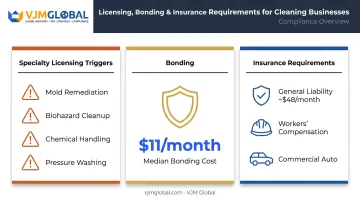
Specialty Licensing Triggers
Some services push you into additional compliance territory:
- Mold remediation — EPA guidance applies to cleanup, though larger jobs may require specific state remediation licensing
- Biohazard/blood cleanup — triggers OSHA's bloodborne pathogens standard, requiring a written exposure-control plan and protective equipment
- Chemical handling — OSHA's Hazard Communication Standard requires labeling, safety data sheets, and employee training
- Pressure washing — some municipalities require specific permits due to wastewater runoff rules
Bonding
Beyond mandatory licenses, many cleaning businesses choose to get bonded, even when it's not legally required. A janitorial bond protects clients against theft or damage claims. It's often the deciding factor when competing for larger residential or commercial contracts. According to Insureon, janitorial bonds carry a median cost of around $11 per month, making it a low-cost way to win trust.
Insurance
- General liability insurance — covers property damage or injury claims; median cost around $48/month for cleaning businesses
- Workers' compensation — mandatory once you hire employees in most states (California requires it with just one employee; Texas makes it optional for most private employers)
- Commercial auto insurance — needed if you use vehicles to transport staff, equipment, or supplies
Requirements shift meaningfully by state. Texas has no general state business license, but it does require sales tax registration for taxable cleaning services and separate employer registration once you hire. Always confirm current rules with your state's Secretary of State site or your local SBA office before launching.
Costs, Timelines, and Mistakes to Avoid
What It Actually Costs
| Cost Item | Typical Range |
|---|---|
| LLC filing fee | $50–$500 (state-dependent) |
| EIN | Free |
| General liability insurance | ~$48/month |
| Janitorial bond | ~$11/month |
| Trademark filing (optional) | $350+ per class |
Costs climb significantly for commercial or specialty operations, requiring higher insurance limits, specialized equipment permits, and potentially workers' comp coverage for a growing crew.
Realistic Timeline
Most owners complete core registration (LLC formation, EIN, and local business license) within a few weeks. EIN approval can be instant online. State entity filing varies from same-day (with expedited fees) to several weeks for standard processing. Specialty permits, like mold remediation certifications, typically take longer.
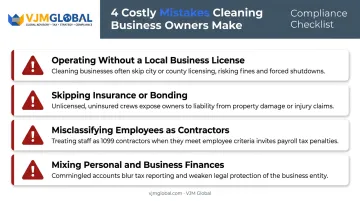
Common Mistakes
- Operating without a local business license: many owners assume "small side business" status exempts them from city or county rules
- Skipping insurance or bonding to save money. One theft claim or injury lawsuit can cost far more than the premiums would have
- Misclassifying employees as contractors, which triggers back taxes, penalties, and potential legal action
- Mixing personal and business finances — undermines your liability protection and complicates tax filing
Wrapping Up
Registering a cleaning business follows a clear, sequential path. Pick your entity, get your EIN, register at the state and local level, then lock down the right licenses and insurance. Skip a step, and you're exposed to fines, lawsuits, or lost contracts.
Requirements differ meaningfully by state and city, so Getting compliance and bookkeeping right from day one sets your business up to scale without scrambling to fix gaps later. Many owners bring in outside accounting support early, since firms like VJM Global handle registration paperwork, tax filings, and bookkeeping so founders can focus on running the business rather than chasing deadlines.
Frequently Asked Questions
Do I need a license to start a cleaning business in Texas?
Texas doesn't require a general state-level cleaning license for most residential or commercial cleaning. However, a local business license or permit, plus a state sales tax permit, often still applies. Always confirm with your local city or county clerk.
Do I need an LLC to start a cleaning business?
No, it's not legally required. A sole proprietorship works too, but an LLC offers liability protection and more credibility with commercial clients as your business grows.
How much does it cost to register a cleaning business in the US?
State LLC filing fees range from about $50 to $500 depending on the state. Your EIN is free from the IRS. Add roughly $48/month for general liability insurance and $11/month for a janitorial bond.
Do I need to be bonded to run a cleaning business?
Bonding isn't always legally mandatory, but many clients expect it before signing a contract. It's a low-cost way to win larger residential and commercial jobs.
How long does it take to register a cleaning business?
Core registration — LLC, EIN, and local license — usually takes a few weeks. EIN approval can be instant online, while specialty permits or licenses can take considerably longer.
Can I run a cleaning business as a sole proprietor without registering an LLC?
Yes, it's legal. Just know you're personally liable for business debts and claims, unlike with an LLC, where your personal assets stay protected.