UK citizens are now classified as third-country nationals, meaning the administrative requirements that once didn't apply now do: visas, residence permits, translated documents, and a registration system that operates entirely in French. None of this makes France off-limits—Business France recorded 1,688 foreign investment decisions in 2024, creating or maintaining nearly 38,000 jobs—but it does mean going in underprepared is expensive.
This guide covers everything UK entrepreneurs need: eligibility, visa routes, the right business structure, the step-by-step registration process, costs, and ongoing compliance obligations.
Key Takeaways
- UK nationals can start a French business, but residing there requires a long-stay entrepreneur visa.
- The SASU is the most popular structure for UK sole founders; SAS suits multi-partner setups.
- Registration now goes through the Guichet Unique (INPI portal), replacing the old CFE system in January 2023.
- Corporate tax in France is 25% (standard rate), with a reduced 15% rate available for eligible SMEs.
- The UK-France Double Taxation Treaty prevents income being taxed twice across both countries.
What UK Citizens Need to Know Before Starting a Business in France
Your Post-Brexit Status Has Changed
Since 1 January 2021, UK nationals follow the same process as any non-EU foreigner when starting a business in France. The automatic right to set up and work that existed under EU freedom of movement is gone.
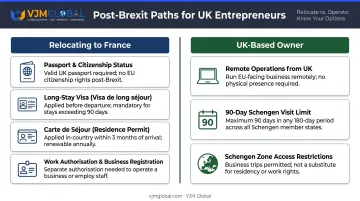
Your situation falls into one of two scenarios, and which applies to you shapes everything that follows:
- You plan to relocate and operate from France — you need a long-stay visa and a residence permit authorising commercial or liberal business activity before you can legally work there.
- You want to own a French company while staying UK-based — this is legally possible without a French visa, provided you spend no more than 90 days in any 180-day period on French soil (the standard Schengen rule).
Visa Routes for UK Founders Moving to France
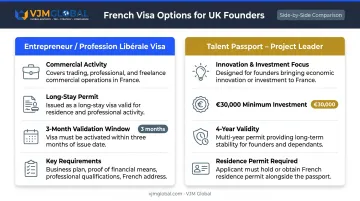
If you're relocating, two main routes apply:
- Entrepreneur/Profession Libérale visa — for those creating or participating in a commercial, industrial, artisanal, or liberal profession activity. You receive a long-stay visa equivalent to a residence permit, which must be validated within 3 months of arrival.
- Talent Passport – Project Leader — for innovation-backed or investment-backed ventures. Requires a minimum investment of €30,000, valid for up to 4 years and renewable. If you plan to stay for at least one year, you'll need a talent residence permit rather than a short-stay visa.
Visa processing at the French Consulate in London typically takes 2 to 15 working days once transferred, though the full process—including gathering documents—takes longer. Start early.
Regulated Professions and Language Realities
UK professional qualifications are no longer automatically recognised in France. If your business falls under a regulated profession — medicine, law, architecture, hairdressing, or construction — check recognition with the relevant French authority before registering anything.
Two language and documentation requirements also deserve attention:
- Key documents must be officially translated into French by a certified translator.
- All registration forms, banking applications, and official correspondence from tax and social security authorities are in French. Bilingual professional support is effectively essential for most founders.
Business Structures in France: Choosing the Right Fit for UK Entrepreneurs
Business Structures in France: Choosing the Right Fit for UK Entrepreneurs
The structure you choose affects tax treatment, personal liability, share capital, management flexibility, and how easily you can bring in partners or investors later. This decision deserves professional advice before you file anything.
The Main Options for UK Founders
| Structure | Best For | Key Points |
|---|---|---|
| Micro-entreprise | Freelancers, low-turnover testing | No VAT charged; revenue caps apply (€188,700 for sales, €77,700 for services); no asset separation |
| SASU | Solo founders wanting scalability | Single shareholder; no minimum capital; flexible governance; popular with non-resident founders |
| SAS | Multi-partner start-ups | 2+ shareholders; highly flexible; preferred by investors and co-founders |
| SARL | Family-type partnerships | 2–100 partners; more rigid governance; tighter control over shareholder entry |
| Branch/Liaison Office | Extending an existing UK company | Branch is French tax-resident; liaison office is not; both require registration |
Which Structure Works Best for UK Entrepreneurs?
Two structures suit most UK founders at the outset:
- SASU — Best for solo founders who want limited liability, no minimum share capital (just €1 legally), and flexible articles of association. Investors recognise the structure, and converting to a SAS if you add partners later is simple.
- Micro-entreprise — Best for testing the French market at minimal cost. It's the fastest to set up and cheapest to maintain, but offers no separation between personal and business assets.
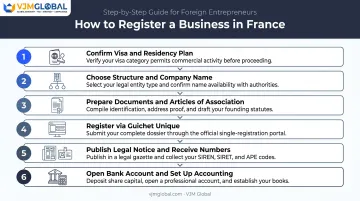
How to Start a Business in France from the UK – Step by Step
Many UK founders underestimate the documentation requirements and translation overhead at each stage. The steps below are sequential. Skipping ahead typically causes delays.
Common mistakes to avoid upfront:
- Starting registration without a business plan ready
- Choosing a structure based on simplicity rather than long-term fit
- Skipping legal or accounting advice (costly to fix later)
Step 1 – Confirm Your Visa Needs and Residency Plan
Decide first whether you'll be France-based or UK-based. This determines whether you need a long-stay visa before anything else can proceed.
If relocating, begin your visa application at the French Consulate in the UK well before your intended start date. You'll need a validated business plan, proof of financial resources, and certified identity documents.
Step 2 – Choose Your Structure and Company Name
Select your legal structure with input from a French accountant (expert comptable) or legal adviser. Then check your desired company name is available using the INPI database. If brand protection matters, register it as a trademark at this stage.
Step 3 – Prepare Documents and Articles of Association
Gather the following before you start:
- Valid passport
- Proof of French registered office address
- Certified translations of non-French documents
- Social security number (if applicable)
For SASU, SAS, or SARL structures, you'll also need to draft the statuts (articles of association). Errors here delay incorporation—professional drafting is worth the cost.
Step 4 – Register via the Guichet Unique
Submit your application online through the Guichet Unique on the INPI portal. Since January 2023, this single portal replaced the old CFE system and automatically routes your application to the tax authority, INSEE, social security office, and commercial court.
For company structures with share capital, deposit the capital into a blocked bank account first and obtain a certificate from the bank. This certificate must accompany your application. The capital is released once you receive your Kbis.
Step 5 – Publish a Legal Notice and Receive Your Numbers
Before registration finalises, you must publish a legal announcement (avis de constitution) in an authorised French legal journal (JAL) or approved online publication in the relevant department. This is mandatory for company structures.
Once accepted, you'll receive:
- Extrait Kbis — your certificate of incorporation and official proof of legal existence
- SIREN — 9-digit company identifier
- SIRET — 14-digit establishment identifier (SIREN + 5-digit NIC)
- APE code — your sector activity code
These must appear on all invoices, official documents, and business correspondence.
Step 6 – Open a Business Bank Account and Set Up Accounting
French banks apply strict approval criteria. A well-prepared business plan, clean identity documents, and a registered address will improve your chances. Some UK founders use specialist business account providers as a bridge while awaiting full bank approval.
Appoint a French-certified accountant (expert comptable) to handle:
- VAT registration and quarterly filings
- Payroll and social charges
- Annual statutory accounts
This isn't legally required in every case, but French tax and labour law is complex enough that most UK founders find professional support pays for itself quickly. If you also have ongoing UK or multi-jurisdiction obligations, firms like VJM Global provide cross-border accounting and international tax advisory services to keep compliance on both sides of the Channel accurate and current.
Costs and Timeline to Expect
Registration Costs
| Item | Approximate Cost |
|---|---|
| Micro-entreprise registration | Free |
| Commercial company registration (SASU, SAS, SARL) | €33.83 |
| Legal notice publication | Variable by department and legal form (tariffs updated annually) |
| Drafting articles of association | €0 (DIY) to €3,000 (professional support) |
| Share capital deposit | Minimum €1 legally; banks may require more in practice |
| Legal address/domiciliation | €200–€500/year typically |
Timeline
- Micro-entreprise: Can be registered in under a week
- SASU/SAS/SARL: Allow 4 to 12 weeks from start to Kbis, accounting for visa processing (if applicable), bank account approval, and document preparation
Hidden Costs to Budget For
Beyond registration fees, several additional costs catch UK founders off guard:
- Certified translation fees for non-French documents
- Notarisation costs where required
- Accountant onboarding and setup fees
- Time spent operating in French—bilingual support has a real cost
Taxes, Banking, and Ongoing Compliance
French Corporate Tax
- Standard rate: 25% for financial years opened from 1 January 2022
- Reduced rate: 15% on profits up to €42,500, available to companies with turnover below €10 million
VAT (TVA)
VAT registration is required once turnover exceeds the exemption thresholds: €91,900 for sales and €36,800 for services (2024 figures). Under the standard real VAT regime, businesses file monthly VAT declarations and must retain supporting invoices and records accordingly.
The UK-France Double Taxation Treaty
The UK-France Double Taxation Convention, signed in 2008 and in force since December 2009, prevents the same income being taxed in both countries. In practice, this means French-sourced business profits are generally taxed in France, while UK-sourced income remains subject to HMRC — but the boundary depends on whether you have a permanent establishment in France.
The 183-Day Rule
Spending more than 183 days per year in France can trigger French tax residency, potentially subjecting your worldwide income to French tax. UK entrepreneurs splitting time between the two countries should track their presence carefully. A tax adviser familiar with both jurisdictions can help you structure your schedule to avoid an unintended residency trigger.
Ongoing Compliance Obligations
French businesses must:
- Submit regular VAT returns (monthly under the standard regime)
- Maintain accounting records in French, following the Plan Comptable Général framework
- File annual accounts
- Comply with social charges on employees
The French tax authority (Direction Générale des Finances Publiques) enforces these obligations consistently, with penalties for late filings running into thousands of euros depending on the breach.
Conclusion
Starting a business in France from the UK is entirely achievable. Post-Brexit, though, it demands more preparation, documentation, and professional support than it once did. Getting the visa route, legal structure, and registration sequence right from the outset saves considerable time, cost, and frustration further down the line.
Whether your setup goes smoothly comes down to a few practical factors:
- Residency intention — knowing upfront whether you're relocating or operating remotely shapes every decision that follows
- Legal structure — choosing the right entity for your goals (micro-entrepreneur, SARL, SAS) before you register, not after
- Cross-border advisers — accountants and legal professionals familiar with both UK and French compliance who can handle the obligations on each side
Get these right early, and the rest of the process is manageable.
Frequently Asked Questions
Can a UK citizen start a business in France?
Yes. UK citizens can register and run a French business, but since Brexit they are treated as third-country nationals. Those planning to reside and work in France need a long-stay entrepreneur visa; those managing a French company from the UK without residing there do not.
How much does it cost to start a business in France?
Costs range from near-zero for a micro-entreprise to €500–€3,000+ for a structured entity like a SASU or SARL. That figure covers the €33.83 registration fee, legal notice publication, articles of association drafting, and accountant onboarding.
What is the 183-day rule in France?
Spending 183 or more days per year in France can make you a French tax resident, meaning your worldwide income may become subject to French tax. UK entrepreneurs splitting their time between the two countries should track this closely and review the UK-France Double Taxation Treaty to avoid being taxed twice.
Do I need to live in France to own a French company?
No. UK nationals can register and direct a French company from the UK. That said, carrying out business activities on French soil regularly requires the appropriate visa — the 90-day Schengen allowance applies to visits, not working residency.
What is the best business structure in France for a UK entrepreneur?
The SASU is the most common choice for UK sole founders — it offers limited liability, flexible governance, and room to scale. Multi-partner ventures typically opt for the SAS. Turnover expectations and residency plans will determine which fits best.
Do I need to speak French to set up a business in France?
There's no formal language requirement for most business types, but French is practically essential throughout the process. Registration forms, bank applications, and all official correspondence from tax and social security authorities are in French. Working with a bilingual professional adviser from the start will save significant time and prevent costly errors.