Many UAE residents assume they need a UK visa, a local partner, or at least a few trips to Companies House to make this work. None of that is true. This guide breaks down exactly what's involved: legal registration, banking, VAT, and the tax treaty questions that trip up first-time founders.
Key Takeaways
- UAE residents can own 100% of a UK private limited company remotely, with no local director or sponsor required
- Formation costs roughly £100 and takes about 24 hours online; ongoing compliance costs continue for the life of the company
- VAT registration only becomes mandatory once UK taxable turnover passes £90,000 in a rolling 12-month period
- The UAE-UK Double Taxation Agreement governs how repatriated profits are taxed, so early tax advice is worthwhile
What Is a UK E-Commerce Business Set Up From the UAE?
A UK e-commerce setup from the UAE is a UK-incorporated company, almost always a private limited company (Ltd), through which a UAE-based founder sells to UK, EU, or global customers without relocating. The entity is registered in the UK; the founder can run day-to-day operations from anywhere.
There are two common formats:
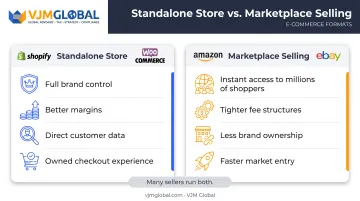
- Standalone online store: a Shopify or WooCommerce site where the UK Ltd is the seller of record, handling its own branding, checkout, and customer relationships
- Marketplace-based selling: listing through Amazon.co.uk or eBay.co.uk, where the UK entity meets platform requirements for VAT numbers and business verification
Plenty of founders run both side by side, using the marketplace for volume and the independent store for margin and brand control.
Why UAE-Based Entrepreneurs Are Choosing the UK for E-Commerce
The UK's online retail sector is large, and it is growing again after a rough patch. IMRG reported that UK online retail grew 3.2% year-on-year in September 2024, its first growth stretch in over three years. For a UAE founder eyeing a new market, that's a meaningful signal.
The Credibility and Access Advantage
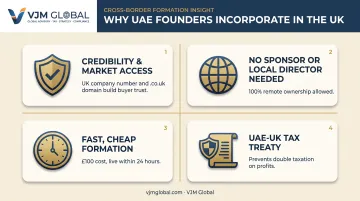
A UK Ltd company does something a UAE free zone entity often can't: it builds instant trust with British and European buyers. Customers recognise a UK company number and a ".co.uk" domain. It also unlocks doors that stay shut otherwise.
- Amazon.co.uk and eBay.co.uk both expect sellers to meet UK compliance standards
- Payment providers like Stripe and Shopify Payments treat UK-incorporated businesses more favourably than overseas entities
- UK banks and suppliers generally trust a Companies House-registered entity over an unfamiliar foreign structure
No Sponsor, No Local Director, No Physical Presence
Unlike setting up in many other jurisdictions, UK company law doesn't ask for a UK-resident director or a local sponsor. A UAE national or expat can be the sole director and 100% shareholder, verified remotely through Companies House's identity checks.
Fast, Cheap Formation
Online incorporation costs £100 and companies are typically live within 24 hours, according to Companies House's own registration guidance. A same-day software filing option exists for £156 if submitted before 3pm on a weekday. That is far less paperwork and waiting than most comparable trading setups elsewhere.
The Double Taxation Agreement Matters
The UK-UAE Double Taxation Convention has been in force since December 2016. It allocates taxing rights between the two countries and prevents the same profits being taxed twice, but it isn't a blanket exemption. How it applies to your specific repatriation plans depends on your personal tax residency and how the company is structured. Specialist cross-border advisors, such as VJM Global's UK and UAE entity teams, can map how the treaty applies to your structure and profit-repatriation plans.
What to Know and Decide Before You Start
A "remote" UK company still generates paperwork. Someone, whether that's you or an outsourced accountant, has to manage it from the UAE.
Recurring UK obligations:
- Annual confirmation statements
- Statutory annual accounts
- Corporation tax returns (CT600)
Ltd Company vs Sole Trader
That compliance load is also why non-resident founders almost always choose a limited company over sole trader status:
| Factor | Private Limited Company | Sole Trader/Branch |
|---|---|---|
| Liability protection | Personal assets separated from business debts | No separation; full personal liability |
| Marketplace eligibility | Meets Amazon/eBay business seller criteria | Often restricted |
| Banking/payment provider access | Broader options | More limited |
| UK credibility | Company number, registered office | Weaker perception |
If you plan to keep any operational presence in the UAE alongside the UK entity, budget for compliance in both jurisdictions. Running two rulebooks means two sets of deadlines.
How to Start a UK E-Commerce Business From the UAE – Step by Step
The sequence below moves from legal registration through to going live. One common mistake: registering the company first and only checking VAT or marketplace requirements afterwards, which forces you to redo paperwork later.
Step 1 – Choose Your Business Structure and Register with Companies House
A private limited company beats sole trader status for almost every UAE-based e-commerce founder. Marketplaces and payment providers expect a registered company, not an individual trading name.
What you'll need to register:
- A valid passport for identity verification (biometric passports work with Companies House's digital verification system, mandatory since November 2025)
- Your current residential address details
- A Companies House personal identification code, issued once verification is complete
- A relevant SIC code describing your business activity (retail sale via mail order or internet falls under specific e-commerce codes)
Registration costs £100 online and usually completes within 24 hours. Companies House identity checks don't automatically require separate proof of address. Your bank or payment gateway still will under their own KYC rules, so keep a recent utility bill or Emirates ID handy.
Step 2 – Set Up a UK Registered Office Address and Appoint Directors
Every UK company needs a physical UK registered office address. A PO Box alone doesn't qualify. Most UAE-based founders use a registered office or virtual address service from an accountant or formation agent instead of trying to source a genuine UK address themselves.
Two practical points:
- There's no requirement for a UK-resident co-director or partner. You can be sole director and sole shareholder.
- Directors provide two addresses: a public service address (which can match the registered office) and a residential address kept off the public register. This keeps your home or UAE address private.
Step 3 – Open UK Banking and Payment Infrastructure
This is where things get tricky. Several major UK banks, including NatWest, Lloyds, and Starling, require the account holder to be UK-resident. That rules out a straightforward high-street account for most UAE-based directors.
Practical alternatives founders typically use:
- Digital-first business accounts (eligibility still varies by provider)
- Stripe, which lists the UK among its supported markets
- PayPal Business and Worldpay, both offering UK-specific e-commerce products
- Shopify Payments, which accepts UK-registered companies but requires a UK GBP bank account capable of receiving Faster Payments
Every provider runs its own KYC checks on beneficial ownership and payout accounts. Confirm eligibility before you build your store around a specific gateway.
You also need a plan for GBP revenue: convert it to AED, reinvest in UK stock, or split between the two. Conversion fees and exchange rates differ enough that this is worth comparing, not defaulting to whichever account opens first.
Step 4 – Register for VAT and Corporation Tax
VAT registration becomes mandatory once your rolling 12-month UK taxable turnover exceeds £90,000, or if you expect to cross that threshold in the next 30 days alone. Below that, voluntary registration is allowed and sometimes worthwhile, since it lets you reclaim VAT on business expenses.
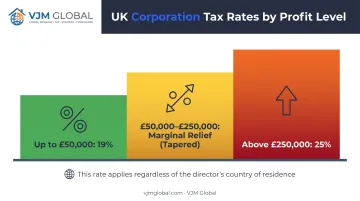
Corporation tax applies regardless of where the director lives:
- 19% on profits up to £50,000
- 25% above £250,000
- Marginal Relief tapers the rate in between
Here's where the UAE-UK tax treaty matters in practice. Your UK company pays UK corporation tax on its profits either way. What happens when you extract that money personally—as dividends or otherwise—depends on your UAE tax residency and how the treaty allocates taxing rights.
This is the stage where most founders bring in specialist support. VJM Global handles UK entity formation alongside cross-border tax compliance, so the same team can align UK filings with how you repatriate profit to the UAE.
Step 5 – Build Your Online Store and Choose Your Sales Channels
Independent store vs marketplace isn't really an either-or decision:
- Shopify or WooCommerce gives you full brand control, better margins, and direct customer data
- Amazon.co.uk or eBay.co.uk gives you instant access to millions of ready-to-buy shoppers, but with tighter fee structures and less brand ownership
- Many established UK sellers run both
Compliance essentials your storefront needs regardless of platform:
- Your company number, registered office, and place of registration displayed clearly
- Terms & conditions and a returns policy (UK distance-selling rules generally give customers 14 days to cancel after delivery)
- A GDPR-compliant privacy notice covering data purposes, retention, and customer rights
Localisation basics for UK buyers: price in GBP, offer payment methods UK shoppers expect, and write copy in British English. A store that reads as obviously translated or mispriced in USD undermines the credibility you just built by incorporating in the UK.
Step 6 – Plan Fulfilment, Logistics and Ongoing Compliance
Where you fulfil orders from affects both delivery speed and customer satisfaction. A UK-based warehouse or third-party logistics provider means next-day delivery expectations get met. Shipping cross-border from the UAE for every order adds days and unpredictability.
If you're importing UAE-sourced inventory into the UK, post-Brexit customs rules apply:
- Consignments valued at £135 or less generally have UK VAT charged at the point of sale
- Above £135, standard import VAT and customs duty apply
- Courier and customs handling responsibilities need to be clearly assigned in your shipping contracts
Once trading, the filing calendar doesn't stop:
- Confirmation statement every 12 months
- Annual accounts, first due 21 months after incorporation, then 9 months after each year-end
- Corporation tax payment 9 months and 1 day after the accounting period ends, with the CT600 return due within 12 months
- VAT returns every 3 months, if registered, even during nil periods
Managing HMRC deadlines from a UAE time zone—on top of any UAE-side accounting you still carry—is where most founders eventually outsource. A firm that covers entity formation and accounting in both jurisdictions, such as VJM Global, keeps one consistent set of books instead of two accountants who never align.
Conclusion
Starting a UK e-commerce business from the UAE is a well-trodden, largely remote process once legal registration, banking, and tax are handled in the right order.
Getting clarity on your structure and the UAE-UK treaty implications before you start trading saves you from unpicking costly mistakes later. Pair the UK opportunity with cross-border accounting support from day one—not after HMRC sends a letter you weren't expecting. VJM Global helps UAE-based founders with UK company formation, tax compliance, and ongoing accounting so obligations stay clear from the start.
Frequently Asked Questions
How can I start an e-commerce business in the UK?
Choose a business structure (usually a Ltd company), register with Companies House, and set up a UK registered address. Arrange banking and payments, register for VAT or corporation tax where relevant, then build and launch your store.
Which e-commerce is best in the UK?
There's no single best option. Independent stores like Shopify suit brand-building and margin control, while marketplaces like Amazon.co.uk and eBay.co.uk offer faster access to an existing customer base. Many UK sellers run both simultaneously.
Can a UAE resident open a UK company without ever visiting the UK?
Yes. UK company registration is fully digital, and neither the director nor the shareholder needs to visit or live in the UK at any point.
Do I need to pay UK tax if I live in the UAE but sell to UK customers through a UK company?
Your UK company pays UK corporation tax on its profits regardless of where you live. Your personal tax treatment depends on your UAE tax residency status and the UAE-UK Double Taxation Agreement.
Is there a tax treaty between the UAE and UK that affects e-commerce profits?
Yes, the UAE-UK Double Taxation Agreement has been in force since December 2016. It's designed to prevent the same profits being taxed twice, though how it applies to your situation should be reviewed with a cross-border tax advisor.
How long does it take to register and launch a UK e-commerce business from the UAE?
Incorporation typically takes 24 hours online, while bank or payment checks can take up to 10 working days. VAT registration may add several weeks, so budget 4–6 weeks from registration to a live store.