Introduction
If you've registered a business in India, you've probably seen three different terms thrown around: GSTIN, GST number, and GST registration certificate. Many business owners assume these are separate things, or worse, confuse the GSTIN with their PAN.
They're not the same. A GSTIN (Goods and Services Tax Identification Number) is the unique identifier assigned once your GST registration is approved. It shows up on every tax invoice, GST return, and e-way bill you generate.
This guide breaks down the GSTIN structure character by character, explains when registration becomes mandatory, lists the documents you'll need, and walks through the online application on the GST Portal. We'll also cover how to verify a GSTIN before you trust an invoice.
Key Takeaways
- GSTIN is a unique 15-character ID tied to your PAN and state registration details
- Register when turnover, interstate supply, or e-commerce activity crosses the applicable threshold
- Prepare PAN, ID proof, constitution documents, and address evidence before you apply
- A valid GSTIN enables input tax credit, compliant invoicing, and smoother interstate trade
- Confirm current thresholds and steps on the GST Portal or with a tax professional
What Is a GSTIN and What Does It Represent?
A GSTIN is the identification number issued after your GST registration application is approved under India's GST law. "GST number" is the informal short form of the same number.
Here's where the confusion usually starts. These four terms sound related but mean different things:
- GSTIN – the 15-character number itself
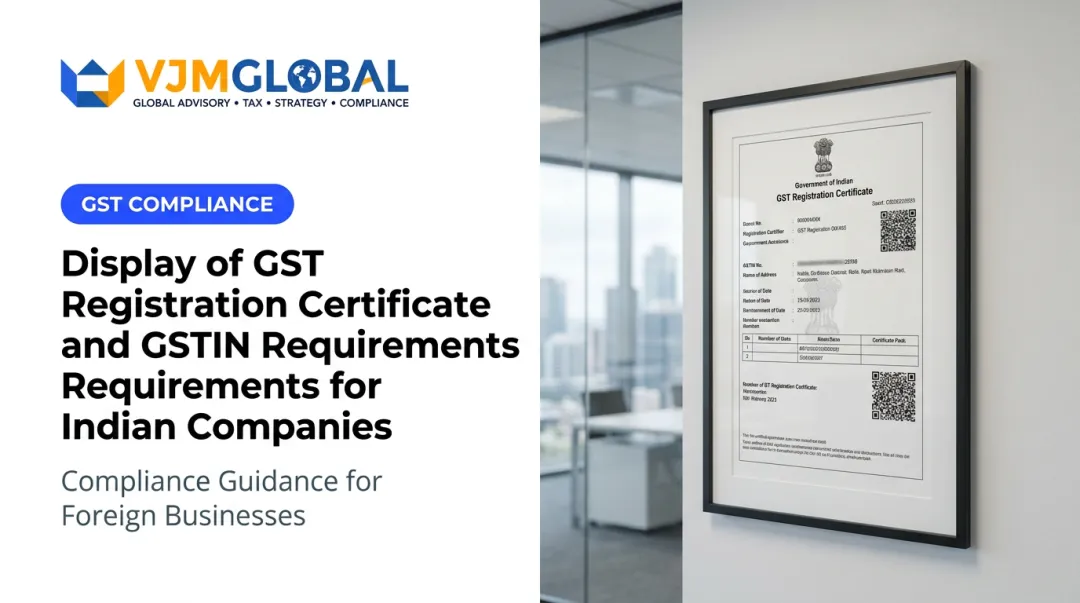
- GST registration certificate (FORM GST REG-06) – the official document that displays your GSTIN, along with your legal name, business address, and registration date
- GSTN (Goods and Services Tax Network) – the IT backbone that runs the GST Portal, not something you're issued personally
- PAN – your 10-character Income Tax identifier, which forms part of your GSTIN but is a separate registration in its own right
Companies, LLPs, partnerships, proprietorships, and trusts can all hold a GSTIN once they meet the applicable registration criteria. Whether you must register—or only may—depends on turnover, activities, and current GST law, so confirm the rules for your entity type before you apply.
How to Read the GSTIN Number Format
A GSTIN is always 15 characters, and each segment tells you something specific about the registered taxpayer, according to the GST Council's official registration guidance.
Here's a fictional example for illustration only, not a real taxpayer's number:
07ABCDE1234F1Z5
| Position | Segment | What it represents |
|---|---|---|
| 1–2 | State code | The state or Union Territory where the entity is registered |
| 3–12 | PAN | The ten-character PAN of the business or proprietor |
| 13 | Entity code | Distinguishes multiple registrations under the same PAN in one state |
| 14 | Default character | Usually "Z" in examples; portal specs allow other characters |
| 15 | Checksum | A validation digit used by the system |
The first two digits pin the registration to a jurisdiction. Always cross-check this against the current official state-code reference on the GST Portal rather than an old list you found online, since state codes do get updated.
The PAN-linked segment (positions 3–12) is why your legal name, PAN, and application details all need to match exactly. A mismatch here is one of the most common reasons applications get sent back for clarification.
The entity code and checksum exist mainly for the system's internal validation. They're not something you can decode yourself to confirm a registration is genuine or active. If you need to verify a GSTIN, use the GST Portal's taxpayer search tool instead of trying to reverse-engineer the number.

If you've sold on an international platform, you've likely seen a field labelled "VAT/GST registration number." That's generic wording used across countries with very different systems. An Indian GSTIN follows this exact 15-character structure; a UK VAT number, an EU VAT ID, or an Australian ABN follow entirely different formats under their own tax laws. Don't assume one will work in place of another.
Benefits of Having a GSTIN
Registering for GST gives your business a formal footing in India's tax system, but the benefits come with strings attached.
Compliant invoicing and tax collection. A registered business can issue tax invoices that display its GSTIN, legal name, and address, as required for taxable supplies. This is often the first thing corporate buyers check before onboarding a vendor.
Input tax credit, conditionally. Registered taxpayers can claim credit for GST paid on business purchases—but it is not automatic. Under Section 16 of the CGST Act, credit depends on all of the following:
- A valid tax invoice (or debit note) on hand
- Actual receipt of the goods or services
- Correct invoice reporting by your supplier
- Tax paid through to the government
Miss one condition, and the credit can be denied or reversed.
Business credibility. Marketplaces, larger corporate buyers, and export customers frequently require a valid GSTIN before they'll work with you. It signals that you're operating within the formal tax system.
Operational advantages, in practice:
- Maintains a formal tax record through the GST system
- Supports return filing such as GSTR-1 and GSTR-3B
- Enables interstate trade without separate state-by-state tax registrations
- Qualifies you for GST-compliant e-commerce channels and many tenders
None of this is free, though. Registration brings ongoing responsibilities:
- Filing returns on time
- Issuing accurate invoices
- Keeping proper records and paying tax dues
- Reconciling input tax credit against your books
- Responding to notices from tax authorities
Skip these, and the benefits unwind quickly.
When Is GST Registration Required in India?
Registration in India isn't triggered by a single rule. Several factors decide it, and getting this wrong (in either direction) creates real compliance risk.
Turnover-Based Registration
Based on CBIC guidance effective from 1 April 2019, the general thresholds are:
- Goods suppliers: ₹40 lakh annual turnover in most states, or ₹20 lakh in specified special category states
- Service suppliers: ₹20 lakh annual turnover generally, or ₹10 lakh in specified special category states
These figures come from CBIC's published 2019 update, so confirm the current applicable threshold for your state and supply type on the GST Portal before relying on it.
Mandatory Registration Regardless of Turnover
Certain categories must register no matter how small their turnover, including:
- Persons making interstate taxable supplies
- Casual taxable persons and non-resident taxable persons
- Persons liable to pay tax under reverse charge
- E-commerce operators and, in many cases, suppliers selling through them
- Persons required to deduct or collect tax at source (TDS/TCS)
- Suppliers of OIDAR (Online Information and Database Access or Retrieval) services from outside India to recipients in India
A 2023 notification carves out a conditional exception for some small goods suppliers selling exclusively through one e-commerce operator within a single state, so this is no longer a blanket rule.
Voluntary Registration
A business under the threshold can still choose to register voluntarily, usually to claim input tax credit or to satisfy buyers who only deal with registered vendors. Weigh this against the compliance burden it adds before opting in.
Selling on Instagram or Facebook
Selling through social media doesn't answer the registration question by itself. What actually matters is:
- Your turnover
- Whether you're supplying interstate
- Your customer location
- Whether an e-commerce operator sits in the transaction chain
Assess these factors individually rather than assuming a platform's terms decide your GST obligation.
Non-Resident and Foreign Businesses
If you're a foreign business or non-resident taxable person supplying goods or services in India, the registration route and compliance timeline differ from the standard process. The rules here are nuanced enough that specialised advice before you file is worth getting.

How to Apply for a GSTIN Online
Once you've confirmed registration applies to you, the process runs entirely through the GST Portal.
Documents You'll Need
Have these ready before you start:
- PAN of the business or proprietor
- Aadhaar or other accepted identity proof
- Mobile number and email address
- Passport-sized photographs of promoters, partners, or the authorised signatory
- Business constitution documents (certificate of incorporation, partnership deed, trust deed, as applicable)
- Authorised signatory details, including any board resolution or letter of authorisation
- Principal place of business proof (ownership papers, lease or rent agreement, consent letter, or a recent utility bill)
Bank account details aren't always required upfront. Under current rules, they generally need to be added within 30 days of registration, or before filing your first outward-supply return, whichever comes first.
One thing that trips up a lot of applicants: inconsistent legal name, PAN, or address across documents. Even small mismatches trigger clarification requests or outright rejection, so double-check everything matches before submission.
Foreign businesses have a few extra document needs:
- Incorporation documents from the home country
- Tax identification details
- An India-resident authorised signatory with a valid PAN
- Evidence of an Indian business address, where applicable
Step-by-Step Application Process
- Start on the GST Portal – Select taxpayer type and state, then enter PAN and contact details
- Complete OTP verification – You'll receive separate OTPs on email and mobile; verifying these generates a Temporary Reference Number (TRN)
- Return using the TRN – Fill in business details, promoter or partner information, authorised signatory details, and places of business
- Add goods/services and bank details – Enter your HSN or SAC codes and, if ready, bank account information
- Authenticate and submit – Complete Aadhaar authentication where available, then sign with a DSC, e-sign, or EVC based on your business structure
- Track your Application Reference Number (ARN) – Use this to monitor progress and respond promptly to any officer queries
- Download your certificate – Once approved, your GST registration certificate with the GSTIN becomes available on the portal
VJM Global supports eligible companies, startups, NRIs, OCIs, and foreign entities with GST registration documentation, application coordination, and ongoing tax-compliance support. No service can guarantee approval or a fixed timeline; the final decision rests with GST authorities.

How to Check GSTIN Status and Verify a GST Number
Before you trust an invoice or onboard a vendor, verify their GSTIN through the official channel rather than a screenshot they've sent you.
Two different tools answer two different questions:
Search Taxpayer (by GSTIN/UIN) returns legal name, registration date, taxpayer type, principal place of business, and current status for an already issued GSTIN.
Track Application Status (by ARN) shows where a pending registration stands—under processing, pending clarification, approved, or rejected.
An ARN confirms an application is moving through the system. A GSTIN confirms registration has actually been granted. Don't treat the two as interchangeable.
Quick verification checklist before accepting an invoice:
- Match the GSTIN against the supplier's legal name
- Confirm status is active on the transaction date
- Check the place-of-supply details align with the transaction
- Save a copy of the verification for your own records
Third-party GST-checker apps and forwarded screenshots aren't reliable enough on their own. Always confirm directly through the official GST Portal.
Frequently Asked Questions
Is GST required to sell on Instagram?
Not automatically. Selling on Instagram alone doesn't determine your GST obligation. Your turnover, supply type, customer location, and whether an e-commerce operator is involved in the transaction all matter more than the platform itself.
How do I find my VAT GST registration number?
Your GSTIN appears on your GST registration certificate, GST Portal profile, and tax invoices. Foreign platforms may label this field "VAT/GST," but that is not the same as your Indian GSTIN.
What is my GST status?
Check the GST Portal's Search Taxpayer tool for an active GSTIN, or Track Application Status with your ARN for a pending application. Statuses include active, pending, suspended, and cancelled.
What is a VAT/GST registration number?
It's a country-specific tax registration identifier, and the format varies by jurisdiction. India's GSTIN is a fixed 15-character number, while VAT or GST numbers in other countries follow entirely different structures.
What does the "VAT GST registration number" on Facebook mean?
Facebook uses generic wording for a seller's tax ID across countries. Indian sellers should enter a valid GSTIN only where the platform requires it for their country settings.
Is there GST or VAT in the USA?
No. The United States generally applies state and local sales taxes rather than a nationwide GST or VAT system. Check the applicable state and local rules directly rather than treating a US tax ID as equivalent to an Indian GSTIN.