This guide walks through jurisdiction selection, licensing routes, realistic costs, and the practical setup process for UAE entrepreneurs entering EU fintech.
TL;DR
- Choose a jurisdiction (Lithuania, Estonia, Malta, Germany, Netherlands) based on your business model and risk appetite
- Secure the right licence: EMI, PI, or Crypto Asset Service Provider (CASP) under MiCA
- Build AML and GDPR compliance in from day one
- Expect 3 months in Lithuania versus 12+ months in Germany
- Remote setup works in several jurisdictions if you retain local legal and compliance partners
Why EU Fintech Is Attracting UAE-Based Entrepreneurs
The core draw is passporting. Once you hold a licence in one EU/EEA state, you can offer services across the bloc, home to roughly 449 million people as of January 2024, according to Eurostat's demography data.
Under PSD2, an authorised payment institution notifies its home regulator, which then coordinates with host-country authorities before you launch elsewhere. It's a genuine passport, but it's a notification process, not an automatic green light for every product.
Funding tells a mixed story. KPMG's 2025 Pulse of Fintech report found EMEA fintech investment fell to $20.3 billion across 1,465 deals in 2024, down from $27.6 billion the year before. That's EMEA-wide, not EU-only, but it signals a market that's cooling globally, not just in Europe.
Why bother, then? A few reasons keep coming up:
- Access to euro-denominated banking rails and settlement infrastructure
- Proximity to European institutional investors
- Diversification away from MEASA-heavy revenue concentration
- Credibility with EU merchants and partners who prefer a licensed local entity
Here's the part most founders get wrong: you don't need to relocate. Many UAE entrepreneurs run their EU entity remotely, with a local director or compliance officer handling substance requirements on the ground.
Choosing the Right EU Jurisdiction for Your Fintech
Jurisdiction choice shapes everything downstream: licensing speed, capital thresholds, operational costs, and how quickly you can start selling across the single market.
Lithuania
Lithuania remains the go-to for speed. The Bank of Lithuania commits to an EMI licensing decision within 3 months of a complete application, with an initial document check inside 5 business days.
Its Newcomer Programme offers plan reviews and direct regulator access, though it doesn't guarantee approval. As of end-2024, Lithuania had 119 licensed EMIs and PIs (76 EMIs, 43 PIs), so new entrants can tap a large local peer network.
Estonia
Estonia's e-Residency programme lets you manage a company entirely online, with approval typically taking 3-8 weeks. It's a digital identity tool, not a fintech licence. Don't confuse the two. For crypto businesses, Estonia's FSA now processes CASP applications under MiCA, with a 25-working-day completeness check followed by a 40-working-day substantive review.
Germany
Germany offers a large market and strong regulatory credibility, but BaFin's approach is thorough. Payment services generally require ZAG authorisation, and once granted, EEA-wide passporting follows. BaFin doesn't publish a standard processing timeline, so budget for a longer runway than Lithuania or Estonia.
Netherlands
The Netherlands runs a joint AFM-DNB InnovationHub that helps founders understand which rules apply. That support is informal guidance, not a sandbox. DNB's statutory review period for PI applications is 3 months, though missing documents pause the clock.
Malta
Malta's MFSA still runs a dedicated Virtual Financial Assets framework with a Financial Instrument Test to classify crypto assets. For crypto service providers, MiCA authorisation is now the primary EU route.
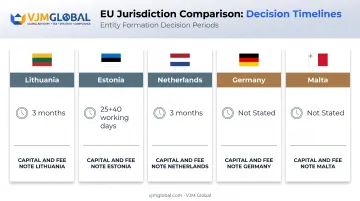
Quick comparison:
| Jurisdiction | Typical decision period | Capital/fee note |
|---|---|---|
| Lithuania | 3 months | EMI capital €350,000; levy €1,463 |
| Estonia | 25+40 working days (CASP) | CASP fee €3,000 |
| Netherlands | 3 months (PI) | Fee charged, amount not published |
| Germany | Not officially stated | Fee-bearing under FinDAGebV |
| Malta | Not officially stated | Service-dependent MiCA safeguards |
Step-by-Step: Setting Up a Fintech Company in the EU from the UAE
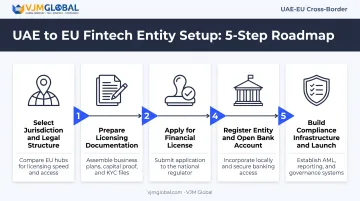
Step 1 – Select Jurisdiction and Legal Structure
Match your business model to the right country and entity type. A crypto exchange might favour Estonia or Malta; a payments app chasing scale might go straight to Germany or the Netherlands. Most jurisdictions require an LLC-equivalent entity as the licensing vehicle.
Step 2 – Prepare Licensing Documentation
Regulators across the EU expect a common file, per EBA guidelines:
- Detailed business plan and programme of operations
- AML/KYC policy and internal controls
- Source-of-funds evidence
- Management CVs for the fit-and-proper test
- IT security and cybersecurity framework
Step 3 – Apply for the Relevant Financial License
Your options generally fall into three main licence types:
- Payment Institution (PI) — capital ranges from €20,000 (money remittance only) to €125,000, depending on services offered
- Electronic Money Institution (EMI) — minimum €350,000 under EMD2
- Crypto Asset Service Provider (CASP) — capital tied to the higher of a MiCA Annex IV minimum or a quarter of prior-year fixed overheads
Step 4 – Register the Entity and Open a Corporate Bank Account
This is where UAE-based founders often stall. Most jurisdictions require a registered office and at least part of the business genuinely operating in-country. A local director or compliance officer is often non-negotiable.
Opening a corporate account as a non-resident-owned fintech is also slow unless your AML framework is airtight before you approach the bank.
Step 5 – Build Compliance Infrastructure and Launch
Before going live, you'll need GDPR-compliant data handling, an AML transaction-monitoring system, and a plan for ongoing regulatory reporting to your home regulator.
Coordinating entity formation, tax registration, and compliance setup across advisors in different countries is where projects lose momentum. VJM Global's entity formation and tax advisory teams help founders keep those workstreams aligned across jurisdictions.
Costs, Timelines, and Compliance Requirements to Expect
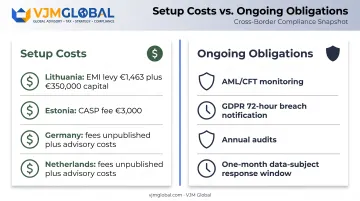
Costs vary sharply by jurisdiction and licence type. Confirmed application costs include:
- Lithuania: EMI application levy of €1,463, plus €350,000 minimum capital
- Estonia: CASP application fee of €3,000
- Germany & Netherlands: Fees are charged but amounts aren't published on regulator sites. Budget for legal and advisory costs on top
Ongoing obligations don't stop once you're licensed:
- AML/CFT transaction monitoring and reporting
- GDPR data protection, including breach notification to the regulator within 72 hours
- Annual audits and periodic reporting to your home central bank or financial authority
- Data-subject rights requests, typically answered within one month
Timelines stretch from roughly 3 months for a complete Lithuanian file to well over a year in Germany. That range stacks legal setup, licensing, and bank account opening end to end.
Conclusion
Success in EU fintech setup comes down to three things: Success in EU fintech setup comes down to three things:
- Matching your business model to the right jurisdiction
- Preparing airtight documentation before you apply
- Building compliance infrastructure early rather than bolting it on later
UAE founders don't need to pack up and move — but they do need reliable, cross-border guidance to avoid the delays that trip up first-time applicants. VJM Global's entity formation, tax, and compliance teams work across markets including Germany, the Netherlands, and Ireland, helping UAE-based founders keep their EU setup coordinated without juggling separate local advisors in each country.
Frequently Asked Questions
How do I set up a fintech company in the EU from the UAE?
Choose your target jurisdiction, prepare licensing documentation, and apply for the relevant EMI, PI, or CASP licence. Many founders manage the resulting entity remotely with local directors or compliance officers handling day-to-day substance requirements.
Which European country is leading in fintech?
Outside the EU, the UK leads Europe in fintech investment. Within the EU, Lithuania leads by number of licensed EMIs and PIs (119 as of end of 2024), while Germany and the Netherlands lead on market size and ecosystem maturity.
Can a UAE resident own 100% of an EU fintech company?
Most EU jurisdictions permit full foreign ownership. However, qualifying holders must typically pass reputation and financial soundness checks, and a local director or registered office is often required.
What is the minimum capital required for an EMI license in the EU?
EMD2 sets the EMI minimum at €350,000. Payment Institution licences require less, ranging from €20,000 to €125,000 depending on the services provided.
Do I need to relocate to the EU to run a fintech company there?
No, physical relocation isn't mandatory in most jurisdictions. You will, however, need a registered office and genuine local substance, often satisfied through a resident director or compliance partner.
How long does it take to get a fintech license in the EU?
Lithuania can decide on a complete EMI application within 3 months. Germany and other stricter jurisdictions can take 12 months or longer once legal setup and bank account opening are factored in.