That scale, combined with a fragmented post-Brexit supply chain, has opened real space for smaller, independent importers who know a specific niche well.
It's why we're seeing growing interest from US sommeliers, wine industry veterans, and expats with UK ties who want to launch an import business without relocating. Established American producers already sell into mature European distribution networks, and UK hospitality and retail demand for interesting, boutique labels hasn't gone anywhere.
This guide walks through both halves of the challenge: the wine-trade mechanics of importing, and the specific legal and administrative steps a US founder must take to set up and run the business legally from across the Atlantic.
Key Takeaways
- Importing wine into the UK means managing sourcing, compliance, logistics and distribution, not just picking good bottles
- Secure a UK company, AWRS approval, VAT registration and a bonded logistics partner before you sell a case
- US founders face extra steps: forming a UK entity, opening UK business banking and managing compliance while based abroad
- Capital stays tied up in stock, duty and VAT for months before the business generates steady income
- A cross-border formation and compliance specialist can cut setup time for non-resident founders
What Is a Wine Import Business in the UK (from the USA)?
A wine import business is the legal purchase of wine from overseas producers, brought into the UK market for resale to trade buyers or consumers.
What you actually sell is the operational backbone: sourcing, regulatory compliance, logistics management and distribution. That work gets a bottle from vineyard to UK wine list or shelf without falling foul of HMRC.
There are two common versions of "from the USA" in this context:
- A US resident owning and operating a UK company remotely — sourcing wine (often, though not exclusively, from the US) and running the entire import operation from American soil
- A US wine business establishing a UK subsidiary — using the UK entity as a base to import wine sourced globally, not just from American vineyards
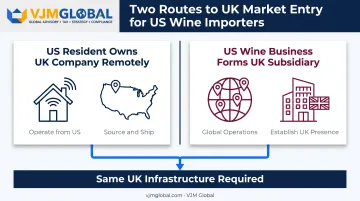
Both routes require the same core UK infrastructure. The difference is mainly in who's on the ground and how sourcing decisions get made.
What to Know Before You Start
Most first-time importers underestimate the dual load this business carries. Alongside UK alcohol regulation, you must handle cross-border company formation, banking and tax registration from another country.
Realistic early-stage time commitment includes:
- Vetting suppliers and negotiating exclusivity or distribution terms
- Preparing and submitting licence applications (some with 45-day lead times)
- Coordinating paperwork and calls across a five-to-eight-hour time difference
Success in this business depends far more on logistics, admin discipline and compliance follow-through than on wine expertise alone. A brilliant palate won't get your AWRS approval through any faster.
Expect cash to sit tied up in stock, duty and VAT for several months before you turn a steady profit. Budget for that reality upfront, not after your first container lands.
Why Start a Wine Import Business in the UK (When It Makes Sense)
Wine importing into the UK is a sound move only under the right conditions. Consider it seriously if:
- Growing boutique demand. UK buyers increasingly look past supermarket ranges for New World and small-producer wines that major distributors don't prioritise.
- Post-Brexit supply gaps. As EU-focused distributors adjust their models, independents with direct producer relationships can fill niches faster than larger competitors.
- Mature legal and trade infrastructure. Clear licensing pathways, a large domestic wine market and an established trade calendar (London Wine Fair, regional tastings) make UK entry relatively straightforward.
- Long-term, defensible value. Exclusive producer relationships and a tightly curated portfolio become real business assets over time, not just a sales pipeline.
If your plan relies on undercutting supermarkets on price, this probably isn't your business. If it relies on curation, relationships and a niche nobody else is servicing well, it can work.
How to Start a Wine Import Business in the UK – Step by Step
For a US-based founder, launching a UK wine import operation means following a clear sequence. Skip a stage and you create tax and liability problems that are expensive to unwind.
Two mistakes come up constantly:
- Assuming US business licences or experience transfer directly to UK rules (they don't)
- Delaying UK entity formation while "testing the market" informally — which usually means you're already trading illegally
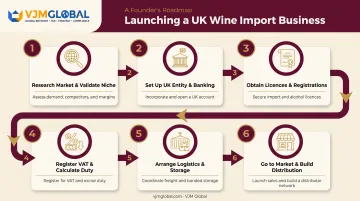
Step 1 – Research the Market and Validate Your Wine Niche
Start by defining your lane: region, price point, and channel (on-trade restaurants, retail, or direct-to-consumer).
Use HMRC and WSTA data to sanity-check demand. The 1.7 billion bottle-equivalent import figure and the 43% of still wine arriving in bulk for UK bottling both point to a market with room for specialist, smaller-volume operators outside the bulk-supply mainstream.
Before committing capital or shipping a single case:
- Talk to UK retailers, restaurants or distributors about your proposed portfolio
- Ask what they're currently short on, not just what they like
- Get informal commitments or letters of interest where possible
Validate demand before you validate paperwork. It's the cheaper mistake to make first.
Step 2 – Set Up Your UK Legal Entity and Business Banking
Most importers register a UK Limited Company through Companies House. It offers liability protection and immediate credibility with suppliers and HMRC. A UK-registered entity signals you're serious, not just testing the waters.
For a US founder, the specific hurdles are:
- Registering as a non-resident director and shareholder (permitted, but documentation requirements are stricter)
- Appointing a UK registered office address — a physical UK address is mandatory before incorporation
- Providing supporting identification and address documentation to Companies House and, later, your UK bank
This is where a cross-border specialist earns its fee. A firm like VJM Global handles UK Companies House and HMRC registration (Corporation Tax, VAT and PAYE) plus UK business bank account setup, so you don't need to fly over or relocate to get this stage done properly.
The most common miss here: founders agree supplier terms or ship their first order before the UK entity exists. That sequencing error creates tax and liability headaches that are far harder to unwind after the fact.
Step 3 – Obtain the Required Licences and Registrations
You cannot wholesale alcohol in the UK without Alcohol Wholesaler Registration Scheme (AWRS) approval from HMRC. This applies once you're selling or arranging alcohol sales to another business at or after the excise duty point.
Key details:
- Apply at least 45 calendar days before your intended trading start date, per HMRC's Excise Notice 2002
- HMRC applies a "fit and proper" test to the business and its directors
- Once approved, you'll receive a Unique Registration Number (URN) that must appear on every wholesale invoice
Beyond AWRS, you'll also need:
- Food business registration with your local council, typically required 28 days before trading
- A Customs Declaration Service (CDS) subscription for import declarations and duty/VAT payments
None of this can happen without your UK entity and address already in place — which is exactly why Step 2 has to come first.
Step 4 – Register for VAT and Understand Duty on US-Sourced Wine
The compulsory VAT registration threshold is £90,000 in taxable turnover, though voluntary registration below that level lets you reclaim import VAT — often worthwhile given how much VAT you'll be paying on stock.
Wine sourced from the USA is treated as a third-country import, meaning it's subject to customs declarations, potential Most Favoured Nation tariffs, and alcohol excise duty based on ABV. Current HMRC wine duty rates per litre of pure alcohol:
| Wine ABV | Duty Rate |
|---|---|
| Up to 1.2% | £0.00 |
| 1.3% – 3.4% | £9.96 |
| 3.5% – 8.4% | £26.61 |
| 8.5% – 22% | £30.62 |
| Above 22% | £33.99 |
(Rates from GOV.UK's alcohol duty rates page; check for updates before customs entry.)
Correctly classifying your goods under UK Trade Tariff heading 2204 matters — misclassification means over- or under-paying duty, and HMRC doesn't split the difference in your favour.
Step 5 – Arrange Logistics, Storage and Supplier Relationships
You've got two shipping options: sea freight (cheaper, more carbon-efficient, slower) or air freight (faster, better temperature stability, pricier). Most volume importers lean on sea freight and use freight forwarders to manage customs paperwork on both ends.
Bonded warehousing is worth understanding early. Storing stock in an HMRC-approved excise warehouse lets you defer duty and VAT payment until the wine actually leaves for sale, protecting cashflow on high-value inventory that might otherwise sit as dead capital for weeks.
Two relationship types matter most here:
- US-side: reliable exporters who understand UK paperwork requirements and won't leave you scrambling for missing documentation
- UK-side: logistics and bonded warehouse partners you trust to handle stock correctly when you're not physically present to check on it
Wine is temperature-sensitive (ideally 12°C to 14°C), so cutting corners on transit or storage shows up in the bottle, not just the paperwork.
Step 6 – Go to Market and Build UK Distribution
Decide your route to market: direct-to-trade sales to restaurants and retailers, working through wholesale distributors, or building a direct-to-consumer e-commerce channel.
Without an existing UK track record, credibility has to be earned quickly:
- Attend UK wine trade fairs and tastings: the London Wine Fair draws over 10,000 industry professionals and is a strong venue for building supplier and buyer trust
- Comply with the CAP Code for alcohol advertising, which prohibits implying social, sexual or therapeutic benefits from drinking
- Build age verification into any online sales, checking ID before delivery, not just at checkout
A visible UK presence, even built through periodic trips and trade events rather than a permanent office, goes a long way toward overcoming the "who are you" question new importers always face.
Common Challenges for US-Based Wine Importers
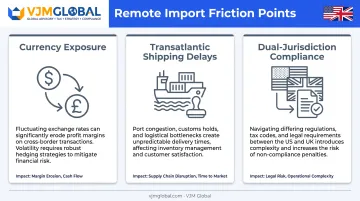
Running this business from outside the UK adds friction points that UK-resident competitors don't deal with:
- Currency exposure: you pay US suppliers in dollars and invoice UK customers in pounds, so exchange-rate swings can erase margins you didn't budget for
- Transatlantic shipping delays: customs holds and paperwork errors are common on US-to-UK freight; experienced forwarders and accurate documents are the best defence
- Dual-jurisdiction compliance: tracking HMRC filings alongside US tax obligations from thousands of miles away is where most founders lose time and make costly mistakes
That last point is where specialist support matters most. VJM Global works with founders in this position, keeping UK filings current so they can stay on sourcing and sales instead of chasing admin across two tax systems.
The businesses that succeed sequence things correctly: entity formation, then licensing, then logistics, not the reverse. Rushing straight to importing stock before the legal groundwork is in place is the single most expensive mistake in this trade.
Frequently Asked Questions
How do I start an import export business in the UK?
Register a UK company, then register with HMRC for the relevant taxes (Corporation Tax, VAT). Obtain product-specific licences (AWRS for alcohol) before you begin trading.
Do I need to live in the UK to own a UK company that imports wine?
No. Non-UK residents can be directors and shareholders of a UK company, provided the company has a UK registered office and meets standard Companies House and HMRC requirements.
What licence do I need to import wine into the UK from the USA?
You'll need AWRS registration for wholesale alcohol sales, local council food business registration, and a Customs Declaration Service account for import declarations.
How much does it cost to start a wine import business in the UK?
Costs vary widely by scale and niche, but expect significant upfront capital for stock, shipping, duty, VAT and marketing before revenue offsets outlay. A formation specialist can give a tailored estimate based on your specific structure.
Can a US citizen open a UK business bank account remotely?
Some UK banks and fintech providers support remote onboarding for non-resident directors, though requirements vary. A UK formation adviser can help assemble the documents banks usually request and smooth the approval process.
What are the UK import duties and VAT on wine imported from the USA?
US-sourced wine is subject to UK customs duty under tariff rules, alcohol excise duty based on ABV, and standard-rate import VAT, all typically payable at the point of import unless deferred through a bonded warehouse.