Introduction
Dubai has firmly established itself as the premier international business destination for Indian entrepreneurs. The numbers tell a compelling story: in 2025 alone, 18,486 new Indian-owned businesses joined the Dubai Chamber of Commerce, representing an 11% year-over-year growth. By the end of 2024, over 70,600 Indian companies were registered as active members, making Indians the largest foreign business community in Dubai's ecosystem.
Several factors drive this migration:
- 0% personal income tax on business profits and personal earnings
- 3-hour flight from major Indian metros — Mumbai, Delhi, Bengaluru
- A large Indian diaspora providing cultural and linguistic familiarity on the ground
- The India-UAE CEPA (signed 2022), which has expanded bilateral trade access for both sides
Most guides, though, explain the UAE trade license process generically — overlooking what Indian entrepreneurs actually face: FEMA/ODI compliance under Indian law, document attestation through India's Ministry of External Affairs, and cross-border tax planning under the India-UAE DTAA framework.
This article explains what a Dubai trade license is, which type fits Indian entrepreneurs best, the exact steps to apply, and the India-specific legal and financial considerations you must address before and during the process.
Key Takeaways
- A Dubai trade license is the mandatory legal permit to operate in the UAE—without it, you cannot invoice clients or open a business bank account
- Indian citizens can own 100% of a Dubai company without a local partner, through either a mainland or free zone license
- Before remitting funds from India, you must comply with RBI's ODI regulations under FEMA
- Common license types include Commercial, Professional/Service, and Free Zone licenses
- The application process takes 3–20 working days depending on license type and regulatory approvals
What Is a Dubai Trade License — and Why Indian Entrepreneurs Need One
A Dubai trade license is the official permit issued by the Department of Economy and Tourism (DET) for mainland businesses, or by the relevant Free Zone Authority for free zone entities. It legally authorizes your business to conduct specific activities in the UAE and defines exactly what you're permitted to do.
Legal Consequences Without One
Operating without a valid license is illegal under Federal Decree-Law No. 32 of 2021. The practical consequences are severe:
- Cannot legally invoice clients or sign commercial contracts
- Cannot open a UAE business bank account
- Cannot hire employees or sponsor visas
- Cannot apply for investor/employee residence visas
- Face administrative penalties starting at AED 5,000 and potential business closure
Why Dubai Appeals to Indian Entrepreneurs
That compliance framework exists because the stakes are high — and so are the rewards. Several factors make Dubai uniquely attractive for Indian entrepreneurs:
- The India-UAE DTAA, in force since September 1993, prevents double taxation on the same income — so profits aren't taxed twice
- The India-UAE CEPA (effective May 1, 2022) boosted bilateral non-oil trade and offers preferential duties on qualifying goods
- A 3-hour flight from major Indian cities, combined with a large Indian diaspora, makes Dubai a naturally accessible international base
- Following the 2021 Companies Law amendment, Indian entrepreneurs can own 100% of mainland companies for most activities — no local sponsor required
- Zero personal income tax on UAE-sourced earnings
Types of Dubai Trade Licenses: Which One Fits Your Business
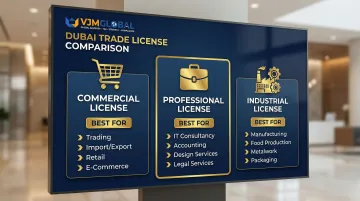
Main License Categories
| License Type | Best For | Typical Activities |
|---|---|---|
| Commercial | Trading, import/export, retail | Wholesale, distribution, e-commerce, general trading |
| Professional | Skill-based service providers | IT consultancy, accounting, design, legal services |
| Industrial | Manufacturing operations | Food production, metalwork, textiles, packaging |
Free Zone License: The Popular Choice
Free zone licenses offer compelling advantages for Indian entrepreneurs:
- 100% foreign ownership guaranteed
- 0% corporate tax on qualifying income
- Exemption from import/export duties within the zone
- Streamlined setup packages with simplified documentation
- No local UAE sponsor required
- Fast incorporation (often 10 working days)
Popular choices among Indian entrepreneurs include DMCC (Dubai Multi Commodities Centre) for trading, Dubai Internet City for tech companies, IFZA (International Free Zone Authority) for general activities, and DIFC (Dubai International Financial Centre) for financial services.
One important constraint: free zone companies cannot trade directly with the UAE mainland market. To sell to local UAE customers, you'll need either a mainland-licensed distributor or a dual-license arrangement — both add cost and complexity.
Mainland License: Full Market Access
If your customers are based in the UAE, a mainland license is worth the additional investment. Regulated by the Department of Economy and Tourism, mainland licenses now permit 100% foreign ownership for most activities following the 2021 law amendment.
General trading licenses cost more than single-activity licenses, but they cover multiple product categories under one registration — a worthwhile trade-off for traders handling diverse inventory.
Free Zone vs. Mainland: How to Decide
Three questions help clarify the right choice:
1. Who are your primary customers? If you're serving international or global clients, a free zone works well. If you're targeting UAE residents or government contracts, you need a mainland license.
2. Do you need physical retail space? Walk-in showrooms and retail outlets require a mainland license. A virtual office or flexi-desk setup is sufficient for most free zone operations.
3. What's your startup budget — and do you need UAE bank access?
| Scenario | Recommended License |
|---|---|
| Budget under AED 25,000, global clients | Free Zone |
| Budget AED 30,000–70,000+, UAE market focus | Mainland |
| Need strong UAE banking relationships | Mainland |
| Need visa quota flexibility | Mainland (generally higher quotas) |
How Indian Entrepreneurs Can Get a Dubai Trade License: Step-by-Step
Step 1 — Choose Your Business Jurisdiction and Legal Structure
Mainland Options:
- Sole Establishment (EST) — for single Indian entrepreneurs
- Limited Liability Company (LLC) — for partnerships or multiple shareholders
Free Zone Options:
- Free Zone Establishment (FZE) — single shareholder structure
- Free Zone Company (FZCO) — for two or more shareholders
The legal form determines ownership structure, personal liability limits, and the number of visas you can sponsor.
Step 2 — Reserve Your Trade Name
Submit your trade name reservation via the Invest in Dubai portal (for mainland) or your chosen Free Zone Authority's platform.
UAE Naming Conventions for Indian Entrepreneurs:
- Must reflect your business activity
- Must be unique (not previously registered)
- Cannot include religious references or governing authority names
- Must include the legal form abbreviation (e.g., LLC, FZE, FZCO)
- Avoid offensive or inappropriate terms
Typical Cost: AED 200–600 for mainland; often included in free zone packages.
Step 3 — Apply for Initial Approval
Submit an initial approval application to the DED (mainland) or Free Zone Authority. This is not authorization to operate—it's the government's confirmation that it has no objection to your entity being formed.
Regulated Activities Require Additional Approvals:
- Healthcare — Dubai Health Authority (DHA) NOC
- Financial Services — Central Bank of UAE (CBUAE) or DFSA (for DIFC)
- Education — Knowledge and Human Development Authority (KHDA)
These third-party approvals can extend timelines by 10–30 working days.
Step 4 — Prepare and Submit Documentation
Core Documents Required from Indian Entrepreneurs:
Personal Documents:
- Passport copies (must be apostilled/attested via India's Ministry of External Affairs)
- Passport-size photographs (2–4 recent photos)
- Proof of address (utility bill or bank statement)
Business Documents:
- Memorandum of Association (notarized, for LLC structures)
- Lease agreement or Ejari-certified tenancy contract (for mainland)
- Professional qualification certificates (attested, for professional licenses)
Document Attestation Process for Indian Entrepreneurs: India is a member of the Hague Apostille Convention, but the UAE is not — so Indian documents go through a four-stage attestation process:
- Notarization in India
- Attestation by India's Ministry of External Affairs (MEA)
- Attestation by the UAE Embassy in India
- Attestation by UAE Ministry of Foreign Affairs (MOFA) upon arrival
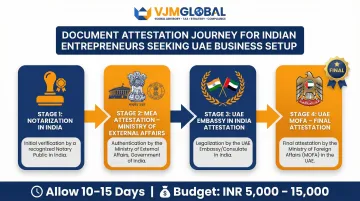
Allow 10–15 days and budget INR 5,000–15,000 depending on the number of documents.
Free Zone Advantage: Many free zones have simplified document requirements and may accept digital submissions, reducing attestation requirements.
Step 5 — Pay Fees and Receive the License
Once your documents clear review and approval, you'll receive a payment notice for the applicable government fees. Pay promptly — the license is issued digitally as soon as payment is confirmed.
Indicative License Fee Ranges:
- Mainland Commercial License: AED 10,000–25,000+ (license fee only)
- Free Zone Packages: Starting from AED 5,500+ (IFZA, RAKEZ) to AED 10,000–15,000 (DMCC, DIC)
- General Trading License (Mainland): AED 20,000–35,000+
These are license fees only. Factor in visas, office rental, Chamber membership, and the establishment card to get your true first-year cost:
- Free Zone (all-in): AED 18,000–40,000
- Mainland (all-in): AED 30,000–70,000+
Processing Timeline:
- Instant/eTrader licenses: 10–15 minutes
- Standard applications: 3–10 working days
- Regulated activities: Up to 20 working days
Step 6 — Post-Licensing Steps
Dubai Chamber of Commerce Registration: Mandatory for mainland companies; optional for free zone entities (AED 300–2,200 annual fee).
UAE Corporate Bank Account: The bank will require your trade license, passport copies, proof of address, and a business plan. Account opening typically takes 2–6 weeks, depending on the bank and your business activity.
Investor Residence Visa: Apply through the General Directorate of Residency and Foreigners Affairs (GDRFA). Requirements:
- Valid trade license
- Establishment Card (immigration file)
- Medical fitness test via Emirates Health Services (EHS) or DHA
- Emirates ID biometrics
- Entry permit and visa stamping
Trade licenses must be renewed annually. Letting a license lapse affects your residency visa and banking relationships — set a renewal reminder before the expiry date.
India-Specific Considerations Every Entrepreneur Must Know
FEMA and ODI Compliance
Indian residents planning to invest in a Dubai company must comply with the Foreign Exchange Management (Overseas Investment) Rules, 2022. Investing in or acquiring shares in a foreign entity constitutes Overseas Direct Investment (ODI) under Indian law.
What Qualifies as ODI:
- Acquiring unlisted equity capital in a foreign entity
- Subscribing to the Memorandum of Association of a foreign entity
- Investing in 10% or more of a listed foreign entity
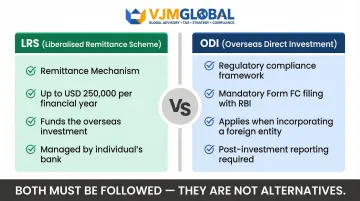
Reporting Requirements: Indian residents must file Form FC with the Reserve Bank of India, even if the investment is funded through the Liberalised Remittance Scheme (LRS).
Automatic Route: Most investments fall under the automatic route, meaning no prior RBI approval is required—but post-investment reporting is mandatory.
Penalties for Non-Compliance: FEMA violations can attract penalties under Section 13 of FEMA, 1999, and delayed reporting incurs a Late Submission Fee (LSF) calculated as INR 7,500 + (0.025% × Amount × years of delay).
LRS vs. ODI Route: Clearing the Confusion
The Liberalised Remittance Scheme (LRS) allows Indian individuals to remit up to USD 250,000 per financial year for permitted purposes, including overseas investment.
Critical Distinction: While you can fund your Dubai company setup using your LRS limit, incorporating a foreign business entity falls under the ODI route, not LRS. You must still comply with ODI Rules and file Form FC reporting.
In short: LRS is the remittance mechanism; ODI compliance is the regulatory framework. Both must be followed.
With the remittance and regulatory distinction clear, the next practical hurdle is paperwork — specifically, getting your Indian documents accepted by UAE authorities.
Document Attestation from India
Many Indian entrepreneurs face delays because they're unaware that documents issued in India—including passport copies, educational certificates (for professional licenses), and company incorporation documents—must be apostilled or attested before Dubai authorities accept them.
The Apostille Process:
- Get documents notarized in India
- Submit to India's Ministry of External Affairs (MEA) for apostille
- Submit to UAE Embassy in India for attestation
- Upon arrival in UAE, submit to UAE Ministry of Foreign Affairs (MOFA) for final attestation
Cost: Approximately INR 5,000–15,000 depending on document volume.
DTAA and Tax Implications
The India-UAE Double Tax Avoidance Agreement ensures income earned in the UAE is not taxed again in India, provided you establish UAE tax residency.
UAE Tax Residency Criteria: Under Article 4 of the DTAA, you qualify as a UAE tax resident if you are present in the UAE for at least 183 days in a calendar year, or if your company is managed and controlled wholly in the UAE.
Indian Tax Considerations:
- Indian tax authorities may scrutinize income repatriated to India
- You must disclose foreign assets and foreign income in Schedule FA (Foreign Assets) of your Indian Income Tax Return
- Proper accounting records in the UAE entity are critical for DTAA benefits
Getting these obligations right across two jurisdictions takes specialized expertise. VJM Global has 30+ years of experience supporting Indian businesses and NRIs with FEMA compliance, UAE business setup, and cross-border tax advisory — helping entrepreneurs avoid costly errors on both sides of the border.
Common Mistakes and Misconceptions Indian Entrepreneurs Make
Setting up a Dubai company is straightforward — but a few persistent misconceptions can lead to costly surprises. Here's what Indian entrepreneurs frequently get wrong.
Misconception: "My Indian regulatory obligations end once I incorporate in Dubai"
Incorporating in Dubai doesn't switch off Indian compliance requirements. Indian residents who set up or invest in overseas entities must still meet FEMA's ODI reporting obligations and disclose foreign assets in Schedule FA of their Indian Income Tax Returns. Non-compliance can trigger FEMA penalties, interest charges, and complications with future remittances.
Misconception: "A free zone license lets me sell to anyone in the UAE"
Free zone licenses restrict direct trading with mainland UAE customers. To sell to local UAE clients, you need a mainland distributor or agent, or a dual-license arrangement — both of which add cost and complexity. Free zones are designed for international trade, not UAE domestic sales.
Mistake: Underestimating Total Costs by Looking Only at the Base License Fee
Many Indian entrepreneurs are surprised when the final bill arrives. The total first-year cost includes:
- License fee (AED 10,000–25,000+ for mainland)
- Trade name reservation (AED 200–600)
- Establishment card/immigration file (AED 300)
- Dubai Chamber of Commerce membership (AED 300–2,200)
- Office space or flexi-desk rental (AED 15,000–20,000 annually)
- Visa fees per person (AED 3,000–5,000 per visa)
- Document attestation costs (INR 5,000–15,000, paid in India)
- Refundable share capital deposit (average AED 50,000)
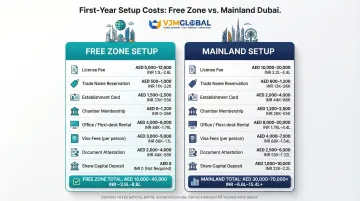
Total First-Year Range: AED 30,000–70,000+ for mainland setups; AED 18,000–40,000 for free zone setups.
Request a full cost breakdown from your setup consultant or free zone authority before committing.
Frequently Asked Questions
What is a Dubai trade licence?
A Dubai trade license is the official permit issued by the Department of Economy and Tourism (for mainland) or a Free Zone Authority (for free zones) that authorizes a business to legally operate in the UAE. It defines permitted activities and enables the business to open bank accounts, hire staff, and apply for visas.
How to obtain a trade license in the UAE?
The process involves choosing a business activity and jurisdiction, reserving a trade name, submitting attested documents, paying government fees, and receiving the license. Timelines range from 10–15 minutes for an Instant License to up to 20 working days for regulated activities.
Which trade license is best in the UAE?
The right license depends on your business model. Commercial Licenses suit traders and importers/exporters; Professional Licenses fit consultants and service providers; Free Zone Licenses work best for entrepreneurs prioritizing 100% ownership, tax efficiency, and international clients over the local UAE market.
Can an Indian citizen own 100% of a Dubai company?
Yes. Following UAE's 2021 Companies Law amendment, Indian citizens can own 100% of a mainland Dubai company for most business activities without needing a local UAE partner. Free zones have always allowed 100% foreign ownership.
Do Indian entrepreneurs need RBI or FEMA approval to set up a business in Dubai?
Indian residents must comply with FEMA's Overseas Direct Investment (ODI) framework. Most investments qualify under the automatic route — no prior RBI approval needed — but post-investment reporting via Form FC is mandatory. Non-compliance can attract FEMA penalties even if the Dubai business is fully legal.
How much does a Dubai trade license cost for Indian entrepreneurs?
Free zone licenses can start from approximately AED 5,500+ for a basic package, while mainland commercial licenses typically start from AED 10,000–25,000+. Total first-year costs (including visas, office space, attestation, and other fees) often range from AED 18,000 to AED 70,000+ depending on the setup.