Guide to Accounting for IT Companies

Published on:
February 2, 2026

Table of contents

Talk to Us
Thank you! Your submission has been received!
Oops! Something went wrong while submitting the form.

One Firm,
Global Solutions

We support cross-border business with confidence and clarity.
Book a Call

The global IT services market is booming, and it's clear why. In 2024, the market was valued at around USD 1.5 trillion, and it's expected to nearly double to USD 2.98 trillion by 2034. With such rapid growth, managing the financial side of an IT company can be a challenge.

IT businesses, especially those offering services like cloud computing, SaaS, and AI, face unique accounting hurdles. From accurately tracking revenue, managing software development costs, to ensuring compliance with constantly changing tax laws, the financial practices of an IT company need to be much more than just routine bookkeeping.

In this guide, we will take you through the core aspects of accounting for IT companies, focusing on how to handle these complexities effectively while ensuring compliance and supporting business growth.

Key Takeaways

  • IT companies face unique accounting challenges due to subscription-based revenue models, software development costs, and the need to manage intangible assets.
  • Effective revenue recognition and the correct handling of deferred revenue are crucial for accurate financial reporting in IT businesses.
  • Properly capitalizing or expensing software development costs requires careful judgment, especially in long-term projects.
  • Global tax compliance and transfer pricing are complex but essential for multinational IT companies, especially those offering SaaS solutions.
  • IT companies must integrate advanced accounting practices with technology to ensure efficiency, from managing employee compensation to cloud computing costs.

What is the Difference Between Regular Accounting and IT Accounting?

What is the Difference Between Regular Accounting and IT Accounting?

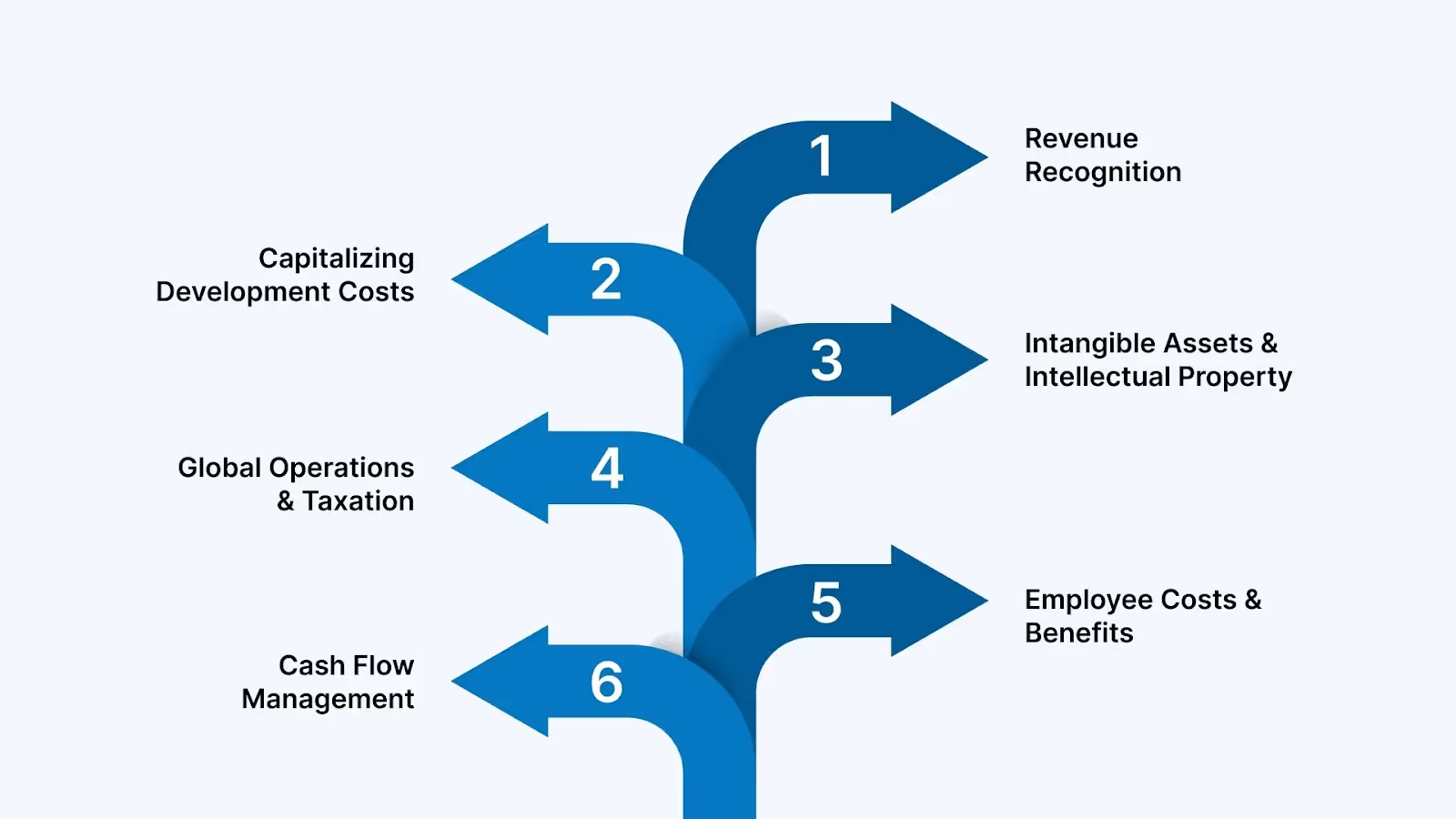
Accounting, in its most basic sense, is about tracking the financial health of a business. However, when we talk about regular accounting versus IT accounting, the differences lie in the nature of the business and the specific financial practices required to keep the books in order.

1. Revenue Recognition

In regular accounting, businesses generally recognize revenue when a sale is made or when a service is delivered. It's straightforward. Goods are sold, and revenue is recognized.

In contrast, IT accounting, especially for companies offering Software-as-a-Service (SaaS) or other subscription-based services, requires a more nuanced approach. With subscription models, revenue must be recognized over time, based on the delivery of the service, not the upfront payment. This means that IT companies often have to deal with deferred revenue, ensuring that revenue is only recognized once the service or product has been provided to the customer.

2. Capitalizing Development Costs

For most businesses, costs like manufacturing or inventory are either expensed or capitalized based on their nature. But in IT accounting, things like research and development (R&D) and software development costs often present challenges. Many tech companies spend heavily on developing new software, apps, or tools, and deciding whether those costs should be capitalized (added to the balance sheet as an asset) or expensed immediately requires careful judgment.

In regular accounting, most costs tied directly to product creation are often capitalized. Still, IT companies have more specific rules for handling software development costs, particularly when it comes to long-term vs short-term projects.

3. Intangible Assets and Intellectual Property (IP)

When it comes to regular accounting, businesses primarily focus on tangible assets—real estate, equipment, or inventory. The valuation of intangible assets, like patents or trademarks, is often minimal unless it’s tied to something specific, like a merger or acquisition.

In IT accounting, however, intellectual property (IP) plays a huge role. Tech companies often have a large portion of their value tied to intangible assets such as software, patents, and trademarks. Managing the valuation and amortization of these assets is a key aspect of IT accounting, with different rules for how long they should be amortized and what costs should be capitalized. Mistakes here can lead to incorrect profit margins or tax errors.

4. Global Operations and Taxation

Regular accounting generally deals with operations in one country or region, making tax and reporting requirements relatively simple. The complexity increases if a company is multinational, but the process remains more straightforward compared to IT accounting.

IT accounting, however, often involves cross-border operations, especially for global SaaS providers or IT consulting companies. Companies might have customers or subsidiaries in multiple countries, and dealing with transfer pricing and international tax compliance becomes a priority. Managing global tax laws and regulations, like the OECD transfer pricing guidelines, is essential for maintaining compliance and avoiding penalties.

5. Employee Costs and Benefits

In traditional businesses, payroll and employee-related expenses are relatively standard, depending on the industry. Costs include wages, benefits, and straightforward compliance with labor laws.

In IT accounting, however, companies often have to manage highly specialized employee costs, such as stock options for tech workers, incentives for software developers, and other non-traditional benefits. For instance, stock-based compensation is common in tech firms, especially for startups looking to attract top talent. IT accounting must track these unique compensation models accurately and manage their impact on both cash flow and tax liabilities.

6. Cash Flow Management

Cash flow management in regular accounting focuses mainly on tracking money coming in from sales and going out for expenses, with a focus on ensuring operational efficiency.

For IT companies, managing cash flow can be more complex. Due to subscription models or long-term contracts, cash flow often doesn’t align directly with when revenue is recognized. This is especially true for companies offering long-term projects or SaaS products, where payment may be received upfront but revenue is recognized over several months or years. IT companies need to be meticulous in tracking both deferred revenue and accounts receivable.

Now that we've outlined the fundamental differences, let's explore some of the key challenges IT companies face in their financial operations.

The Unique Challenges of Accounting for IT

Accounting for IT companies isn’t your typical business accounting. The nature of the IT industry, with its diverse revenue models, continuous innovation, and global reach, presents a number of unique challenges. As IT companies deal with products and services that are intangible, ever-changing, and often highly technical, accurate accounting becomes more complicated.

Here’s a closer look at some of the specific challenges:

Revenue Recognition Complexity

IT companies, especially those offering Software-as-a-Service (SaaS) or subscription-based services, face the challenge of recognizing revenue at the right time. It’s not as simple as when the payment is received; rather, it depends on when the service is actually delivered.

  • Long-term contracts: For companies offering long-term services, revenue must be recognized over the life of the contract, not all at once. This means tracking services rendered and ensuring revenue is allocated accurately.
  • Deferred revenue: Subscriptions and advance payments often result in deferred revenue, which must be reported correctly until the service is provided.
  • Revenue standardization: Compliance with standards like ASC 606 or IFRS 15 is essential. Mismanagement here can lead to significant financial inaccuracies.

Handling Software Development Costs

Software development, whether it’s for internal use or customer-facing products, is a major part of an IT company’s operations. The challenge lies in deciding which costs should be capitalized and which should be immediately expensed.

  • Capitalizing R&D expenses: Some development costs can be capitalized if they’re directly tied to creating a product or service for sale, while others are considered operational and need to be expensed.
  • Documentation and timing: Proper tracking and documentation are key. Failing to do so could mean the company risks incorrectly capitalizing costs or missing out on potential tax deductions.

Intellectual Property (IP) Valuation and Amortization

IT companies often rely on intellectual property (IP) like software, patents, and trademarks. Accurately accounting for these assets is important for proper reporting and tax compliance.

  • IP valuation: Determining the value of intangible assets is difficult but necessary for proper accounting.
  • Amortization: IP assets must be amortized over their useful life, and setting a reasonable schedule can be tricky, especially with rapidly changing technology.
  • Compliance: IT companies must comply with relevant IP laws, ensuring that their IP is properly protected and accounted for in financial statements.

Transfer Pricing and Cross-Border Taxation

Many IT companies operate across multiple countries, which introduces challenges around transfer pricing and international taxation. Transfer pricing is the compensation set for transactions between the parent company and its subsidiaries in different countries.

  • Managing intercompany transactions: When selling products or services to subsidiaries, businesses must ensure prices are set at “arm's length” to escape tax evasion or penalties.
  • Different tax laws: Each country has its own tax laws, and managing these can become a headache, especially when IT companies are moving money across borders.
  • Global compliance: Ensuring that your transfer pricing complies with local tax authorities’ expectations is essential for avoiding costly audits and penalties.

Cloud Computing and IT Infrastructure Costs

Cloud computing has become an integral part of many IT companies’ operations. However, managing cloud costs is not as straightforward as traditional infrastructure.

  • CapEx vs OpEx: The distinction between capital expenditures (CapEx) and operational expenditures (OpEx) becomes blurred with cloud computing, making it difficult to allocate costs correctly.
  • Pay-as-you-go model: Many cloud services use a pay-per-use model, which can lead to fluctuating expenses that are difficult to predict.
  • Long-term contracts: Cloud providers may offer discounts for long-term commitments, but those contracts come with financial complexities that require careful tracking.

Managing High-Volume Transactions and Data Integrity

IT companies often deal with large volumes of transactions, especially those in SaaS or cloud services. Managing all these transactions accurately is crucial for maintaining clean financial records.

  • Tracking subscription renewals: Subscription-based services need to track renewals, cancellations, and user activity to ensure revenue is reported correctly.
  • Data accuracy: Errors in transaction records can lead to inaccurate financial reporting, impacting taxes, revenue recognition, and overall financial health.
  • Automated systems: Many companies use automated accounting systems to help manage high volumes of data, but these systems require constant monitoring and updating to ensure they’re working effectively.

IT companies face unique accounting challenges. Ensure your business is on track with VJM Global’s expert advice on managing revenue recognition, software development costs, and more from the US to India.

Beyond managing data, tech companies also need to track key performance indicators (KPIs) that drive business success. These metrics are essential for evaluating company performance and guiding decision-making.

Key Performance Indicators and Financial Metrics for Tech Companies

Key Performance Indicators and Financial Metrics for Tech Companies

For any business, understanding how well it is performing is crucial. Where innovation and rapid growth are constant, Key Performance Indicators (KPIs) and financial metrics are essential tools to track success and guide decision-making.

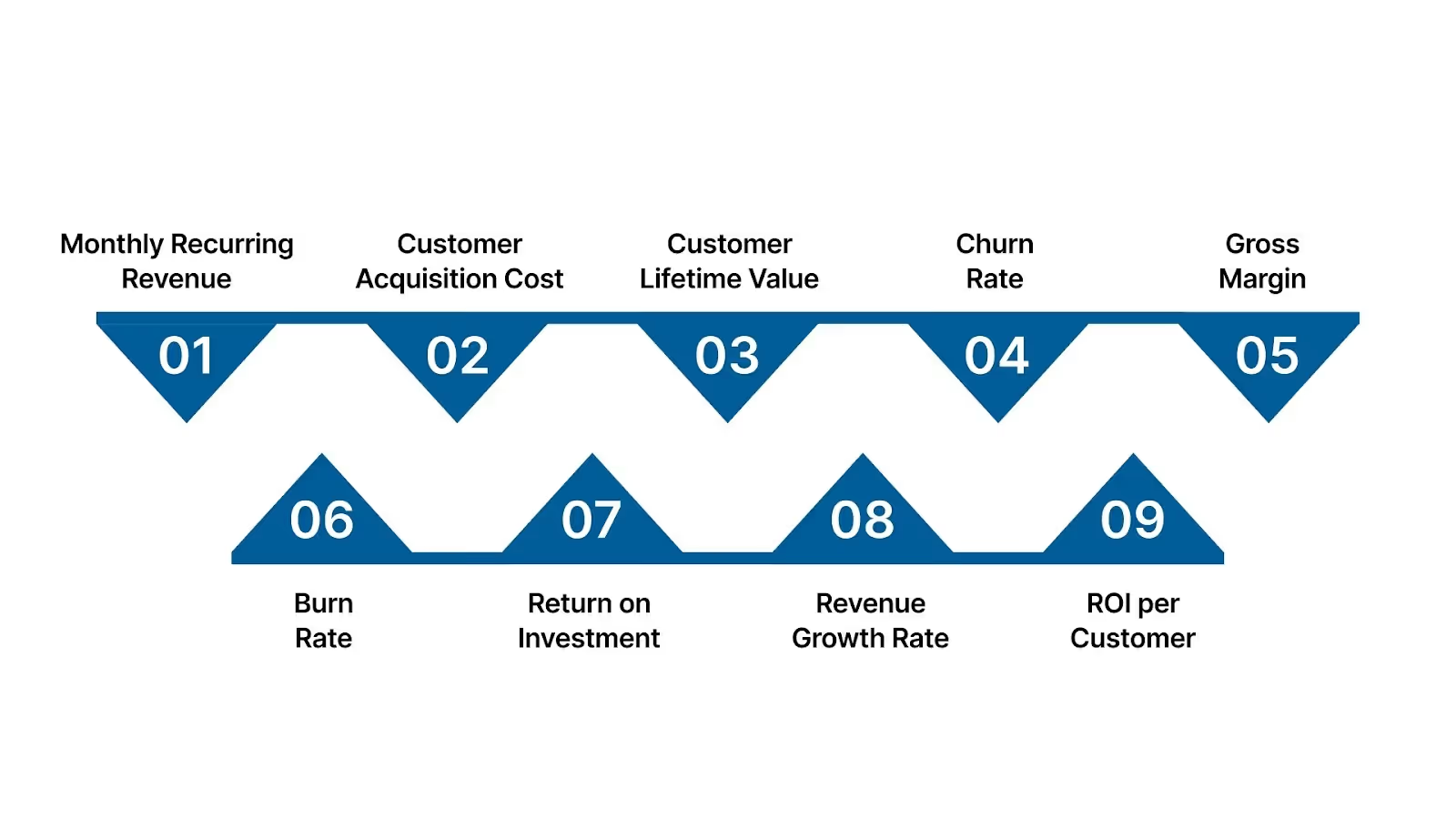
Let’s explore some key metrics and KPIs that tech companies should pay attention to in order to effectively manage growth and financial health:

1. Monthly Recurring Revenue (MRR)

Monthly Recurring Revenue (MRR) is a key metric for any tech company with a subscription-based business model, such as SaaS companies. It measures the predictable revenue generated each month from active subscribers, excluding one-time sales.

  • Why it matters: MRR provides a reliable view of recurring revenue streams, making it easier to forecast future earnings, manage cash flow, and plan for growth.
  • Formula: MRR = Sum of monthly subscription fees from all active customers

Tracking MRR helps identify trends in customer retention and new customer acquisition, making it a crucial metric for subscription-based businesses.

2. Customer Acquisition Cost (CAC)

Customer Acquisition Cost (CAC) represents the total amount of money spent on acquiring a new customer. This includes costs associated with marketing, sales, advertising, and other expenses related to bringing in new clients.

  • Why it matters: A high CAC can reduce profitability, especially if the cost of acquiring customers exceeds the revenue they generate. By tracking CAC, companies can assess the effectiveness of their marketing and sales strategies.
  • Formula: CAC = Total Sales & Marketing Expenses / Number of Customers Acquired

Tracking this metric allows tech companies to optimize their marketing efforts and find more cost-effective ways to acquire customers.

3. Customer Lifetime Value (CLTV)

Customer Lifetime Value (CLTV) measures the total revenue a business can assume to generate from a customer throughout their term. It's an important metric that helps businesses know the long-term value of each customer.

  • Why it matters: CLTV helps companies decide how much they can spend on getting new customers while maintaining profitability. A high CLTV relative to CAC indicates a healthy, scalable business model.
  • Formula: CLTV = Average Revenue Per User (ARPU) × Average Customer Lifespan

This metric enables tech companies to gauge the long-term potential of their customers and tailor retention strategies accordingly.

4. Churn Rate

Churn Rate drafts the percentage of customers who cancel their subscriptions or cease using a service over a period. A high churn rate indicates that customers are leaving at a higher rate, which can significantly impact revenue.

  • Why it matters: A high churn rate often signals problems with customer satisfaction, product quality, or competition. Monitoring this metric helps companies identify issues early and take steps to improve retention.
  • Formula: Churn Rate = (Number of Customers Lost During Period / Total Customers at Start of Period) × 100

Understanding churn rate allows companies to focus on retention efforts and improve customer satisfaction.

5. Gross Margin

Gross Margin showcases the percentage of revenue remaining after eliminating the cost of goods sold (COGS), which includes every direct cost associated with producing and delivering products or services.

  • Why it matters: A high gross margin indicates that a company is efficiently managing its direct costs and has enough margin to cover operating expenses. For tech companies, a high gross margin is a sign of scalability and operational efficiency.
  • Formula: Gross Margin = (Revenue - COGS) / Revenue × 100

Monitoring gross margin helps tech companies ensure they are pricing their products effectively and managing production costs efficiently.

6. Burn Rate

Burn Rate refers to the rate at which a company is spending its cash reserves before becoming profitable. It is particularly useful for startups or tech companies in their early stages of growth.

  • Why it matters: Burn rate gives companies an estimate of how long they can operate before needing to raise additional funds or reach profitability.
  • Formula: Burn Rate = (Total Expenses – Total Revenue) / Month

Tech startups with a high burn rate need to manage their expenses carefully to avoid running out of capital before reaching a break-even point.

7. Return on Investment (ROI)

Return on Investment (ROI) calculates the profitability of an investment relative to its cost. It is particularly important when assessing investments in research and development (R&D), marketing campaigns, or new projects.

  • Why it matters: ROI helps companies evaluate whether their investments are paying off and whether they should continue investing in particular areas.
  • Formula: ROI = (Net Profit / Cost of Investment) × 100

ROI provides insights into the effectiveness of business strategies and ensures that resources are allocated in the most efficient way.

8. Revenue Growth Rate

Revenue Growth Rate shows the percentage increase or decrease in a company's revenue over a specified period, typically year-over-year or quarter-over-quarter.

  • Why it matters: This metric is a clear indicator of how fast a company is growing. A strong revenue growth rate is a positive signal to stakeholders that the company is expanding its market share and customer base.
  • Formula: Revenue Growth Rate = ((Current Period Revenue - Previous Period Revenue) / Previous Period Revenue) × 100

For tech companies, a high revenue growth rate is often linked to a solid business model and strong customer demand.

9. ROI per Customer (ROIC)

Return on Investment per Customer (ROIC) evaluates how profitable each individual customer is for the business in relation to the cost of acquiring them. It allows businesses to examine the profitability of their customer base.

  • Why it matters: By calculating this metric, tech companies can determine if their customer acquisition strategy is sustainable and profitable.
  • Formula: ROIC = (Revenue per Customer - CAC) / CAC

Tracking this metric helps tech companies refine their customer acquisition and retention strategies.

With KPIs in hand, IT companies must also approach financial reporting and compliance strategically. Understanding and adhering to accounting standards and tax laws ensures long-term success and mitigates the risk of financial misstatements.

How to Approach Financial Reporting and Compliance in the IT Industry

How to Approach Financial Reporting and Compliance in the IT Industry

Financial reporting and compliance are critical aspects of any business, but for the IT industry, the complexities are greater due to the rapidly changing business models, technologies, and regulatory environments.

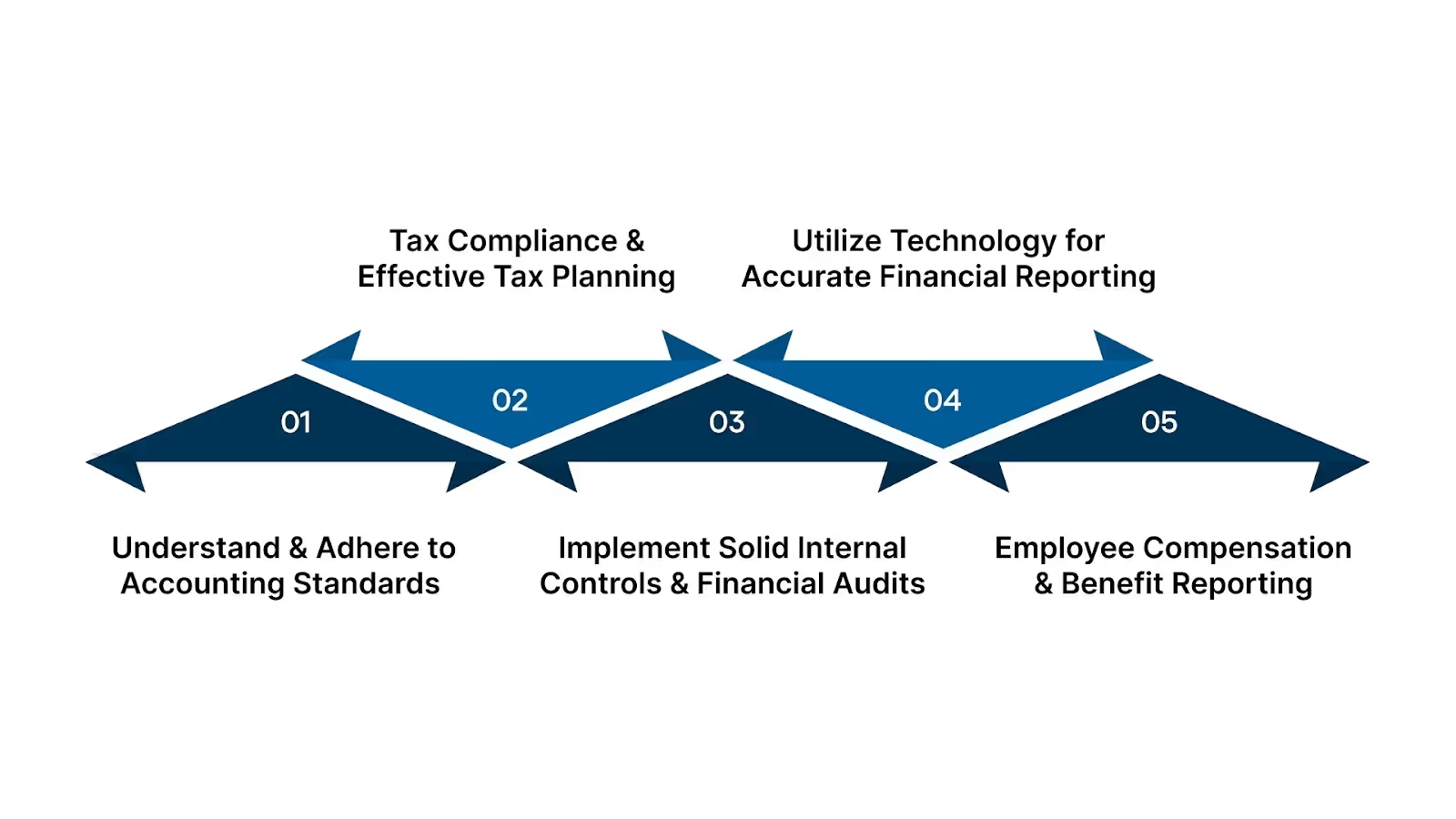
Let's discuss how IT companies can approach financial reporting and compliance effectively to maintain accurate records, optimize tax planning, and mitigate risks:

1. Understand and Adhere to Accounting Standards

For IT companies, especially those operating globally or offering SaaS solutions, understanding the relevant accounting standards is essential for accurate financial reporting.

  • U.S. GAAP and IFRS: Depending on where your company is registered and operates, you'll need to follow either U.S. Generally Accepted Accounting Principles (GAAP) or International Financial Reporting Standards (IFRS). Companies operating globally must ensure their financial statements comply with the standards of the jurisdictions in which they are located.
  • Revenue Recognition: A critical aspect of accounting for IT companies is how they recognize revenue. For SaaS and subscription-based businesses, following standards such as ASC 606 in the U.S. or IFRS 15 globally ensures that revenue is recorded in the appropriate periods, based on when services are rendered, not when payments are received.
  • Cost Capitalization: Software development costs, research, and development (R&D) investments should be correctly capitalized, ensuring that the balance sheet reflects accurate financial health and helps with depreciation calculations over time.

By understanding and implementing these accounting standards, IT companies can maintain transparency in their financial reports, reduce audit risks, and gain trust from investors.

2. Tax Compliance and Effective Tax Planning

Tax compliance is one of the most complex areas of financial reporting for IT companies, particularly those engaged in international operations. Countries have different tax laws that affect IT companies, including digital services tax, value-added tax (VAT), and corporate tax.

  • Indirect Taxes (VAT/GST): IT companies offering products or services are often subject to VAT or GST (depending on the region). For example, in India, the Goods and Services Tax (GST) applies to the sale of software, while in the U.S., sales tax varies by state. Correctly tracking and reporting these taxes ensures compliance and helps avoid penalties.
  • Transfer Pricing: When IT companies operate across borders, they must ensure that intercompany transactions are priced at "arm's length," meaning the same as if the transactions were between unrelated parties. Transfer pricing documentation and compliance can help mitigate tax risks.
  • Tax Credits: Many countries, including the U.S. and India, offer R&D tax credits for companies engaged in innovation and technology development. IT businesses should ensure that they track and apply for eligible tax credits to reduce their tax liability.

A strong tax compliance strategy not only reduces the risk of audits or penalties but also improves cash flow and contributes to financial efficiency.

3. Implement Solid Internal Controls and Financial Audits

A good internal control system is essential to ensure accurate financial reporting and prevent fraud. For IT companies, where a significant amount of transactions happen online or through automated systems, it’s crucial to maintain strong checks and balances.

  • Segregation of Duties: Ensure that key financial tasks, such as invoicing, payments, and reconciliations, are handled by different individuals. This reduces the likelihood of fraudulent activity and ensures that each aspect of financial reporting is independently reviewed.
  • Regular Financial Audits: Plan internal or external audits regularly to verify the accuracy of your financial condition. For IT companies, audits should review areas like revenue recognition, software capitalization, and proper tax filings.
  • Compliance Audits: In addition to financial audits, IT companies should perform compliance audits to ensure they adhere to industry standards, such as GDPR, or sector-specific compliance like HIPAA in healthcare technology.

Strong internal controls and regular audits safeguard against financial misstatements, regulatory non-compliance, and operational inefficiencies.

4. Utilize Technology for Accurate Financial Reporting

Applying technology for financial reporting is more important than ever, especially for IT companies. Financial reporting software can help simplify operations, automate tasks, and ensure compliance with industry standards.

  • Cloud-Based Accounting Software: Tools like QuickBooks, Xero, or Oracle NetSuite can automate much of the accounting process, from expense tracking to financial statement generation, ensuring that your company adheres to accounting standards and regulations.
  • ERP Systems: Incorporating an Enterprise Resource Planning (ERP) system like SAP or Microsoft Dynamics helps integrate accounting, finance, sales, and inventory management into one unified platform. This allows real-time data access, improved decision-making, and more accurate reporting.
  • Automation of Tax Filings: Automated tax filing tools ensure that IT companies remain compliant with tax deadlines, VAT/GST filings, and income tax returns. By reducing human errors, these tools simplify the tax reporting process and reduce the administrative burden.

Technology enables faster, more accurate financial reporting and ensures compliance with regulations, saving both time and money.

5. Employee Compensation and Benefit Reporting

For IT companies, managing employee compensation and benefits accurately is critical. This includes salary payments, bonuses, stock options, and retirement plans, all of which need to be tracked correctly for tax reporting and compliance.

  • Stock Options and Equity Compensation: Many IT companies offer equity compensation to employees, particularly in the form of stock options. These need to be properly accounted for, as they affect both financial reporting and tax filings.
  • Payroll Reporting: Ensure that all employee compensation is reported correctly, with the appropriate withholding for income tax, social security contributions, and other benefits. Adherence to local laws, such as Employee Provident Fund (EPF) in India or 401(k) in the U.S., is essential for compliance.
  • Benefit Tracking: Track employee benefits like health insurance, paid leave, and retirement plans to ensure they are properly accounted for, compliant with the applicable tax laws, and reflected in financial reports.

Managing financial compliance is easier with the right support. Contact VJM Global today to ensure your IT business’s reporting stays accurate and compliant, from the US to India.

Accurate reporting of compensation and benefits ensures compliance with tax regulations and supports financial planning and forecasting for employee-related expenses.

Wrapping Up

The IT sector requires a tailored approach to accounting, one that takes into account the fast pace of innovation, changing revenue models, and global regulations. IT companies face specific challenges that require specialized knowledge, from revenue recognition to the management of R&D costs. Setting up the right accounting practices from the beginning helps ensure smooth operations and long-term financial health.

At VJM Global, we specialize in accounting services that are specifically designed for IT companies. Our team understands the intricacies of the tech industry and can help simplify your financial reporting, ensure tax compliance, and help you manage costs effectively.

Get in touch with VJM Global today to find out how we can help you build a solid financial foundation for your IT company, allowing you to focus on what you do best, driving innovation and growth.

FAQs

1. What are the key factors in determining whether software development costs should be capitalized or expensed?

Costs directly related to creating a product for sale can be capitalized, but operational expenses like routine maintenance or research should be expensed.

2. How can IT companies accurately value their intellectual property?

Companies must use industry-specific methods for valuing intangible assets like software, patents, and trademarks, ensuring proper amortization schedules to avoid financial discrepancies.

3. What are the risks of not managing global taxation and transfer pricing properly?

Mismanagement can result in costly penalties and audits. IT companies must ensure that intercompany transactions are priced correctly according to international tax laws.

Recent Blogs

Contact Us

We'd love to hear from you! Please fill out the form and we'll get back to you as soon as possible.