According to a recent Gartner survey, eighteen percent of accountants make financial errors daily, and over half report several errors each month. In a high-stakes environment shaped by regulatory pressure and financial complexity, even routine mistakes can lead to audit failures, compliance issues, or reputational risk.
This guide provides a structured company audit checklist that helps businesses and CPA firms prepare for internal and external audits. This blog blends practical audit steps with required standards (GAAP, SOX, IRS), covering planning, documentation, testing, reporting, and follow-up, so your audits are accurate, defensible, and complete.
An audit is a formal evaluation of a business’s financial records, internal controls, or compliance processes to verify accuracy, detect risk, and ensure adherence to regulatory standards. In the U.S., audits play a key role in supporting trust among stakeholders, whether investors, regulators, or internal leadership.
Unlike informal reviews, audits follow defined frameworks (such as GAAP, SOX, or IRS standards), require supporting documentation, and often involve structured testing or sampling. Both internal and external audits serve as tools for improving transparency, reducing risk exposure, and preparing the business for scrutiny or growth.
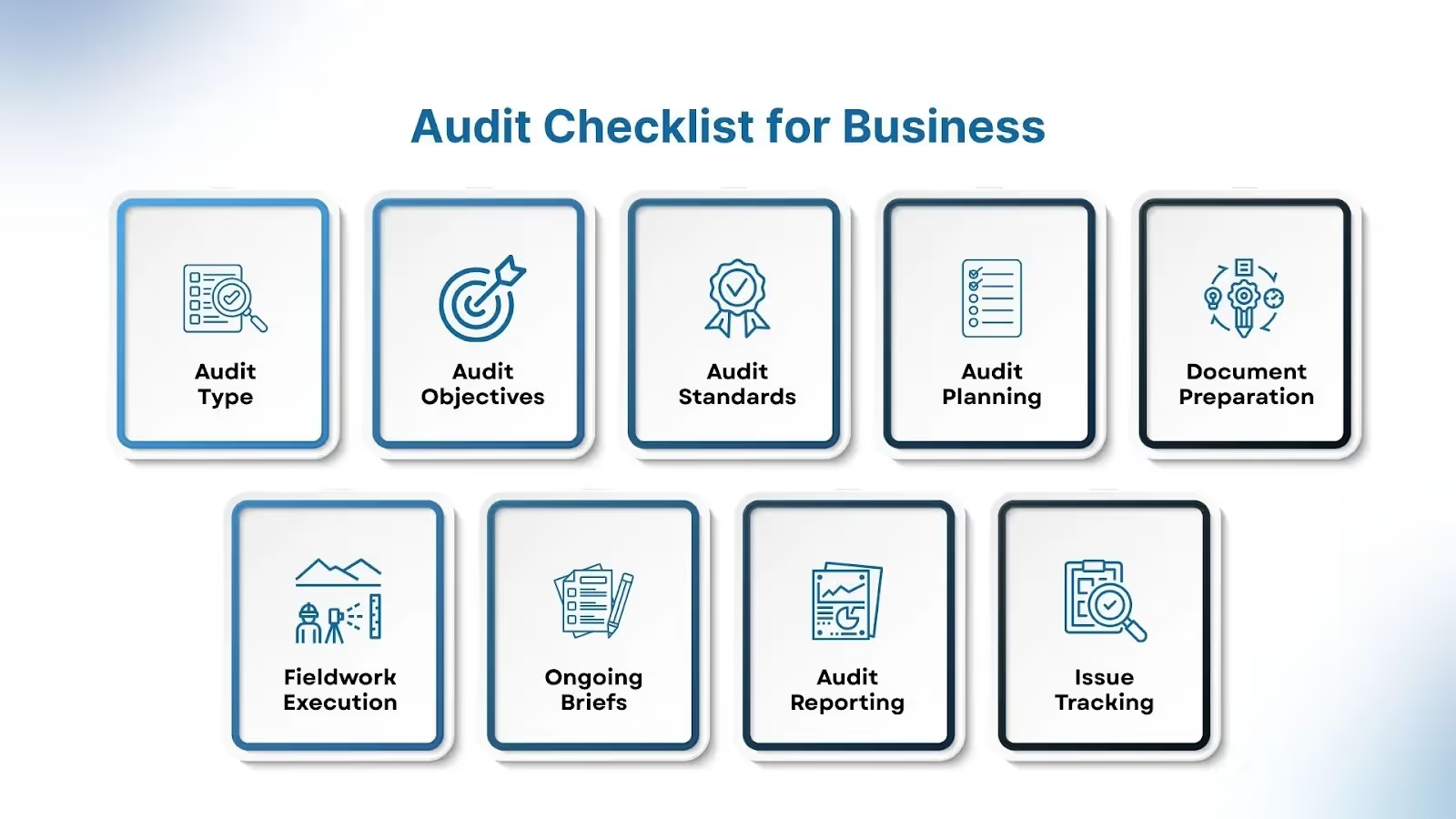
The audit process begins by selecting the right type based on business needs, risk areas, and regulatory drivers. Each type targets a specific aspect of operations or compliance, and the choice impacts how the audit is planned, staffed, and executed.
In many businesses, multiple audits, such as financial, internal control, and tax reviews, may run in parallel, each requiring its own preparation and documentation path.
Once the audit type is identified, set clear objectives and boundaries. A well-defined audit scope sets the direction for the entire audit process. This step ensures team alignment, prevents wasted effort, and helps auditors concentrate on the highest-risk areas.
Audit objectives define what the audit is meant to accomplish. They must align with the audit type and any known regulatory or operational pressures.
Common objectives include:
示例:“评估 2025 年财务报表是否存在重大错报,并评估关键内部控制在收入确认方面的有效性。”
Each audit has internal and external stakeholders with distinct interests. Knowing what each party expects shapes the audit depth and reporting requirements.
The scope defines the audit boundaries. It tells the team exactly what to test and where to allocate time.
Scoping should address:
Also, document any exclusions:
Example: “The audit will review inventory valuation methods but will not include a full physical inventory count.”
Formalize the agreed scope in an engagement letter for external audits or in an audit charter for internal audits.
Each document should cover :
This ensures clarity across the audit team, leadership, and external reviewers, reducing disputes and missed expectations later.
Audit procedures must follow the right standards depending on your audit type, entity status, and industry. Confirm these upfront to avoid compliance gaps later in the process.
Audit failures often stem from mismatched expectations, when the scope expands but the standards aren’t clear. Locking in the correct regulatory frameworks ensures that the audit delivers what regulators, executives, and auditors all expect.
Once the scope and standards are defined, the next step is to build a structured audit plan and assign responsibilities. A detailed plan prevents delays, clarifies workload, and ensures the audit stays aligned with its objectives.
制定包含规划、现场工作、报告和后续跟进阶段的时间表。以外部截止日期(如财务报表申报或董事会报告日期)为基准进行倒推,以确定关键里程碑。
设置内部审查、问题解决和文档移交的检查点,特别是在涉及多个部门的情况下。
审计的每个环节都需要明确的责任归属。无论是使用内部员工还是外部事务所,都要明确谁负责规划、证据收集、测试和报告。
关键角色可能包括:
将时间和精力集中在具有高重要性、已知问题或控制薄弱的领域。基于风险的规划有助于减少低风险领域的过度测试,同时确保在必要领域实现充分覆盖。
完成步骤:
将这些风险评估记录在规划文件中;它们为范围决策提供了依据,并有助于审计师解释其审计方法。
现场工作是审计的核心执行阶段。在此阶段,审计师应用审计程序中定义的步骤来验证财务报表认定、测试内部控制并评估运营合规性。严谨且记录详尽的方法可确保涵盖所有检查清单内容,并使审计经得起审查。
确保所有财务报告和分类账准确、定稿,并与审查期间保持一致。
如果您的审计包含控制测试或SOX合规性,请收集:
提前做好审计后勤准备,以防延误。
确认所有数据均符合报告截止日期,并以审计团队可访问的格式进行整理。
现场工作是审计团队执行审计程序中既定步骤的阶段。这包括测试财务记录、验证控制措施以及检查合规性。结构化且记录详尽的方法可确保每一项关键认定都有证据支持,并使审计结果能够经受住监管机构或利益相关方的审查。
对高风险和重大账户应用详细的审计程序。每项测试都应与特定的财务报表认定(如完整性、存在性、计价)相一致。常见的测试包括:
利用分析程序预测预期余额或比率,并将其与实际数据进行比较。调查超出阈值的差异。
示例:
对于抽样,根据测试目标选择统计抽样或判断抽样:
维护清晰的工作底稿,将每一项审计程序与其证据和结论联系起来。每份工作底稿应包括:
调查发现的任何异常或错误:
If the audit includes regulatory or compliance elements, test these areas with the same rigor as financial items.
Examples:
Use technology and team oversight to maintain audit quality.
Use structured, traceable communication during fieldwork to resolve issues early and keep the audit on track.
Once audit procedures are complete, the findings must be formally documented, reviewed with management, and communicated to oversight bodies. This phase turns audit evidence into actionable insights. Reporting must be clear, supported by evidence, and structured to drive follow-up, whether the audit is internal or external.
Start by drafting the final report. It should include:
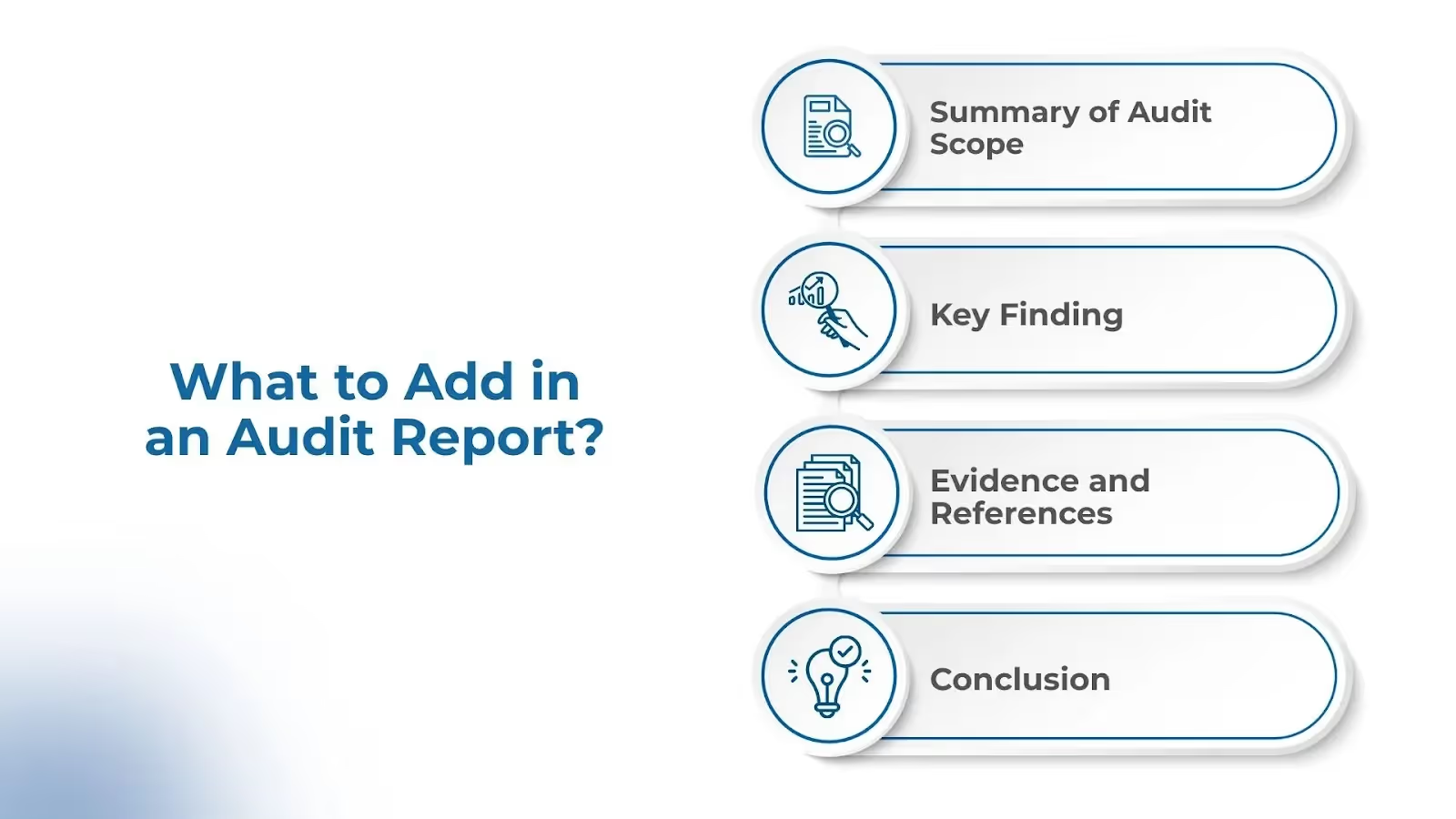
Each finding should be accompanied by a management response that either:
Once the report is reviewed internally, share it with the appropriate stakeholders:
If a follow-up audit or validation review is required, document that in the final report and schedule it in the audit calendar. Only close the audit once the report is signed off, supporting files are archived, and open issues are formally handed off for resolution tracking.
Issuing the audit report is not the end of the process. Post-audit follow-up ensures that identified issues are resolved, corrective actions are implemented, and risks are reduced going forward. Whether the audit is internal or external, unresolved findings can undermine future performance or regulatory standing. This phase adds accountability and closes the audit loop.
A complete audit process doesn't stop at fieldwork or reporting; it follows through until every risk is addressed and every issue is closed.
By using a structured company audit checklist that blends internal and external audit priorities, businesses can stay aligned with regulations, strengthen internal controls, and improve operational oversight.
Whether you're preparing for your first audit or refining an established process, these steps ensure that the audit delivers more than compliance; it delivers measurable value.
与 VJM Global 合作,可为您的团队提供高效管理审计所需的专业支持。我们专注的专业知识和精简的流程有助于确保审计工作的准确性和文档的规范性,提供的洞察力能有效降低风险并支持长期的财务稳定性。
We work with U.S. businesses and CPA firms to maintain clean, reliable financial records. From bookkeeping and balance sheet prep to equity reconciliation, our team helps keep your reports audit-ready and aligned with GAAP requirements.
想了解更多信息?立即预约回电。