


IRS audits are standard, but the cost can escalate quickly if your documentation isn’t in order. In 2023 alone, the IRS assessed $7 billion in estimated tax penalties, nearly four times the amount from the previous year. Much of that stemmed from businesses failing to track, file, or support what they reported.
When your return is reviewed, you are responsible for proving its accuracy. This means supplying the right documents, meeting deadlines, and knowing how to manage the audit without widening its scope.
This guide breaks down how IRS audits work, why they happen, and what steps business owners should take before, during, and after an audit to avoid penalties and stay in control.
An IRS audit is a formal review of your tax return, financial statements, and documentation to verify that income, deductions, and credits were reported correctly. While often triggered by discrepancies or patterns in your return, audits may be selected randomly or due to third-party links.
The IRS uses automated systems and peer benchmarks to screen business returns. Triggers often involve outliers, inconsistencies, or aggressive claims that deviate from your size bracket or industry category norms.
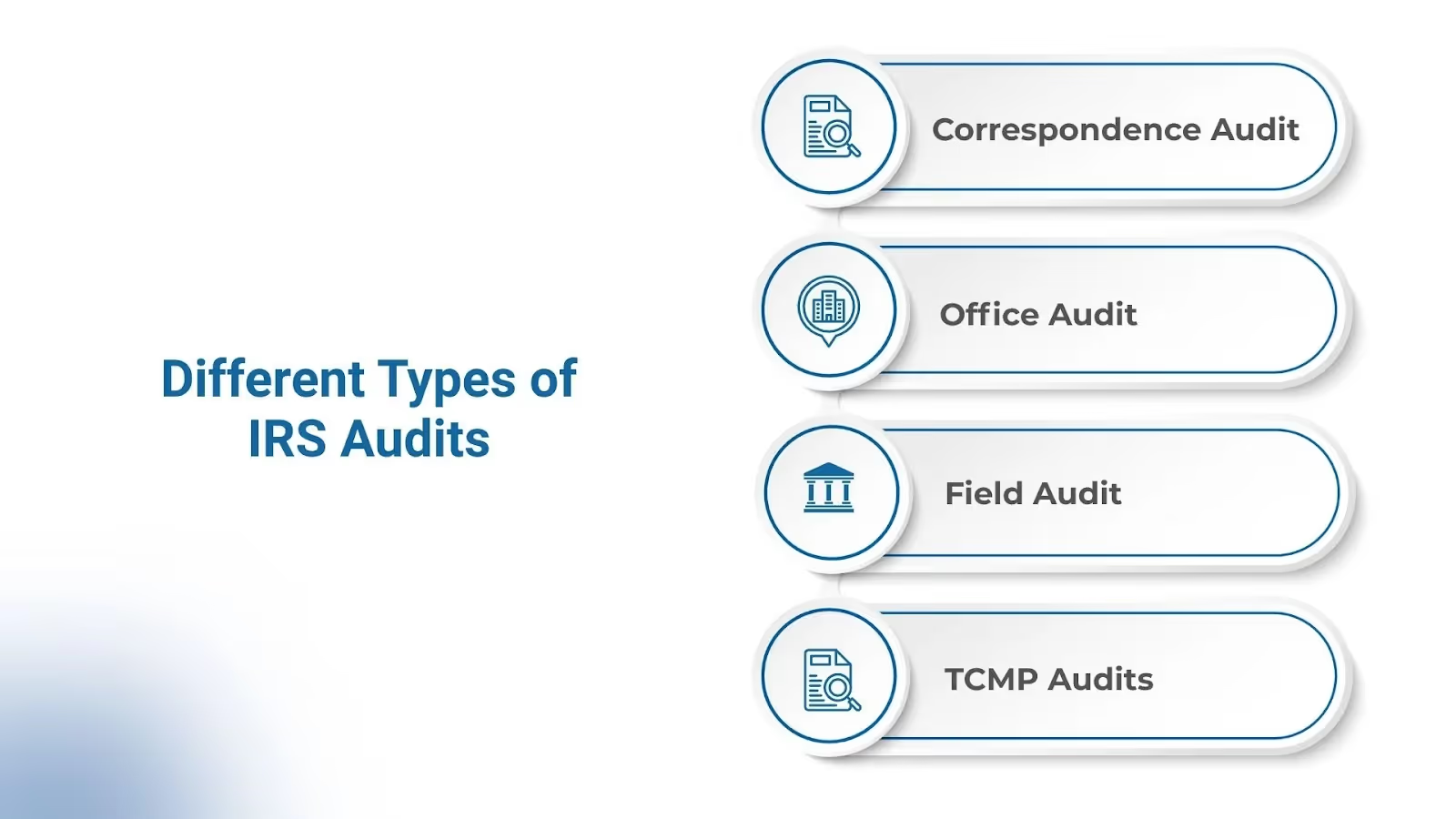
The IRS conducts audits in four main formats. Each one differs in scope and how records are reviewed.
Conducted by mail. The IRS requests documentation for specific line items, such as a deduction or credit. Most are resolved through written responses without meetings.
Held at an IRS office. These reviews cover broader topics, like income, expenses, or employee classification. You’ll be asked to bring organized records for review.
Takes place at your business location or your CPA’s office. IRS agents examine records on-site and may ask operational questions. These are typically used for higher-revenue or complex businesses.
The Taxpayer Compliance Measurement Program (TCMP) is a research-driven audit. If selected, every line of your return must be substantiated. These are rare and not based on red flags.
国税局(IRS)的审计总是以邮寄通知的形式开始。在没有事先书面通知的情况下,国税局绝不会通过电话或电子邮件联系企业。
审计流程如下:
请务必核实审计通知的真实性,并及时回复,以免被默认调整税额。
如果您收到审计通知,请不要惊慌。将其视为一个可以通过充分准备和协调来妥善处理的流程。
首先,让您的内部团队了解相关情况。任何涉及财务、薪资或负责处理审计人员问询的人员,都应明确国税局正在审查的内容、涉及的文件以及如何准确沟通。
团队达成共识后,重点收集并核对您的记录。做好审计准备可以最大限度地减少干扰,并让您在整个过程中掌握主动权。
准备步骤包括:
提示:这些《审计技术指南》虽然是为国税局审查员编写的,但它们是公开的,对企业和税务专业人士也非常实用。指南概述了常见的审计问题、文件要求和会计方法,是了解审计员关注重点的宝贵参考。
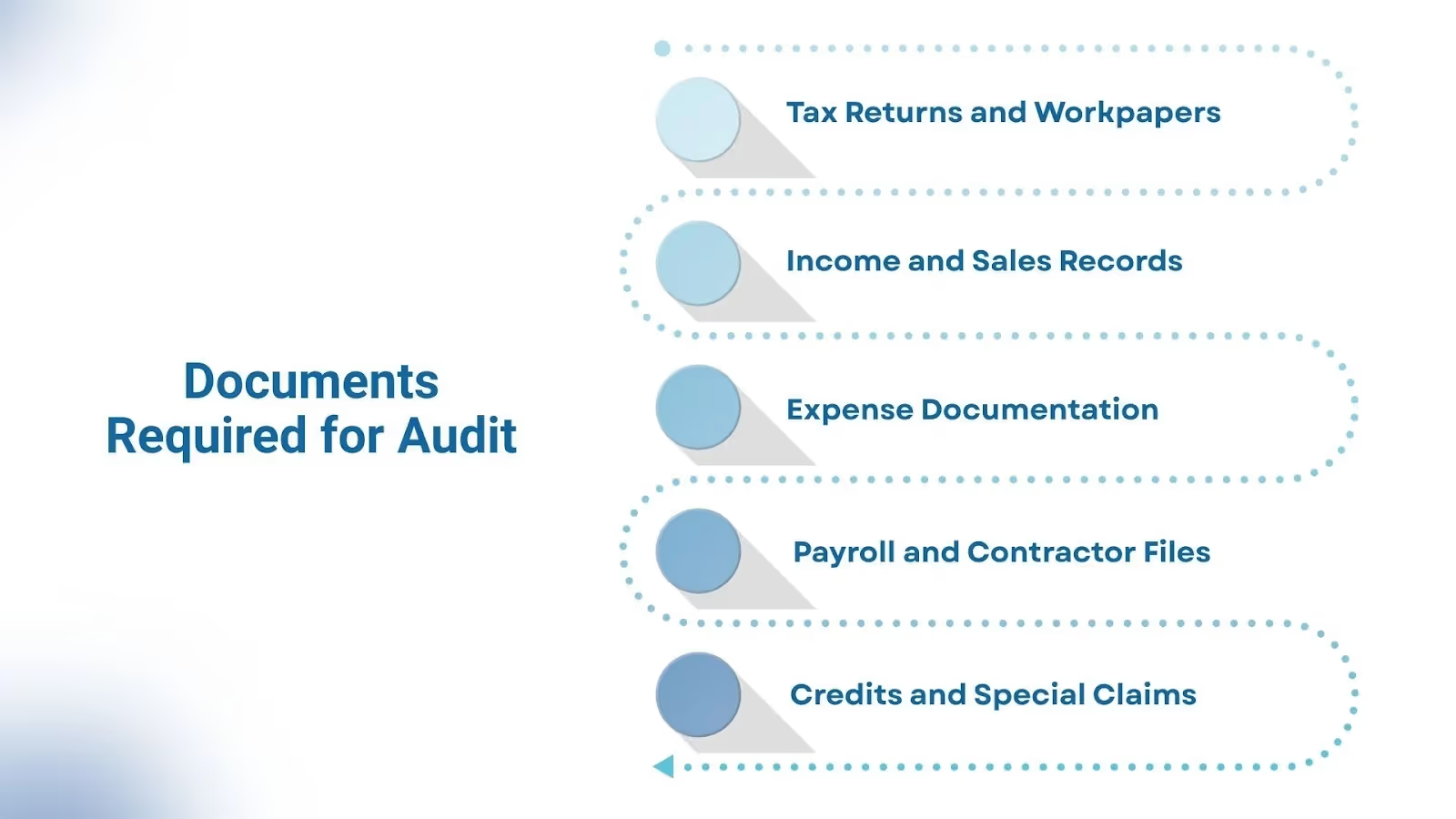
虽然国税局通常只审计近期的税表,但他们可能会要求提供最长可追溯至六年前的记录。因此,所有文件都必须妥善归档和保存,以便随时调取。
优先整理以下类别:
在您回复初步通知后,国税局将发布一份《信息文件请求》(IDR),列出他们需要查看的记录。这决定了审计的范围。
审计流程分为明确的几个阶段:
对于办公室审计或现场审计,国税局可能会安排一次会议,以确认时间和地点并明确预期。此时,您也可以提出初步的问题或疑虑。
You’ll have a fixed window, typically 30 days, to organize and submit records listed in the IDR.
Depending on the audit type, this could be by mail (correspondence), at an IRS office (office audit), or your business (field audit). Expect operational questions during field visits.
The IRS will review the documentation and create a Revenue Agent’s Report (RAR). Depending on the complexity of the issues, this may take several months to two years.
You’ll be asked to accept or contest the findings. Acceptance leads to payment or refund instructions. If you disagree, you can file a formal appeal.
In more detailed audits, a closing meeting may be offered to discuss the report and present final clarifications or corrections before resolution.
The audit concludes once adjustments are accepted and settled, or after appeals are exhausted.
Once the audit review is complete, the IRS will issue a formal Revenue Agent's Report (RAR), typically on Form 4549. This report outlines any proposed changes to your return and gives you a chance to respond.
IRS outcomes fall into three categories:
All documentation checks out. The IRS accepts your return as filed and closes the audit with no action required.
The IRS proposes adjustments and you agree. You’ll sign the RAR and receive instructions for paying additional tax or claiming a refund. You may also owe penalties or interest, depending on the issue.
If you disagree with the findings, you can submit a written protest and request a hearing with the IRS Office of Appeals. This must usually be done within 30 days of receiving the report. If no resolution is reached, you can take the matter to the U.S. Tax Court.
Regardless of the outcome, take the time to identify what triggered the audit and update internal processes to prevent repeat issues. This could include revising documentation procedures, bookkeeping systems, or how deductions and credits are substantiated.
The audit may be over, but your work isn't. Post-audit action ensures lasting compliance and protects your business in the future. This is also your chance to fix internal weaknesses, whether it’s recordkeeping, expense tracking, or how you prepare filings, before they cause issues again.
The best defense against audits is consistency. Long-term audit readiness means setting up repeatable habits that reduce your risk and make future audits easier to handle.
In some cases, bringing in a tax professional early can save time, prevent missteps, and protect your business’s position.
Consider hiring a tax pro if:
Note: CPAs, enrolled agents, and tax attorneys can represent you before the IRS, including during appeals. If penalties or legal exposure are on the line, consider working with someone experienced in audit defense.
An IRS audit can be intensive, but it doesn’t have to derail your business or drain your resources if you're prepared. Most audits can be resolved efficiently with accurate records, calm preparation, and the right support. Businesses that prioritize tax hygiene year-round are less likely to be flagged and better equipped to respond when they are.
If your team needs experienced offshore audit support to manage documentation and compliance reviews during peak periods, VJM Global can help. Our team supports audit prep, documentation, and compliance reviews while ensuring alignment with U.S. accounting standards.
Need flexible capacity without compromising accuracy or security? Reach out to VJM Global for scalable audit support tailored to your firm’s needs.




