


The Goods and Services Tax (GST) law aims to simplify and implement a taxpayer friendly indirect taxes regime in India. The GST law has brought several multi-tiered central and state taxes under its ambit. The GST has reduced the cascading effect on the prices of goods and services.
The GST law has paved for the way for increased levels of transparency in reporting, administration and governance. The GST has its backbone in the form of a widespread Information technology network infrastructure system called the GSTN (Goods and Service Tax Network).
The GSTN is equipped to facilitate the collection, storage, analysis and retrieval of huge influx of taxpayer data filed from time to time and contribute to the Revenue intelligence. The benefits of GST could be tangible, effective and widespread only if the taxpayers facilitated with a hassle-free compliance and reporting process.
The government has realized and has brought in several taxpayer friendly measures from time to time. While the process has kicked off in the right direction, one may have to wait for more time to let the dust settle down.
The GST law requires taxpayers to file periodical returns in order report their business transactions. In addition to the monthly/ quarterly returns filed, there is a requirement to file an Annual return under the GST law.
In this article, let us look at the overview of GST annual return, who should file annual returns, different annual return forms, due dates for filing, audit compliances under GST law and related legal provisions.
We shall also look through GSTR 9 and familiarise with various parts therein.
Annual return under the GST law is a summary return to be filed once in a year by the registered taxpayers.
The annual return consists of the details of supplies made and received during the financial year pertaining to all the tax heads – Central Goods and Services Tax (CGST), State Goods and Services tax (SGST) and Integrated Goods and Services tax (IGST).
The information mentioned in the Annual returns is predominantly a summary of the details furnished in various monthly and quarterly returns.
The annual return validates the monthly and quarterly returns filed by the taxpayers throughout the year.
As per Section 44(1) of the Central Goods and Services Tax Act, 2017 (‘CGST Act’), “specified taxpayers are required to file an annual return every year”.
In accordance with the provisions of Rule 80 of the Central Goods and Services tax Rules, 2017 (‘CGST Rules’), the government has notified the forms for filing annual return under the GST law.
Annual return under the GST law should be filed by all taxpayers registered under GST, except the following persons:
Similar to the other laws, there is a requirement for certain categories of taxpayers to undergo annual audit under GST. As per Section 35(5) of the CGST Act read with rule 80(3) of the CGST Rules, “every registered taxpayer whose turnover exceeds INR 2 crores in a financial year is required to get the accounts audited by a practicing Chartered Accountant and submit a copy of the audited annual accounts and reconciliation statement in Form GSTR 9C.”
因此,凡营业额超过 2 亿印度卢比的纳税人,均须在提交 GSTR 9 的同时,提交经执业特许会计师或成本会计师正式认证的 GSTR 9C 表格。此项认证每个财政年度需进行一次。
除上述规定外,GST 法规还规定,税务部门可根据需要,要求由执业特许会计师或成本会计师进行部门审计或专项审计。
The annual returns under GST law for the financial year are due for filing on or before 31st December every year.
GST 法规中并无关于修订年度申报的具体条款。因此,根据现行法律版本,年度申报一旦提交,似乎无法进行修订。
GST 法规并未针对未提交或逾期提交年度申报设定具体的罚款。不过,法规已规定了因延迟提交年度申报而产生的滞纳金。
未在截止日期前提交年度申报的滞纳金为:中央商品及服务税(CGST)每天 100 印度卢比,州商品及服务税(SGST)每天 100 印度卢比。因此,任何延误均会导致每天 200 印度卢比的滞纳金。IGST 不收取滞纳金。滞纳金总额上限为营业额的 0.25%。
所有按月或按季提交 GST 申报的普通纳税人均应通过 GSTR 9 进行年度申报。GSTR 9 包含 6 个部分,用于报告各项详细信息。
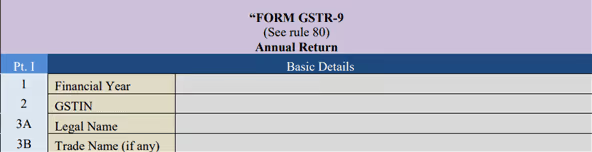
此部分包含纳税人的基本信息,如 GSTIN、法定名称和贸易名称。这些信息将自动填充。
此部分包含纳税人的基本信息,如 GSTIN、法定名称和贸易名称。这些信息将自动填充。
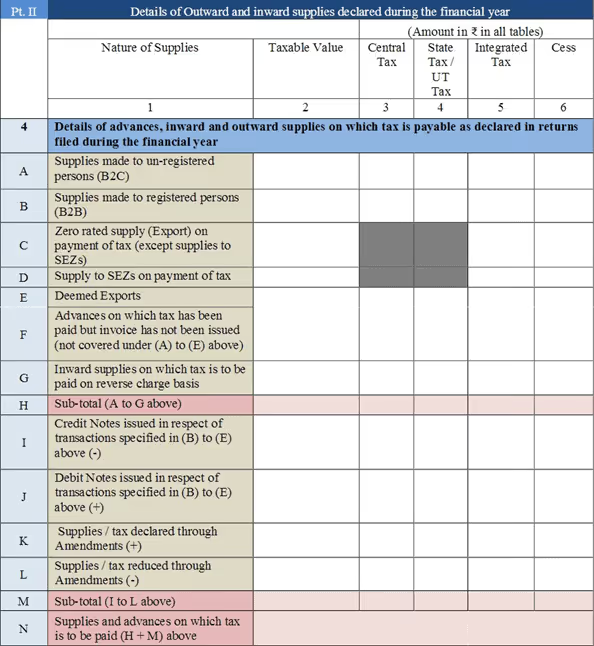
本年度内发生的所有销项及进项供应明细均在此部分报告。这些明细应通过汇总该财政年度内已提交的月度/季度申报数据得出。
8.2.1 第 4 点要求披露以下汇总供应:B2C 供应、B2B 供应、已缴税的出口/经济特区(SEZ)销售、视同出口、应纳税预付款,以及受反向征收机制约束的进项供应,并根据借记/贷记通知单及修订情况(如有)进行调整。
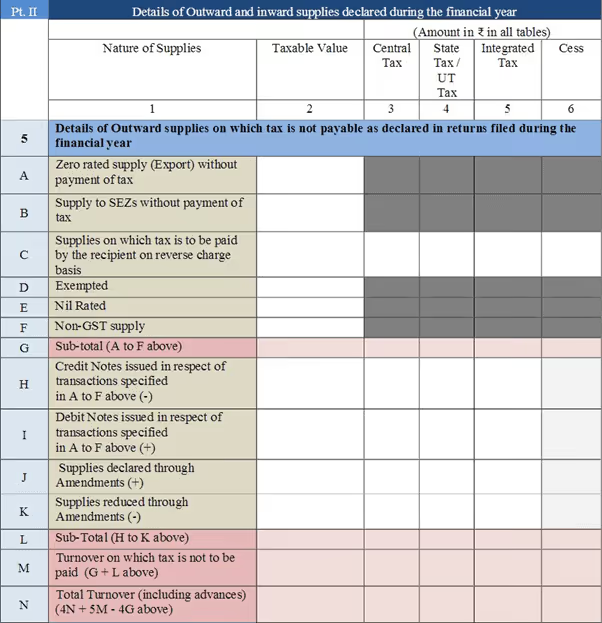
8.2.2 第 5 点要求披露与免税出口/经济特区(SEZ)销售以及免税/零税率/非 GST 供应相关的明细。该数据需根据借记/贷记通知单及修订情况(如有)进行调整。
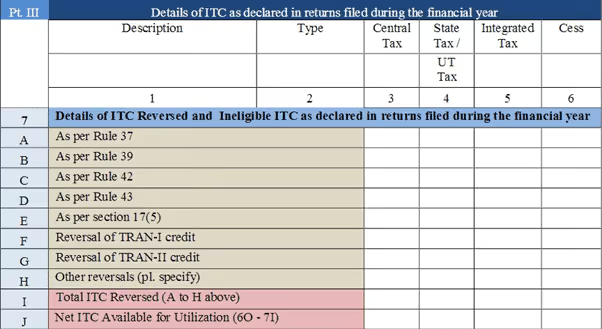
此部分包含与进项税抵扣(“ITC”)相关的明细,分为两点说明。
8.3.1 第6点包含了从不同来源收到的进项税额抵免(ITC)的详细信息,并按投入、资本货物和投入服务进行了分类。任何来自GST前制度的过渡性抵免(在TRAN I和TRAN II表格中)也需要进行申报。
8.3.2 第7点包含了已转回或不符合条件的进项税额抵免的详细信息,并根据TRAN I和TRAN II表格中GST前制度的过渡性抵免转回情况进行了调整。
8.3.3 第8点主要包含从 GSTR 2A 自动生成的ITC与上述第6点中披露的ITC之间的核对及差异详情,并尝试计算年度内失效的ITC。
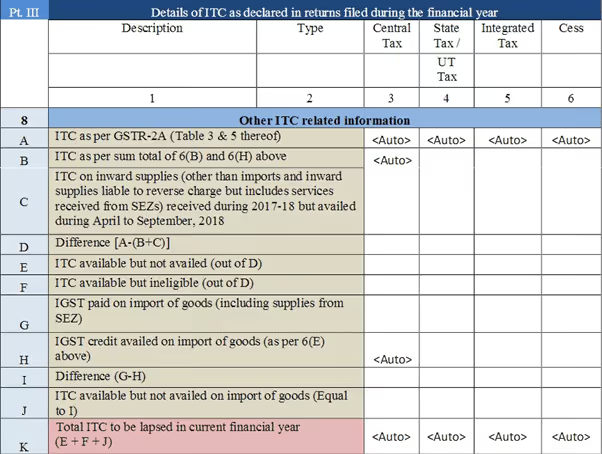
本部分包含在IGST、CGST、SGST和附加税项下缴纳的税款详情,以及利息、滞纳金和罚款。
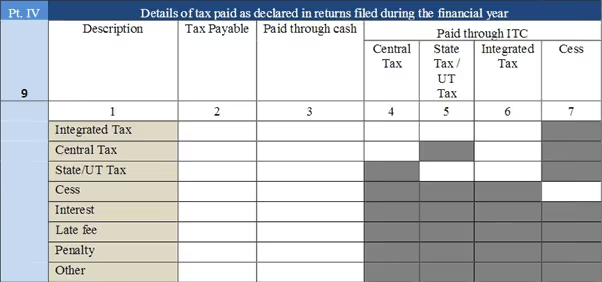
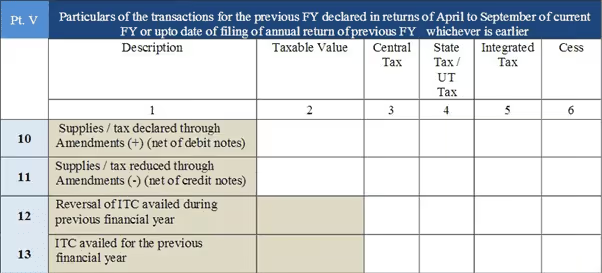
本部分包含所有属于上一财年但于后续财年申报的修正/遗漏事项的汇总。对于第10至13点中迄今为止已申报的详细信息,需提供任何必要的核对说明。
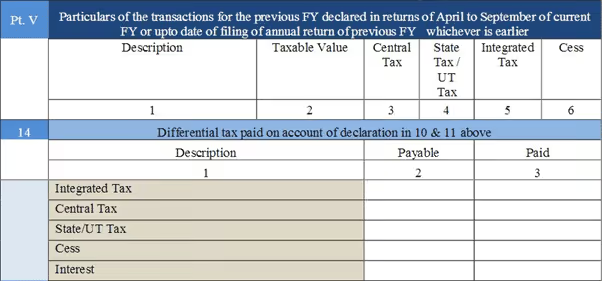
因上述核对而产生的任何差额税款,均需在第14点中披露并缴纳。
8.6.1 第15点包含已申请、已批准、已拒绝和待处理的退税明细,以及与所申请退税相关的已缴纳/未结清的税款要求。相关数据需按CGST、SGST、IGST和附加税分别披露。
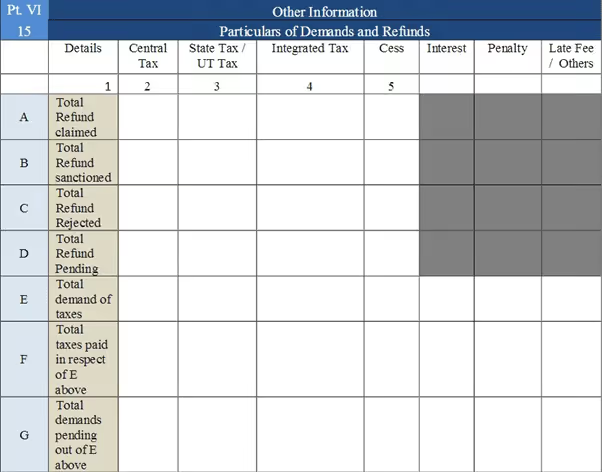
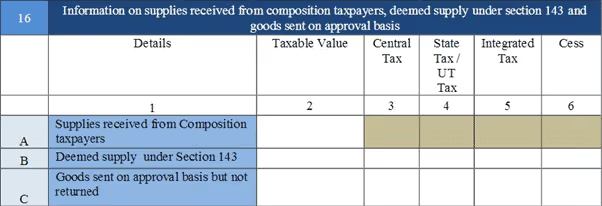
8.6.2 第16点包含从组合纳税人处收到的其他供应、视同供应以及 以审批为基础发送的货物
8.6.3 第17点和第18点包含按HSN分类的销项和 进项供应 汇总详情。
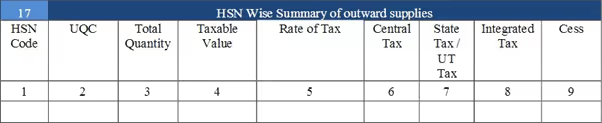
8.6.3 第17点和第18点包含按HSN分类的销项和进项供应汇总详情。
自 GST年度申报 表格发布以来,一直伴随着各种争议。这些年度申报表仍要求披露多个数据点。虽然披露内容仅为汇总,但每个条款都需要大量的后台数据支持。纳税人在记录账目交易时,可能并未全部采集这些详细信息。
例如:
这些要求被视为增加了纳税人的合规负担。这导致了 年度申报 工具至今仍严重滞后。政府若能真正采纳纳税人、顾问和整个行业的意见,将是使GST成为一个对纳税人而言更便捷、更合规的制度所迈出的重要一步。
阅读我们关于修订后的GSTR-9和GSTR-9C年度申报格式
阅读我们关于 税务发票信息缺失导致第125条和第122条下的处罚




