As a consultant, your expertise is supposed to be in solving client problems - not wrestling with spreadsheets, chasing unpaid invoices, or scrambling to get your books ready for taxes. Yet the data shows this is still a major challenge for many independent professionals and consulting firms.
In 2025, about 71% of small business owners use accounting software, yet still rely on spreadsheets or manual tracking for parts of their financial management. Even more striking, roughly 70% of small businesses don't have a dedicated accountant or bookkeeper. This increases their risk of compliance issues and missed financial insights.
These patterns matter in accounting for consultants because financial complexity tends to grow as you take on more clients, projects, and revenue streams - especially in the U.S., where regulatory and tax obligations are detailed and unforgiving.
This blog explores practical accounting strategies explicitly designed for consultants and consulting businesses in 2026. By the end, you'll have a clear framework to strengthen your financial foundation and focus more of your energy on what you do best - consulting.
Accounting is more than just bookkeeping. It's the systematic process of recording, classifying, and interpreting financial transactions to help business owners understand performance, make informed decisions, and stay compliant with legal requirements.
It produces key reports such as balance sheets, income statements, and cash flow statements that together tell your business's financial story. In the U.S., consultants typically follow GAAP (Generally Accepted Accounting Principles) for financial reporting and tax compliance, ensuring consistency and transparency in financial records.
For consultants, accounting is far more than just number-crunching. It's the foundation of a healthy, growing business.
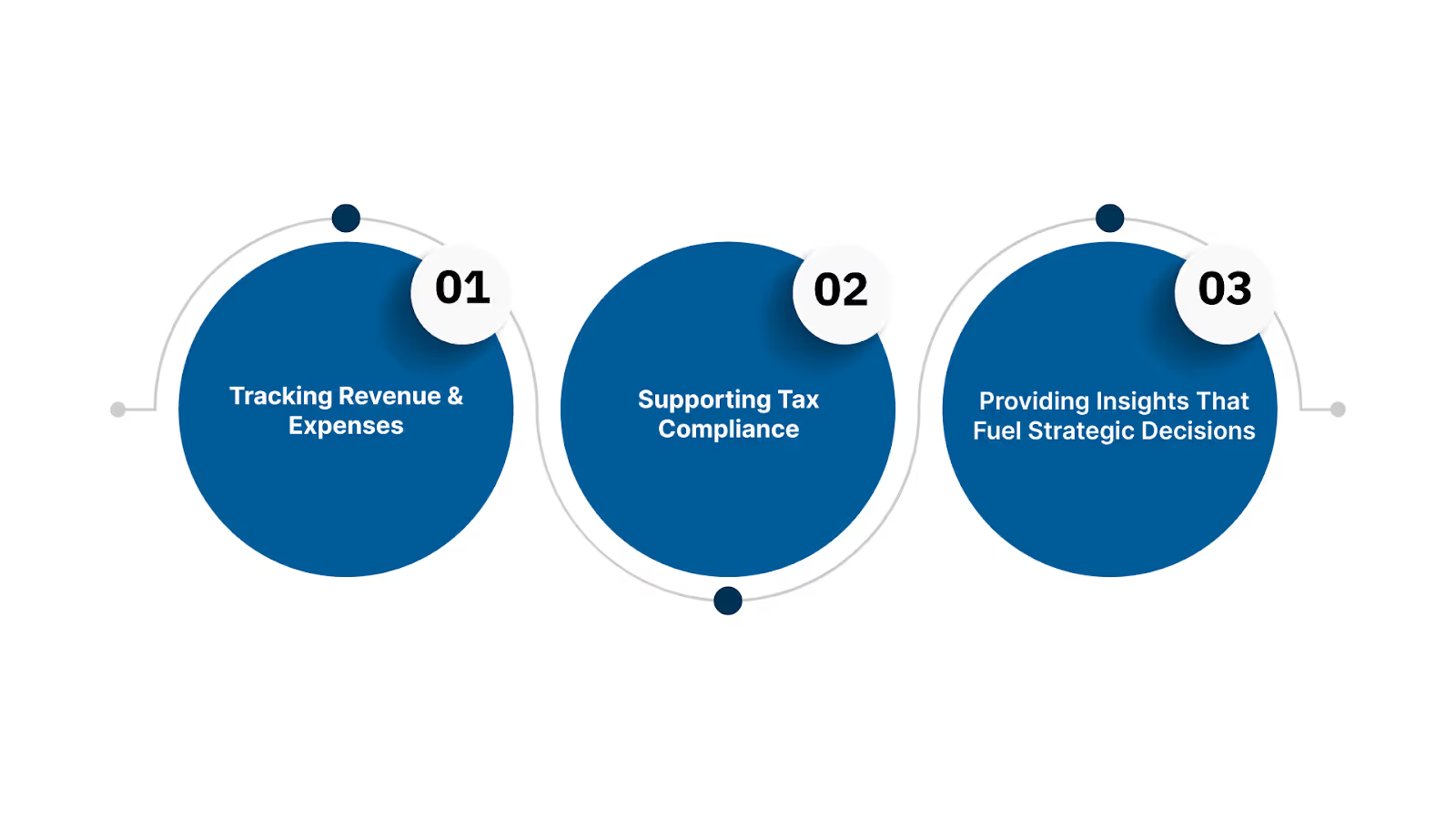
Here's how systematic accounting helps consultants stay on track and scale confidently:
Without systematic accounting, consultants lack the financial clarity needed to run their businesses confidently, especially as they scale.
Consultants, especially those in the U.S. market with variable income and diverse service engagements, face unique challenges:
Without a solid accounting foundation, it's nearly impossible to anticipate these challenges or take advantage of opportunities like tax planning strategies or investment decisions.
Also Read: Key Differences Between Bookkeeping and Accounting Explained
Now, let's explore some of the best practices. You'll see how simple shifts can transform your financial management and give you more time to focus on clients and growth.
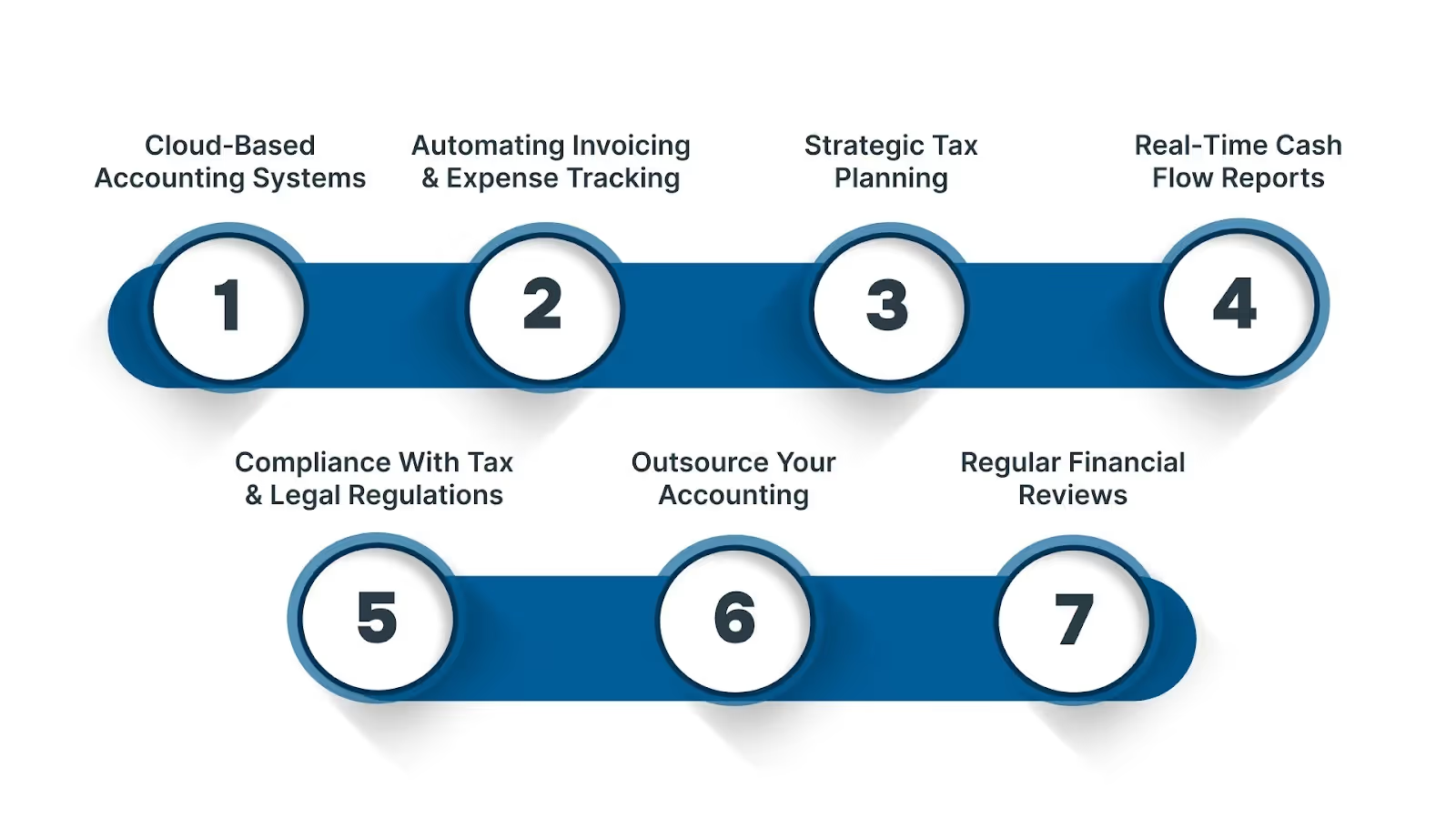
Before we break down each strategy in depth, it's worth anchoring why they matter in a rapidly changing business context.
The global accounting services market is projected to reach $804.4 billion in 2029, growing at a compound annual growth rate (CAGR) of 5.1%, driven by tools that automate, analyze, and reframe how financial tasks are performed. In fact, a majority of accounting professionals (about 67 %) now prefer cloud‑based solutions, recognizing their role in business success.
For consultants who juggle variable income, client billing cycles, tax complexity, and growth decisions, each strategy below is a practical enhancement with measurable impact on accuracy, compliance, and profitability.
Cloud accounting isn't just "digital bookkeeping." It's a framework that gives you real‑time access to your financial data anywhere in the world, something especially valuable for consultants who work remotely or with distributed teams.
Cloud‑based systems like QuickBooks Online, Xero, and Sage Business Cloud automatically sync transactions with bank feeds, categorize expenses, and provide dashboards that show your financial position, reducing manual data entry.
Why does this matter for consultants?
Manual billing and expense tracking are among consultants' most time‑consuming financial tasks. Small business owners can spend up to 21 hours a week on manual bookkeeping.
Automating these workflows does more than shave hours off your week; it also improves cash flow and client relationships.
How does automation help?
For consultants, tax planning isn't just about compliance but keeping more of what you earn. Unlike product businesses, service consultants typically have no sales tax obligations, but income tax, self‑employment tax, and deductibility rules remain complex.
Effective tax strategies include:
Proactive planning provides confidence heading into tax season.
Knowing what's in your bank account isn't the same as understanding cash flow. Monitoring cash flow in real time means tracking payables, receivables, and projected expenses in one place, which is crucial for consultants whose monthly revenues can vary widely.
Tools that provide cash flow dashboards help you:
That kind of foresight supports strategic choices, such as pricing adjustments or expansion into new service lines.
Consultants often start as generalists, doing everything themselves. But as your client base expands and projects multiply, taking on accounting tasks detracts from revenue‑generating work.
Outsourcing your accounting can:
The value isn't just in offloading tasks. It's in gaining a partner who understands your business nuances and anticipates issues before they become problems.
At VJM Global, we specialize in providing customized accounting outsourcing solutions for consultants and service-based businesses. We help U.S. consultants ease their financial operations, reduce overhead, and maintain compliance with U.S. tax and reporting standards. All this is done while freeing up your time to grow your business.
Contact VJM Global today to learn how we can provide the strategic accounting support you need.
Compliance has real consequences. Misclassifying income, missing filing deadlines, or mishandling 1099s and 1096s can invite internal audits, penalties, and wasted hours correcting avoidable mistakes.
Focus areas for consultants:
A consistent compliance framework reduces risk and ensures that financial insights are reliable, which becomes increasingly valuable as consultant revenues grow and tax situations become more complex.
Even with the best systems and practices in place, accounting shouldn't be “set and forget.” Regular reviews, like quarterly or monthly, help you catch trends that matter:
For consultants, these reviews become strategic checkpoints that improve decision‑making and protect profitability over the long term.
Each of these strategies stands on its own. But together, they make your consulting business financially resilient, compliant, and positioned for growth in 2026 and beyond.
If you're ready to implement these strategies and transform your accounting practices, VJM Global's expert team is here to guide you every step of the way with customized services to meet the unique needs of consultants.
Reach out to us today for a personalized consultation and get started on optimizing your accounting processes.
After walking through the accounting strategies, the next question many consultants ask is: "Which of these should I implement first, and how do I know what matters most for my business right now?”
A decision framework would help you to evaluate your current situation and choose the right strategy mix based on where your consulting business stands today. Before selecting a strategy, consider your current accounting maturity across these core areas.
Use this simple rubric:
Your answers to these help you prioritize your next move.
Suggested Read: How to Manage Accounting for Small Businesses
Once you have your answers and assessment, let's understand via the framework below what to do first based on your priorities:
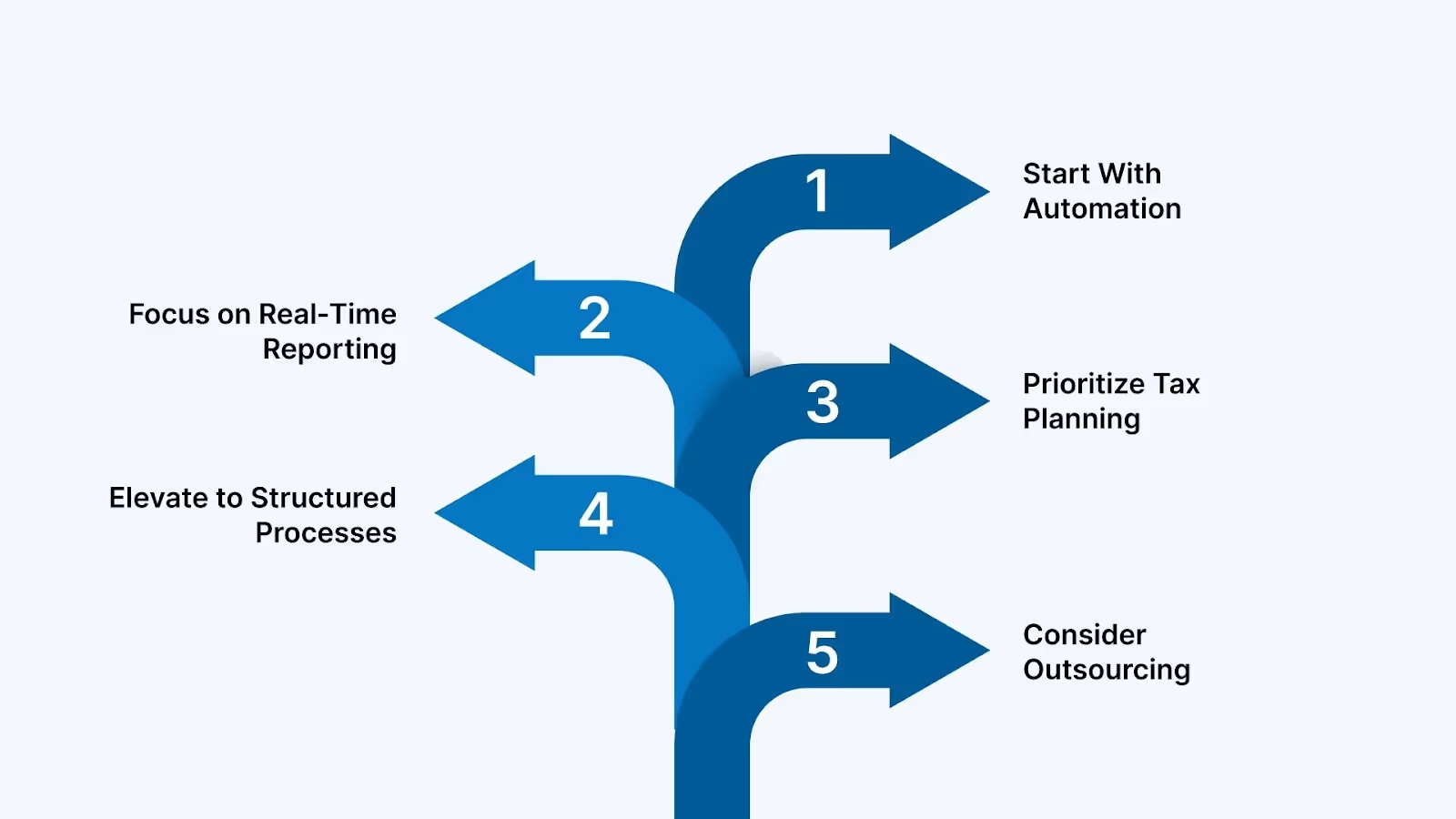
Manual systems often lead to costly errors and take up significant time that could be better spent on client work or business development. Transitioning to automated systems is essential for improving efficiency and reducing the risk of human error.
Priority Actions:
Cash flow challenges are often cited as a top reason small firms fail to scale. Real-time financial visibility is key to staying on top of receivables, payables, and overall economic health.
Priority Actions:
Many consultants face unexpected tax liabilities, often due to poor planning. Given the variable nature of consulting income, taking a proactive approach to tax planning can help you avoid surprises and make tax season much less stressful.
Priority Actions:
Tax planning and compliance don't have to be confusing or stressful. With VJM Global's Representation Services, you gain expert support for handling tax filings, dispute representation, and compliance documentation. This lets you focus on your consulting work while ensuring your tax strategy is solid and accurate.
Contact us today with our team and discover which planning strategy is right for you.
Lack of consistent financial documentation and disorganized record-keeping can increase the risk of audits and errors, leading to costly penalties. Establishing structured, organized processes is key to staying compliant.
Priority Actions:
As a consultant, your time is limited, and managing accounting internally can take away from core business activities. Outsourcing accounting functions is a strategic move that not only saves time but also enhances financial management.
Priority Actions:
There you go! This framework is designed to help consultants act, not just read.
Not sure where to start? VJM Global can help you evaluate your current financial situation and make a strategy that addresses your needs. Whether it's automation, tax planning, or compliance, we guide consultants through the process of implementing the right solutions for long‑term success.
Schedule a free consultation with our team and discover which accounting strategy is right for you.
As a consultant, optimizing your accounting practices is about empowering your business for growth, ensuring compliance, and gaining the insights needed to make smarter, more informed decisions. From automating your invoicing and expenses to proactively planning your taxes, these strategies will lay the foundation for an efficient client service in 2026 and beyond.
At VJM Global, we specialize in helping U.S. consultants simplify their accounting processes with tailored solutions that support both growth and compliance. Here's how we can help:
Partner with VJM Global today to streamline your accounting, improve compliance, and build a sustainable foundation for your consulting business. Contact us now to learn how we can support your financial management needs.
For consultants, accounting must handle time‑based billing, multiple client projects, and irregular revenue cycles, unlike product businesses that focus on inventory and fixed‑cost tracking. This makes project‑based accounting and cash flow visibility essential.
Use project tracking tools integrated with your accounting system (e.g., QuickBooks or Xero), tagging hours to specific clients or engagements so you can match income and costs and see profitability by project in real time.
Consultants should review key reports (cash flow, profit and loss, receivables) monthly or quarterly to catch issues early, adjust pricing or spending, and prepare for tax payments rather than waiting for year‑end summaries.
Yes. Because consultants often don't have tax withholding on self‑employment income, paying quarterly estimated taxes helps avoid IRS penalties and spreads the liability over the year rather than dealing with a lump sum at tax time.
Bookkeeping records daily transactions (income, expenses, invoices), while accounting interprets that data to produce financial reports, support tax planning and compliance, and inform strategic decision‑making. Both are necessary for reliable business insights and for pacing growth.