Managing financial operations for a distribution company in the US involves complex challenges that differ from other business models. You must track inventory across multiple states, manage fluctuating fuel and transportation costs, and maintain cash flow despite extended payment terms common with large retailers.
These complexities can strain internal accounting teams and obscure your true profitability across different sales tax jurisdictions. Specialized accounting for distribution companies provides the framework to manage these unique financial demands effectively.
Implementing proper systems gives you clear visibility into product line profitability and operational efficiency across your supply chain.
This guide explains the core principles of distribution accounting for US businesses. You will learn about essential structures, tax considerations, and best practices to maintain accurate financial records for your distribution operation.
Distribution company accounting refers to specialized accounting methods designed for businesses that purchase goods from suppliers and sell them to customers without transformation.
This field addresses the unique financial aspects of distribution operations that standard accounting approaches cannot adequately cover. This accounting specialization manages the complete tracking of goods from procurement through storage to final sale.
It focuses on accurate inventory valuation, cost of goods sold calculation, and overhead allocation specific to distribution activities. The approach also handles the complex revenue recognition and expense matching cycles inherent in distribution operations.
Also read: Understanding the Advantages of Outsourcing Accounts Payable
Understanding this definition reveals the specific areas where distribution accounting differs from standard practices.
Distribution accounting demands specific approaches that distinguish it from standard accounting practices. These differences stem from the unique operational characteristics of distribution businesses and their financial implications.
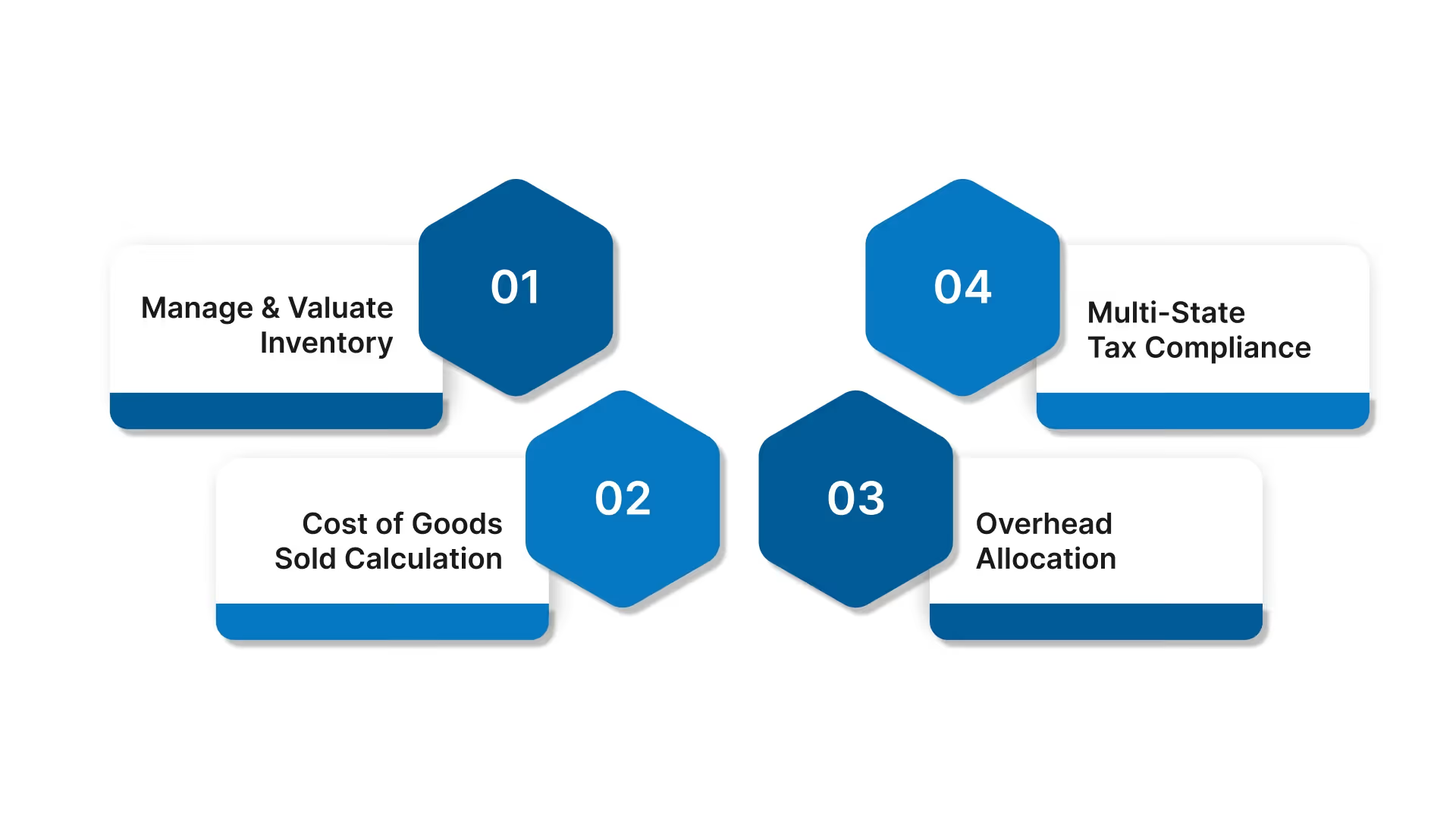
These key areas require specialized accounting attention:
Distribution companies maintain substantial inventory investments across multiple locations and product categories. You must track stock levels, turnover rates, and valuation accurately using GAAP-compliant methods like FIFO or weighted average cost. Proper inventory accounting affects your balance sheet strength and cost of goods sold calculations.
This represents your largest expense category and requires precise tracking of purchase costs, freight charges, and import duties. You must properly allocate these costs to specific products and sales to determine true profitability. Accurate COGS calculation directly impacts your gross margin analysis and pricing decisions.
Distribution operations involve significant warehouse, transportation, and handling costs that must be allocated to products. You need systems that assign these overhead expenses accurately to determine product line profitability. Proper allocation ensures you understand the true cost of serving different customer segments and markets.
Distribution companies often operate across multiple states with different tax obligations and filing requirements. You must track and comply with various sales tax rates, rules, and reporting deadlines. Proper tax accounting prevents costly penalties and maintains your good standing with tax authorities.
Are you accurately tracking costs across your product lines? VJM Global can help you implement the inventory and overhead allocation systems needed for true profitability analysis. Get in touch with our team to assess your current setup.
Managing these unique aspects successfully leads to significant operational and financial benefits.
Implementing specialized accounting practices provides significant strategic advantages for your distribution business. These systems deliver crucial financial insights that support informed decision-making and regulatory compliance.
These benefits highlight the value of distribution-specific accounting:
Specialized accounting tracks revenues and expenses by product category, customer type, and sales channel. You gain clear visibility into which segments generate the most profit. This detailed cost accounting helps you make informed decisions about product focus and resource allocation.
Proper accounting systems provide real-time data on stock levels, turnover rates, and carrying costs. You can identify slow-moving items and optimize purchasing decisions. Better inventory management reduces carrying costs while maintaining adequate stock to meet customer demand.
Historical financial data helps you analyze sales trends, vendor performance, and operational efficiency. You can evaluate the financial impact of potential business changes and expansion opportunities. This analytical approach supports both tactical adjustments and long-term strategic planning.
Distribution accounting provides visibility into accounts receivable, accounts payable, and inventory conversion cycles. You can anticipate cash flow gaps and plan financing needs accordingly. Better cash forecasting helps maintain financial stability throughout seasonal fluctuations.
Also read: Why CPA Firms in the U.S. Are Choosing India for Outsourcing
To capture these benefits, you need a properly structured chart of accounts designed for distributors.
A well-structured chart of accounts is crucial for accurate financial reporting in the distribution industry. This framework organizes your financial transactions into logical categories that support GAAP-compliant reporting and provide clarity on your company's performance.
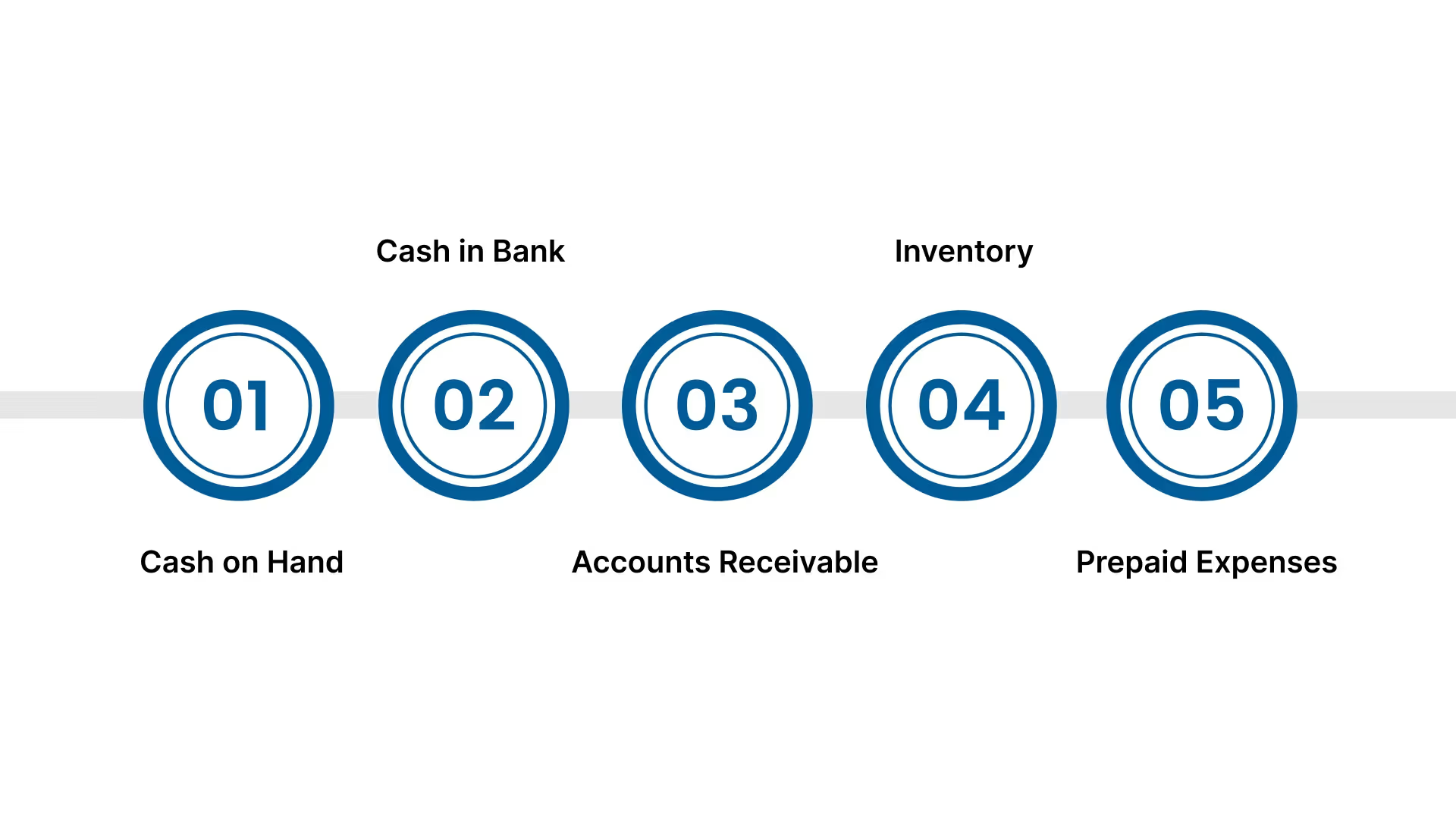
Essential accounts for your distribution operation include:
This account tracks physical currency kept on premises for minor operational expenses. It typically maintains a small, fixed balance for incidental purchases or emergencies. Regular reconciliation ensures this petty cash fund is properly accounted for and secure.
This primary account handles all daily business transactions, including customer receipts and vendor payments. You monitor this balance to manage operational liquidity and cover immediate expenses. Regular bank reconciliation is essential to maintain accuracy between your records and bank statements.
This asset account tracks all outstanding payments owed by your customers for credit sales. You maintain detailed subsidiary records showing individual customer balances and invoice due dates. Proper management of this account is vital for maintaining healthy cash flow and minimizing bad debts.
This major asset account represents the total cost of products you have purchased for resale to customers. You must track inventory by category or SKU to support accurate cost of goods sold calculations. Regular physical counts verify the accuracy of your perpetual inventory records.
These accounts capture payments made for future benefits, such as annual insurance premiums or quarterly rent. You allocate these costs to the appropriate accounting periods through monthly amortization entries. This practice ensures expenses are matched with the periods they benefit.
Also read: Effective Strategies for Accounts Payable Management
A solid financial structure must also account for the complex tax landscape facing distribution companies.
Distribution operations face multiple tax obligations that require careful tracking and compliance. Understanding these requirements helps minimize your tax liability while maintaining regulatory compliance.
These tax types affect distribution companies:
Distribution companies must collect and remit sales tax in states where they have nexus or physical presence. You need systems that calculate correct rates for different jurisdictions and generate accurate filings. Proper sales tax management prevents penalties and interest charges from state authorities.
International distribution operations may encounter VAT requirements in foreign markets. You must understand VAT registration, collection, and remission rules for countries where you conduct business. International tax expertise helps maintain compliance across borders.
Companies involved in international distribution must pay customs duties on imported goods. You need processes to properly classify products, calculate duties, and maintain import documentation. Accurate duty accounting ensures compliance with customs regulations.
Distribution companies must comply with federal and state income tax requirements for their business structure. You need systems that track taxable income and deductions specific to distribution operations. Proper income tax accounting optimizes your tax position while maintaining compliance.
Handling multi-state sales tax nexus is complex. VJM Global's experts ensure your filings are accurate and compliant across all jurisdictions. Talk to an expert to review your tax obligations.
Beyond tax compliance, implementing day-to-day best practices is key to maintaining financial control.
Implementing disciplined accounting practices ensures accurate financial reporting and supports operational decision-making. These methods provide the structure needed to manage the unique aspects of distribution financial management.
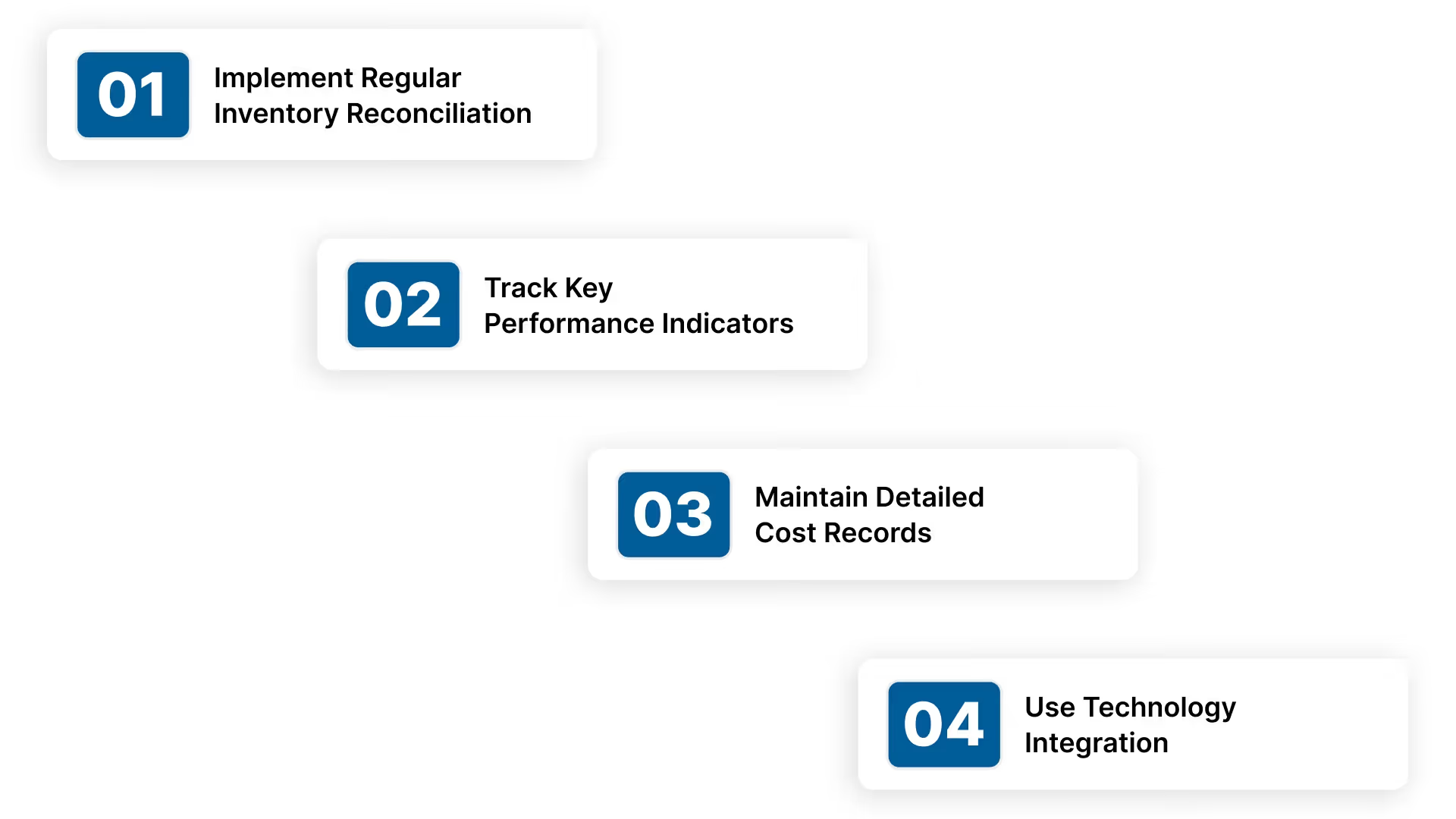
Follow these established practices to maintain control over your distribution finances:
Conduct physical inventory counts regularly and reconcile them with your perpetual records. This process identifies shrinkage, theft, or recording errors promptly. Accurate inventory tracking ensures your financial statements reflect true asset values.
Monitor distribution-specific metrics like inventory turnover, gross margin return on investment, and days sales in inventory. These measurements provide insights into your operational efficiency and financial health. Regular KPI review helps identify improvement opportunities.
Track all product costs, including purchase price, freight, duties, and storage expenses by SKU or product category. Detailed cost records provide the data needed for accurate profitability analysis. This granular approach supports both operational decisions and tax documentation.
Implement systems that connect your accounting software with inventory management, order processing, and shipping systems. Integrated technology provides real-time visibility into your financial and operational data. Automation reduces manual entry errors and improves reporting efficiency.
Also read: Accounts Payable Outsourcing Costs and Savings
For many businesses, implementing these practices effectively requires specialized support.
Distribution businesses face accounting complexities that often exceed the capabilities of general accounting approaches. These challenges can divert attention from core business growth and strategic development.
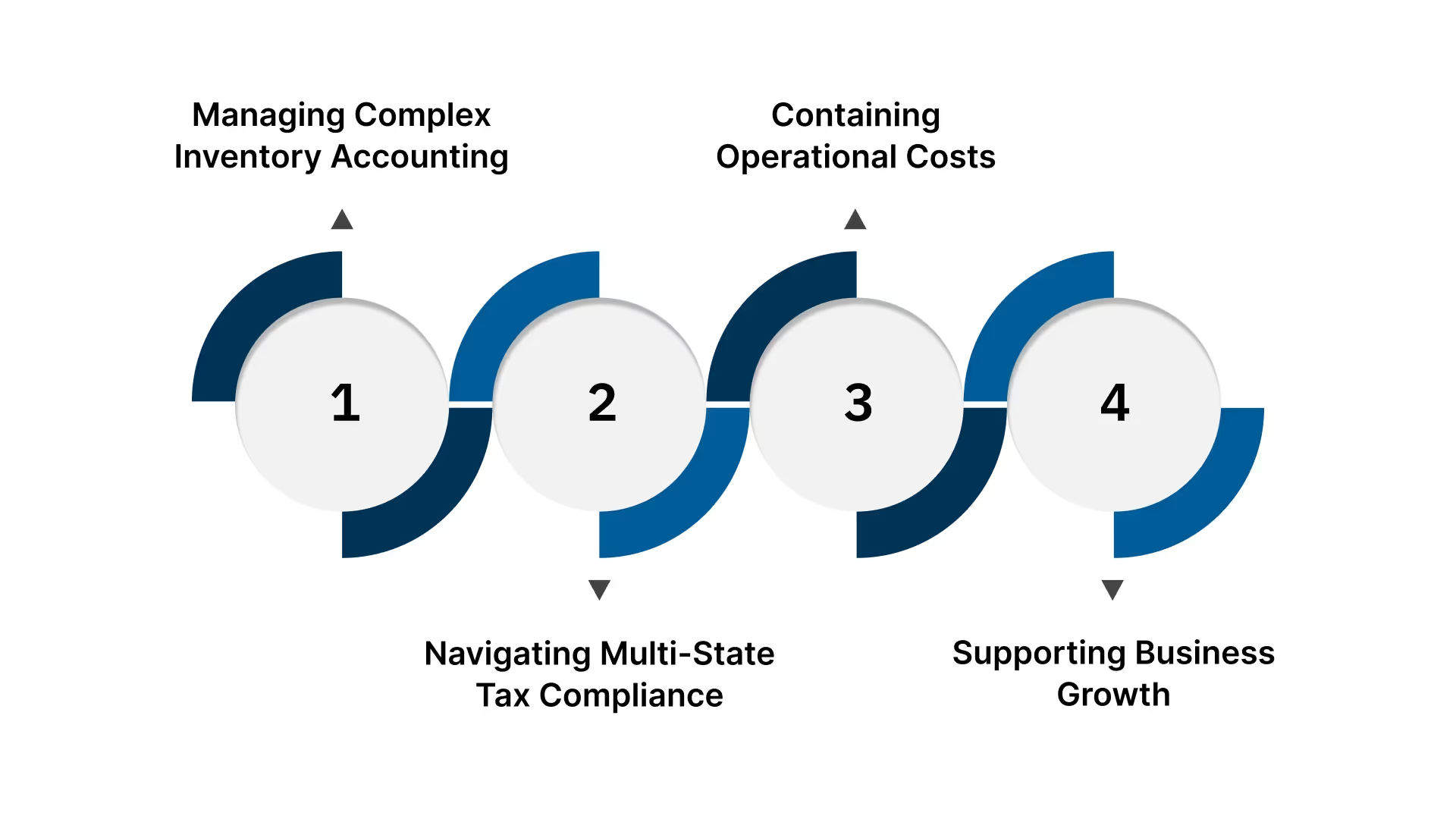
These factors make professional accounting support valuable:
Distribution operations require specialized inventory valuation and cost accounting expertise. You need systems that accurately track costs across multiple product lines and locations. Professional accountants implement methods appropriate for your specific distribution model.
Distribution companies operating across state lines face different tax regulations in each jurisdiction. You must comply with various sales tax rates, rules, and filing requirements. Accounting specialists maintain current knowledge of these evolving regulations.
Distribution businesses face significant overhead expenses for warehouse space, transportation, and inventory carrying costs. You need systems that accurately allocate these expenses to products and customers. Professional analysis identifies opportunities for cost reduction and efficiency improvement.
Expanding distribution operations require financial systems that scale with increasing transaction volumes and complexity. You need reporting that provides insights for strategic decision-making. Professional accounting support delivers the infrastructure for controlled growth.
Also read: Understanding US GAAP Consolidation Accounting Rules
VJM Global provides this specialized support, tailored to the needs of US distribution companies.
Managing distribution accounting requires specialized knowledge of industry practices and compliance requirements. Without proper systems, you risk inaccurate reporting, missed deductions, and compliance issues that affect your operation's financial health.
VJM Global provides specialized accounting services for US distribution companies. Our team understands the unique aspects of distribution financial management and compliance requirements.
Our approach provides US distribution companies with accurate financial information and compliance support from the US to India. We help you implement systems that capture the data needed for operational decisions and regulatory requirements.
Effective distribution accounting provides the financial clarity needed to manage a successful distribution operation. Specialized practices address the unique aspects of inventory management, cost accounting, and multi-state taxation. Proper systems deliver accurate data for strategic decisions while maintaining regulatory compliance.
VJM Global's expertise in distribution accounting supports US businesses in the distribution sector. Our understanding of industry-specific requirements helps clients implement appropriate financial systems and controls.
Book a demo today to discuss how our specialized accounting services can support your distribution business requirements. Our team provides the industry knowledge and technical expertise needed for your financial management needs.
Most distribution companies use the accrual method for more accurate financial reporting of inventory and revenue cycles. This approach matches revenues and expenses to the correct accounting period. Some smaller operations may qualify for cash basis accounting for tax purposes.
Inventory represents a significant asset on your balance sheet and requires careful valuation tracking. You capitalize all costs associated with purchasing and preparing goods for sale. These costs transfer to the cost of goods sold when you recognize related revenue.
Distribution operations may qualify for various deductions, including warehouse expenses, transportation costs, and inventory carrying charges. Specific provisions exist for domestic production activities and research development. Professional tax guidance identifies all eligible benefits.
VJM Global provides specialized accounting services for US distribution companies from our India-based team. We handle bookkeeping, tax preparation, and financial reporting using our knowledge of US distribution accounting standards.
Most providers offer flexible models, including monthly retainers based on transaction volume or hourly packages. This structure often provides significant savings compared to the full-time cost of an in-house accountant, including salary and benefits. You typically pay only for the specific services and level of support your business requires.