
As a U.S.-based architect looking to expand into India or establish operations in the country, one of the critical elements of setting up your firm is understanding how accounting works within the architectural field. With different tax laws, financial systems, and business regulations in India, understanding the nuances of accounting for U.S. architectural Firms is essential for long-term success.
If you’re dealing with complex project budgets or managing client billing, having the right accounting practices in place will ensure your business develops and remains compliant with local laws.
This guide provides an in-depth, yet simple, approach to accounting for architects specifically tailored for U.S. firms looking to set up or expand in India.
Architectural accounting is the specialized area of accounting that focuses on managing the financial aspects of architectural projects, including income tracking, tax planning, project-based budgeting, and client billing.
For U.S.-based architectural firms looking to expand into India, architectural accounting is crucial for understanding the local business environment. India’s regulatory environment, coupled with its mix of GST (Goods and Services Tax), corporate taxes, and other local requirements, demands accurate and reliable financial management.
This type of accounting ensures that an architecture firm can handle complex transactions, such as project-based accounting, client invoicing, and the management of overhead costs, all while ensuring compliance with Indian accounting standards.
Accounting for U.S. architectural companies expanding into the Indian market is about understanding how to manage these unique financial needs within the framework of Indian and US business regulations. With the expertise of VJM Global in outsourcing accounting and bookkeeping services, limited company registration, and FEMA consultancy, we can help your US firm understand India’s financial conditions, ensuring your firm stays compliant and profitable.
As you grasp architectural accounting, understanding the subtleties specific to architectural firms will help you manage finances more effectively in both the U.S. and Indian markets.

U.S. architectural firms often face challenges that become even more complex when expanding into a market like India. Let’s break down some of these subtleties and how they impact accounting for U.S. architect firms operating or planning to operate in India.
In architectural firms, accounting is driven by project-specific costs and revenue. For U.S. architecture firms in India, tracking these projects accurately ensures that they meet Indian tax regulations, like GST, and other local financial reporting standards.
For architectural firms, recognizing revenue as projects progress is a complex task. U.S. firms in India need to be aware of the Accounting Standards for Revenue Recognition under Indian GAAP (Generally Accepted Accounting Principles) and the GST regime to ensure accurate client billing.
Overhead costs like salaries, office rent, and utilities are common across firms, but in architectural firms, these costs often need to be divided by project. U.S. firms operating in India must account for these overheads while also adhering to the local taxation system to ensure no losses from mismanagement.
In architectural firms, assets such as CAD software, machinery, and tools are essential for project delivery. For U.S. companies expanding to India, it’s important to correctly categorize and depreciate these assets to comply with Indian tax laws on depreciation, ensuring tax efficiency.
Architects in India are required to comply with GST and service tax regulations. U.S. firms need to understand how GST on architectural services works in India, especially when it comes to different tax rates depending on the project type, ensuring compliance with India’s tax laws.
Also Read: Effective Strategies for Accounts Payable Management
With a deeper understanding of accounting subtleties, distinguishing between project accounting and standard accounting will streamline financial management for U.S. firms in India.
Understanding the difference between project-based accounting and standard accounting is essential for architectural firms, especially when dealing with complex projects and budgets. Here’s a breakdown to help U.S. firms understand how these types of accounting apply in India:
Understanding these differences will highlight the benefits of proper bookkeeping and accounting, which are critical for U.S. architectural firms entering the Indian market.
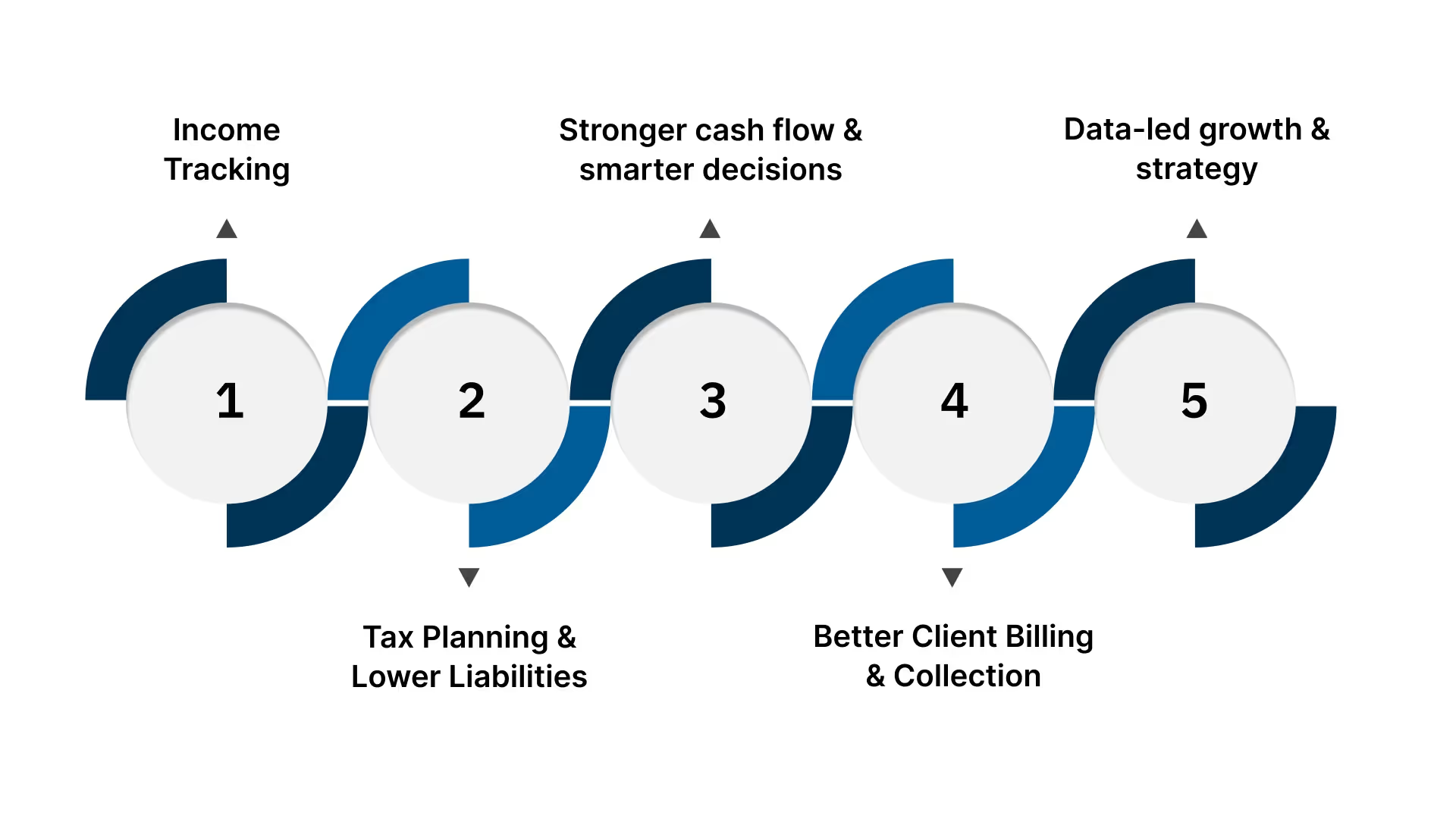
Outsourcing accounting operations to India gives U.S.-based architectural firms a strategic advantage, combining cost efficiency, expertise, and compliance with U.S.–India tax frameworks. Here is how it helps:
Outsourcing ensures accurate tracking of project revenues across multiple Indian cities, eliminating invoicing delays and improving transparency between U.S. headquarters and Indian clients or contractors.
Indian accounting experts familiar with GST and U.S. IRS regulations help reduce liabilities through compliant structuring, avoiding double taxation under the India–U.S. DTAA treaty.
Outsourced accountants provide real-time cash flow monitoring and financial forecasting, allowing U.S. firms to allocate resources effectively for new Indian design or construction projects.
Indian accounting partners handle end-to-end billing, follow-ups, and payment reconciliation, ensuring U.S. architecture firms maintain healthy receivables while focusing on design and client delivery.
By using detailed reports and performance analytics, U.S. firms can assess project profitability, refine pricing strategies, and plan expansions confidently within India’s growing architectural market.
Also Read: How Much Does a CPA Charge for Tax Preparation
As you adopt effective bookkeeping practices, focusing on the core aspects of accounting for architects will help you maintain operational efficiency in India.
Bookkeeping and accounting in architecture firms involve several key aspects that ensure financial accuracy, smooth project execution, and sustainable business growth. Here are some core aspects of accounting for architects, specifically relevant to U.S. firms in India:
In India, where sustainable architecture is gaining ground, U.S. firms must integrate environmental impact tracking into their accounting system to reflect sustainability efforts and ensure proper project budgeting.
U.S. architectural firms expanding into India must stay competitive by monitoring industry trends and conducting financial benchmarking against Indian competitors, ensuring their prices and services are aligned with the local market.
U.S. firms must employ effective cost estimation and cost-plus pricing strategies in India to ensure competitive pricing while managing profitability, factoring in GST and other regulatory taxes.
Efficient budget management is key for architectural firms, particularly when entering a new market. Proper budgeting ensures U.S. firms in India have clear project costs, allowing for better pricing proposals and client expectations.
Protecting IP in architecture, such as designs, models, and patents, is essential. U.S. firms in India need to account for these assets correctly and ensure that their IP rights are legally protected within India’s framework.
Also Read: Accounting Outsourcing Services in USA
When expanding your architectural firm into India, effective bookkeeping and financial audits are essential for smooth operations. With accounting outsourcing and audit services from VJM Global, your U.S. firm overcomes the complexities of Indian tax laws, ensuring your financial records are transparent and aligned with both local and international standards.
Next, let's address the specific needs of accounting and bookkeeping for US-based architectural firms in India.
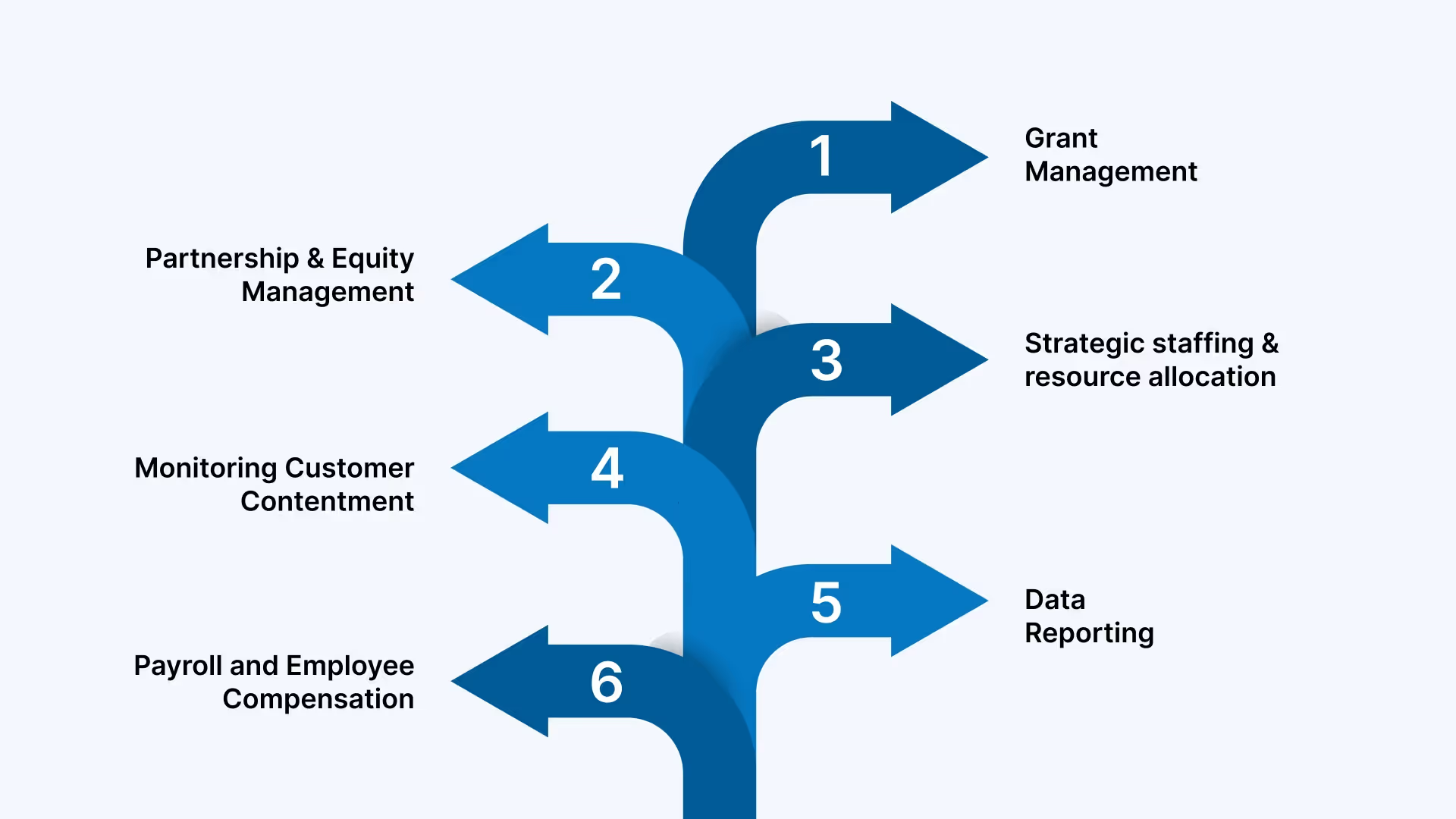
Bookkeeping and accounting for architects isn’t just about keeping the books in order; it plays a key role in running a successful, compliant, and profitable firm. For U.S. firms expanding into India, here are some specific needs:
For U.S. architects working on government-funded projects in India, managing grants requires clear tracking of expenditures and ensuring compliance with Indian government financial requirements.
U.S. firms expanding into India often partner with local architects or firms. Accounting practices must ensure equity shares and partnerships are tracked accurately, particularly for FEMA and joint venture requirements.
Efficient bookkeeping allows U.S. firms to allocate resources and manage staff efficiently, ensuring they remain within budget while scaling operations in India.
Accurate billing and financial transparency improve cash flow but also boost client trust and satisfaction, leading to repeat business and referrals for U.S. firms in India.
Timely and accurate financial data is crucial for U.S. firms to monitor performance, make informed decisions, and provide reports to clients and partners, ensuring compliance with both U.S. and Indian regulations.
Managing payroll efficiently is crucial, especially when handling employees across different regions in India. U.S. firms must ensure proper compliance with India’s labor laws and payroll tax regulations.
Also Read: Settle Tax Debt with Confidence: Relief Options For US Businesses
After addressing these needs, understanding the unique challenges architects face in India will further help you streamline your accounting processes.
Expanding into India can present unique challenges for U.S. architecture firms due to the country’s distinct regulatory, cultural, and operational settings. Here’s a breakdown of some common challenges and potential solutions for overcoming them:
Dealing with India’s GST, corporate tax, and labor laws can be overwhelming for U.S. firms unfamiliar with local regulations.
Solution: Work with local legal and tax advisors to ensure compliance with India’s regulatory requirements and avoid penalties.
Understanding local architectural styles and client expectations is crucial, especially for U.S. firms unfamiliar with the Indian market.
Solution: Conduct market research and collaborate with local architects to understand cultural preferences and tailor designs accordingly.
Currency fluctuations and economic instability in India can impact pricing, costing, and overall project budgeting.
Solution: Implement hedging strategies and continuously monitor economic conditions to adjust pricing and project budgets accordingly.
Managing teams across time zones and overcoming communication hurdles can delay project timelines and affect decision-making.
Solution: Use project management tools and set clear communication protocols to ensure smooth coordination between teams in different time zones.
Ensuring timely resource allocation and managing subcontractors can be a significant challenge when projects face delays.
Solution: Develop a robust project timeline, allocate resources efficiently, and work closely with local vendors to prevent delays.
Also Read: How to Establish a Shared Services Center Setup in India from the USA
By overcoming these challenges, applying efficient accounting practices will be key to U.S. architects’ success in India’s competitive market.
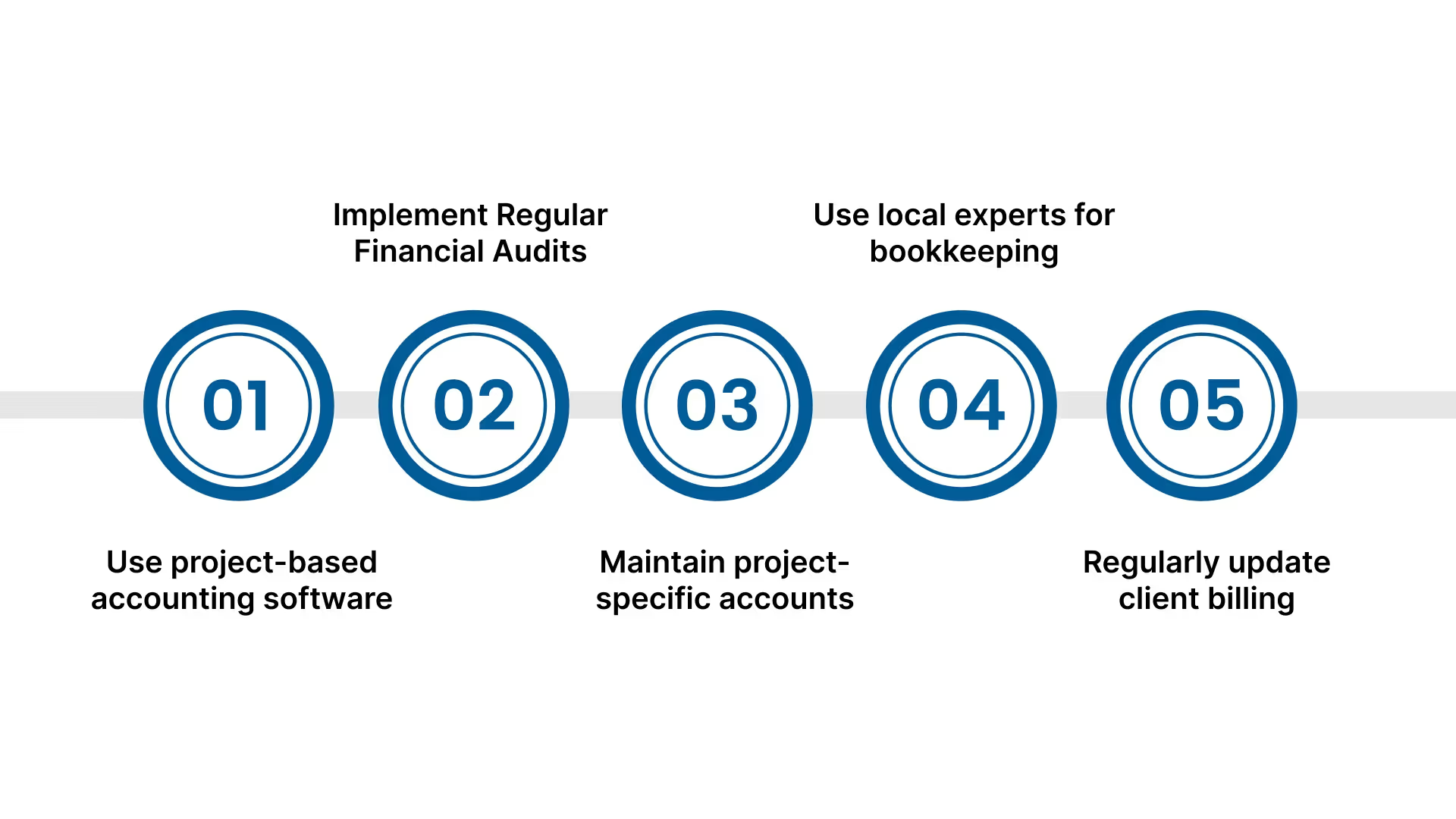
For U.S. firms expanding into India, adopting efficient accounting practices is critical for project success and overall business sustainability. Here are some best practices:
U.S. firms should implement accounting software tailored for architecture firms to track project budgets, timelines, and costs, ensuring compliance with Indian tax regulations.
Regular financial audits ensure transparency and compliance with both U.S. and Indian financial regulations, helping to identify inefficiencies early.
Keeping financial records separate for each project allows firms to better track costs, manage cash flow, and understand the profitability of each project.
U.S. firms should consider outsourcing bookkeeping to Indian accountants who are familiar with local tax codes, ensuring accuracy and compliance with Indian laws.
Keeping client billing systems up-to-date with Indian market practices helps ensure timely payments and maintains strong client relationships.
Also Read: How to Start a Clothing Brand in India from the US: A Step-by-Step Guide
With efficient accounting in place, let's see how VJM Global can help your US architecture firm manage payroll compliance as you expand into India.
Expanding your U.S.-based architectural firm into India requires more than just setting up a presence; it demands strong financial strategies and robust accounting practices to deal with the complexities of the Indian market. VJM Global offers tailored services that address every aspect of setting up and growing your business, from accounting for architects to complying with local regulations. Here’s how we can help you establish a successful business in India:
At VJM Global, we are committed to helping U.S.-based architectural firms succeed in India by providing expert financial services and ensuring compliance with local regulations.
Effective accounting for architects is a fundamental component of running a successful U.S. architecture firm planning to expand into India. Understanding the nuances of project accounting, tax planning, and client billing ensures that your architectural firm can develop in a new market.
With the right accounting practices in place, U.S.-based architecture firms can deal with India’s complex financial conditions, improve cash flow, and make better strategic decisions. Accounting for architects helps in staying compliant, but also provides the financial clarity needed to drive business growth and succeed in India’s competitive architectural market.
Expanding to India involves strategic decisions about business structure and tax planning. With expertise in international taxation, transfer pricing, and financial restructuring, VJM Global ensures that your U.S. architectural firm is positioned for long-term success in India while maintaining tax efficiency and regulatory compliance.
Contact VJM Global and let us guide you through the complexities of expanding your US entity and managing your accounting needs in India.
GST applies to architectural services in India, impacting project invoicing and tax filings. U.S. firms must register and comply with local GST regulations.
U.S. firms can utilize India’s Double Taxation Avoidance Agreement (DTAA), reducing tax burdens by avoiding double taxation between the U.S. and India.
U.S. firms should track project-specific revenues and expenses separately to comply with Indian tax laws and GST regulations, ensuring accurate financial reporting and audits.
U.S. firms must register with the Registrar of Companies (RoC), obtain FEMA clearance, and comply with India’s tax laws for establishing a branch office.
U.S. architects can optimize entry by setting up efficient bookkeeping systems, understanding Indian GST laws, and using local tax consultants to manage compliance.