.avif)
Expanding your business into a new market is a significant undertaking, and the opportunity in India is immense. However, before you can ship your first product or invoice a client, there's a crucial piece of documentation you need to secure: the Importer Exporter Code, or IEC code.
For U.S. businesses and professionals looking to establish a presence in India, understanding the IEC code is a foundational step to unlocking the Indian market's full potential.
This guide will walk you through everything you need to know about the IEC code, from its definition to the step-by-step application process, to ensure a smooth entry into the world of international trade with India.
The IEC code is your entry pass into India's cross-border trade ecosystem. It's a unique, 10-digit number issued by the Directorate General of Foreign Trade (DGFT), which operates under India's Ministry of Commerce and Industry. It serves as a mandatory business identification number for anyone involved in importing goods into or exporting goods from India.
The primary role of the IEC code is to legitimize and streamline cross-border business. It provides a legal identity for your business in the eyes of Indian customs and government authorities. The IEC is now essentially the same as your business’s Permanent Account Number (PAN), which simplifies the process while maintaining a distinct purpose for international trade.
An IEC code is required for any business entity, whether a sole proprietorship, partnership, LLP, or corporation, that wishes to engage in commercial import or export activities. There are very few exemptions, such as for personal use, which do not apply to most businesses.
For U.S. start-ups and small to medium-sized enterprises (SMEs) looking to enter the Indian market, securing an IEC code is a foundational requirement. It serves as your company's official business ID for all international trade transactions with India.
Here’s why it's a must-have for your business:
If you're a U.S. business owner and are unsure about where to begin with the application process, our experts at VJM Global can provide the guidance you need to get started correctly.
The process for obtaining an IEC code is now entirely online and requires a specific set of documents and information. Gathering these items beforehand will significantly speed up your application.
Here is a list of the essential documents you will need to apply for the code:
Special Considerations for Foreign Entities: While the process is streamlined, foreign professionals and entities may need to provide additional legal documentation, such as the Certificate of Incorporation for a foreign company or other similar business registration proofs.
Common Mistakes to Avoid:
To avoid these common pitfalls and ensure all your documents are perfect from the start, our specialists at VJM Global can provide a comprehensive document review and application support.
.avif)
The process is designed to be user-friendly and can be completed through the DGFT's official website.
First, you must register as an "Importer/Exporter" on the DGFT portal. You will need a valid email address and a mobile number. The portal will send OTPs (One-Time Passwords) to both for verification.
Once registered, log in and start the application. The form, known as ANF 2A, will require you to enter details about your business, including its nature, legal status, and address. You will also need to provide bank account details.
You will be prompted to upload digital copies of all the documents listed in the previous section. Make sure they are in PDF or JPEG format and do not exceed the file size limit (typically 5MB). The application fee of INR 500 (approximately $6 USD) can be paid online via debit card, credit card, or net banking.
After paying the fee, you can submit the application. The DGFT portal will generate a 20-digit ECOM reference number for your application. You can use this number to track the status of your application on the DGFT website. The code is typically auto-generated within a few days of a successful submission.
Also Read: How to Set Up a Digital Signature Business in India?
While the IEC code is a basic requirement, its benefits for U.S. entrepreneurs are significant and strategic.
Also Read: Benefits of LLP registration in India
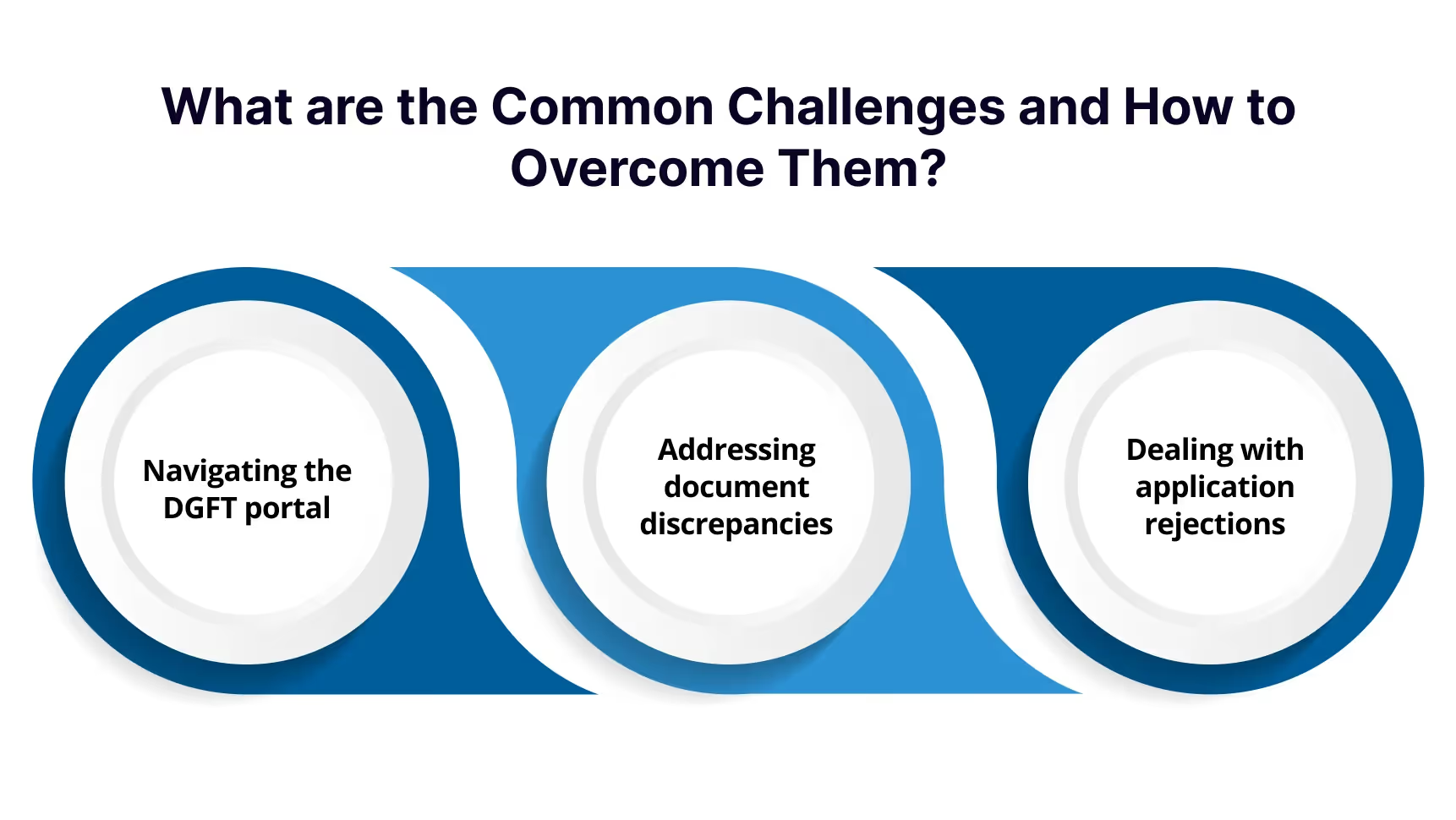
Despite the streamlined process, some challenges can arise, especially for foreign entities. Being aware of them can help you prepare.
An IEC code has permanent validity, meaning it doesn't expire. However, there are mandatory compliance obligations you must follow to keep it active.
Also Read: Company registration cost in India explained
For U.S. startups and SMEs, entering the Indian market presents a significant opportunity, and obtaining an IEC is the first and most critical step. With its permanent validity and simple annual compliance, the IEC code is a strategic, one-time investment that grants legal authority to trade.
It simplifies customs and opens the door to government incentives. It ensures compliance and positions your company for success in the international marketplace.
Ready to start your journey into the Indian market? Contact VJM Global today to ensure a smooth and compliant IEC application process from start to finish.
A. Yes, an IEC code is required for most service exports from India if they involve receiving payments in foreign currency. This code is crucial for completing financial transactions and claiming benefits under various government schemes. It legitimizes your business in the eyes of Indian banking and trade authorities.
A. The IEC code has permanent validity and does not have an expiration date. However, it is mandatory for all IEC holders to electronically update their details every year between April and June, even if there are no changes. Failure to do so will result in the deactivation of the IEC code, halting all import and export activities.
A. No, a single business entity is only permitted to have one IEC code, which is linked directly to its Permanent Account Number (PAN). Applying for multiple codes is not allowed and can lead to complications with the DGFT. If you operate different business activities, they must all be conducted under the same, single IEC code.
A. To reactivate a deactivated IEC code, you must log in to the DGFT portal and complete the mandatory annual electronic update. There are no additional fees for reactivation, but the process may take a few days to be processed by the DGFT. It is essential to ensure all your business details are up to date and correct before resubmitting.
A. Yes, an IEC code is not required for imports or exports that are for personal use and not for commercial, industrial, or agricultural purposes. The value of such goods should not exceed a certain limit, which is specified in the Foreign Trade Policy. This exemption is primarily for non-business-related transactions.
A. Yes, the IEC code must be prominently mentioned on all shipping and customs-related documents for both import and export shipments. This includes the bill of lading, shipping bill, and commercial invoices. Providing the IEC code on these documents is critical for seamless customs clearance and to avoid delays.