Introduction
Many UK businesses struggle with mounting compliance demands. Between Making Tax Digital mandates expanding annually, rising employer costs (with National Insurance Contributions now at 15%), and a finance talent shortage affecting 34% of UK businesses, the administrative burden has never been greater. For many, outsourcing accounting and bookkeeping has become less of a cost-cutting tactic and more of a practical necessity.
This guide is for UK SMEs, startups, and established businesses under pressure to reduce overhead whilst keeping financial records accurate and compliant. Here's what it covers:
- What accounting outsourcing actually involves
- Why UK businesses are adopting it at record rates
- How the process works, step by step
- Which functions can be delegated
- How to choose the right outsourcing partner
Key Takeaways
- Delegating finance tasks to an external team saves time, cuts costs, and keeps your business compliant
- 75% of UK SMEs outsource at least one business function, with 84% reporting high provider loyalty
- Common outsourced tasks include bookkeeping, VAT returns, payroll, year-end accounts, and management reporting
- Vet providers on UK compliance expertise, data security, scalability, and clear pricing
- Not every business is ready to outsource: on-site needs or inconsistent data handover can make it impractical
What Is Accounting and Bookkeeping Outsourcing?
Accounting and bookkeeping outsourcing means handing responsibility for financial record-keeping, reporting, and compliance tasks to a specialist third-party provider. Rather than managing every finance function in-house, businesses delegate specific tasks to an external team with defined workflows, secure systems, and service-level agreements.
This differs from offshoring, which specifically refers to engaging a team based in another country. Outsourcing can be onshore (UK-based provider) or offshore (overseas provider) — both models are widely used across UK businesses.
The distinction from hiring a freelance accountant matters too. A managed outsourcing arrangement typically provides:
- An organised team with shared accountability
- Standardised processes and documented workflows
- Cloud-based collaboration tools for real-time access
- Contractual service commitments and defined SLAs
A sole freelancer, by contrast, offers none of these structural safeguards.
Why UK Businesses Are Choosing to Outsource Accounting
Cost Pressures Are Intensifying
Hiring in-house finance staff has become significantly more expensive. A bookkeeper in England costs £27,000–£45,000 annually in salary alone, whilst a qualified management accountant commands £64,250–£79,500.
Layer in employer National Insurance Contributions at 15% (up from 13.8% in April 2025), minimum 3% employer pension contributions, software licences, workspace, and recruitment costs — and the true cost of an in-house hire climbs fast.
Outsourcing consolidates these resources under one provider. Businesses have documented cost reductions of up to 50% when switching from in-house to outsourced models, primarily by eliminating headcount-related expenses and benefiting from shared resources and scale.
UK Compliance Demands Are Expanding
Making Tax Digital (MTD) mandates are rolling out progressively:
- MTD for VAT: Already mandatory for all VAT-registered businesses
- MTD for Income Tax (ITSA): Mandatory from 6 April 2026 for income above £50,000; from April 2027 for income above £30,000; and from April 2028 for income above £20,000
HMRC enforcement is tightening. Compliance checks on mid-sized businesses doubled from 2,099 in 2020–21 to 4,506 in 2024–25, and HMRC levied £2.5 billion in fines and penalties in 2024–25. Late corporation tax filings now attract penalties up to £2,000 for three consecutive failures.
Outsourced providers specialising in UK compliance stay current with these shifting requirements, reducing the risk of penalties and missed deadlines.
Access to Qualified Talent Is Constrained
The UK finance talent market is under strain:
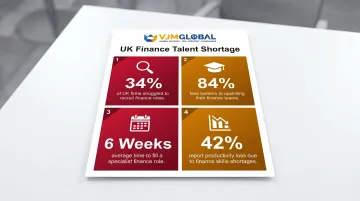
- 34% of businesses struggled to recruit for finance and accounting roles in the past year
- 84% face barriers to upskilling current employees
- Business and finance roles take an average of 6 weeks to fill
- Skills shortages cause a 42% productivity drop for affected employers
Outsourcing gives businesses immediate access to qualified professionals—including Chartered Accountants, ACCAs, and specialists in UK GAAP and HMRC rules—without the time and cost burden of local recruitment.
Scalability and Time Freed for Growth
Beyond cost and compliance, outsourcing reshapes how a business operates day-to-day:
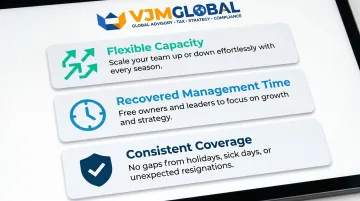
- Flexible capacity: Teams scale up during year-end, VAT periods, or growth phases — and scale back during quieter months, eliminating the cost of a full-time salary for fluctuating workloads
- Recovered management time: When bookkeeping, reconciliation, and compliance sit with an external team, owners and managers can focus on client acquisition, product development, and strategic planning
- Consistent coverage: No gaps from staff holidays, sick leave, or resignations — the work continues uninterrupted
How Accounting and Bookkeeping Outsourcing Works
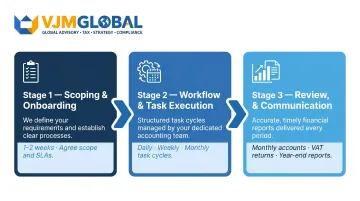
Most outsourced accounting relationships follow three stages: initial onboarding, ongoing task execution, and regular reporting and review.
Before work begins, you'll typically need to:
- Share access to your cloud accounting software (Xero, QuickBooks, or Sage)
- Provide bank statements and transaction records
- Agree on reporting formats, deadlines, and communication preferences
Step 1: Scoping and Onboarding
The provider assesses your current accounting setup: transaction volume, compliance obligations (VAT, PAYE, corporation tax), software stack, and reporting needs. Together, you agree on:
- Scope of work (which functions to outsource)
- Service level expectations
- Pricing model (fixed retainer, per-transaction, tiered package)
- Communication cadence (weekly check-ins, monthly reports, quarterly reviews)
This phase typically takes 1–2 weeks, depending on the complexity of your operations.
Step 2: Workflow Setup and Task Execution
Once onboarded, the outsourced team takes ownership of agreed tasks on a defined schedule—daily, weekly, or monthly. Common workflows include:
- Daily: Transaction coding, receipt capture
- Weekly: Bank reconciliation, invoice processing
- Monthly: Management accounts, payroll runs, VAT return preparation
The team works within your existing cloud software. No platform migration required, and your internal team continues working as normal.
Step 3: Review, Reporting, and Communication
Completed work is delivered at agreed intervals — typically monthly management accounts, quarterly cashflow statements, or annual year-end reports. Standard deliverables include:
- Monthly management accounts and bank reconciliations
- Quarterly VAT returns and cashflow statements
- Annual year-end reports and statutory filings
Queries are handled via email, video call, or dedicated client portals.
The client retains final sign-off authority throughout. Directors must still sign statutory filings and remain legally responsible for accuracy under the Companies Act 2006 — the outsourced provider supports these activities but does not replace the owner's accountability.
Data protection falls under UK GDPR Article 28, which requires a written contract between you (the controller) and the provider (the processor). That contract must cover eight mandatory clauses: processing only on written instructions, confidentiality commitments, appropriate security measures, sub-processor authorisation, assistance with data subject rights, breach notification support, data deletion at contract end, and audit rights. This is a legal requirement, not discretionary best practice.
What Accounting Functions Can UK Businesses Outsource?
UK businesses commonly delegate the following:
Daily and periodic tasks:
- Daily bookkeeping and transaction recording
- Bank reconciliation
- Accounts payable management (invoice scanning, payment scheduling)
- Accounts receivable management (invoicing, deposit tracking, aged debt analysis)
Compliance and statutory tasks:
- Payroll processing and PAYE submissions
- VAT returns with MTD-compliant digital filing
- Year-end accounts preparation
- Corporation tax return preparation
Strategic and reporting tasks:
- Management accounts and KPI dashboards
- Cashflow forecasting
- Budgeting and variance analysis
What stays in-house:
- Final financial decision-making
- Strategic financial planning and investment decisions
- High-level advisory discussions
- Signing off on statutory filings (this is a director's legal responsibility)
These categories aren't an all-or-nothing decision. You can outsource a single function — bookkeeping only, for instance — or hand off an entire finance function, depending on your size, budget, and internal capacity.
HMRC's framework accommodates this directly. Agents not based in the UK can register for an Agent Services Account and act on behalf of UK clients for VAT, MTD for Income Tax, and other digital handshake services — provided they meet the HMRC Standard for Agents.
How to Choose the Right Accounting Outsourcing Partner in the UK
Five criteria separate dependable outsourcing partners from those who create more problems than they solve.
1. Verified UK Compliance Knowledge
The provider must understand HMRC rules, Making Tax Digital requirements, UK GAAP, VAT treatment, and Companies House obligations. Generic accounting knowledge won't cut it. Ask directly: How many UK businesses do they serve? Do they hold memberships in recognised professional bodies?
Firms with a verifiable track record — such as those serving 250+ UK businesses and holding membership in EAI International (a globally recognised group of independent accounting and tax firms) — demonstrate the credibility worth seeking.
2. Technology That Fits Your Stack
The provider should work within your existing cloud accounting software — Xero, QuickBooks, or Sage — rather than forcing a platform migration. They should also use HMRC-recognised tools for digital submissions and demonstrate familiarity with API integrations, automated bank feeds, and digital receipt capture.
3. Data Security You Can Document
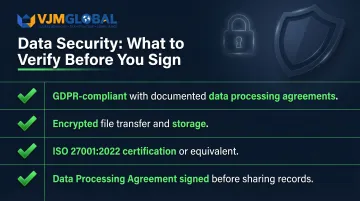
GDPR compliance isn't optional. Look for providers who meet all of the following:
- GDPR-compliant with documented data processing agreements
- Encrypted file transfer and storage in place
- ISO 27001:2022 certification (or equivalent) for information security management
- Willing to sign a Data Processing Agreement before you share any records
4. Transparent Pricing With No Hidden Costs
Understand the pricing model before you sign. Common structures include:
| Model | How It Works | Watch Out For |
|---|---|---|
| Fixed monthly retainer | Set fee for defined scope | Scope creep charges |
| Per-transaction fees | Scales with volume | Unpredictability at growth stage |
| Tiered packages | Entry, standard, premium levels | Feature gaps between tiers |
Clarify exactly what's included. Does the monthly fee cover unlimited queries? Are VAT returns billed separately? Hidden fees erode the cost advantage of outsourcing quickly.
5. Capacity to Scale With You
Beyond the current engagement, consider whether the provider can handle additional entities, new payroll staff, or multi-currency operations as your business grows. The right partner adapts to your trajectory — not just your starting point.
Common Misconceptions About Accounting and Bookkeeping Outsourcing
"Outsourcing means losing control"
Reputable providers operate within agreed workflows, deliver regular reporting, and require client approval on statutory filings. You retain full visibility via cloud software access, monthly reports, and client portals. Failing to deliver annual accounts to Companies House is a criminal offence, and all directors risk prosecution regardless of outsourcing—so providers build client sign-off into the process by design.
"Only large businesses benefit from outsourcing"
SMEs and sole traders increasingly outsource. Many providers offer modular entry-level packages starting with basic bookkeeping. When compared to the full cost of a part-time in-house hire, outsourcing often delivers better value even at small transaction volumes. A typical in-house hire carries:
- Base salary
- 15% employer National Insurance contributions
- 3% minimum pension contribution
- Accounting software licences
37% of SME employers seeking external advice approached an accountant—the most common external source. Micro businesses (1–9 employees) were even more likely to use accountants (39%) than small or medium firms. Outsourcing is not a large-company privilege.
"Offshore providers can't handle UK compliance"
Geographic location does not determine compliance competence. Many offshore accounting firms invest specifically in UK regulatory training, HMRC software certifications, and memberships in UK professional bodies. What matters is the provider's knowledge of HMRC rules, MTD protocols, UK GAAP, and their track record with UK clients—not their postcode.
HMRC provides a dedicated registration pathway for overseas agents, and the same conduct standards apply regardless of location. The 10% of UK employers who offshore work do so to bridge skills gaps and access qualified talent—not to cut corners on quality.
When outsourcing may not fit
That said, outsourcing is not the right fit for every situation. Consider these scenarios before committing fully:
- Your business requires real-time, on-site financial support for complex, high-frequency transactions
- You operate in a highly regulated sector (financial services, healthcare) with bespoke reporting needs
- You lack the internal structure to consistently handover transaction data, receipts, and documentation
In these cases, a hybrid model—outsourcing routine tasks whilst retaining strategic finance in-house—may work better than full delegation.
Frequently Asked Questions
How much does it cost to outsource an accountant in the UK?
Common models include fixed monthly retainers (£200–£1,500+), per-transaction fees, or tiered packages. Final cost depends on transaction volume, VAT and payroll complexity, number of entities, and reporting frequency. Request itemised quotes from multiple providers to compare like-for-like.
Is outsourcing legal in the UK?
Yes, outsourcing accounting functions is fully legal. However, businesses remain legally responsible for the accuracy of their filings. Directors risk criminal prosecution and unlimited fines for failing to file accurate accounts, regardless of outsourcing arrangements.
Can accountants work from home in the UK?
Yes, but this is distinct from outsourcing. Remote in-house staff are still employees on your payroll. Outsourcing involves a separate third-party provider with its own team, systems, and contractual service commitments.
What accounting tasks can be outsourced to a third party?
The most commonly outsourced functions are bookkeeping, payroll and PAYE submissions, VAT returns, year-end accounts preparation, management reporting, and accounts payable/receivable management. Businesses retain strategic planning, final decision-making, and statutory sign-off.
How do I ensure data security when outsourcing my accounting?
Verify that the provider is GDPR-compliant, uses encrypted platforms, maintains defined access controls, and holds ISO 27001 certification or equivalent. A signed Data Processing Agreement is mandatory before sharing any financial records, as required under UK GDPR Article 28.
Is outsourced accounting suitable for small businesses in the UK?
Yes. Many providers offer modular entry-level packages tailored to sole traders and micro-businesses. When the cost of outsourcing is compared to the time cost of managing books independently—or the expense of a part-time hire—even small firms typically reclaim significant time and reduce overhead costs.
Ready to explore outsourcing for your UK business? VJM Global has supported 250+ UK businesses with accounting, VAT compliance, and MTD-ready services, with a 95% client retention rate and membership in EAI International. Contact us to discuss a plan built around your compliance requirements and growth stage.