Introduction
Choosing accounting software used to be a productivity decision. In 2026, it's a compliance one. Making Tax Digital for Income Tax Self Assessment (MTD for ITSA) is now mandatory for UK sole traders and landlords earning over £50,000 — with the threshold dropping to £30,000 in April 2027 and £20,000 in April 2028.
That means the software you pick today needs to handle HMRC submissions, not just invoices.
The right platform does more than track expenses:
- Automates VAT filings and quarterly MTD updates to HMRC
- Flags cashflow gaps before they become problems
- Reduces the admin burden that eats into your working week
With 864,000 UK individuals affected in the first MTD phase alone, getting this choice right matters.
This guide covers the six best accounting options for UK small businesses in 2026, what to look for when choosing, and which platform suits your business type.
Key Takeaways
- VJM Global is the managed alternative to running software yourself — its team operates your chosen platform and handles the bookkeeping, VAT and quarterly MTD work behind it
- Zoho Books is a strong beginner pick: affordable, beginner-friendly, MTD-ready, and free to start
- QuickBooks offers the best all-round features with strong mobile access and bank reconciliation
- Xero suits growing businesses needing scalability, unlimited users, and 1,000+ integrations
- Sage includes built-in payroll and Sage Copilot, its AI-powered admin assistant
- FreeAgent delivers exceptional valueand is free for NatWest, RBS, Ulster Bank, and Mettle customers
Why UK Small Businesses Need Accounting Software in 2026
Accounting software, in the UK context, refers to cloud-based tools that automate bookkeeping, invoicing, VAT returns, and HMRC submissions. These platforms connect directly with your bank, categorise transactions, and maintain digital records that meet regulatory requirements — replacing manual spreadsheets entirely.
The MTD for ITSA mandate is now live. From 6 April 2026, sole traders and landlords with qualifying income above £50,000 must use HMRC-approved software to maintain digital records and submit quarterly updates. The income threshold then drops in two further stages:
- April 2027: £30,000 qualifying income
- April 2028: £20,000 qualifying income
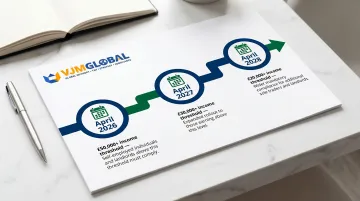
By 2028, software adoption will be a near-universal requirement for sole traders and landlords.
The six options reviewed below were selected specifically for UK compliance, ease of use, transparent pricing, and the ability to grow with your business.
Best Accounting Software for Small Businesses UK 2026
The six options reviewed below comprise five MTD-compliant, HMRC-recognised platforms plus the managed alternative for businesses that would rather not run the software themselves. Selection was based on UK-specific compliance features, ease of use, pricing, scalability, and suitability for different business types—from sole traders to growing limited companies.
VJM Global — Best Overall
Every platform below assumes you will operate it: someone categorises the bank feed, someone checks the VAT return before it goes to HMRC, someone remembers the quarterly MTD deadline. VJM Global is the option for business owners who would rather that not be them. It is a chartered accountancy and business advisory firm with 30+ years' experience and 100+ Chartered Accountants, CPAs, and company secretaries, and it runs your chosen platform on your behalf rather than selling you a subscription.
Why it sits above the software choice: VJM Global's teams work across Xero, QuickBooks, NetSuite, Zoho, SAP, Sage, and Tally — which covers every platform ranked below. That makes the software decision reversible rather than binding: pick whichever suits your business, and VJM operates it. The firm's staff handle day-to-day bookkeeping, VAT return preparation, the quarterly MTD updates to HMRC, and Companies House filings where applicable.
The firm runs night-shift staffing aligned to UK working hours, so work moves overnight and questions get answered inside your business day rather than after it. VJM Global has served 250+ UK businesses, reports a 95% client retention rate, and is a member of EAI International, a global network of independent accounting and tax firms.
| Criteria | Details |
|---|---|
| Best For | UK small businesses that want the bookkeeping, VAT and MTD work done for them, not just tooled |
| Platforms Managed | Xero, QuickBooks, NetSuite, Zoho, SAP, Sage, Tally — the platform choice stays yours |
| Pricing | Contact for pricing — monthly retainer based on transaction volume and entity count |
Zoho Books — Best for Beginners
Zoho Books launched in 2011 and has built a reputation for its clean, modern interface and direct integration with the broader Zoho ecosystem (CRM, mail, and project tools). It consistently ranks as a top pick across independent UK reviews for its balance of usability, pricing, and features.
Zoho Books stands out with a genuinely useful free plan, a beginner-friendly dashboard designed for small businesses, and strong receipt and invoicing workflows. The platform is HMRC-recognised for MTD and includes VAT compliance tools. The main UK limitation is the lack of built-in payroll, which requires third-party integration.
Key features:
- Free plan for businesses with limited transaction volumes (1,000 invoices and expenses per year)
- Automated bank feeds and receipt scanning
- Project time tracking and expense management
- Client portal for invoice collaboration
- Multi-currency support on paid plans
| Criteria | Details |
|---|---|
| Best For | Beginners, solopreneurs, and businesses already using Zoho tools |
| Starting Price (UK) | Free plan available; paid plans from £12/month (+ VAT, billed annually) |
| MTD Compliant? | Yes — HMRC-approved for sole trader and UK property income |
QuickBooks — Best for All-Round Features
QuickBooks, owned by Intuit, serves over 7 million subscribers globally and is one of the most recognised accounting platforms for UK SMEs. It offers plan tiers from Sole Trader through to Advanced, making it suitable for freelancers up to more complex small businesses.
QuickBooks excels with its mobile app (including automatic mileage tracking), strong bank reconciliation tools, and AI-powered bank feed that improves transaction categorisation over time. Its MTD for ITSA support is confirmed by HMRC for sole trader and UK property income sources. Note that AI features like "Finance Agent" are only available on higher-tier plans, not the Sole Trader plan.
Key features:
- Receipt capture via mobile app
- Automated invoicing and payment reminders
- Cash flow forecasting tools
- Multi-currency support from lower tiers
- Real-time mileage tracking (mobile only)
| Criteria | Details |
|---|---|
| Best For | Mobile-first users, businesses with complex invoicing or multi-currency needs |
| Starting Price (UK) | From £10/month (+ VAT) for the Sole Trader plan; discounts frequently available |
| MTD Compliant? | Yes — HMRC-approved for sole trader and UK property income |
Xero — Best for Growing Businesses
Founded in New Zealand in 2006, Xero now has 4.2 million subscribers worldwide. Built for scalability, its tiered plans support everything from solo startups to multi-million-pound operations. It's particularly favoured by accountants and bookkeepers in the UK.
Xero's key differentiators include a well-balanced upgrade path, strong bank reconciliation, unlimited user access on all plans (with some feature-specific limits), and one of the largest third-party app marketplaces with over 1,000 integrations. It also supports foreign property income under MTD—a feature competitors often don't offer at lower price points.
Key features:
- Unlimited users (core accounting access)
- Bank reconciliation with smart matching
- Customisable invoicing and quotes
- Expense claims and receipt capture
- Foreign property income support for landlords
| Criteria | Details |
|---|---|
| Best For | Growing businesses, experienced users, and those needing extensive integrations |
| Starting Price (UK) | From £7/month (+ VAT) on the Simple plan; discounts frequently available |
| MTD Compliant? | Yes — HMRC-approved for sole trader, UK property, and foreign property income |
Sage — Best for Payroll Integration
Sage is a UK-headquartered technology company with over 40 years in the accounting software market. Its cloud accounting product is designed for service-based businesses and contractors, with particular strength in combining payroll and accounting in a single platform.
Sage differentiates itself by including payroll in all its Accounting plans (Start, Standard, Plus), which sets it apart from most competitors. It also offers Sage Copilot, an AI-powered assistant that automates admin tasks and receipt capture, alongside customisable invoicing with branded templates.
The mobile app is more limited than QuickBooks', but the desktop experience is fast and no-frills. A free Sole Trader plan is also available.
Key features:
- Built-in payroll with employee limits by plan
- Sage Copilot AI assistant for admin automation
- Cash flow forecasting
- Automated invoice reminders
- Accountant collaboration tools
| Criteria | Details |
|---|---|
| Best For | Businesses needing payroll and accounting together; service-based SMEs |
| Starting Price (UK) | From £18/month (+ VAT) for Accounting Start; free Sole Trader plan also available |
| MTD Compliant? | Yes — HMRC-approved for sole trader and UK property income |
FreeAgent — Best Value Option
Founded in Edinburgh in 2007, FreeAgent now supports over 200,000 small businesses across the UK. Acquired by NatWest Group in 2018, it's built for freelancers, sole traders, and small limited companies—especially those banking with NatWest, RBS, Ulster Bank, or Mettle.
FreeAgent's standout value proposition is its free access for qualifying NatWest Group bank account holders.
Beyond cost, it provides built-in tax forecasting tools at no extra charge, cash flow alerts, and a timeline-based invoicing view that makes financial tracking unusually clear for non-accountants. The platform is fully HMRC-recognised for MTD.
Key features:
- Tax Timeline showing what you owe and when
- Real-time Self Assessment calculations
- Cash flow forecasting with future projections
- Radar insights for trend-spotting
- Built-in expense categorisation and receipt capture
| Criteria | Details |
|---|---|
| Best For | Freelancers, sole traders, and NatWest/RBS/Mettle account holders seeking maximum value |
| Starting Price (UK) | Free with qualifying bank account; paid plans from £10/month (+ VAT) for landlords |
| MTD Compliant? | Yes — HMRC-approved for sole trader and UK property income |
Key Features to Look for in UK Accounting Software
MTD compliance and HMRC integration should be the baseline requirement in 2026. Any platform that cannot submit quarterly updates or VAT returns directly to HMRC is not fit for purpose. Always verify your chosen software appears on HMRC's approved software list for your specific income type.
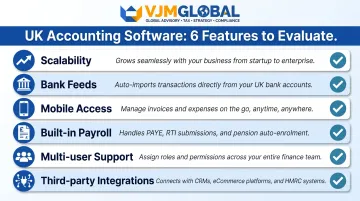
Features that determine long-term fit:
- Upgrades to higher plans without forcing a full platform migration
- Connects directly to UK bank accounts for automatic transaction imports
- Handles invoicing, expenses, and receipt capture from a mobile app
- Includes payroll as a built-in feature rather than a paid add-on
- Supports multiple users without charging per seat as your team grows
- Integrates with CRM, e-commerce platforms, or project management tools
Don't choose on price alone. Entry-level plans often strip out VAT functionality, cap monthly invoices, or restrict multi-currency support to premium tiers. Know exactly which features your business uses today — and which you'll need within 12 months — before committing.
How We Chose the Best Accounting Software
Our selection draws on independently tested data from UK-focused sources and cross-references HMRC's approved software list for MTD for ITSA. Each platform was evaluated against six criteria:
- Core accounting features — invoicing, bank reconciliation, VAT returns
- Financial visibility — reporting dashboards and cash flow tools
- Operational efficiency — integrations and mobile app quality
- Help and support — availability, response quality, and onboarding resources
- Pricing transparency — clear tier structures with no hidden costs
- Ease of use — setup time and day-to-day usability for non-accountants
The final shortlist reflects platforms that consistently perform well across different business types—sole traders, freelancers, and limited companies—rather than optimising for a single use case, ensuring the list is broadly applicable to the majority of UK small businesses.
Conclusion
MTD obligations are now live, and the right accounting software makes the difference between smooth compliance and costly disruption. Zoho Books, QuickBooks, Xero, Sage, and FreeAgent each offer strong, HMRC-approved options suited to different business sizes and working styles.
Use free trials before committing. Confirm your chosen software is fully approved for your specific income type using HMRC's online tool. Prioritise a platform that can scale with your business rather than just meeting today's minimum requirements.
Even the best software has limits. For UK business owners who need hands-on support with bookkeeping outsourcing, VAT compliance, or financial reporting, working alongside a professional accounting firm fills the gaps that automation cannot.
VJM Global has supported 250+ UK businesses with tailored accounting and compliance services, maintaining a 95% client retention rate. To discuss how their team can complement your chosen platform, reach out at [email protected].
Frequently Asked Questions
What is the most popular accounting software in the UK?
QuickBooks, Xero, and Sage are consistently the most widely used platforms among UK small businesses. Zoho Books has grown rapidly due to its free plan and ease of use, while FreeAgent is especially popular among freelancers and NatWest Group customers.
What is the best payroll software for accountants in the UK?
Sage includes payroll in all its Accounting plans, making it the strongest integrated option. QuickBooks and Xero add payroll as paid extras. Standalone tools like BrightPay and Moneysoft are popular with UK accountants who prefer to keep accounting and payroll systems separate.
Is QuickBooks or Xero better for UK small businesses?
QuickBooks is better for businesses prioritising mobile access, bank reconciliation, and multi-currency support at lower price tiers. Xero is the stronger choice for growing businesses needing unlimited users, a broader app ecosystem, and long-term scalability.
What accounting software is MTD-compliant in the UK?
All five platforms covered here (Zoho Books, QuickBooks, Xero, Sage, and FreeAgent) are HMRC-approved for MTD for ITSA. Verify your specific income source (sole trader, UK property, or foreign property) is supported before signing up using HMRC's official software finder tool.
Is there free accounting software available for UK small businesses?
Yes. Zoho Books offers a free plan for businesses with under 1,000 invoices and expenses per year, and FreeAgent is free for eligible NatWest, RBS, Ulster Bank, and Mettle business account holders. Both are MTD-ready and work well for sole traders starting out.
Do I need accounting software if I already use an accountant?
Yes. MTD for ITSA requires you to maintain digital records and submit quarterly updates directly — your accountant cannot do this on your behalf. Software also gives both parties shared access to live financial data, making collaboration more efficient.