Introduction
If you've received two audit quotes for the same company and found them thousands of dollars apart, you're not alone. Audit fees in Singapore vary widely — and without knowing what drives the differences, it's hard to tell whether you're getting fair value or leaving money on the table.
Under the Companies Act (Cap. 50), most Singapore-incorporated companies must undergo a statutory audit each year. For SMEs and multinational subsidiaries alike, that fee line item deserves scrutiny.
This guide covers:
- Realistic pricing ranges by company size and type
- Key cost drivers that push fees up or down
- What a typical audit fee quote includes
- How to estimate the right budget for your business
Key Takeaways
- Small companies in Singapore pay audit fees from around S$3,000; mid-size companies pay significantly more depending on complexity
- Not every company requires a statutory audit—exemptions apply to those meeting at least two of three size criteria
- Transaction volume, industry regulations, and financial record quality drive fees more than company size alone
- Choosing auditors purely on price leads to delays, quality gaps, and higher long-term costs
How Much Do Audit Fees Cost in Singapore?
There is no fixed price for a statutory audit in Singapore. Auditors quote fees after assessing the scope of work, and businesses that assume a flat rate often face budget surprises.
Common budgeting mistakes include treating audit fees as a commodity, choosing firms based solely on price, and failing to account for out-of-scope work like XBRL preparation, prior-year adjustments, or regulatory filings. Understanding what a realistic quote should cover — and what it won't — is the clearest way to avoid those gaps.
Typical Audit Fee Ranges in Singapore
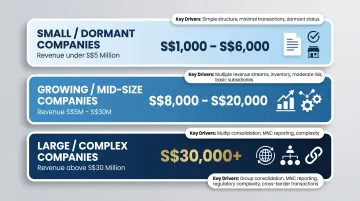
| Company Type | Revenue Range | Typical Fee Range | Notes |
|---|---|---|---|
| Small / dormant companies | Under S$5M | S$1,000–S$6,000 | Boutique firms start at S$1,000–S$2,000 for dormant entities; standard SMEs typically S$2,500–S$4,500. Market data from Singapore audit firms confirms the S$3,000–S$6,000 midpoint. |
| Growing / mid-size companies | S$5M–S$30M | S$8,000–S$20,000 | Multiple revenue streams, larger headcount, and heavier documentation requirements drive fees toward the upper end. |
| Large / complex companies | Above S$30M | S$30,000+ | Group structures, consolidated accounts, and industry-specific compliance requirements apply. Big 4 firms serving listed or multinational entities typically floor at S$15,000, scaling significantly with complexity. |
What these ranges typically include:
- Audit fieldwork and testing procedures
- Audit report and statutory compliance sign-off
- Communication of findings to management
What is typically excluded and billed separately:
- XBRL filing (often S$250+ as an add-on)
- Tax computation and filing
- GST reviews and reporting
- Prior-year restatements
- Advisory services and management letter follow-up
- Travel costs for off-site audits
- Disbursements (photocopying, printing, transport) — S$200–S$250
Key Factors That Affect Audit Fees in Singapore
Audit fee pricing in Singapore depends on a mix of technical, regulatory, and operational variables — and the spread is wide. A small holding company might pay S$2,500; a regulated financial services firm could pay S$20,000 or more for the same revenue size. Here's what drives that gap.
Company Size, Revenue, and Transaction Volume
Auditors estimate time and resource requirements based on financial transaction volume and complexity. Higher transaction volumes demand more sampling, testing, and documentation, directly increasing billable hours and fees.
A company with S$8M in annual revenue but low transaction frequency (e.g., a property holding company) will pay substantially less than a retail business with the same revenue but thousands of daily transactions requiring inventory counts and receivables verification.
Industry and Regulatory Environment
Companies in regulated industries face higher audit fees due to additional scrutiny and sector-specific standards:
MAS-regulated entities: Capital markets services licence holders must submit Form 5 within five months of financial year-end, covering risk-based capital adequacy requirements. Payment service providers require Form 4 compliance audits. These regulatory audits run parallel to statutory audits, increasing total compliance costs.
Construction companies: BCA-registered contractors must submit audited accounts as part of their Contractors Registration System (CRS) requirements. Higher BCA grades require audited financials even if the company would otherwise qualify for audit exemption.
Charities and IPCs: Charities with gross annual income or expenditure exceeding S$500,000 require audits. All Institutions of a Public Character (IPCs) must be audited regardless of size.
Singapore audit firms report a 20-30% premium on standard fees for complex sectors including crypto (digital asset verification), construction (specialized reporting), and retail (intensive inventory counts).
Quality and Readiness of Financial Records
Well-maintained books, reconciled accounts, and organized documentation allow auditors to complete fieldwork faster. Poor records, on the other hand, add time and cost — often significantly.
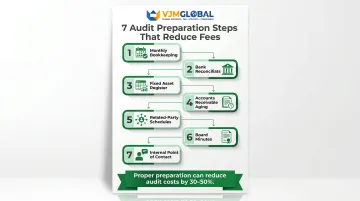
A Singapore-based audit preparation service reports that proper preparation can cut audit costs by 30-50%. One logistics company reduced its audit fee from S$18,000 to S$11,000 through pre-audit preparation, including completed bank reconciliations, fixed asset schedules, and organized loan agreements.
Key preparation steps that reduce fees:
- Monthly bookkeeping kept current
- Bank reconciliations completed before fieldwork
- Complete fixed asset registers with depreciation schedules
- Accounts receivable aging with confirmations prepared
- Related-party transaction schedules documented
- Board minutes compiled and accessible
- Designated internal point of contact for auditors
Auditor's Firm Size and Expertise
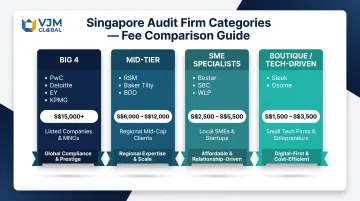
Fee differences reflect not just brand but also audit methodology depth and sector specialization:
| Firm Category | Client Profile | Typical SME Fee | Key Differentiator |
|---|---|---|---|
| Big 4 (PwC, Deloitte, EY, KPMG) | Listed companies, MNCs, IPO-track | S$15,000+ | Global brand, IPO readiness |
| Mid-tier (RSM, Baker Tilly, BDO, Grant Thornton) | Regional expansion, mid-cap | S$6,000–S$12,000 | Big 4 quality at lower cost |
| SME specialists (Bestar, SBC, WLP Group) | Local SMEs, startups | S$2,500–S$5,500 | High-touch advisory |
| Boutique/tech-driven (Sleek, Osome) | Small companies, tech firms | S$1,500–S$3,500 | Cloud-native efficiency |
Audit Exemption Status Under Singapore's Companies Act
A private company qualifies for audit exemption if it meets at least two of three criteria:
- Annual revenue not exceeding S$10 million
- Total assets not exceeding S$10 million
- No more than 50 employees
These thresholds must be met for the past two consecutive financial years. Companies that qualify are not legally required to undergo statutory audits but may choose voluntary audits for creditor or investor confidence.
Dormant companies — those with no accounting transactions during the financial year — are separately exempt under Section 205B.
Group companies face an additional layer of qualification. To claim exemption, a company must satisfy the criteria both individually and as part of a "small group," assessed at the ultimate parent level. Two conditions complicate this:
- If the parent prepares consolidated financials, those consolidated figures determine group size
- If the parent does not consolidate, aggregate figures across all entities are used instead — often pushing the group above the thresholds
Full Breakdown: What's Included (and Not Included) in Audit Fees
When an audit firm quotes a fee, that figure rarely covers your full annual compliance cost. Several services sit outside the standard engagement — and the gaps add up quickly if you're not prepared.
Core Audit Engagement (Included in Standard Quote)
Standard statutory audit fees cover:
- Planning and risk assessment procedures
- Audit fieldwork (testing of transactions, balances, and controls)
- Preparation of the auditor's report
- Communication of findings to management
- Assessment of material misstatements (fraud or error)
- Identification of weaknesses in internal controls
This is typically a one-time annual engagement fee based on the anticipated scope of work.
Out-of-Scope Services (Often Billed Separately)
XBRL financial statement tagging: Required by ACRA for most companies filing with BizFile+. Budget firms typically charge S$250+ as a separate add-on, though some firms bundle it into corporate secretarial packages. Third-party XBRL conversion services start from as low as S$50 for basic tagging.
Tax-related services:
- Tax computation preparation
- GST reviews (approximately S$150 per quarter at some firms)
- Tax filing and submissions
Other commonly excluded services:
- Prior-year restatements or adjustments
- Advisory services and strategic recommendations
- Management letter follow-up work
- Disbursements (transport, printing, photocopying)
Ongoing and Periodic Costs to Budget For
Out-of-scope charges are just one piece of the puzzle. Audit fees sit within a broader compliance spend that most businesses revisit annually:
- Accounting and bookkeeping fees
- Corporate secretarial fees and annual filings
- Tax filing and compliance
- Regulatory submissions specific to your industry
Fees can increase year-on-year even when the auditor and engagement structure stay the same. Revenue growth, higher transaction volumes, or expansion into new markets all widen the audit scope. Building in a 10–15% budget buffer each year is a practical way to avoid surprises at renewal.
How to Estimate and Manage Your Audit Budget
Selecting the right audit budget is not just about finding the lowest quote—it's about matching audit needs with appropriate expertise and ensuring internal processes support efficient engagement.
Assess Your Audit Obligations First
Step 1: Determine whether your company meets the small company exemption criteria:
- Revenue ≤ S$10M for past two consecutive years?
- Total assets ≤ S$10M for past two consecutive years?
- Employees ≤ 50 for past two consecutive years?
If you meet at least two of three thresholds, you qualify for exemption.
Step 2: If exempt, evaluate whether a voluntary audit is warranted for:
- Bank loan applications or credit facility requirements
- Investor due diligence (especially for VC or PE funding)
- Parent company governance or group reporting obligations
- BCA registration at higher grades
- Credibility with suppliers or customers
- Internal control validation
Step 3: If not exempt, proceed to scope the engagement based on company size, industry, and transaction complexity.
Factors That Reduce Your Audit Fee
Practical steps to lower audit costs:
- Keep monthly bookkeeping current and reconciled
- Prepare complete fixed asset registers before fieldwork begins
- Have bank statements reconciled and confirmed
- Designate an internal point of contact for auditor queries
- Address previous year's audit findings promptly
- Organize supporting documentation in advance
- Maintain proper filing systems for invoices and contracts
Preparation quality is the single most controllable cost variable in any audit engagement.
How to Compare Quotes from Audit Firms
Request detailed scope breakdowns rather than comparing headline figures.
Key questions to ask audit firms:
- Is XBRL preparation included in your quote or billed separately?
- What is the expected timeline for fieldwork and report delivery?
- How will findings be communicated (written reports, meetings, management letters)?
- What documentation do you need from us, and when?
- Are there any anticipated out-of-scope items we should budget for?
- What is your firm's experience in our specific industry?
For multinationals managing compliance across several jurisdictions, firms like VJM Global — which advises foreign companies on tax, audit, and regulatory obligations across markets including India — can help coordinate group-level compliance requirements alongside any Singapore audit engagement.
When It Makes Sense to Spend More
Higher audit fees are the right commercial decision in several situations:
- Bank financing: Lenders weigh audit credibility heavily; Big 4 or reputable mid-tier firm reports carry more weight in credit decisions.
- Institutional investment: VCs and private equity firms scrutinize audit quality during due diligence — a recognized firm reduces fundraising friction.
- M&A transactions: Buyers rely on audited financials to set valuations; weak audit quality can derail deals or compress sale prices.
- Regulated industries: MAS-regulated entities, BCA-registered contractors, and licensed businesses benefit from sector-specific auditor expertise.
- Diverse or public-facing shareholder bases: Audit quality signals governance maturity to stakeholders who may not be involved in day-to-day operations.
That said, not every company needs premium-tier coverage. Dormant companies, minimal-activity holding structures, and straightforward single-activity businesses are well-served by lower-cost engagements.
Common Mistakes When Budgeting for Audit Fees
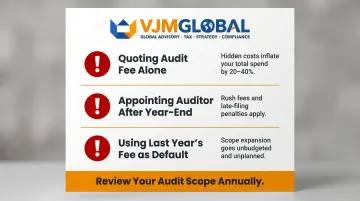
Three planning errors account for most audit budget overruns in Singapore.
Quoting the audit fee alone, not the total compliance cost. Many businesses discover that XBRL filing, tax preparation, and secretarial services are billed separately — inflating actual spend beyond the initial quote by 20–40%.
Appointing an auditor only after the financial year closes. This compresses the timeline, raises error risk, and can result in rush fees or late-filing penalties. ACRA requires financial statements to be filed within prescribed timelines, so starting late rarely ends well.
Using last year's fee as the default budget. As revenue, headcount, or transaction volume grows, audit scope expands — even if the auditor and engagement structure stay the same. Review scope annually during planning meetings to avoid unexpected cost increases.
Conclusion
Audit fees in Singapore range from S$3,000 for simple small company engagements to tens of thousands for complex, multi-entity structures. Where your business lands on that spectrum depends on regulatory obligations, operational complexity, industry sector, and how well-prepared your accounts are before fieldwork begins.
The right audit budget starts with knowing exactly what's included in a quoted fee versus what gets billed separately. From there, confirming exemption eligibility, improving internal preparation, and choosing an auditor based on fit—not just price—will do more to control costs than negotiating on the quote alone.
Done well, a properly scoped audit protects your credibility with lenders, investors, and regulators. That's worth getting right.
Frequently Asked Questions
Do all companies in Singapore need to be audited?
Not all Singapore companies require statutory audits. Private companies qualify as "small companies" under the Companies Act if they meet at least 2 of 3 criteria (revenue ≤ S$10M, assets ≤ S$10M, employees ≤ 50) for two consecutive years and are therefore exempt. Voluntary audits remain an option.
What is the typical audit fee for a small company in Singapore?
Audit fees for small Singapore companies typically range from S$3,000 to S$6,000 per engagement, depending on transaction volume, industry, and record quality. Quotes vary between firms, with boutique specialists sometimes starting below S$3,000.
What factors most significantly affect audit fees in Singapore?
The primary drivers are company revenue and transaction volume, industry-specific regulatory requirements (such as MAS or BCA compliance), quality of internal financial records, and the size and specialization of the audit firm selected.
Are audit fees in Singapore tax-deductible?
Yes. Audit fees are explicitly deductible under Section 14V of the Income Tax Act as statutory and regulatory expenses incurred for business purposes. This includes fees paid by companies eligible for audit exemption who choose voluntary audits.
Can a company negotiate its audit fees in Singapore?
Audit fees are typically negotiable, particularly when businesses maintain well-organized records, commit to timely document submission, and engage auditors early. Firms may offer better rates for multi-year engagements or bundled compliance service packages.
How does Singapore's small company audit exemption affect foreign-owned subsidiaries?
Foreign-owned subsidiaries may still require audits if they don't meet small company criteria individually or as part of a "small group" assessed at the parent level. Parent company home-jurisdiction or group reporting requirements may also mandate audits regardless of Singapore exemption eligibility.