Introduction
Securing a business setup loan is one of the toughest hurdles you'll face as a UK founder turning an idea into a trading company. You may struggle with knowing which product fits your situation, and rejection often comes down to poor preparation rather than a bad business idea.
Understanding the application process early saves both time and rejection risk. "Startup loan" isn't one product. It covers government-backed schemes, high street bank loans, and alternative lender finance. Your outcome depends heavily on how well you prepare your business plan and choose the right lender.
This guide covers the UK loan types available, the step-by-step application process, and the eligibility criteria and documents you'll need. It also flags common mistakes to avoid and outlines alternative funding routes if a loan isn't the right fit.
Key Takeaways
- UK Start Up Loans offers £500–£25,000 unsecured funding at 7.5% fixed interest, plus free mentoring
- Lenders assess your business plan, cash flow forecasts, and personal credit history before approving funding
- Compare total loan cost (rate plus fees), not just the headline interest rate
- Grants, equity investment, and crowdfunding remain valid routes if a loan doesn't suit you
Types of Startup Business Loans in the UK
Several loan types fall under the "startup loan" umbrella in the UK, and the right one depends on your trading history and what security you can offer.
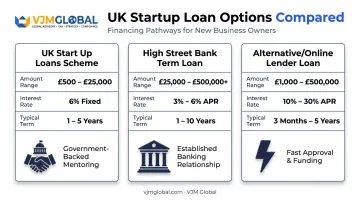
The three main financing routes compare as follows:
| Loan Type | Amount | Rate | Term | Key Notes |
|---|---|---|---|---|
| UK Start Up Loans scheme | £500–£25,000 | 7.5% fixed | 1–5 years | No application or early-repayment fees; approved applicants get 12 months of free mentoring |
| High street bank term loan | Varies by lender | Fixed or variable | Typically 1–10 years | Needs trading history and, in many cases, security; banks assess accounts, cash flow forecasts, and owner investment |
| Unsecured loans from alternative/online lenders | Smaller if no trading history | Higher than bank rates | Short-to-medium term | Fast decisions, no collateral; Funding Circle's criteria, for example, require at least one year of trading and £100,000 turnover |
Beyond these three, two other options suit specific needs:
- Asset finance and equipment loans – Funding tied to a specific purchase (machinery, tech, vehicles), with the asset itself acting as security through leasing or hire purchase.
- Business overdrafts and revolving credit lines – Short-term, flexible funding for cash flow gaps. Interest is charged only on what you actually draw, not the full facility.
How to Apply for a Startup Business Loan in the UK: Step-by-Step
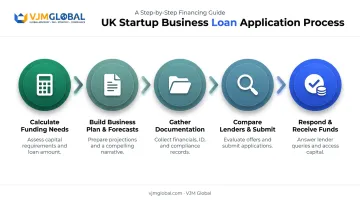
Step 1: Work Out How Much You Need
Calculate three things separately: setup costs, 6-12 months of operating expenses, and working capital. Founders who blend these together tend to over-borrow or, worse, under-borrow and run out of cash mid-year. Once you have a clear figure, match that funding gap to the right loan type from the section above.
Step 2: Build a Business Plan and Financial Forecasts
This is the document lenders scrutinise most closely. Include:
- A clear revenue model and pricing rationale
- Market and competitor research
- A realistic cash flow and break-even forecast
If you're applying through Start Up Loans, take advantage of the free business mentoring on offer. Mentors help you tighten forecasts and spot gaps before a lender does it for you.
Step 3: Gather Required Documentation
Typical requirements include:
- Proof of ID and address
- Companies House registration details (where applicable)
- Personal and business bank statements
- Personal credit report
- The business plan and cash flow forecast itself
Document checklists differ slightly between government schemes, banks, and alternative lenders, so confirm each lender's specific list before you start filling in forms.
Step 4: Compare Lenders and Submit Your Application
Don't fixate on the headline rate. Compare lenders across:
- Interest rate and total fees
- Approval turnaround time
- Mentoring or support bundled with the loan
Start Up Loans applicants with everything prepared can complete the process in two to three weeks, with initial contact typically within two working days of submitting. Online lenders often decide faster, sometimes within an hour, though the funds landing in your account follow a separate timeframe from approval.
Step 5: Respond to Follow-Up Queries and Receive Funds
Underwriters almost always ask follow-up questions. Respond promptly, whether that's a missing bank statement or a clarification on your forecast. Once funds land, set up your repayment schedule and a cash flow tracking system immediately, so repayments are budgeted from day one rather than an afterthought.
Eligibility Requirements & Documents You'll Need
Trading history: Most banks want to see genuine trading, often somewhere between 6 and 24 months, though there's no universal published minimum. The Start Up Loans scheme, by contrast, is built for businesses trading under five years, including those that haven't started trading at all yet.
Personal and business credit score: Trading history isn't the whole story, though. New businesses have no financial track record of their own, so lenders weigh the director's personal credit history heavily instead. A Start Up Loan is legally a personal loan, so passing a personal credit check is mandatory, and the check itself may appear on your credit file.
Start Up Loans eligibility criteria:
- You must be 18 or older
- UK resident with the right to work in the UK
- Running, or planning to run, a UK-based business
- Business must be trading for less than five years (60 months)
Security or personal guarantee: Meeting the criteria above doesn't mean you'll need to put up collateral. Most startup-focused loans, including Start Up Loans, are unsecured, so no assets or guarantors are required. Larger bank loans and some asset finance products may still ask for a personal guarantee or collateral.
Core document checklist: Whether your loan is secured or unsecured, lenders still need paperwork to verify the application:
| Document | Why lenders want it |
|---|---|
| Proof of ID and address | Confirms identity and residency |
| Personal bank statements (typically 3 months) | Assesses affordability |
| Business plan and 12-month cash flow forecast | Tests viability |
| Companies House details (if incorporated) | Confirms legal structure |
| Credit report | Assesses repayment risk |
Personal financial contribution: Paperwork aside, your own stake in the business carries weight too. Demonstrating that you've already put your own savings into the business signals commitment and shares the financial risk with the lender, strengthening most applications considerably.
Common Mistakes to Avoid & Tips to Improve Approval Chances
Common Mistakes
- Applying without a detailed business plan or realistic financial forecasts
- Miscalculating funding needs by over- or under-estimating startup costs
- Ignoring personal credit issues that could have been resolved before applying
Tips to Strengthen Your Application
- Use the free mentoring included with schemes like Start Up Loans to refine your plan before you submit
- Contribute personal savings into the business to show lenders you're sharing the financial risk
- Get quotes from multiple lenders rather than accepting the first offer, comparing total cost not just the headline rate
A rushed application with vague numbers is the fastest route to rejection. Slow down at the forecasting stage, even if it delays submission by a week or two.
Alternatives to Business Loans for UK Startups
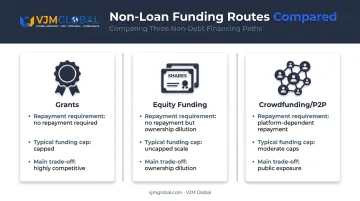
Not every founder wants, or qualifies for, debt finance. A few routes worth exploring instead:
- Grants: Innovate UK and local council grants offer non-repayable funding, though each competition has its own scope, eligible costs, and deadlines. Check the live Innovation Funding Service rather than assuming last year's rules still apply.
- Equity funding: Angel investors and venture capital, often via SEIS or EIS: SEIS caps raises at £250,000 with 50% investor tax relief, while EIS permits up to £5 million per year (£12 million lifetime) at 30% relief.
- Crowdfunding and peer-to-peer lending: Platforms like Crowdcube and Republic Europe (formerly Seedrs) let founders raise equity directly from individual backers, trading ownership dilution for capital rather than scheduled repayments.
Funding UK Growth While Expanding Into India
Some UK founders raise domestic capital, whether through a Start Up Loan, grant, or equity round, specifically to fund international expansion. India is an increasingly common target market, but setting up there brings its own regulatory layer: FEMA compliance, entity structuring, transfer pricing, and repatriation rules that don't map neatly onto UK processes.
Firms like VJM Global handle the practical side of scaling into India for UK companies, including:
- Entity incorporation (private limited company or LLP), typically completed in 10-15 working days
- Ongoing accounting, payroll, and GST/income tax compliance once the entity is operational
- FEMA and RBI advisory for capital inflows, external commercial borrowing, and repatriating profits back to the UK
- DTAA-based tax planning to avoid double taxation on UK-India income
None of this replaces a UK funding strategy. It complements it, ensuring capital raised at home doesn't get tangled up in avoidable compliance issues abroad.
Frequently Asked Questions
How can I get a business setup loan for a startup?
Assess your funding needs, build a strong business plan and cash flow forecast, gather your documentation, and compare government-backed schemes, banks, and online lenders before applying.
How much will my monthly payment be on a business setup loan?
Repayments depend on the loan amount, interest rate, and term you choose. Use a loan repayment calculator with your specific figures for an accurate monthly estimate.
Can I get a startup business loan with no trading history in the UK?
Yes. The Start Up Loans scheme specifically targets pre-trading or early-stage founders, unlike most bank loans, which typically expect some trading history first.
What is the UK Start Up Loans scheme and who is eligible?
It's a government-backed, unsecured personal loan for business use. You'll generally need to be 18 or older, a UK resident, and running a UK-based business trading under five years.
How much can I borrow as a UK startup?
Borrowing limits vary by lender and loan type. Government schemes are typically capped lower than secured bank loans, so check current limits directly with your chosen lender.
Do I need to put up collateral for a startup business loan in the UK?
Most startup-focused loans, including Start Up Loans, are unsecured. Larger bank loans or asset finance products may still require security or a personal guarantee.