Key Takeaways
- MTD ITSA makes digital record-keeping and quarterly HMRC submissions mandatory from April 2026 for landlords earning over £50,000
- Property-specific platforms like Landlord Vision and Landlord Studio outperform general accounting tools for per-tenancy tracking
- Free tools suit portfolios of 1–3 properties, but MTD compliance requirements will push most landlords toward paid software
- CGT disposals, non-resident landlord obligations, and company structures require professional accountant support that no software fully replaces
UK landlords are navigating a demanding regulatory shift. Making Tax Digital for Income Tax takes effect from April 2026, the Renters' Rights Act has abolished Section 21, and rising mortgage costs are squeezing yields — landlords still relying on spreadsheets are carrying real compliance risk.
This guide covers what property management accounting software actually does, which UK-specific features matter, how leading tools compare, and when professional accounting support becomes necessary. Whether you manage one rental flat or a mixed portfolio, the aim is to help you choose the right tools and stay on the right side of HMRC.
Why UK Property Accounting Is Getting More Complex
UK landlords are facing three simultaneous pressures — tax digitalisation, tightening legislation, and shrinking margins — and each one raises the stakes for accurate record-keeping.
Making Tax Digital Is Coming for Landlords
HMRC's MTD ITSA rollout follows a phased schedule:
| Phase | Income Threshold | Start Date |
|---|---|---|
| Phase 1 | Over £50,000 (2024–25) | 6 April 2026 |
| Phase 2 | Over £30,000 (2025–26) | 6 April 2027 |
| Phase 3 | Over £20,000 | 6 April 2028 |
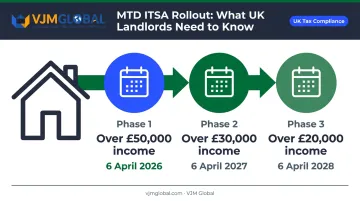
Under MTD, landlords must keep digital records of every income and expense transaction — including amount, date, and category — using compatible software, and submit quarterly updates to HMRC. Annual self-assessment still applies as a final declaration.
HMRC estimates around 780,000 people fall into Phase 1 alone, covering both sole traders and landlords.
Regulatory Pressure Beyond Tax
The legal landscape has also shifted significantly. The Renters' Rights Act 2025 received Royal Assent on 27 October 2025, with tenancy reforms beginning 1 May 2026 — Section 21 no-fault evictions can no longer be used for any tenancy from that date. Watertight documentation and financial records are now essential in case of disputes.
EPC rules compound the pressure further. Key requirements include:
- Privately rented homes in England and Wales must hold a minimum EPC rating of E
- Non-compliance carries penalties up to £5,000 per property
- A 2025 government consultation proposed raising the minimum to C by 2030
Financial Squeeze on Yields
Buy-to-let mortgage rates averaged 4.77% in Q4 2025 according to UK Finance — nearly double the 2.93% seen before the 2022 mini-Budget. The Bank of England estimates average annual interest payments for buy-to-let landlords rose by around £2,500. With margins tighter, accurate real-time tracking of income and costs matters more than ever.
What Property Management Accounting Software Does
Property management accounting software replaces manual spreadsheets with centralised, audit-ready financial records — automated, accurate, and accessible from anywhere.
Core Financial Functions
Most platforms handle:
- Tracks rental income by property, unit, or tenancy
- Logs expenses across maintenance, repairs, insurance, and management fees
- Reconciles bank accounts via live feeds that import transactions automatically
- Generates profit and loss reports per property or across the full portfolio
- Exports tax-ready summaries for accountants or HMRC submissions
Tenant and Lease Management
Beyond bookkeeping, property-specific tools handle the financial side of tenancies:
- Automated rent reminders and invoice generation
- Payment status monitoring (paid, overdue, partial)
- Deposit recording and protection scheme compliance
- Lease renewal tracking with deadline alerts
Compliance Document Storage
Most platforms now double as a compliance repository, storing tenancy agreements, gas safety certificates, EPCs, and right-to-rent documents. Every record is timestamped and retrievable if HMRC audits or tenancy disputes arise.
Gas safety records must be kept for at least two years and provided to tenants within 28 days of the annual check. Automated reminders make that deadline far harder to miss.
Property-Specific vs. General Accounting Software
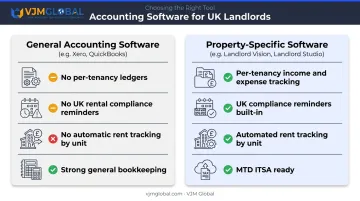
This distinction matters. General tools like Xero or QuickBooks handle bookkeeping well, but they weren't built for landlords. They lack per-tenancy ledgers, compliance reminders tied to UK rental law, or automatic rent tracking by unit.
Property-specific platforms like Landlord Vision or Landlord Studio offer both accounting and property management in one place. For most landlords, that's the more practical choice. Larger portfolios sometimes pair a general accounting tool with a dedicated property management platform, but for the majority, an all-in-one solution is simpler and sufficient.
UK-Specific Features to Look For
Not all software is built for the UK rental market. Here's what to check before committing to a platform.
MTD ITSA Readiness
From April 2026, landlords above the £50,000 income threshold must file quarterly updates via MTD ITSA — so HMRC recognition matters more than vendor marketing. Check whether the software appears on HMRC's recognised software list for MTD ITSA, as vendor claims of "MTD readiness" don't always translate to full HMRC compliance. Landlord Vision was confirmed on the GOV.UK list in research reviewed for this guide.
HMRC-Compatible Tax Reporting
Look for platforms that:
- Categorise rental income and expenses in line with HMRC allowable categories
- Support Self Assessment preparation or data export for accountants
- Allow quarterly update submission directly to HMRC (or via bridging software)
Bank Feed Integration
Open Banking connections automatically import transactions from your bank into the software, removing manual data entry and ensuring records stay up to date for quarterly MTD submissions. The FCA defines open banking as a secure, regulated method for sharing payment account data with authorised apps, and most major UK banks now support it.
Compliance Reminders
UK-specific alert capabilities should cover:
- Gas safety certificate renewals (required every 12 months)
- EPC expiry notifications
- Tenancy renewal and break clause deadlines
- Deposit protection deadlines (30 days from receipt in England and Wales)
Portfolio Scalability
If you manage HMOs or a mixed portfolio, check whether the software supports per-room ledgers and income tracking at unit level. Property management companies need multi-client functionality and letting agent workflows — not all platforms offer this at entry-level pricing.
Top Property Management Accounting Software Options in the UK
This is a starting framework for comparison, not an exhaustive ranking. Portfolio size and MTD readiness should drive your shortlist.
| Software | Starting Price | MTD ITSA Ready | Best For |
|---|---|---|---|
| Landlord Vision | £7.99/month (ex VAT) | Yes (HMRC listed) | Small to large landlord portfolios |
| Xero + add-on | £16/month | Yes (platform-level) | Property businesses needing full accounting |
| Landlord Studio | Free (up to 3 properties) | Via Xero integration | Growing individual landlords |
| Arthur Online | Annual billing (varies) | Via Xero integration | Medium to large property managers |
| Property Hawk | Free | Not verified | First-time or low-volume landlords |
| Hammock | £8/month (ex VAT) | Yes (HMRC listed) | Landlords wanting simple MTD compliance |
Landlord Vision
A UK-built, cloud-based platform with a full accounting suite, per-tenancy income and expense tracking, automated rent reminders, and Open Banking integration. Landlord Vision appears on HMRC's recognised MTD ITSA software list.
Pricing starts from around £7.99/month (ex VAT) on a Starter plan, with Premium at around £39.97/month for up to 15 tenancies. Well-suited to landlords managing anything from a handful of properties to larger portfolios.
Xero (With Property Add-ons)
Xero is a full-featured accounting platform used widely by UK property businesses. Its bookkeeping, bank reconciliation, and MTD-compatible features are strong — but it lacks native property management functionality. It works best when paired with a dedicated property tool such as Landlord Studio or Arthur Online.
UK pricing starts at £16/month (Ignite plan), up to £65/month (Ultimate). Xero states MTD for Income Tax readiness on its UK platform.
Landlord Studio
A mobile-friendly platform with a free tier covering up to three properties. Paid plans are priced in USD (Pro at approximately USD 12/month). Features include bank feeds, receipt scanning, tax reporting, and Xero integration.
MTD compliance is currently delivered through its Xero integration, with direct HMRC submission planned. Good fit for individual landlords actively growing their portfolio.
Arthur Online
Positioned for property management companies and landlords with medium to large portfolios. Core features include:
- Tenant screening and letting agent functionality
- Automated workflows and maintenance scheduling
- Xero integration for accounting
Pricing uses annual billing across Standard, Professional, and Enterprise tiers — expect costs higher than entry-level tools. Strong operational depth for those managing multiple sites.
Property Hawk
Suitable for first-time or low-volume landlords, though Property Hawk does not appear on HMRC's GOV.UK recognised software list for MTD ITSA submission.
A free, UK-focused option for landlords with small portfolios. Core features include digital rent recording, expense logging, document generation (including AST, Section 8 forms), and basic compliance support. Described as free to use with no property-number limits.
Hammock
A UK-based platform specifically built for landlords, with tiered pricing from £8/month (ex VAT) for 1–3 properties. Hammock supports 50+ UK bank and credit card feeds, quarterly MTD update filing, and is FCA registered. A 30-day free trial is available. A solid option for landlords who want straightforward MTD-ready software without the complexity of a full property management suite.
Free vs. Paid: Which Is Right for You?
The decision usually comes down to portfolio size and MTD obligations.
Free tools work well when you:
- Manage 1–3 properties with straightforward letting arrangements
- Need basic rent tracking, document storage, and compliance reminders
- Aren't yet subject to MTD ITSA thresholds
Paid platforms make sense when you:
- Manage 4+ properties or HMOs requiring per-unit ledgers
- Need automated bank feeds and multi-property reporting
- Must submit quarterly updates to HMRC from April 2026
The key risk with free tools is MTD readiness. A platform that doesn't support quarterly HMRC submissions may require a full migration later, bringing the cost and disruption that entails.
The English Private Landlord Survey 2024 found 68% of landlords registered just one deposit — so many are small-scale, but the MTD threshold still catches those earning above £50,000 from all income sources, rental and otherwise.
When trialling paid options, look for monthly billing rather than annual contracts initially, and confirm MTD status directly with the vendor before committing.
When Software Alone Isn't Enough
Property management accounting software handles day-to-day bookkeeping efficiently. What it can't do is provide professional judgement on complex tax and structural decisions.
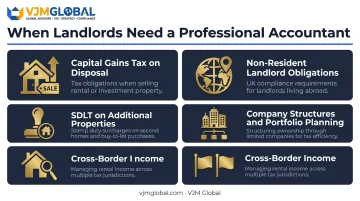
Scenarios that typically require a chartered accountant include:
- Capital gains tax on disposal — from 6 April 2026, basic-rate taxpayers pay 18% on residential property gains (24% above the basic-rate band); higher-rate taxpayers pay 24%; the annual exempt amount is £3,000. Partial ownership stakes and improvement cost claims add complexity that software cannot resolve.
- Non-resident landlord obligations — landlords living abroad for six months or more per year fall under the HMRC Non-Resident Landlord Scheme. Letting agents or tenants paying more than £100/week must deduct basic-rate tax unless HMRC approves gross payment — and GOV.UK lists a professional accountant as the recommended filing route.
- SDLT on additional properties — additional dwellings attract a 5% surcharge on top of standard rates; non-UK residents add a further 2%. Acquisition timing and ownership structure decisions require advice no software can provide.
- Company structures and portfolio planning — landlords using limited company structures or mixed portfolios face complexity around income extraction, corporation tax, and reporting that exceeds what standard bookkeeping software handles.
- Cross-border income — UK landlords with Indian income or assets, and Indian nationals holding UK property, may need to manage simultaneous HMRC and Indian tax obligations, including DTAA interpretation to prevent double taxation.
VJM Global's chartered accountants have served 250+ UK businesses across tax compliance, financial reporting, and advisory work. For landlords navigating non-resident obligations, complex disposals, or dual-jurisdiction income, an outsourced partner with hands-on HMRC and international tax experience fills the gaps no software addresses.
Frequently Asked Questions
Which accounting software is best for property management?
The best option depends on your portfolio size. Landlord Vision and Landlord Studio are the most widely used UK-specific choices, while Xero suits those needing strong general accounting paired with a property add-on. Start with a free tier where available before committing to a paid plan.
What is HMRC-compliant software for landlords?
HMRC publishes a recognised list of MTD ITSA-compatible software at GOV.UK — Landlord Vision was confirmed on this list at the time of writing. Always verify MTD status directly with HMRC before purchasing, as vendor claims don't always match official approval.
Is Xero good for property management in the UK?
Xero is strong for bookkeeping, bank reconciliation, and MTD-compatible tax reporting, but it lacks native property management features like per-tenancy ledgers. It works best when integrated with a dedicated property platform such as Landlord Studio or Arthur Online.
Do UK landlords need to use accounting software for Making Tax Digital?
From April 2026, landlords with qualifying income above £50,000 must keep digital records and submit quarterly updates to HMRC. For landlords above that threshold, MTD-compatible software becomes a legal requirement — not optional.
What is the difference between property management software and property accounting software?
Property management software covers broader operations including tenant communications, maintenance tracking, and compliance workflows. Accounting software focuses on financial records and tax reporting. Many modern platforms combine both — your portfolio size and MTD obligations are the clearest guide to which approach fits.
Can I use free software to manage my UK rental property accounts?
Free tools like Property Hawk or Landlord Studio's free tier work for small portfolios with basic requirements. However, if your income crosses the MTD ITSA threshold from 2026, you'll need a compliant paid platform — factoring in a potential migration is worth doing now rather than later.